• 文献检索
  • 文档翻译
  • 深度研究
  • 学术资讯
  • Suppr Zotero 插件Zotero 插件
  • 邀请有礼
  • 套餐&价格
  • 历史记录
应用&插件
Suppr Zotero 插件Zotero 插件浏览器插件Mac 客户端Windows 客户端微信小程序
定价
高级版会员购买积分包购买API积分包
服务
文献检索文档翻译深度研究API 文档MCP 服务
关于我们
关于 Suppr公司介绍联系我们用户协议隐私条款
关注我们

Suppr 超能文献

核心技术专利:CN118964589B侵权必究
粤ICP备2023148730 号-1Suppr @ 2026

文献检索

告别复杂PubMed语法,用中文像聊天一样搜索,搜遍4000万医学文献。AI智能推荐,让科研检索更轻松。

立即免费搜索

文件翻译

保留排版,准确专业,支持PDF/Word/PPT等文件格式,支持 12+语言互译。

免费翻译文档

深度研究

AI帮你快速写综述,25分钟生成高质量综述,智能提取关键信息,辅助科研写作。

立即免费体验

基于表现的能力情绪智力有益于在执行热任务时的工作记忆容量。

Performance-based ability emotional intelligence benefits working memory capacity during performance on hot tasks.

机构信息

Department of Basic Psychology, Faculty of Psychology, University of Málaga, Málaga, Spain.

Department of Developmental and Educational Psychology, University of Granada, Granada, Spain.

出版信息

Sci Rep. 2017 Sep 15;7(1):11700. doi: 10.1038/s41598-017-12000-7.

DOI:10.1038/s41598-017-12000-7
PMID:28916754
原文链接:https://pmc.ncbi.nlm.nih.gov/articles/PMC5600979/
Abstract

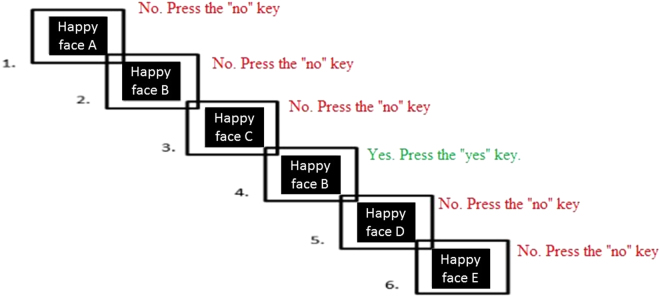
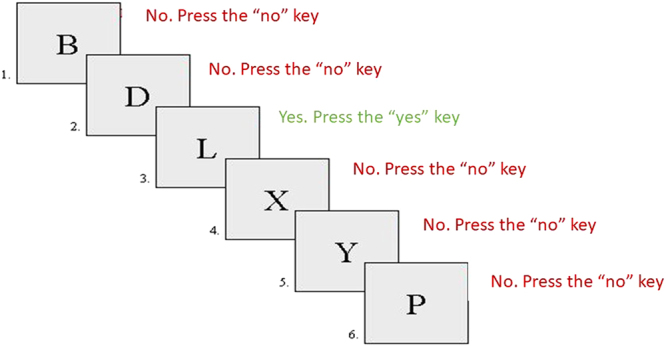
Emotional intelligence (EI) is the ability to perceive, use, understand, and regulate emotions. Higher scores on this ability measured through performance tests (but no through self-reports) appears to be related to better performance on "hot" (emotionally laden) cognitive tasks. However, there are relatively few studies concerning how EI may benefit the working memory capacity (WMC). Thus, the objective of this study is to analyse the relationship between EI (as measured through a performance-based ability test, a self-report mixed test, and a self-report ability test) and the WMC during the performance of hot and "cool" (i.e., non-emotionally laden) "2-back" tasks. 203 participants completed three EI tests as well as two 2-back tasks. The results provide evidence for better performance of higher EI participants (specifically in the managing branch) measured through the performance-based ability test, but only on the hot task. For the self-report mixed model, incongruent results were found, and no correlations were obtained using the self-report ability model. The implications of these findings are discussed in terms of the validity of the various EI models.

摘要

情绪智力(EI)是指感知、运用、理解和调节情绪的能力。通过表现测试(而不是自我报告)测量的这种能力的得分较高,似乎与“热”(情绪负荷)认知任务的更好表现有关。然而,关于 EI 如何有益于工作记忆容量(WMC)的研究相对较少。因此,本研究的目的是分析 EI(通过基于表现的能力测试、混合自我报告测试和自我报告能力测试来衡量)与执行“热”和“冷”(即非情绪负荷)“2 位回”任务时的 WMC 之间的关系。203 名参与者完成了三个 EI 测试以及两个 2 位回任务。结果表明,在表现测试中,得分较高的 EI 参与者(特别是在管理分支)表现更好,但仅在热任务中。对于混合自我报告模型,得到了不一致的结果,而使用自我报告能力模型则没有获得相关性。这些发现的意义在各种 EI 模型的有效性方面进行了讨论。
https://cdn.ncbi.nlm.nih.gov/pmc/blobs/c7d4/5600979/bf70c5fb408e/41598_2017_12000_Fig5_HTML.jpg
https://cdn.ncbi.nlm.nih.gov/pmc/blobs/c7d4/5600979/aff2f7e16688/41598_2017_12000_Fig1_HTML.jpg
https://cdn.ncbi.nlm.nih.gov/pmc/blobs/c7d4/5600979/9c0f92bb8c35/41598_2017_12000_Fig2_HTML.jpg
https://cdn.ncbi.nlm.nih.gov/pmc/blobs/c7d4/5600979/af53660584f9/41598_2017_12000_Fig3_HTML.jpg
https://cdn.ncbi.nlm.nih.gov/pmc/blobs/c7d4/5600979/17e201947020/41598_2017_12000_Fig4_HTML.jpg
https://cdn.ncbi.nlm.nih.gov/pmc/blobs/c7d4/5600979/bf70c5fb408e/41598_2017_12000_Fig5_HTML.jpg
https://cdn.ncbi.nlm.nih.gov/pmc/blobs/c7d4/5600979/aff2f7e16688/41598_2017_12000_Fig1_HTML.jpg
https://cdn.ncbi.nlm.nih.gov/pmc/blobs/c7d4/5600979/9c0f92bb8c35/41598_2017_12000_Fig2_HTML.jpg
https://cdn.ncbi.nlm.nih.gov/pmc/blobs/c7d4/5600979/af53660584f9/41598_2017_12000_Fig3_HTML.jpg
https://cdn.ncbi.nlm.nih.gov/pmc/blobs/c7d4/5600979/17e201947020/41598_2017_12000_Fig4_HTML.jpg
https://cdn.ncbi.nlm.nih.gov/pmc/blobs/c7d4/5600979/bf70c5fb408e/41598_2017_12000_Fig5_HTML.jpg

相似文献

1
Performance-based ability emotional intelligence benefits working memory capacity during performance on hot tasks.基于表现的能力情绪智力有益于在执行热任务时的工作记忆容量。
Sci Rep. 2017 Sep 15;7(1):11700. doi: 10.1038/s41598-017-12000-7.
2
The Three Models of Emotional Intelligence and Performance in a Hot and Cool go/no-go Task in Undergraduate Students.大学生在冷热二择一任务中的三种情商模型与表现
Front Behav Neurosci. 2017 Feb 22;11:33. doi: 10.3389/fnbeh.2017.00033. eCollection 2017.
3
The Relationship between Emotional Intelligence and Cool and Hot Cognitive Processes: A Systematic Review.情商与冷热认知过程之间的关系:一项系统综述。
Front Behav Neurosci. 2016 May 27;10:101. doi: 10.3389/fnbeh.2016.00101. eCollection 2016.
4
Working memory updating of emotional stimuli predicts emotional intelligence in females.情绪刺激的工作记忆更新可预测女性的情绪智力。
Sci Rep. 2020 Nov 30;10(1):20875. doi: 10.1038/s41598-020-77944-9.
5
The Geneva Emotional Competence Test (GECo): An ability measure of workplace emotional intelligence.日内瓦情绪能力测试(GECo):一种职场情绪智力的能力衡量工具。
J Appl Psychol. 2019 Apr;104(4):559-580. doi: 10.1037/apl0000365. Epub 2018 Oct 22.
6
Validity evidence for the situational judgment test paradigm in emotional intelligence measurement.情境判断测验范式在情绪智力测量中的有效性证据。
Int J Psychol. 2012;47(6):438-47. doi: 10.1080/00207594.2012.682063. Epub 2012 Jul 24.
7
Emotional intelligence, life satisfaction and subjective happiness in female student health professionals: the mediating effect of perceived stress.女学生医护人员的情商、生活满意度与主观幸福感:感知压力的中介作用
J Psychiatr Ment Health Nurs. 2014 Mar;21(2):106-13. doi: 10.1111/jpm.12052. Epub 2013 Apr 12.
8
Measurement of ability emotional intelligence: results for two new tests.情绪智力能力的测量:两个新测试的结果。
Br J Psychol. 2010 Aug;101(Pt 3):563-78. doi: 10.1348/000712609X474370. Epub 2009 Oct 19.
9
Performance on emotional tasks engaging cognitive control depends on emotional intelligence abilities: an ERP study.情绪任务中认知控制表现取决于情绪智力能力:一项 ERP 研究。
Sci Rep. 2017 Nov 27;7(1):16446. doi: 10.1038/s41598-017-16657-y.
10
Cognitive Control and Emotional Intelligence: Effect of the Emotional Content of the Task. Brief Reports.认知控制与情商:任务情感内容的影响。简短报告。
Front Psychol. 2019 Feb 7;10:195. doi: 10.3389/fpsyg.2019.00195. eCollection 2019.

引用本文的文献

1
Emotional Intelligence in Portuguese Youth: Age and Gender Differences.葡萄牙青少年的情商:年龄与性别差异
J Intell. 2025 Apr 15;13(4):48. doi: 10.3390/jintelligence13040048.
2
Kindergarten teachers' emotional intelligence and surface acting: the chain mediating effects of self-efficacy and work engagement.幼儿园教师的情商与表面行为:自我效能感和工作投入的链式中介作用。
Front Psychol. 2025 Jan 27;16:1434407. doi: 10.3389/fpsyg.2025.1434407. eCollection 2025.
3
Can We "Brain-Train" Emotional Intelligence? A Narrative Review on the Features and Approaches Used in Ability EI Training Studies.

本文引用的文献

1
The Three Models of Emotional Intelligence and Performance in a Hot and Cool go/no-go Task in Undergraduate Students.大学生在冷热二择一任务中的三种情商模型与表现
Front Behav Neurosci. 2017 Feb 22;11:33. doi: 10.3389/fnbeh.2017.00033. eCollection 2017.
2
Emotional working memory training as an online intervention for adolescent anxiety and depression: A randomised controlled trial.情绪工作记忆训练作为青少年焦虑和抑郁的在线干预措施:一项随机对照试验。
Aust J Psychol. 2016 Sep;68(3):228-238. doi: 10.1111/ajpy.12134. Epub 2016 Jul 1.
3
Age and gender differences in ability emotional intelligence in adults: A cross-sectional study.
我们能否“训练大脑”提升情商?关于能力情商训练研究中使用的特征和方法的叙述性综述。
Front Psychol. 2021 Aug 17;12:569749. doi: 10.3389/fpsyg.2021.569749. eCollection 2021.
4
Experiential and Strategic Emotional Intelligence Are Implicated When Inhibiting Affective and Non-Affective Distractors: Findings from Three Emotional Flanker N-Back Tasks.抑制情感和非情感干扰因素时涉及体验性和策略性情绪智力:来自三项情绪侧抑制N-回溯任务的发现。
J Intell. 2021 Mar 1;9(1):12. doi: 10.3390/jintelligence9010012.
5
Cognitive Control and Emotional Intelligence: Effect of the Emotional Content of the Task. Brief Reports.认知控制与情商:任务情感内容的影响。简短报告。
Front Psychol. 2019 Feb 7;10:195. doi: 10.3389/fpsyg.2019.00195. eCollection 2019.
成年人能力型情商的年龄和性别差异:一项横断面研究。
Dev Psychol. 2016 Sep;52(9):1486-92. doi: 10.1037/dev0000191.
4
The Relationship between Emotional Intelligence and Cool and Hot Cognitive Processes: A Systematic Review.情商与冷热认知过程之间的关系:一项系统综述。
Front Behav Neurosci. 2016 May 27;10:101. doi: 10.3389/fnbeh.2016.00101. eCollection 2016.
5
The neuroscience of working memory capacity and training.工作记忆容量与训练的神经科学
Nat Rev Neurosci. 2016 Jul;17(7):438-49. doi: 10.1038/nrn.2016.43. Epub 2016 May 26.
6
Anxiety and working memory capacity: A meta-analysis and narrative review.焦虑与工作记忆容量:一项荟萃分析和叙述性综述。
Psychol Bull. 2016 Aug;142(8):831-864. doi: 10.1037/bul0000051. Epub 2016 Mar 10.
7
Working memory training improves emotion regulation ability: Evidence from HRV.工作记忆训练可提高情绪调节能力:来自心率变异性的证据。
Physiol Behav. 2016 Mar 1;155:25-9. doi: 10.1016/j.physbeh.2015.12.004. Epub 2015 Dec 8.
8
The impact of affective contexts on working memory capacity in healthy populations and in individuals with PTSD.情感背景对健康人群和创伤后应激障碍患者工作记忆容量的影响。
Emotion. 2016 Feb;16(1):16-23. doi: 10.1037/emo0000072. Epub 2015 Sep 28.
9
Improving problem solving in primary school students: The effect of a training programme focusing on metacognition and working memory.提高小学生的问题解决能力:一项聚焦元认知和工作记忆的培训计划的效果。
Br J Educ Psychol. 2015 Sep;85(3):424-39. doi: 10.1111/bjep.12083. Epub 2015 Jun 22.
10
Working memory training improves emotional states of healthy individuals.工作记忆训练能改善健康个体的情绪状态。
Front Syst Neurosci. 2014 Oct 16;8:200. doi: 10.3389/fnsys.2014.00200. eCollection 2014.