IrsiCaixa AIDS Research Institute, Institut de Recerca Germans Trias i Pujol (IGTP), Hospital Universitari Germans Trias i Pujol, Universitat Autonoma de Barcelona, 08916, Badalona, Barcelona, Spain.
Université de Montréal, Faculté de Médecine, Department of microbiology, infectiology and immunology, Centre de Recherche du CHUM, Montréal, QC, Canada.
Sci Rep. 2017 Sep 15;7(1):11711. doi: 10.1038/s41598-017-12013-2.
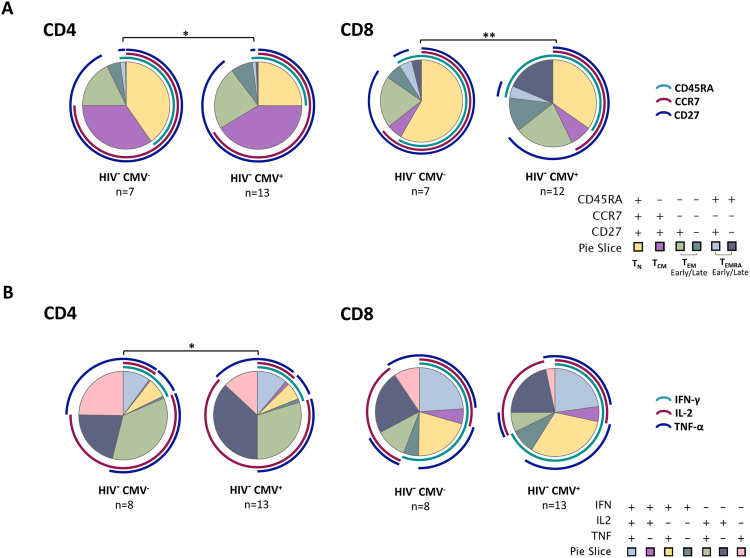
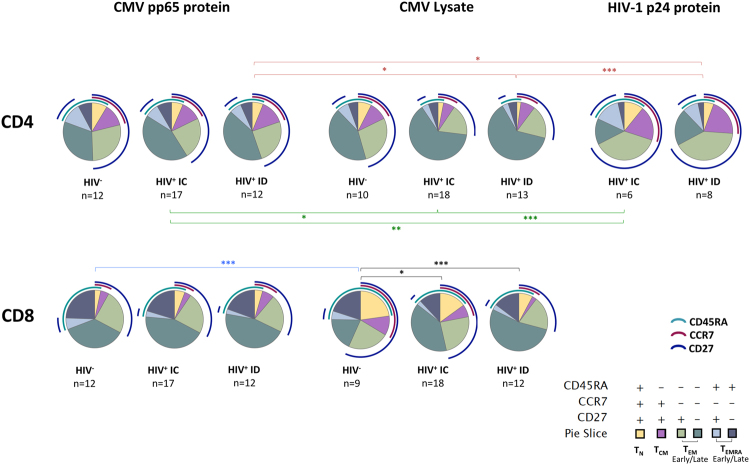
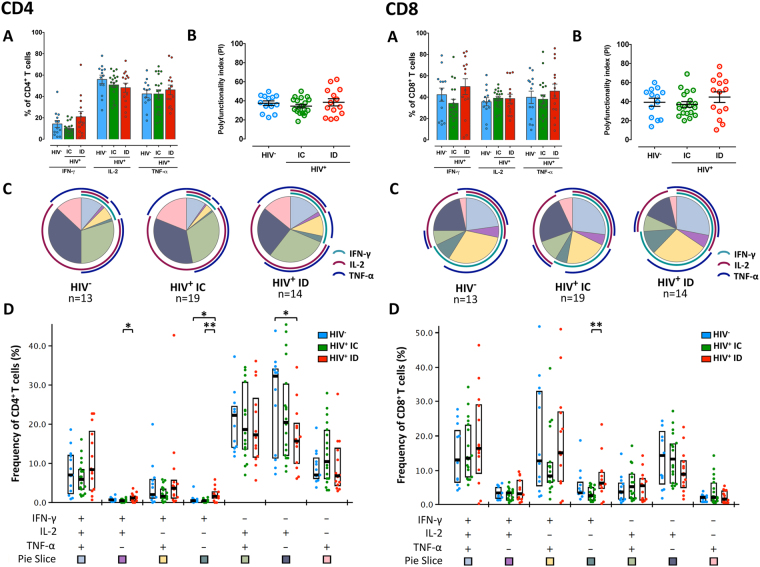
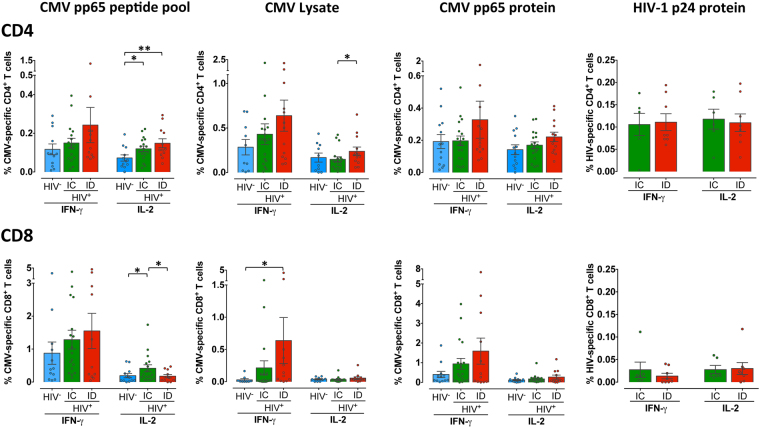
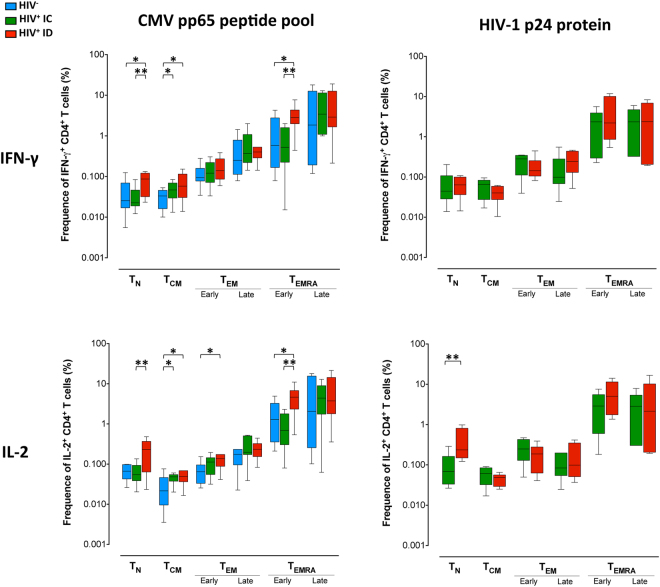
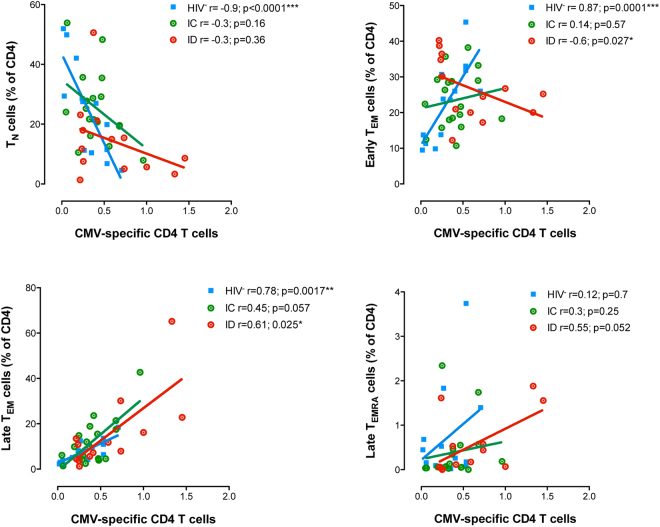
Poor CD4 T-cell recovery after cART has been associated with skewed T-cell maturation, inflammation and immunosenescence; however, T-cell functionality in those individuals has not been fully characterized. In the present study, we assessed T-cell function by assessing cytokine production after polyclonal, CMV and HIV stimulations of T-cells from ART-suppressed HIV-infected individuals with CD4 T-cell counts >350 cells/μL (immunoconcordants) or <350 cells/μL (immunodiscordants). A group of HIV-uninfected individuals were also included as controls. Since CMV co-infection significantly affected T-cell maturation and polyfunctionality, only CMV individuals were analyzed. Despite their reduced and skewed CD4 T-cell compartment, immunodiscordant individuals showed preserved polyclonal and HIV-specific responses. However, CMV response in immunodiscordant participants was significantly different from immunoconcordant or HIV-seronegative individuals. In immunodiscordant subjects, the magnitude of IFN-γ CD8 and IL-2 CD4 T-cells in response to CMV was higher and differently associated with the CD4 T-cell maturation profile., showing an increased frequency of naïve, central memory and EMRA CMV-specific CD4 T-cells. In conclusion, CD4 and CD8 T-cell polyfunctionality was not reduced in immunodiscordant individuals, although heightened CMV-specific immune responses, likely related to subclinical CMV reactivations, may be contributing to the skewed T-cell maturation and the higher risk of clinical progression observed in those individuals.
在 cART 后 CD4 T 细胞恢复不佳与 T 细胞成熟、炎症和免疫衰老有关;然而,这些个体的 T 细胞功能尚未完全表征。在本研究中,我们通过评估 T 细胞在多克隆、CMV 和 HIV 刺激后细胞因子的产生来评估 T 细胞功能,这些 T 细胞来自 CD4 T 细胞计数 >350 个/μL(免疫一致者)或 <350 个/μL(免疫不一致者)的接受 ART 抑制的 HIV 感染者。还纳入了一组 HIV 未感染者作为对照。由于 CMV 合并感染显著影响 T 细胞成熟和多功能性,因此仅分析了 CMV 个体。尽管免疫不一致者的 CD4 T 细胞数量减少且呈偏态分布,但他们仍表现出保留的多克隆和 HIV 特异性反应。然而,免疫不一致者的 CMV 反应与免疫一致者或 HIV 血清阴性者明显不同。在免疫不一致者中,CMV 刺激后 IFN-γ CD8 和 IL-2 CD4 T 细胞的幅度更高,并且与 CD4 T 细胞成熟谱不同相关,表现出幼稚、中央记忆和 EMRA 特异性 CD4 T 细胞的频率增加。总之,免疫不一致者的 CD4 和 CD8 T 细胞多功能性并未降低,尽管 CMV 特异性免疫反应增强,可能与亚临床 CMV 再激活有关,可能导致这些个体中观察到的 T 细胞成熟偏态和更高的临床进展风险。