Huang Bo-Tsang, Lai Wei-Yun, Chang Yi-Chung, Wang Jen-Wei, Yeh Shauh-Der, Lin Emily Pei-Ying, Yang Pan-Chyr
Institute of Biomedical Sciences, Academia Sinica, Taipei, Taiwan.
Institute of Biomedical Sciences, Academia Sinica, Taipei, Taiwan; Department of Urology, Taipei Medical University Hospital, Taipei, Taiwan.
Mol Ther Nucleic Acids. 2017 Sep 15;8:520-528. doi: 10.1016/j.omtn.2017.08.006. Epub 2017 Aug 15.
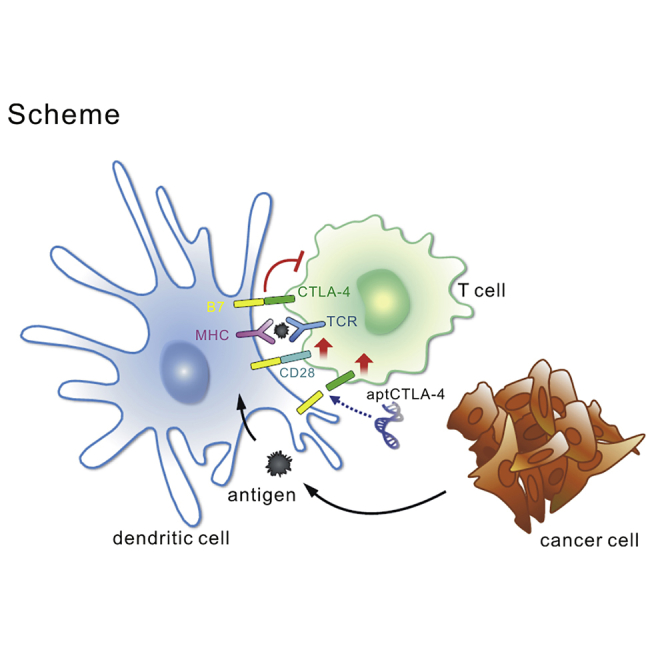
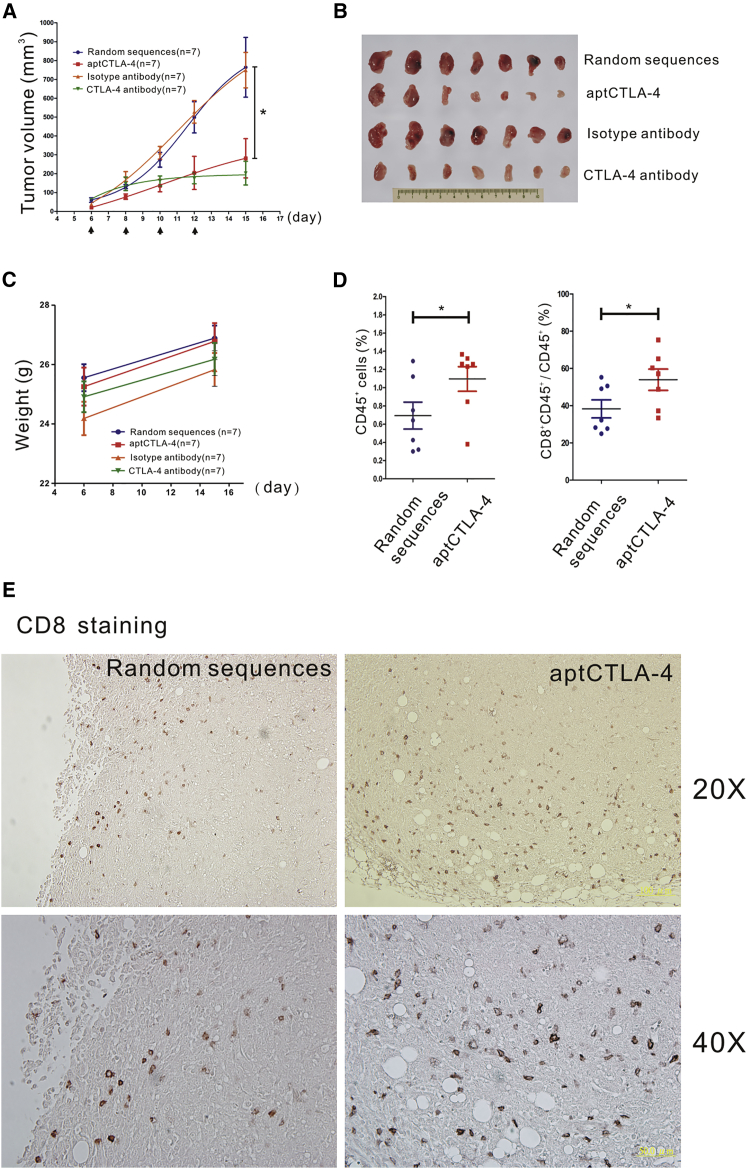
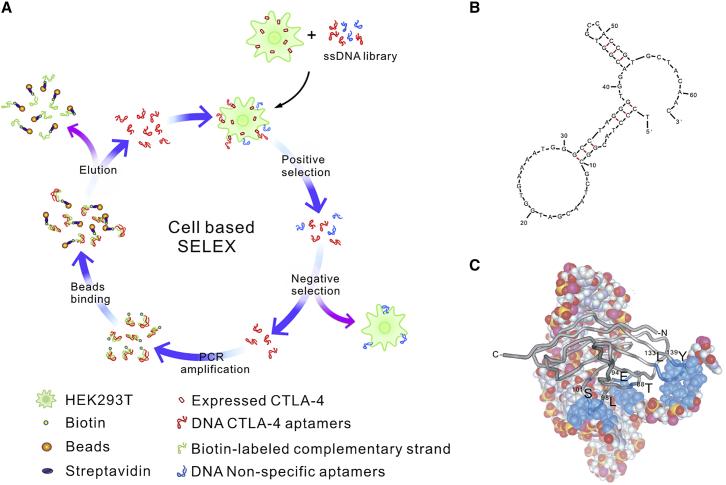
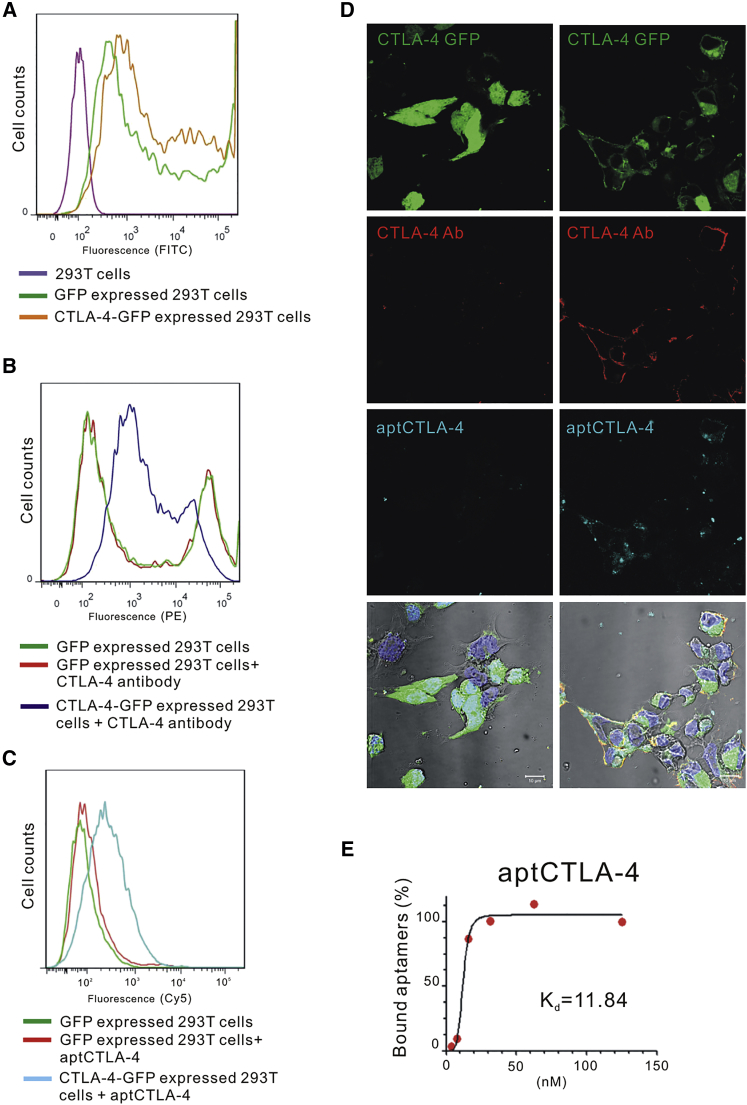
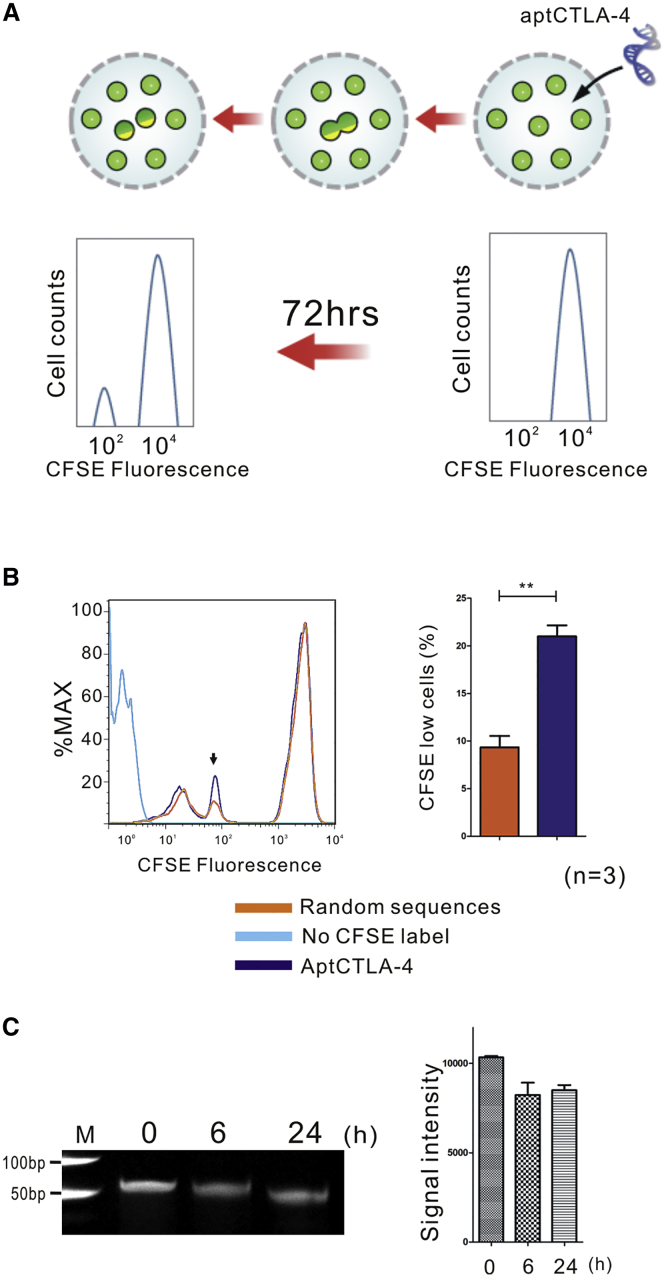
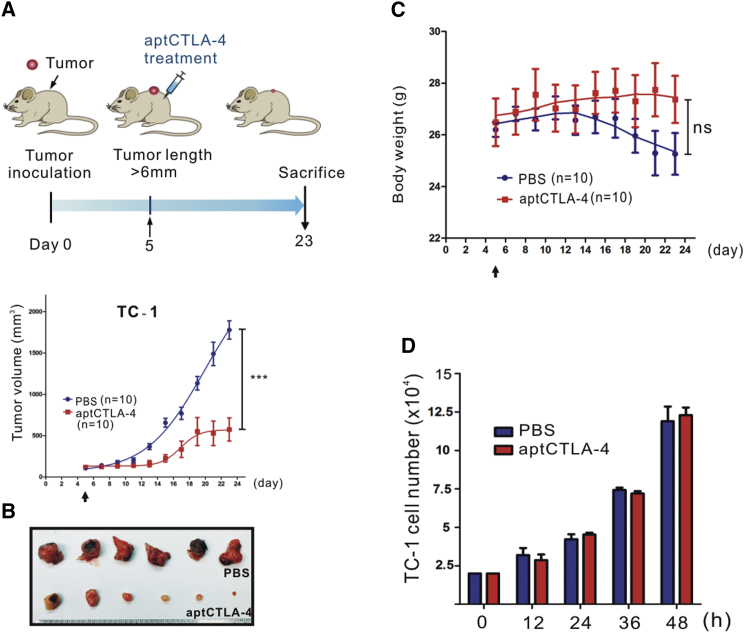
The successful translation of cytotoxic T lymphocyte antigen-4 (CTLA-4) blockade has revolutionized the concept of cancer immunotherapy. Although monoclonal antibody therapeutics remain the mainstream in clinical practice, aptamers are synthetic oligonucleotides that encompass antibody-mimicking functions. Here, we report a novel high-affinity CTLA-4-antagonizing DNA aptamer (dissociation constant, 11.84 nM), aptCTLA-4, which was identified by cell-based SELEX and high-throughput sequencing. aptCTLA-4 is relatively stable in serum, promotes lymphocyte proliferation, and inhibits tumor growth in cell and animal models. Our study demonstrates the developmental pipeline of a functional CTLA-4-targeting aptamer and suggests a translational potential for aptCTLA-4.
细胞毒性T淋巴细胞相关抗原4(CTLA-4)阻断疗法的成功应用彻底改变了癌症免疫治疗的概念。尽管单克隆抗体疗法仍是临床实践中的主流,但适体是具有抗体模拟功能的合成寡核苷酸。在此,我们报告了一种新型的高亲和力CTLA-4拮抗DNA适体(解离常数为11.84 nM),aptCTLA-4,它是通过基于细胞的指数富集配体系统进化技术(SELEX)和高通量测序鉴定出来的。aptCTLA-4在血清中相对稳定,能促进淋巴细胞增殖,并在细胞和动物模型中抑制肿瘤生长。我们的研究展示了一种功能性CTLA-4靶向适体的研发流程,并提示了aptCTLA-4的转化潜力。