Zamani Mohammad Reza, Šácha Pavel
Department of Cell Biology, Faculty of Science, Charles University, Prague, Czech Republic.
Institute of Organic Chemistry and Biochemistry, Czech Academy of Sciences, Flemingovo n. 2, Prague 6, Prague, 16610, Czech Republic.
Med Oncol. 2025 Jun 19;42(7):273. doi: 10.1007/s12032-025-02822-1.
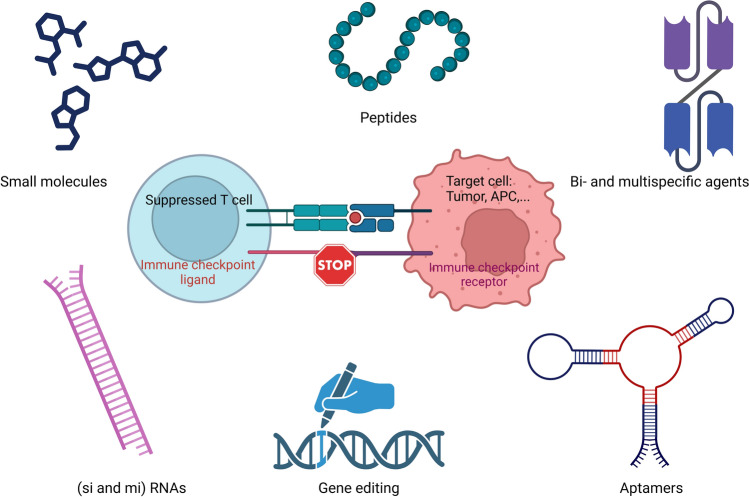
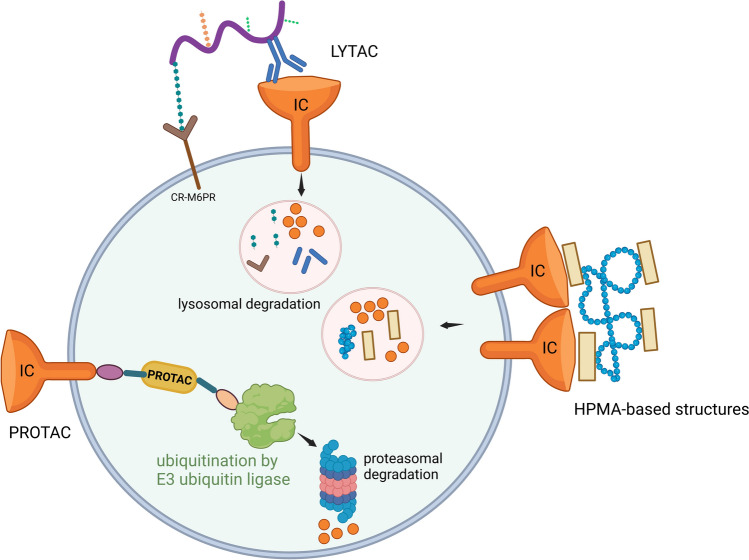
Immune checkpoints are critical in modulating immune responses and maintaining self-tolerance. Cancer cells can exploit these mechanisms to evade immune detection, making immune checkpoints attractive targets for cancer therapy. The introduction of immune checkpoint inhibitors (ICIs) has transformed cancer treatment, with monoclonal antibodies targeting CTLA-4, PD-1, and PD-L1 demonstrating clinical success. However, challenges such as immune-related adverse events, primary and acquired resistance, and high treatment costs persist. To address these challenges, it is essential to explore alternative strategies, including small-molecule and peptide-based inhibitors, aptamers, RNA-based therapies, gene-editing technologies, bispecific and multispecific agents, and cell-based therapies. Additionally, innovative approaches such as lysosome-targeting chimeras, proteolysis-targeting chimeras, and N-(2-hydroxypropyl) methacrylamide copolymers are emerging as promising options for enhancing treatment effectiveness. This review highlights significant advancements in the field, focusing on their clinical implications and successes.
免疫检查点在调节免疫反应和维持自身耐受性方面至关重要。癌细胞可以利用这些机制逃避免疫检测,这使得免疫检查点成为癌症治疗的有吸引力的靶点。免疫检查点抑制剂(ICIs)的引入改变了癌症治疗,靶向细胞毒性T淋巴细胞相关蛋白4(CTLA-4)、程序性死亡受体1(PD-1)和程序性死亡配体1(PD-L1)的单克隆抗体已显示出临床疗效。然而,诸如免疫相关不良事件、原发性和获得性耐药以及高治疗成本等挑战依然存在。为应对这些挑战,探索替代策略至关重要,包括小分子和基于肽的抑制剂、适体、基于RNA的疗法、基因编辑技术、双特异性和多特异性药物以及基于细胞的疗法。此外,诸如溶酶体靶向嵌合体、蛋白酶解靶向嵌合体和N-(2-羟丙基)甲基丙烯酰胺共聚物等创新方法正作为提高治疗效果的有前景的选择而出现。本综述重点介绍了该领域的重大进展,着重阐述其临床意义和成功之处。