Wang Kaiping, Cheng Fang, Pan Xianglin, Zhou Tao, Liu Xiqiu, Zheng Ziming, Luo Li, Zhang Yu
a Hubei Key Laboratory of Nature Medicinal Chemistry and Resource Evaluation , Tongji Medical College, Huazhong University of Science and Technology , Wuhan , China.
b Union Hospital of Tongji Medical College , Huazhong University of Science and Technology , Wuhan , China.
Drug Deliv. 2017 Nov;24(1):1360-1371. doi: 10.1080/10717544.2017.1375576.
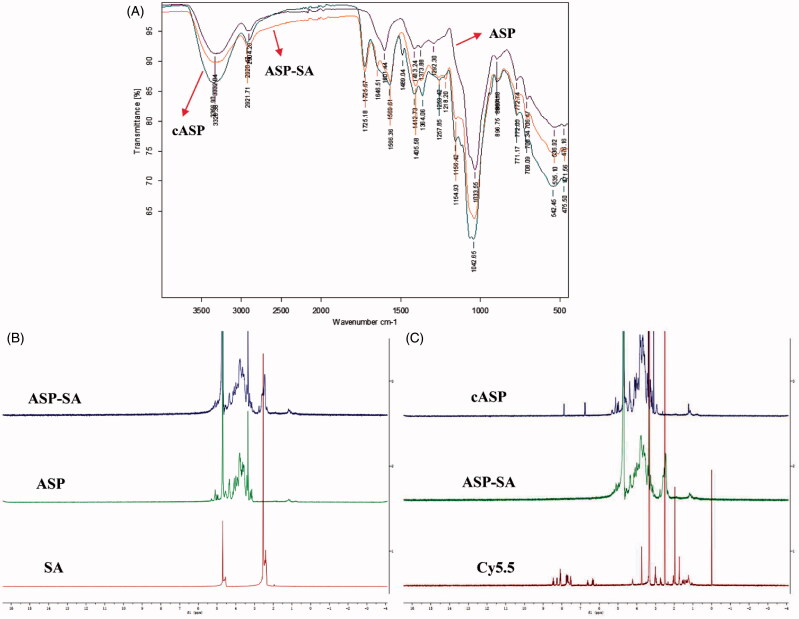
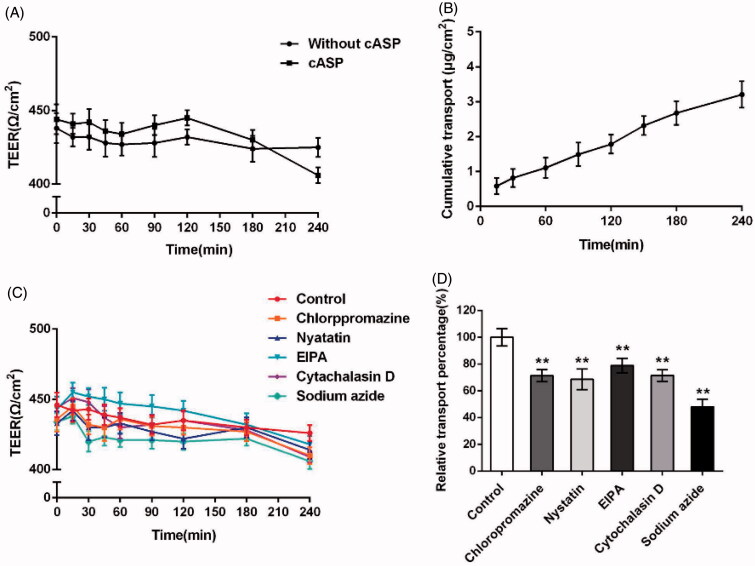
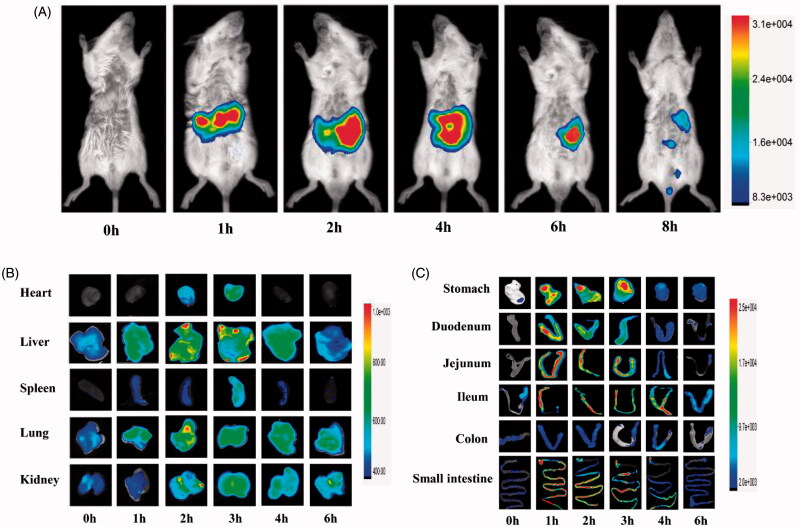
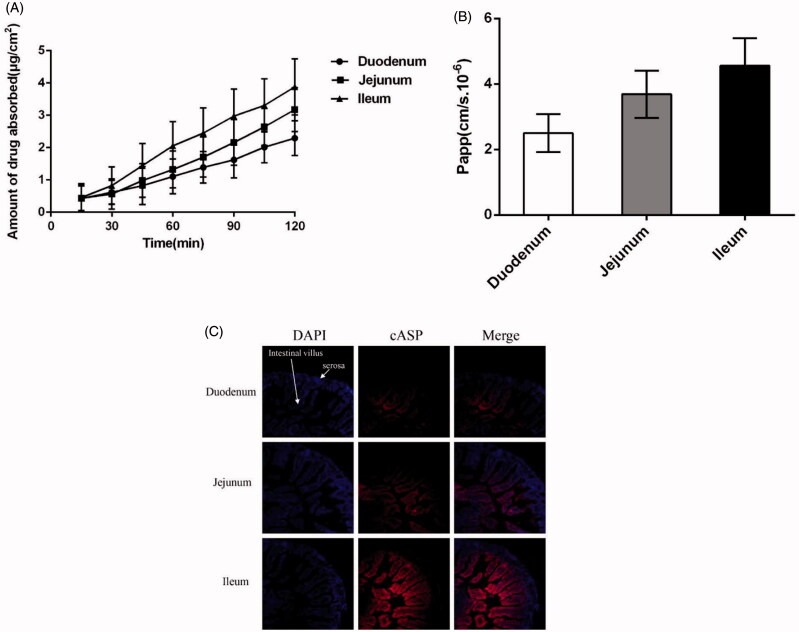
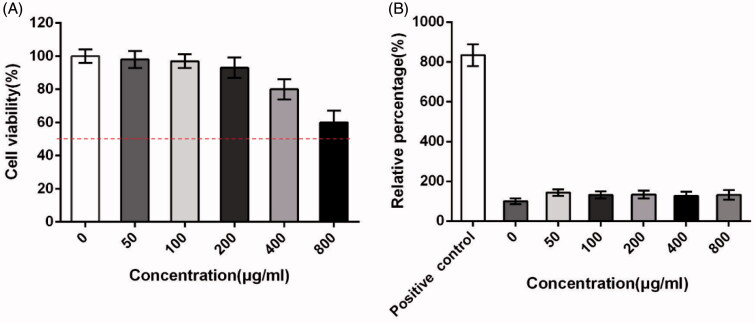
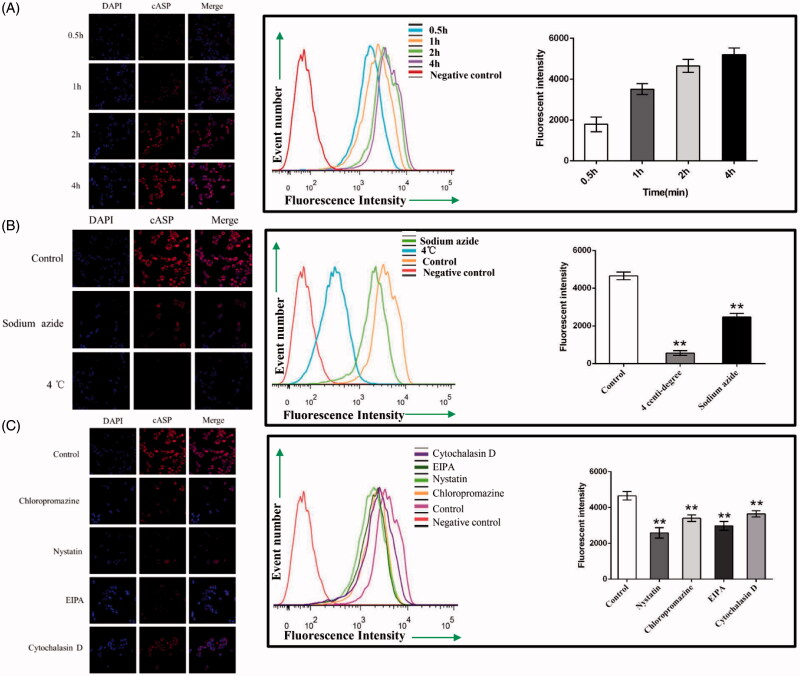
To investigate the absorption and delivery of ASP in gastrointestinal (GI) tract, cASP was successfully synthesized by chemically modifying with succinic anhydride and then conjugating with a near infrared fluorescent dye Cy5.5. Then, the capacity of oral absorption of cASP was evaluated. The results demonstrated that cASP had low toxicity and no disruption on the integrity of cell membrane. The endocytosis of cASP into the epithelial cells was time- and energy-dependent, which was mediated by macropinocytosis pathway and clathrin- and caveolae (or lipid raft)-related routes. Otherwise, the actin filaments played a relatively weak role at the same time. The transport study illustrated that cASP could penetrate through the epithelial monolayer and mainly mediated by the same routes as that in the endocytosis experiment. Moreover, both in vitro Ussing chamber and in vivo ligated intestinal loops models indicated that cASP could be diffused through the mucus barriers and be absorbed in the whole small intestine. Finally, near-infrared fluorescence imaging presented that cASP could be absorbed and circulated into the blood, then distributed into various organs after oral administration. In conclusion, ASP could be absorbed after oral administration through endocytosis process mainly mediated by macropinocytosis pathway and clathrin- and caveolae (or lipid raft)-related routes, then be absorbed and circulated into blood. This study presents a comprehensive understanding of oral delivery of cASP, which will provide theoretical basis for the clinical application of ASP.
为研究天冬酰胺(ASP)在胃肠道(GI)中的吸收和转运情况,通过用琥珀酸酐化学修饰然后与近红外荧光染料Cy5.5偶联,成功合成了环化天冬酰胺(cASP)。然后,评估了cASP的口服吸收能力。结果表明,cASP毒性低,对细胞膜完整性无破坏作用。cASP进入上皮细胞的内吞作用具有时间和能量依赖性,其由巨胞饮途径以及网格蛋白和小窝(或脂筏)相关途径介导。此外,肌动蛋白丝同时发挥的作用相对较弱。转运研究表明,cASP可穿透上皮单层,其主要由与内吞作用实验相同的途径介导。此外,体外Ussing小室模型和体内结扎肠袢模型均表明,cASP可扩散穿过黏液屏障并在整个小肠中被吸收。最后,近红外荧光成像显示,口服给药后cASP可被吸收并进入血液循环,然后分布到各个器官。总之,ASP口服给药后可通过主要由巨胞饮途径以及网格蛋白和小窝(或脂筏)相关途径介导的内吞过程被吸收,然后被吸收并进入血液循环。本研究全面了解了cASP的口服递送情况,将为ASP的临床应用提供理论依据。