
白细胞介素-27介导的中性粒细胞极化作为脑出血的治疗靶点
Neutrophil polarization by IL-27 as a therapeutic target for intracerebral hemorrhage.
作者信息
Zhao Xiurong, Ting Shun-Ming, Liu Chin-Hsuan, Sun Guanghua, Kruzel Marian, Roy-O'Reilly Meaghan, Aronowski Jaroslaw
机构信息
Department of Neurology, University of Texas Health Science Center at Houston, McGovern Medical School, Houston, TX, 77030, USA.
Department of Integrative Biology and Pharmacology, University of Texas Health Science Center at Houston, McGovern Medical School, Houston, TX, 77030, USA.
出版信息
Nat Commun. 2017 Sep 19;8(1):602. doi: 10.1038/s41467-017-00770-7.
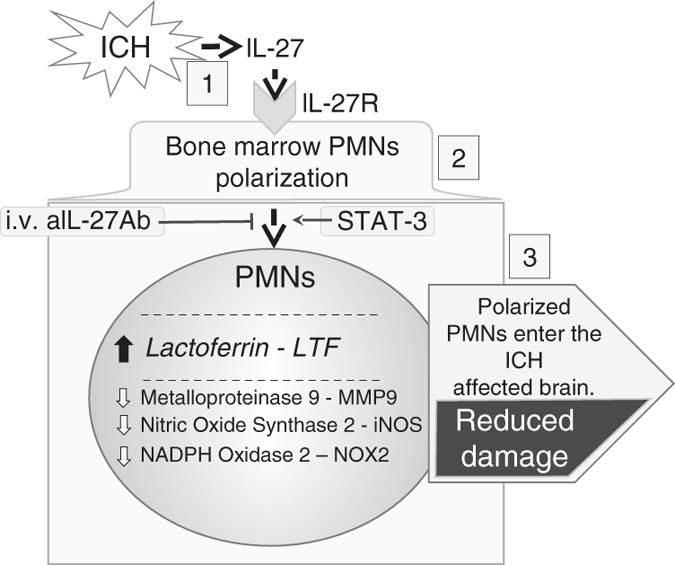
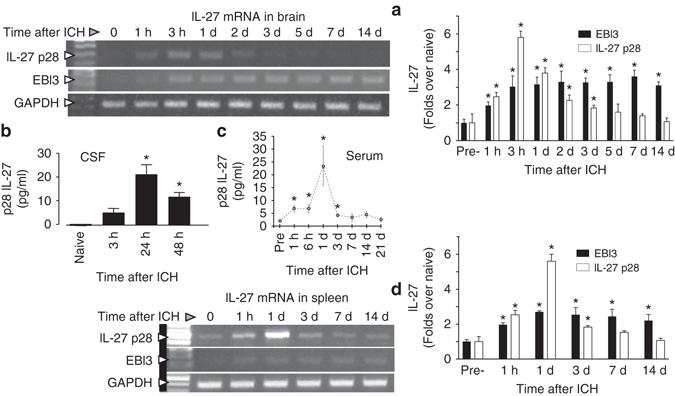
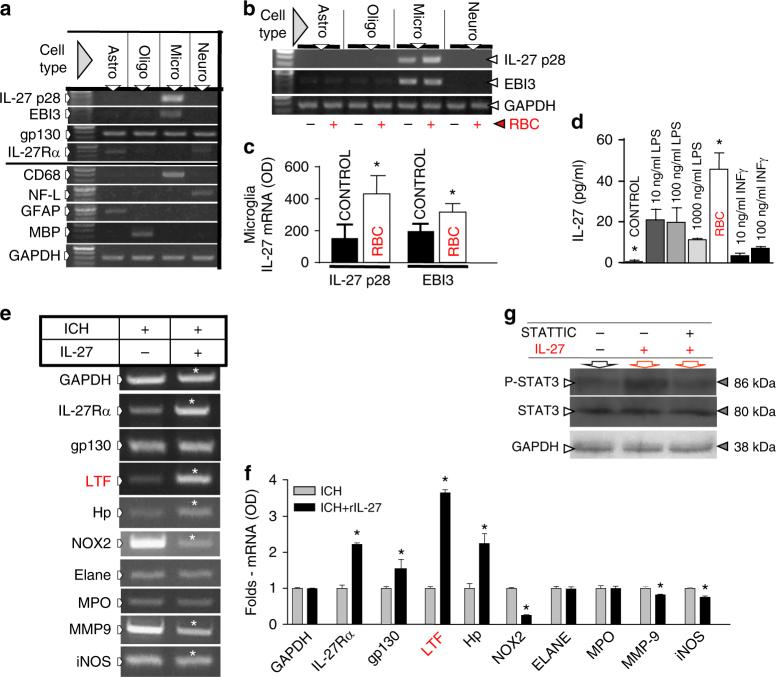
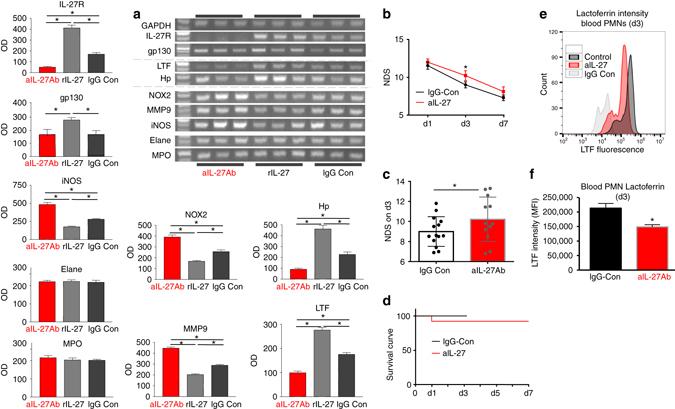
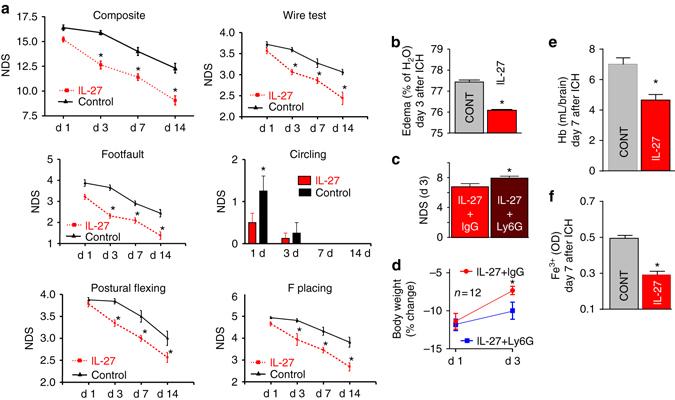
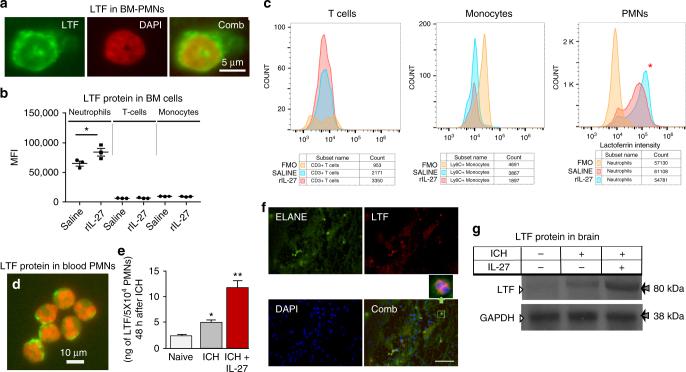
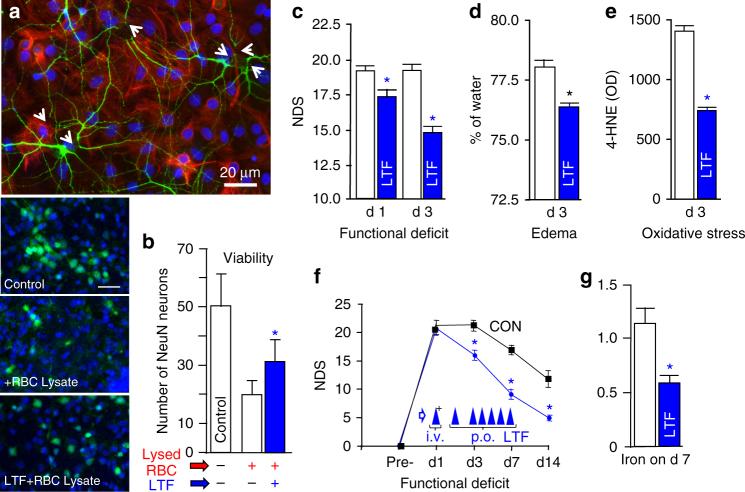
Shortly after intracerebral hemorrhage, neutrophils infiltrate the intracerebral hemorrhage-injured brain. Once within the brain, neutrophils degranulate, releasing destructive molecules that may exacerbate brain damage. However, neutrophils also release beneficial molecules, including iron-scavenging lactoferrin that may limit hematoma/iron-mediated brain injury after intracerebral hemorrhage. Here, we show that the immunoregulatory cytokine interleukin-27 is upregulated centrally and peripherally after intracerebral hemorrhage. Data from rodent models indicate that interleukin-27 modifies neutrophil maturation in the bone marrow, suppressing their production of pro-inflammatory/cytotoxic products while increasing their production of beneficial iron-scavenging molecules, including lactoferrin. Finally, interleukin-27 or lactoferrin administration results in reduced edema, enhanced hematoma clearance, and improved neurological outcomes in an animal model of intracerebral hemorrhage. These results suggest that interleukin-27/lactoferrin-mediated modulations of neutrophil function may represent a therapeutically viable concept for the modification of neutrophils toward a "beneficial" phenotype for the treatment of intracerebral hemorrhage.Neutrophils are important modulators of tissue damage after intracerebral hemorrhage (ICH), but how this function is regulated is not clear. Here, the authors show interleukin-27 promotes the tissue-protecting functions of neutrophils via, at least partly, the induction of lactoferrin to present a potential therapy for ICH.
脑出血后不久,中性粒细胞会浸润到脑出血损伤的脑内。一旦进入脑内,中性粒细胞就会脱颗粒,释放出可能加剧脑损伤的破坏性分子。然而,中性粒细胞也会释放有益分子,包括可清除铁的乳铁蛋白,这可能会限制脑出血后血肿/铁介导的脑损伤。在此,我们表明免疫调节细胞因子白细胞介素-27在脑出血后在中枢和外周均上调。来自啮齿动物模型的数据表明,白细胞介素-27可改变骨髓中中性粒细胞的成熟过程,抑制其促炎/细胞毒性产物的产生,同时增加其有益的铁清除分子(包括乳铁蛋白)的产生。最后,在脑出血动物模型中,给予白细胞介素-27或乳铁蛋白可减轻水肿、增强血肿清除并改善神经功能结局。这些结果表明,白细胞介素-27/乳铁蛋白介导的中性粒细胞功能调节可能代表一种在治疗脑出血时将中性粒细胞转变为“有益”表型的可行治疗理念。中性粒细胞是脑出血(ICH)后组织损伤的重要调节因子,但其功能如何调节尚不清楚。在此,作者表明白细胞介素-27至少部分通过诱导乳铁蛋白来促进中性粒细胞的组织保护功能,从而为脑出血提供一种潜在的治疗方法。
 Zotero 插件