Huang Huaping, Kuang Yirui, Chen Yang, Zhang Yi, Zhou Jiayin, Yu Xian, Zheng Yonghe, Cai Lingxin, Hu Wanglu, Gao Liansheng, Wu Haijian, Ling Hui, Dong Xiao, Zhou Hang, Yu Xiaobo, Peng Yucong, Chen Gao, Wang Xiaoyu, Yan Wei
Department of Neurosurgery, The Second Affiliated Hospital, Zhejiang University School of Medicine, Hangzhou, Zhejiang, China.
Key Laboratory of Precise Treatment and Clinical Translational Research of Neurological Diseases, Hangzhou, Zhejiang, China.
J Neuroinflammation. 2025 Jun 21;22(1):161. doi: 10.1186/s12974-025-03483-7.
Intracerebral hemorrhage (ICH) triggers a dynamic immune response involving macrophages, However, the functional heterogeneity of these cells and the mechanisms through which they promote repair remain unclear. Although the neuropeptide CGRP has been shown to modulate macrophage phenotypes in other pathological contexts, its role in ICH recovery and white matter repair remains unexplored.
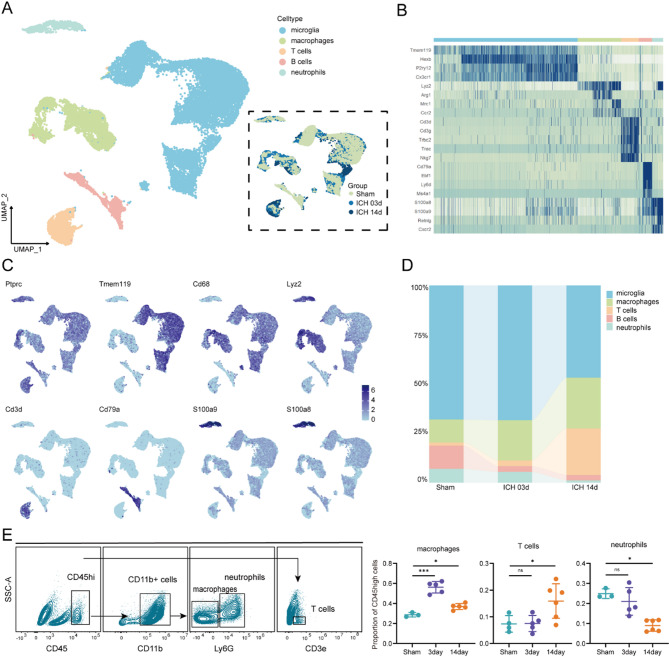
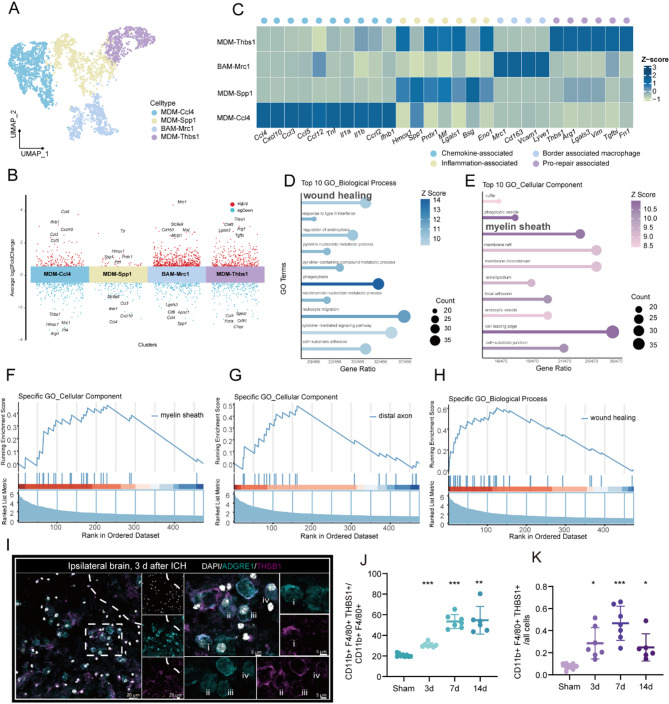
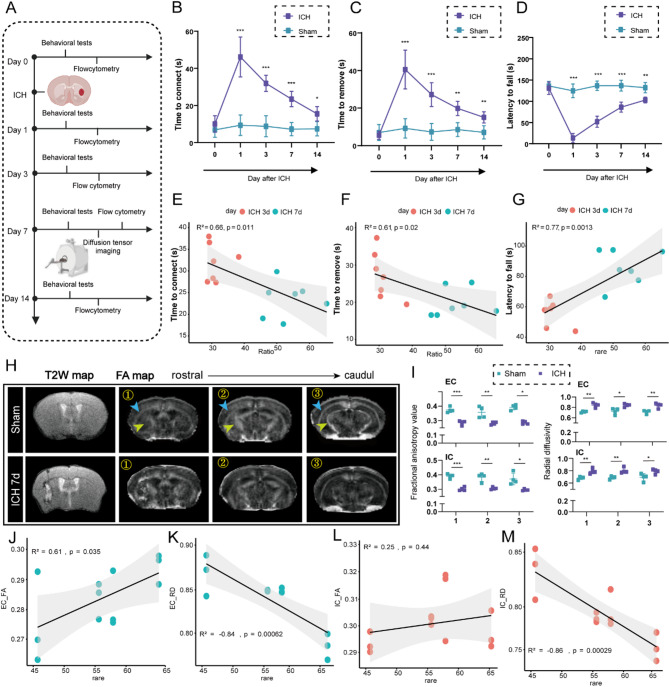
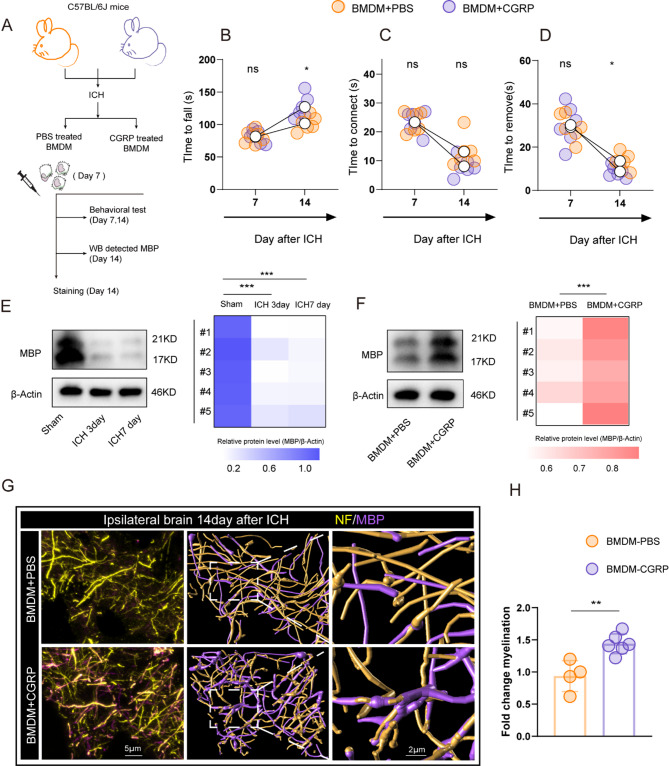
Single-cell RNA sequencing (scRNA-seq) of CD45 + cells from ICH mice (GSE167593 and GSE230414 datasets) identified macrophage subsets. Flow cytometry, diffusion tensor imaging (DTI), behavioral assays, and immunofluorescence validated macrophage dynamics and white matter (WM) integrity. Bone marrow and skull analyses traced macrophage origins. The role of calcitonin gene-related peptide (CGRP) was tested via intraperitoneal administration in ICH mice, with outcomes assessed through transcriptomics, ultrastructural imaging, and functional recovery.
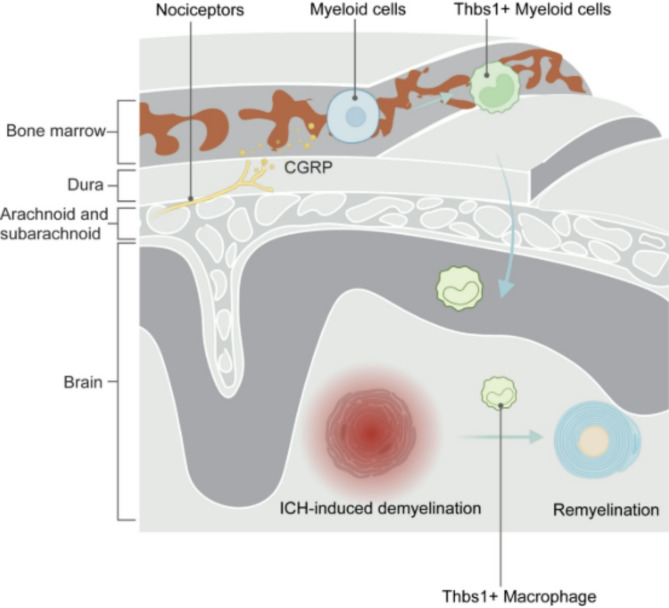
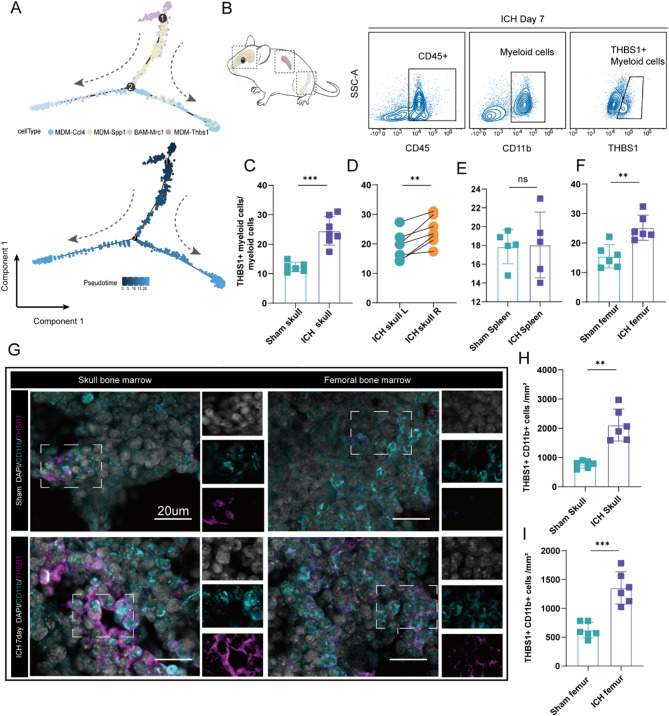
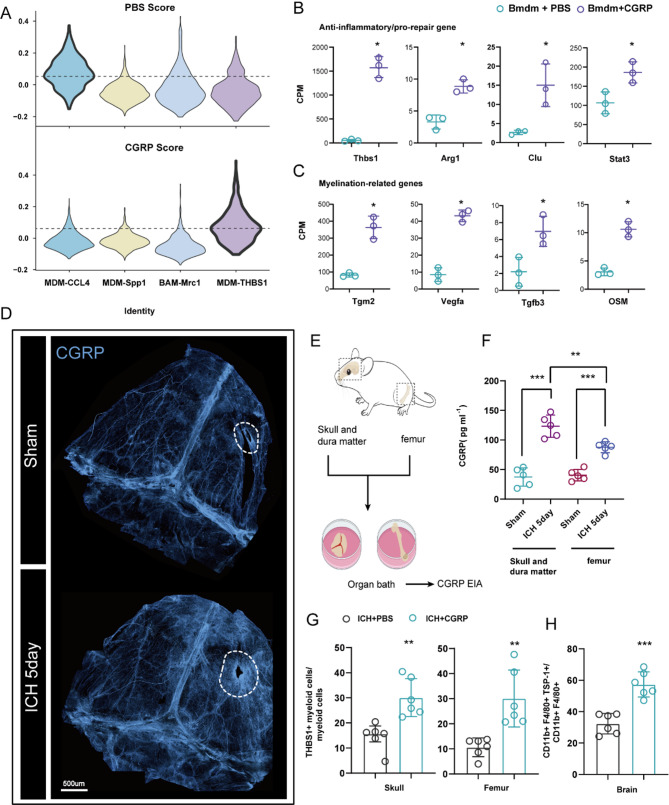
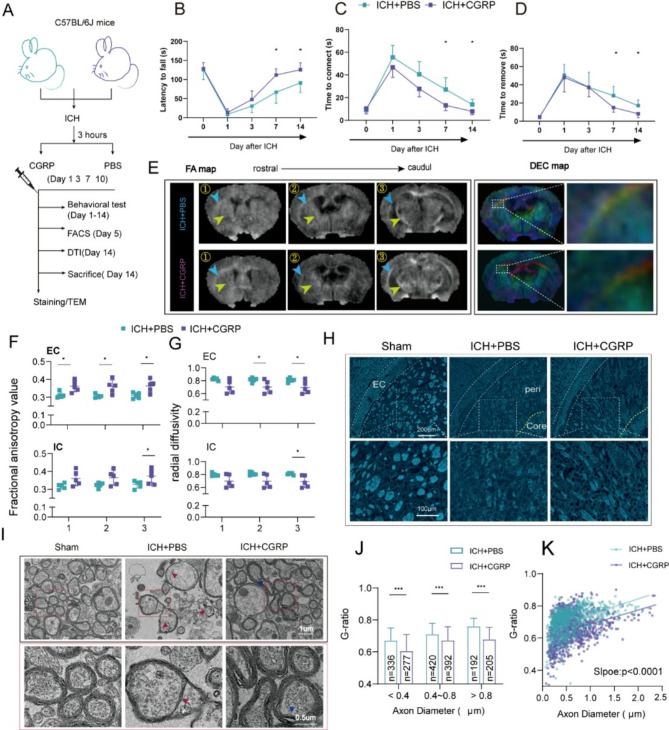
scRNA-seq revealed sustained accumulation of THBS1 + macrophages post-ICH, correlating with WM repair and neurological recovery. These macrophages exhibited pro-repair and remyelination gene signatures (e.g., Arg1, Tgm2). Bone marrow-derived myeloid cells, particularly skull-resident populations, served as the primary source of THBS1 + macrophages. CGRP, elevated in meninges and bone marrow post-ICH, drove macrophage polarization toward THBS + phenotypes. CGRP administration expanded THBS1-positive macrophages in the bone marrow and brain, improving WM integrity (reduced radial diffusivity, higher fractional anisotropy) and sensorimotor function. Ultrastructural analysis confirmed enhanced myelin regeneration (lower g-ratio) in CGRP-treated mice.
This study identifies a neuroimmune axis wherein CGRP promotes bone marrow-derived THBS1 + macrophages to facilitate WM repair and functional recovery after ICH. Targeting CGRP-macrophage signaling offers a therapeutic strategy to enhance recovery in hemorrhagic brain injury.
The online version contains supplementary material available at 10.1186/s12974-025-03483-7.
脑出血(ICH)引发涉及巨噬细胞的动态免疫反应。然而,这些细胞的功能异质性以及它们促进修复的机制仍不清楚。尽管神经肽降钙素基因相关肽(CGRP)已被证明在其他病理情况下可调节巨噬细胞表型,但其在脑出血恢复和白质修复中的作用仍未被探索。
对脑出血小鼠(GSE167593和GSE230414数据集)的CD45 +细胞进行单细胞RNA测序(scRNA-seq)以鉴定巨噬细胞亚群。流式细胞术、扩散张量成像(DTI)、行为分析和免疫荧光验证了巨噬细胞动态变化和白质(WM)完整性。骨髓和颅骨分析追踪了巨噬细胞的来源。通过对脑出血小鼠腹腔注射来测试降钙素基因相关肽(CGRP)的作用,并通过转录组学、超微结构成像和功能恢复来评估结果。
scRNA-seq显示脑出血后THBS1 +巨噬细胞持续积累,这与白质修复和神经功能恢复相关。这些巨噬细胞表现出促进修复和髓鞘再生的基因特征(例如,Arg1、Tgm2)。骨髓来源的髓样细胞,特别是颅骨驻留细胞群,是THBS1 +巨噬细胞的主要来源。脑出血后脑膜和骨髓中CGRP升高,促使巨噬细胞向THBS +表型极化。给予CGRP可增加骨髓和脑中THBS1阳性巨噬细胞,改善白质完整性(降低径向扩散率,提高各向异性分数)和感觉运动功能。超微结构分析证实CGRP治疗的小鼠中髓鞘再生增强(g比值降低)。
本研究确定了一种神经免疫轴,其中CGRP促进骨髓来源的THBS1 +巨噬细胞,以促进脑出血后白质修复和功能恢复。靶向CGRP-巨噬细胞信号通路提供了一种增强出血性脑损伤恢复的治疗策略。
在线版本包含可在10.1186/s12974-025-03483-7获取的补充材料。