de Vries Liv, Pfeiffer Keram, Trebels Björn, Adden Andrea K, Green Ken, Warrant Eric, Heinze Stanley
Lund Vision Group, Department of Biology, Lund UniversityLund, Sweden.
Department of Biology, Marburg UniversityMarburg, Germany.
Front Behav Neurosci. 2017 Sep 4;11:158. doi: 10.3389/fnbeh.2017.00158. eCollection 2017.
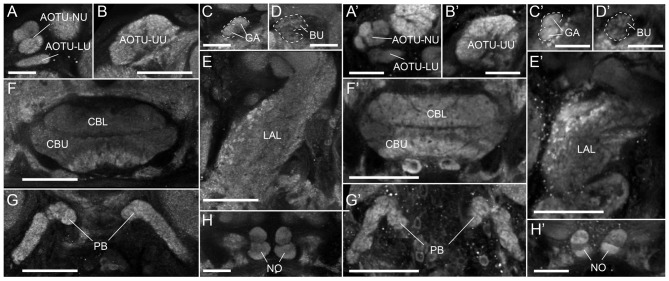
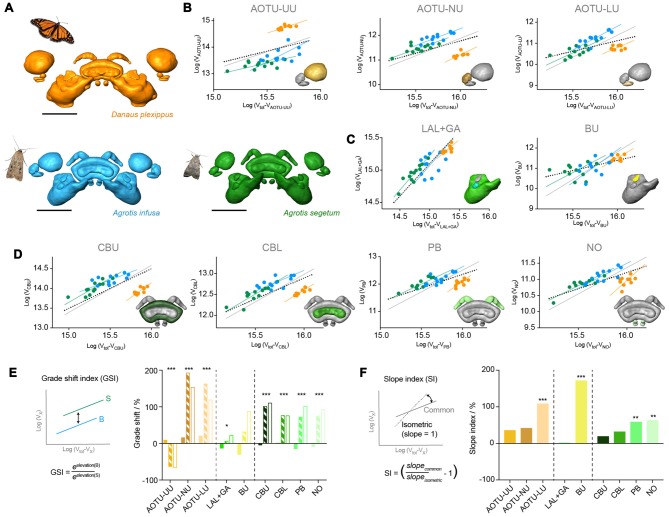
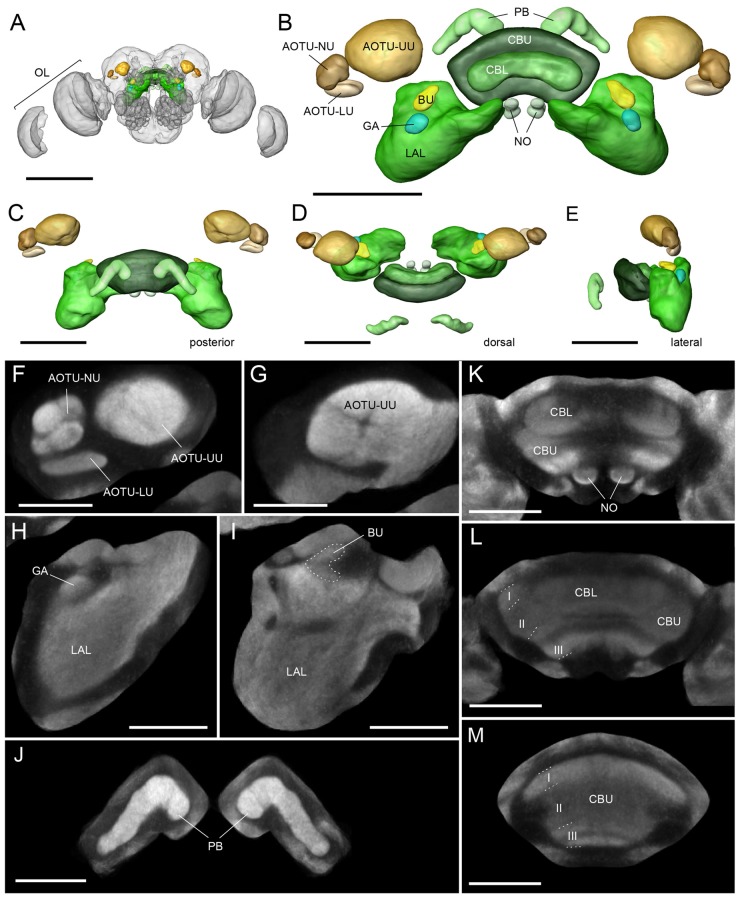
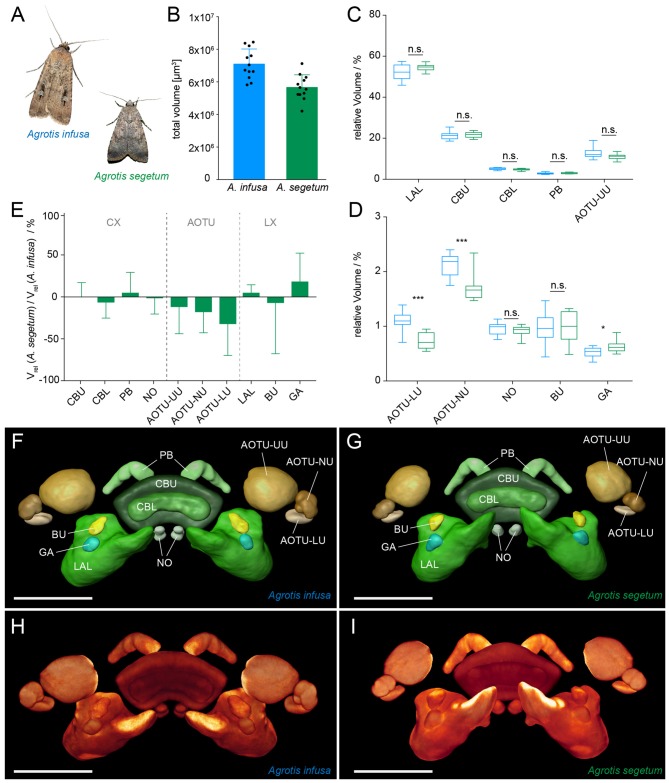
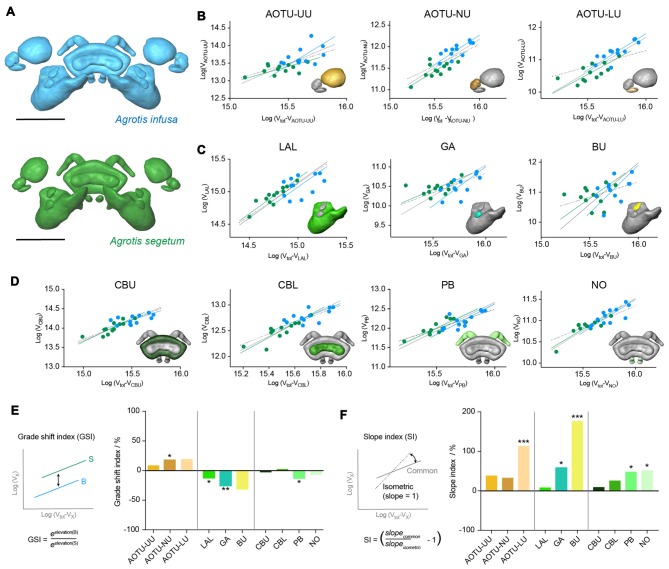
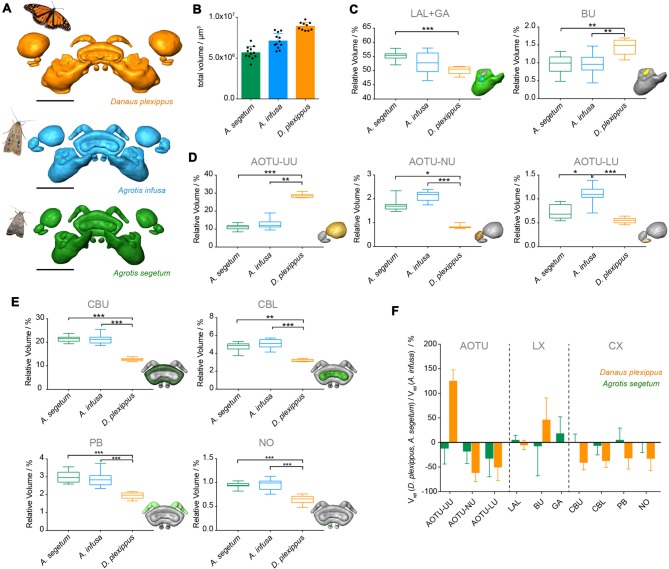
Brain structure and function are tightly correlated across all animals. While these relations are ultimately manifestations of differently wired neurons, many changes in neural circuit architecture lead to larger-scale alterations visible already at the level of brain regions. Locating such differences has served as a beacon for identifying brain areas that are strongly associated with the ecological needs of a species-thus guiding the way towards more detailed investigations of how brains underlie species-specific behaviors. Particularly in relation to sensory requirements, volume-differences in neural tissue between closely related species reflect evolutionary investments that correspond to sensory abilities. Likewise, memory-demands imposed by lifestyle have revealed similar adaptations in regions associated with learning. Whether this is also the case for species that differ in their navigational strategy is currently unknown. While the brain regions associated with navigational control in insects have been identified (central complex (CX), lateral complex (LX) and anterior optic tubercles (AOTU)), it remains unknown in what way evolutionary investments have been made to accommodate particularly demanding navigational strategies. We have thus generated average-shape atlases of navigation-related brain regions of a migratory and a non-migratory noctuid moth and used volumetric analysis to identify differences. We further compared the results to identical data from Monarch butterflies. Whereas we found differences in the size of the nodular unit of the AOTU, the LX and the protocerebral bridge (PB) between the two moths, these did not unambiguously reflect migratory behavior across all three species. We conclude that navigational strategy, at least in the case of long-distance migration in lepidopteran insects, is not easily deductible from overall neuropil anatomy. This suggests that the adaptations needed to ensure successful migratory behavior are found in the detailed wiring characteristics of the neural circuits underlying navigation-differences that are only accessible through detailed physiological and ultrastructural investigations. The presented results aid this task in two ways. First, the identified differences in neuropil volumes serve as promising initial targets for electrophysiology. Second, the new standard atlases provide an anatomical reference frame for embedding all functional data obtained from the brains of the Bogong and the Turnip moth.
在所有动物中,大脑结构与功能紧密相关。虽然这些关系最终是神经元不同连接方式的表现,但神经回路结构的许多变化会导致在脑区层面就已可见的更大规模的改变。定位这些差异一直是识别与物种生态需求密切相关的脑区的指引——从而为更详细地研究大脑如何支撑物种特异性行为指明方向。特别是在感觉需求方面,亲缘关系相近的物种之间神经组织的体积差异反映了与感觉能力相对应的进化投入。同样,生活方式带来的记忆需求也揭示了与学习相关脑区的类似适应性变化。目前尚不清楚在导航策略不同的物种中是否也是如此。虽然已经确定了昆虫中与导航控制相关的脑区(中央复合体(CX)、外侧复合体(LX)和前视结节(AOTU)),但尚不清楚为适应特别复杂的导航策略进行了怎样的进化投入。因此,我们生成了一种迁徙性夜蛾和一种非迁徙性夜蛾与导航相关脑区的平均形状图谱,并使用体积分析来识别差异。我们还将结果与帝王蝶的相同数据进行了比较。虽然我们发现两种夜蛾之间AOTU的结节单元、LX和原脑桥(PB)的大小存在差异,但这些差异并不能明确反映所有这三个物种的迁徙行为。我们得出结论,至少在鳞翅目昆虫的长途迁徙中,导航策略不易从整体神经纤维网解剖结构中推断出来。这表明确保成功迁徙行为所需的适应性变化存在于导航神经回路的详细连接特征中——这些差异只有通过详细的生理和超微结构研究才能揭示。本文呈现的结果在两个方面有助于这项任务。首先,确定的神经纤维网体积差异为电生理学提供了有前景的初始目标。其次,新的标准图谱为嵌入从柏氏夜蛾和黄地老虎大脑获得的所有功能数据提供了解剖学参考框架。