Key Laboratory of Nutrition and Metabolism, CAS Center for Excellence in Molecular Cell Sciences, Institute for Nutritional Sciences, Shanghai Institutes for Biological Sciences, Chinese Academy of Sciences, University of Chinese Academy of Sciences, 320 Yueyang Road, Shanghai 200031, China.
School of Life Science and Technology, Shanghai Tech University, Shanghai 200093, China.
Nutrients. 2017 Jul 26;9(8):805. doi: 10.3390/nu9080805.
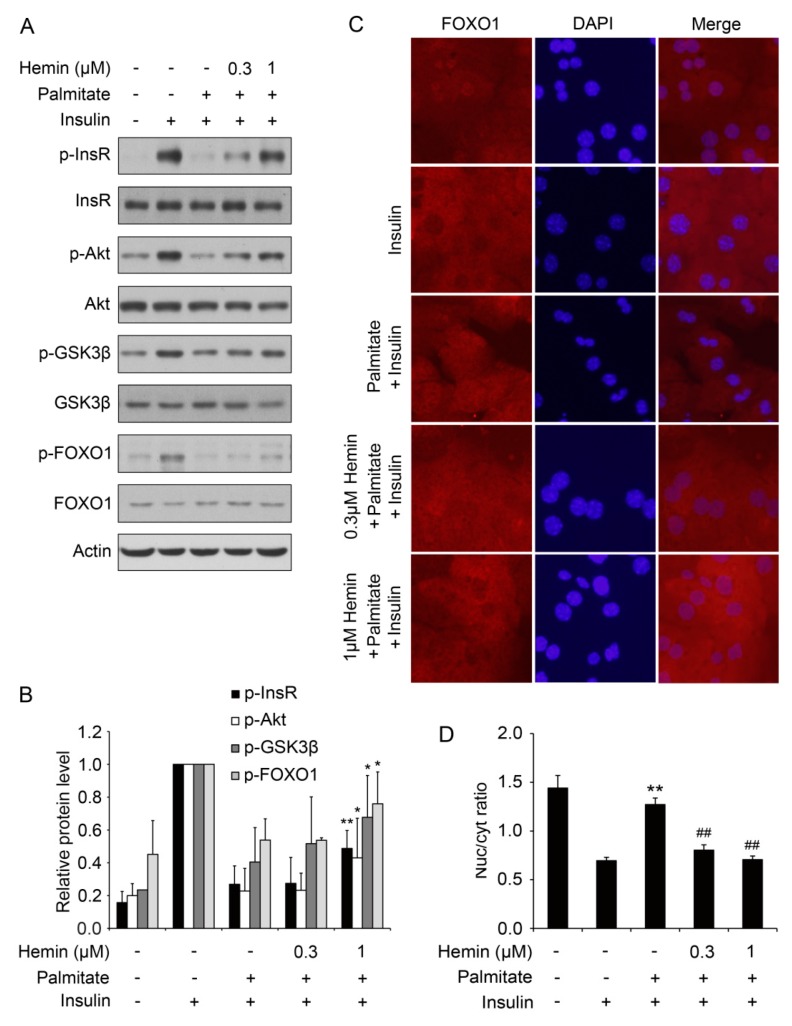
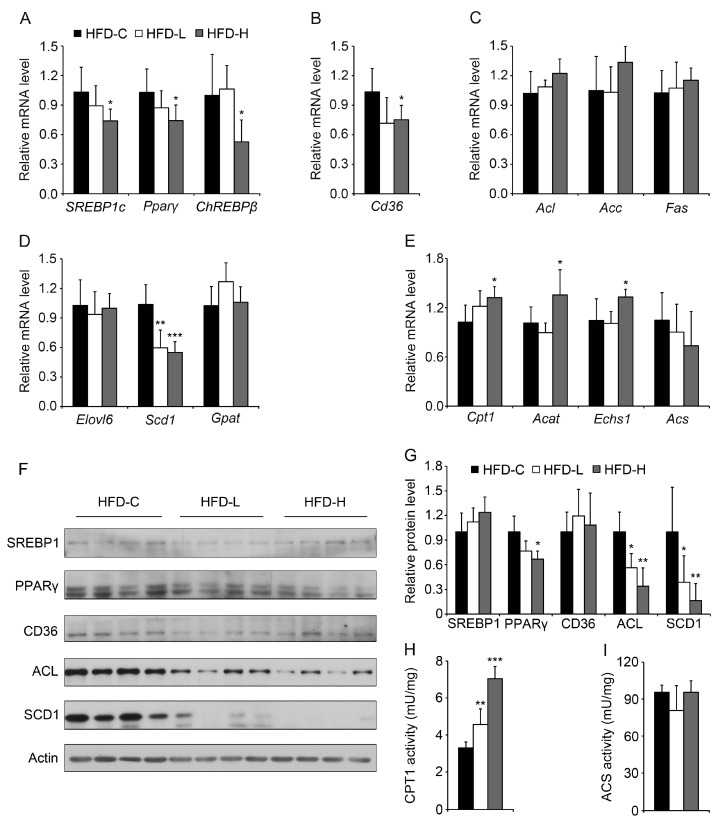
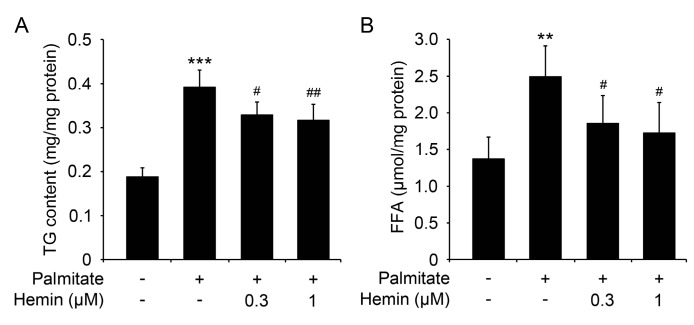
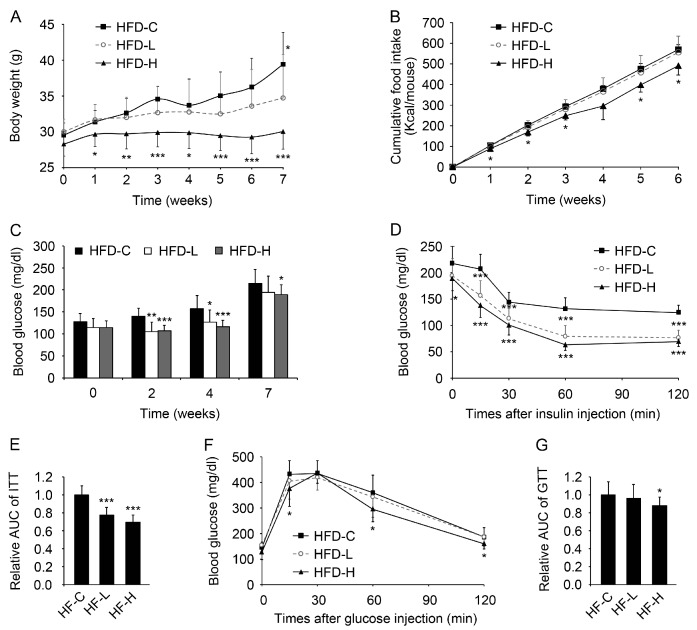
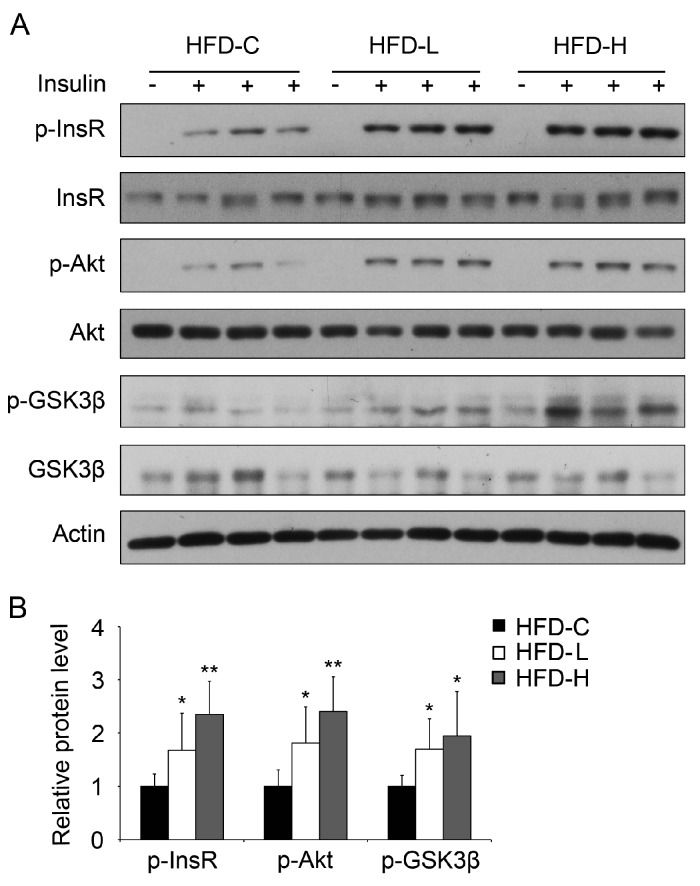
Hemin is a breakdown product of hemoglobin. It has been reported that the injection of hemin improves lipid metabolism and insulin sensitivity in various genetic models. However, the effect of hemin supplementation in food on lipid metabolism and insulin sensitivity is still unclear, and whether hemin directly affects cellular insulin sensitivity is yet to be elucidated. Here we show that hemin enhances insulin-induced phosphorylation of insulin receptors, Akt, Gsk3β, FoxO1 and cytoplasmic translocation of FoxO1 in cultured primary hepatocytes under insulin-resistant conditions. Furthermore, hemin diminishes the accumulation of triglyceride and increases in free fatty acid content in primary hepatocytes induced by palmitate. Oral administration of hemin decreases body weight, energy intake, blood glucose and triglyceride levels, and improves insulin and glucose tolerance as well as hepatic insulin signaling and hepatic steatosis in male mice fed a high-fat diet. In addition, hemin treatment decreases the mRNA and protein levels of some hepatic genes involved in lipogenic regulation, fatty acid synthesis and storage, and increases the mRNA level and enzyme activity of CPT1 involved in fatty acid oxidation. These data demonstrate that hemin can improve lipid metabolism and insulin sensitivity in both cultured hepatocytes and mice fed a high-fat diet, and show the potential beneficial effects of hemin from food on lipid and glucose metabolism.
血红素是血红蛋白的降解产物。据报道,血红素的注射可以改善各种遗传模型中的脂质代谢和胰岛素敏感性。然而,血红素补充食物对脂质代谢和胰岛素敏感性的影响尚不清楚,血红素是否直接影响细胞胰岛素敏感性也尚未阐明。在这里,我们发现在胰岛素抵抗条件下,血红素增强了培养的原代肝细胞中胰岛素诱导的胰岛素受体、Akt、Gsk3β、FoxO1 的磷酸化和 FoxO1 的细胞质易位。此外,血红素减少了由棕榈酸诱导的原代肝细胞中甘油三酯的积累和游离脂肪酸含量的增加。血红素的口服给药降低了高脂肪饮食喂养的雄性小鼠的体重、能量摄入、血糖和甘油三酯水平,并改善了胰岛素和葡萄糖耐量以及肝胰岛素信号和肝脂肪变性。此外,血红素处理降低了一些与脂质生成调节、脂肪酸合成和储存相关的肝脏基因的 mRNA 和蛋白质水平,并增加了参与脂肪酸氧化的 CPT1 的 mRNA 水平和酶活性。这些数据表明,血红素可以改善培养的肝细胞和高脂肪饮食喂养的小鼠的脂质代谢和胰岛素敏感性,并显示食物中血红素对脂质和葡萄糖代谢的潜在有益作用。