Department of Obstetrics and Gynecology, Ren Ji Hospital, School of Medicine, Shanghai Jiao Tong University, Shanghai, China.
Shanghai Key Laboratory of Gynecologic Oncology, Ren Ji Hospital, School of Medicine, Shanghai Jiao Tong University, Shanghai, China.
Cell Death Dis. 2017 Sep 21;8(9):e3054. doi: 10.1038/cddis.2017.419.
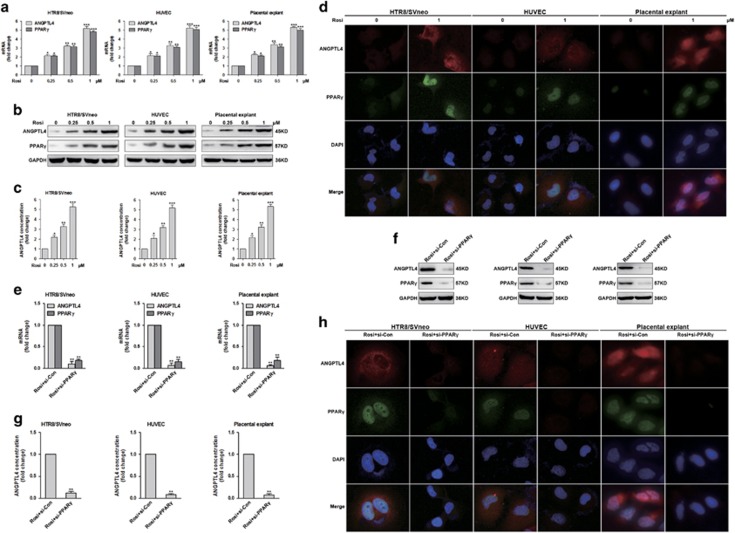
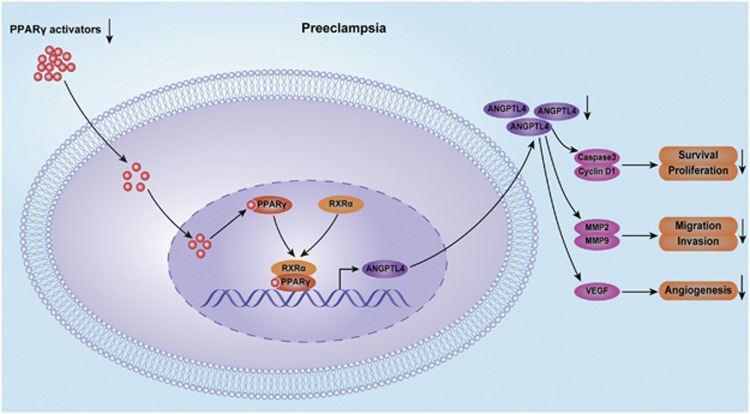
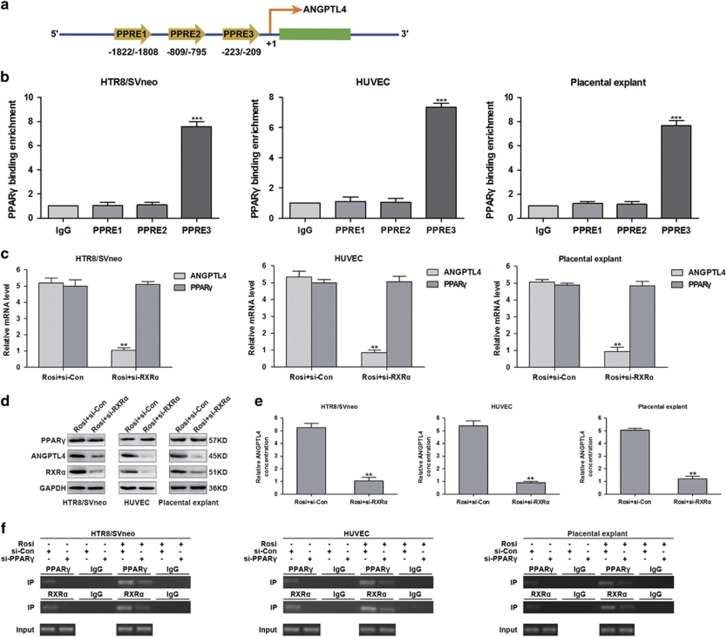
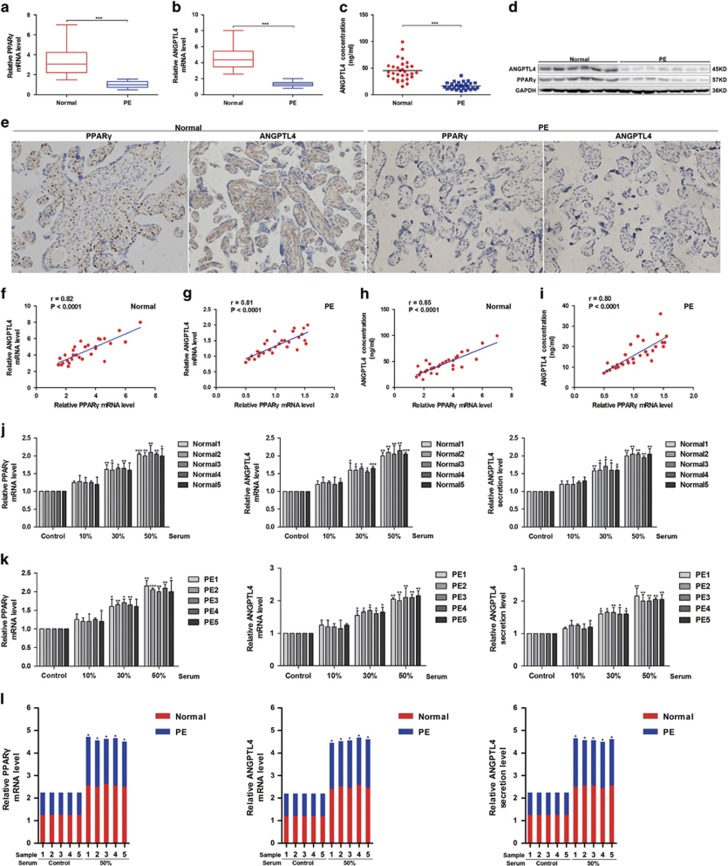
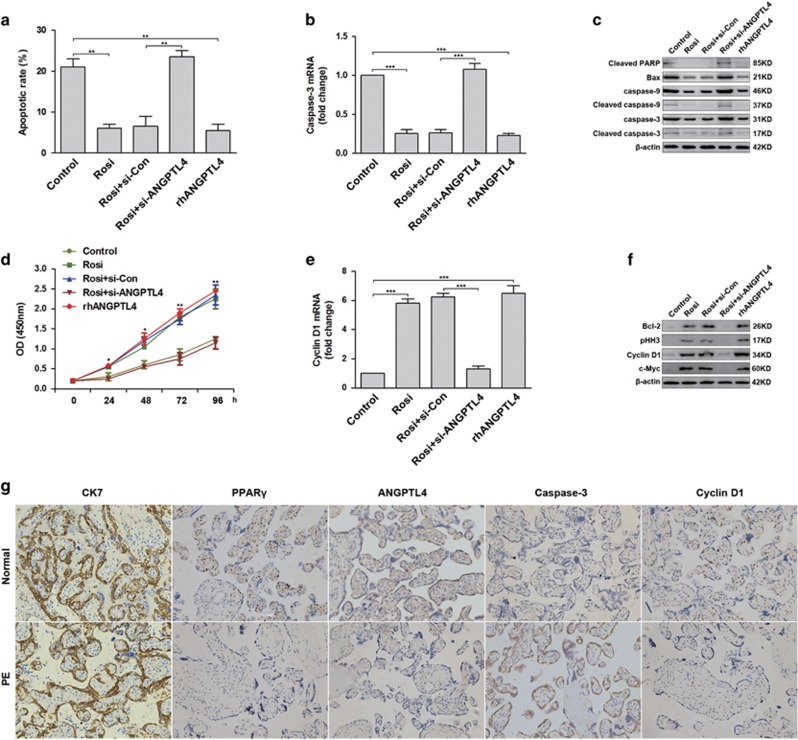
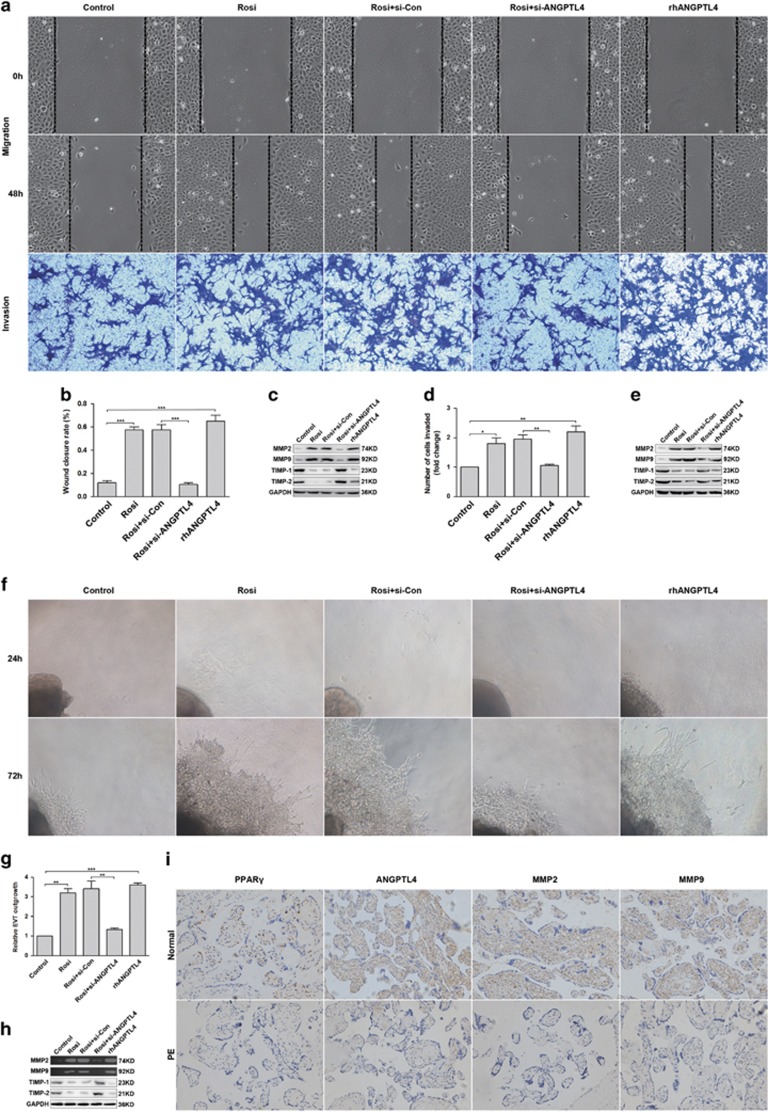
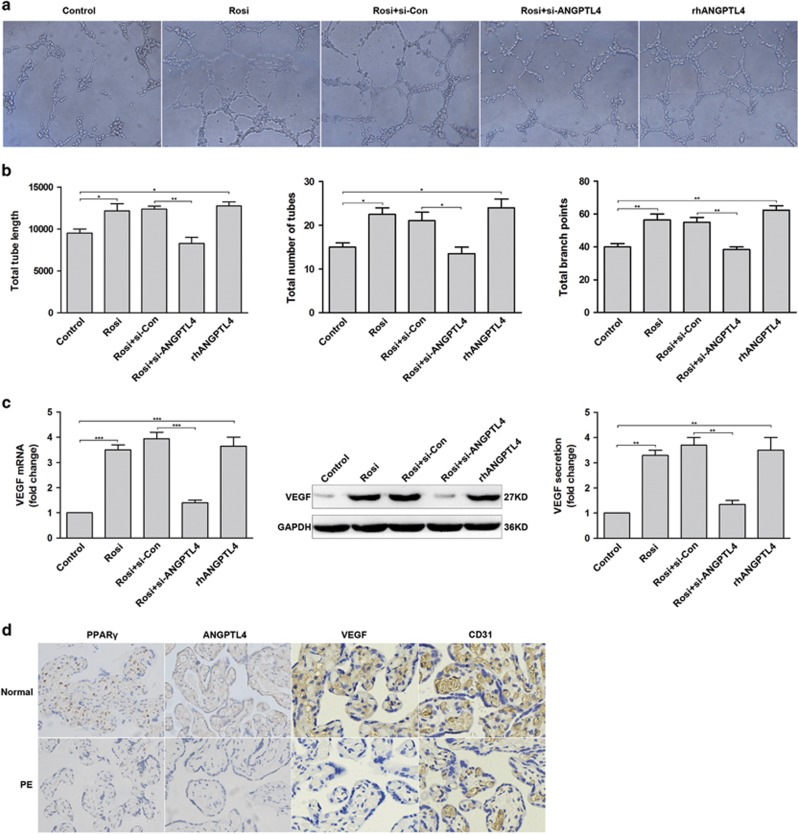
Peroxisome proliferator-activated receptor γ (PPARγ) has been shown to be a therapeutic target for preeclampsia (PE). Angiopoietin-like protein 4 (ANGPTL4) is a multifunctional secretory protein involved in regulating lipid metabolism and angiogenesis in various tissues. However, the expression of PPARγ and ANGPTL4 and their interaction in PE remain elusive. Here we showed that PPARγ agonist rosiglitazone upregulated the expression and secretion of ANGPTL4 in a dose-dependent manner in HTR8/SVneo cells, human umbilical vein endothelial cells (HUVECs) and placental explants. More importantly, we confirmed that the PPARγ/retinoid X receptor α heterodimer specifically binds to the ANGPTL4 promoter region and enhances its transcriptional activity. In addition, the levels of ANGPTL4 and PPARγ activators in the serum and their expression in placental tissues were significantly reduced in preeclamptic patients compared with normal pregnant subjects. Furthermore, functional studies demonstrated that ANGPTL4 mediates the facilitative effects of the PPARγ agonist on the survival, proliferation, migration and invasion of HTR8/SVneo cells, placental explants outgrowth and angiogenesis in HUVECs. Taken together, our results suggest that ANGPTL4 is a potential target gene for PPARγ and mediates the protective role of PPARγ activators in the pathogenesis of PE.
过氧化物酶体增殖物激活受体 γ(PPARγ)已被证明是子痫前期(PE)的治疗靶点。血管生成素样蛋白 4(ANGPTL4)是一种多功能分泌蛋白,参与调节各种组织中的脂质代谢和血管生成。然而,PPARγ和 ANGPTL4 的表达及其在 PE 中的相互作用仍不清楚。在这里,我们表明,PPARγ 激动剂罗格列酮以剂量依赖的方式在上皮细胞(HTR8/SVneo 细胞)、人脐静脉内皮细胞(HUVECs)和胎盘组织中上调 ANGPTL4 的表达和分泌。更重要的是,我们证实 PPARγ/视黄酸受体 α 异二聚体特异性结合 ANGPTL4 启动子区域并增强其转录活性。此外,与正常妊娠受试者相比,子痫前期患者血清中的 ANGPTL4 和 PPARγ 激动剂水平及其在胎盘组织中的表达均显著降低。此外,功能研究表明,ANGPTL4 介导了 PPARγ 激动剂对 HTR8/SVneo 细胞的存活、增殖、迁移和侵袭、胎盘组织外植体生长和 HUVECs 血管生成的促进作用。总之,我们的结果表明,ANGPTL4 是 PPARγ 的潜在靶基因,并介导 PPARγ 激动剂在 PE 发病机制中的保护作用。