Department of Gynecology and Obstetrics, University Hospital, LMU Munich, Marchioninistr. 15, 81377 Munich, Germany.
Department of Gynecology and Obstetrics, University Hospital Augsburg, 86156 Augsburg, Germany.
Int J Mol Sci. 2021 Nov 18;22(22):12469. doi: 10.3390/ijms222212469.
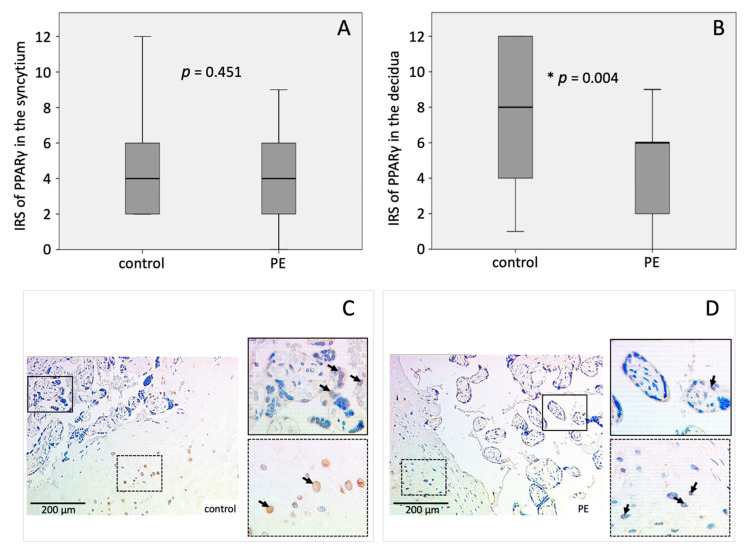
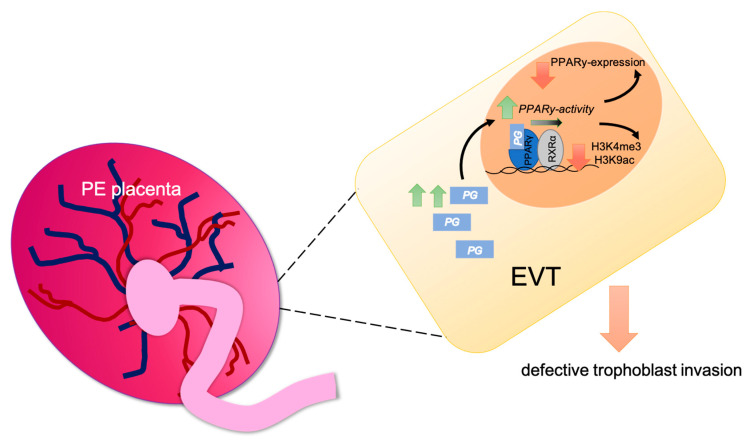
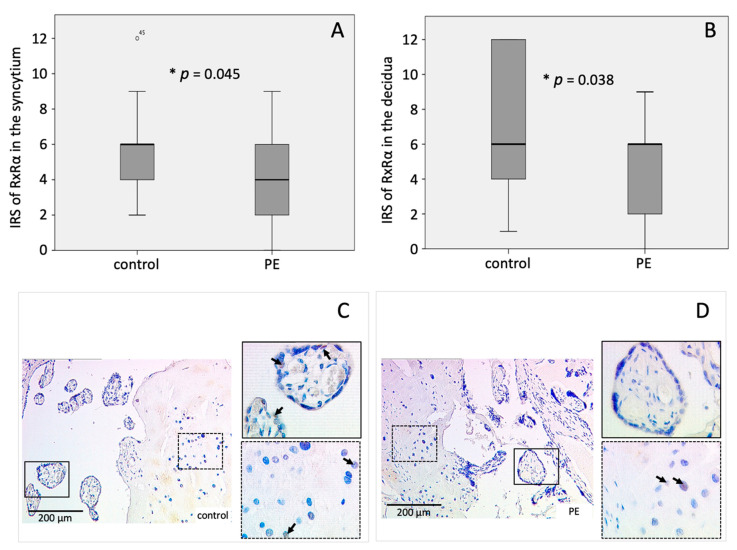
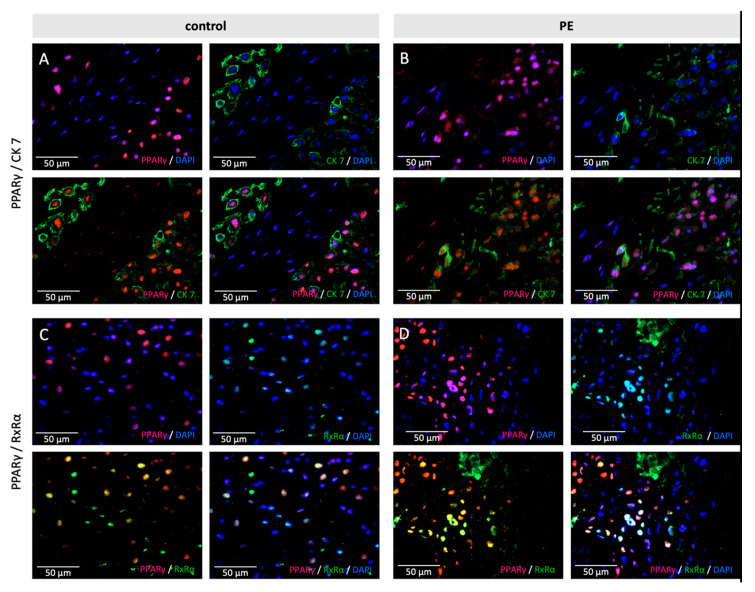
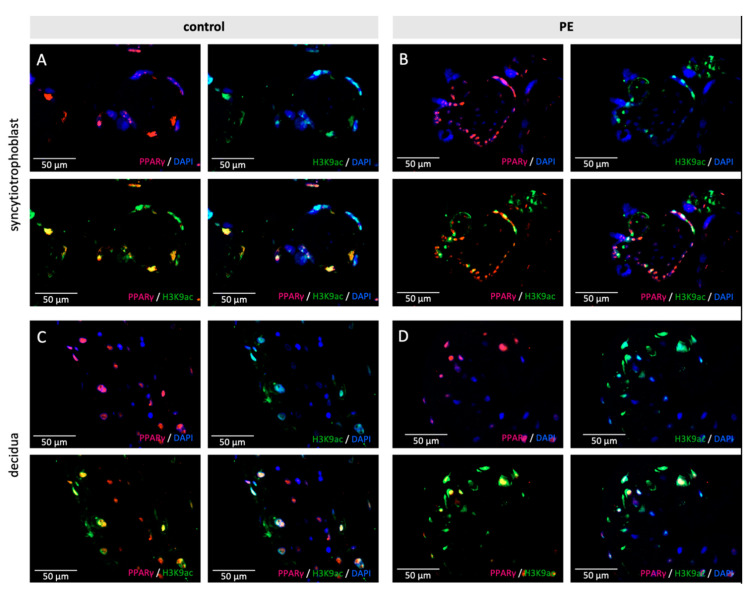
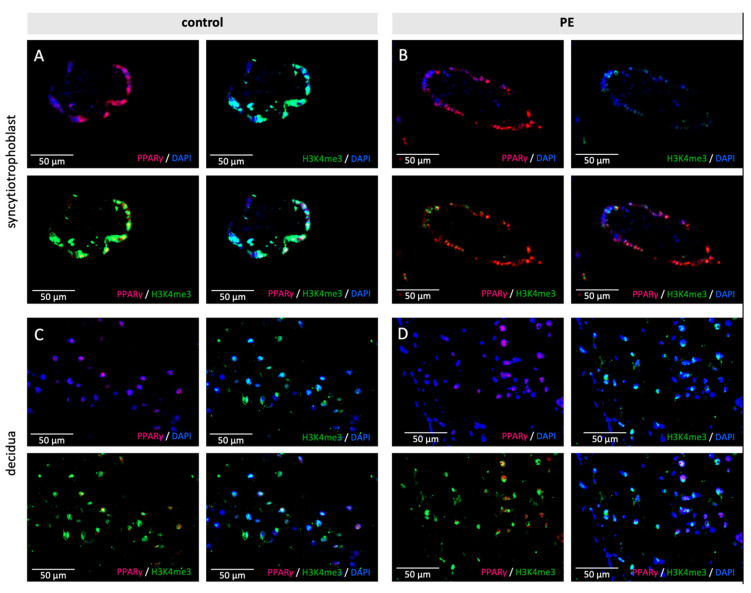
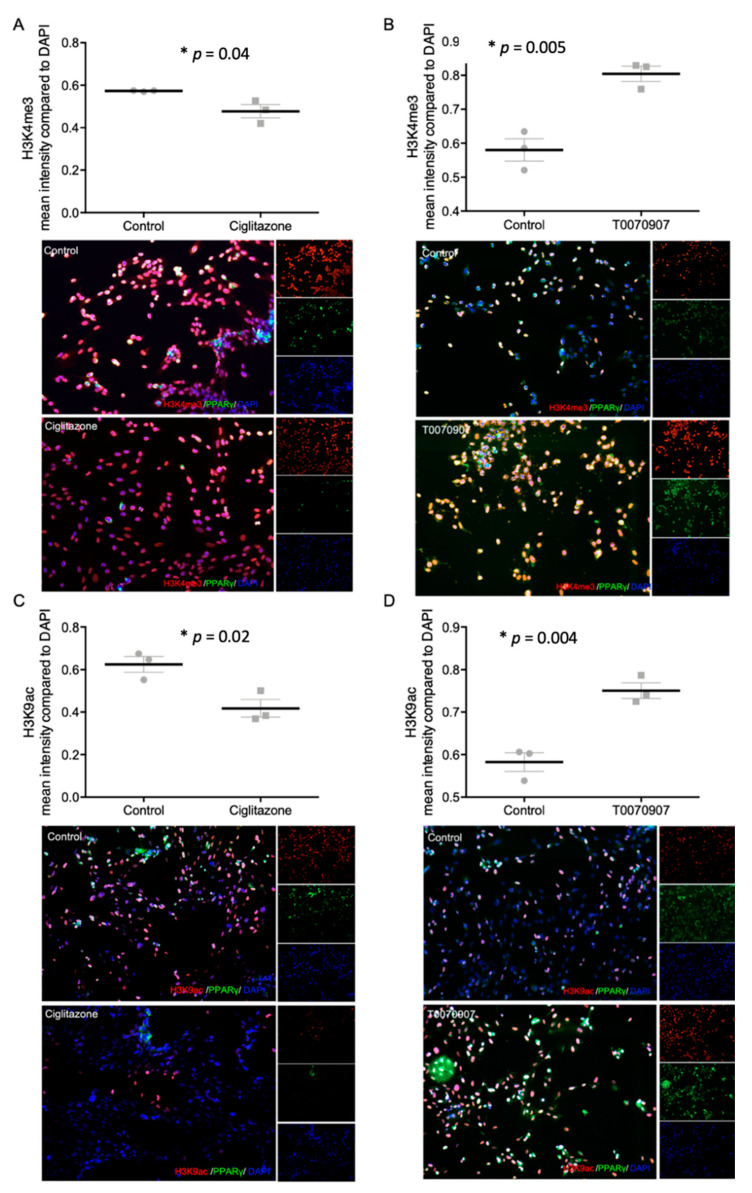
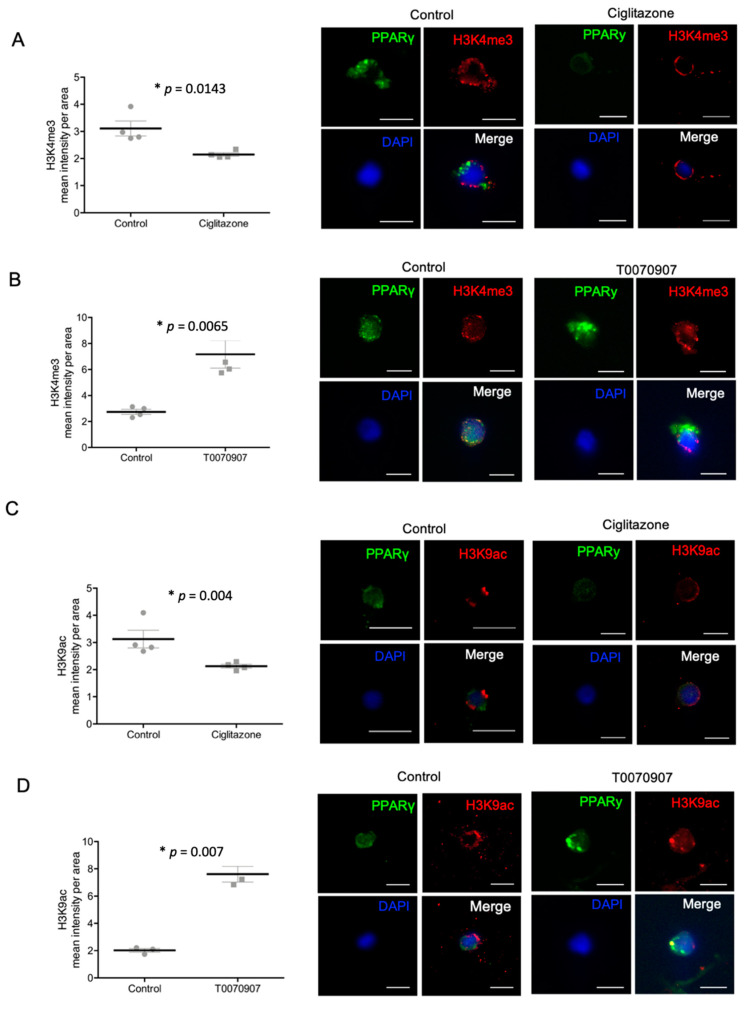
The aim of this study was to analyze the expression of peroxisome proliferator-activated receptor γ (PPARγ) and retinoid X receptor α (RxRα), a binding heterodimer playing a pivotal role in the successful trophoblast invasion, in the placental tissue of preeclamptic patients. Furthermore, we aimed to characterize a possible interaction between PPARγ and H3K4me3 (trimethylated lysine 4 of the histone H3), respectively H3K9ac (acetylated lysine 9 of the histone H3), to illuminate the role of histone modifications in a defective trophoblast invasion in preeclampsia (PE). Therefore, the expression of PPARγ and RxRα was analyzed in 26 PE and 25 control placentas by immunohistochemical peroxidase staining, as well as the co-expression with H3K4me3 and H3K9ac by double immunofluorescence staining. Further, the effect of a specific PPARγ-agonist (Ciglitazone) and PPARγ-antagonist (T0070907) on the histone modifications H3K9ac and H3K4me3 was analyzed in vitro. In PE placentas, we found a reduced expression of PPARγ and RxRα and a reduced co-expression with H3K4me3 and H3K9ac in the extravillous trophoblast (EVT). Furthermore, with the PPARγ-antagonist treated human villous trophoblast (HVT) cells and primary isolated EVT cells showed higher levels of the histone modification proteins whereas treatment with the PPARγ-agonist reduced respective histone modifications. Our results show that the stimulation of PPARγ-activity leads to a reduction of H3K4me3 and H3K9ac in trophoblast cells, but paradoxically decreases the nuclear PPARγ expression. As the importance of PPARγ, being involved in a successful trophoblast invasion has already been investigated, our results reveal a pathophysiologic connection between PPARγ and the epigenetic modulation via H3K4me3 and H3K9ac in PE.
这项研究的目的是分析过氧化物酶体增殖物激活受体 γ (PPARγ) 和视黄酸 X 受体 α (RxRα) 在子痫前期患者胎盘组织中的表达。PPARγ 和 RxRα 是一种结合异二聚体,在成功的滋养细胞侵袭中起着关键作用。此外,我们旨在描述 PPARγ 与 H3K4me3(组蛋白 H3 的赖氨酸 4 三甲基化)和 H3K9ac(组蛋白 H3 的赖氨酸 9 乙酰化)之间的可能相互作用,以阐明组蛋白修饰在子痫前期(PE)中滋养细胞侵袭缺陷中的作用。因此,通过免疫组织化学过氧化物酶染色分析了 26 例 PE 和 25 例对照胎盘组织中 PPARγ 和 RxRα 的表达,以及通过双重免疫荧光染色分析了与 H3K4me3 和 H3K9ac 的共表达。此外,还在体外分析了特定的 PPARγ 激动剂(Ciglitazone)和 PPARγ 拮抗剂(T0070907)对组蛋白修饰 H3K9ac 和 H3K4me3 的影响。在 PE 胎盘组织中,我们发现绒毛外滋养细胞(EVT)中 PPARγ 和 RxRα 的表达减少,与 H3K4me3 和 H3K9ac 的共表达减少。此外,用 PPARγ 拮抗剂处理人绒毛滋养细胞(HVT)细胞和原代分离的 EVT 细胞显示出更高水平的组蛋白修饰蛋白,而用 PPARγ 激动剂处理则降低了相应的组蛋白修饰。我们的结果表明,PPARγ 活性的刺激导致滋养细胞中 H3K4me3 和 H3K9ac 的减少,但矛盾的是降低了核 PPARγ 的表达。由于 PPARγ 参与成功的滋养细胞侵袭的重要性已经得到了研究,我们的结果揭示了 PPARγ 与 PE 中通过 H3K4me3 和 H3K9ac 的表观遗传调节之间的病理生理联系。