Yan Rui, Woith Heiko, Wang Rongjiang, Wang Guangcai
State Key Laboratory of Biogeology and Environmental Geology & MOE Key Laboratory of Groundwater Circulation and Environmental Evolution, China University of Geosciences, Beijing, 100083, China.
School of Water Resources and Environment, China University of Geosciences, Beijing, 100083, China.
Sci Rep. 2017 Sep 21;7(1):12120. doi: 10.1038/s41598-017-12441-0.
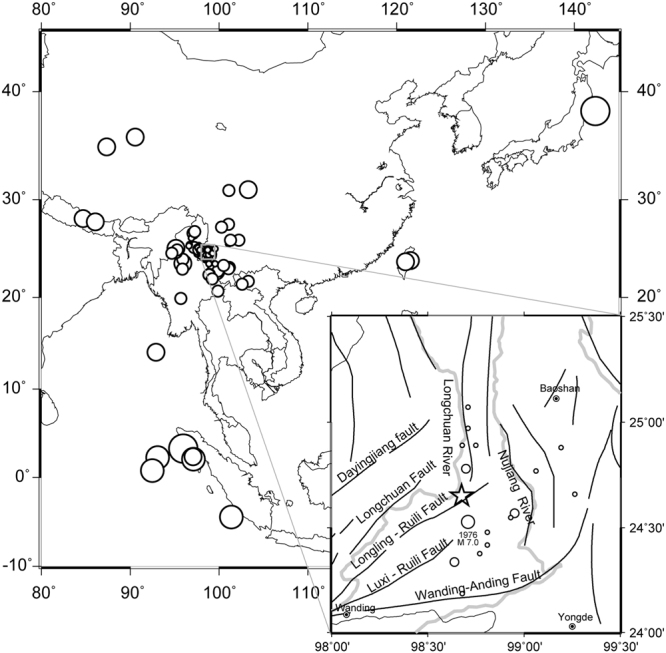
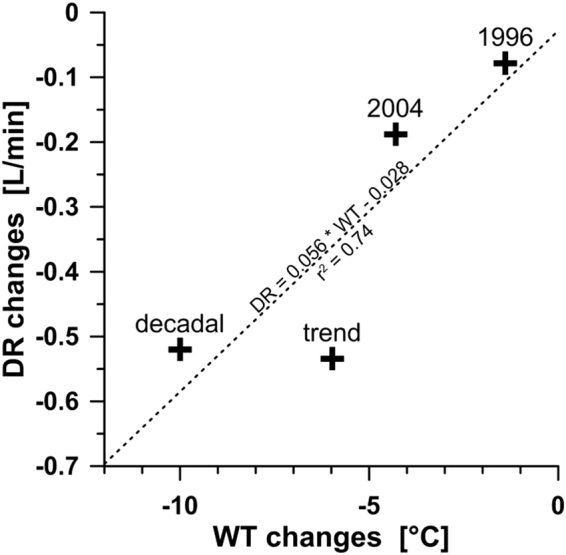
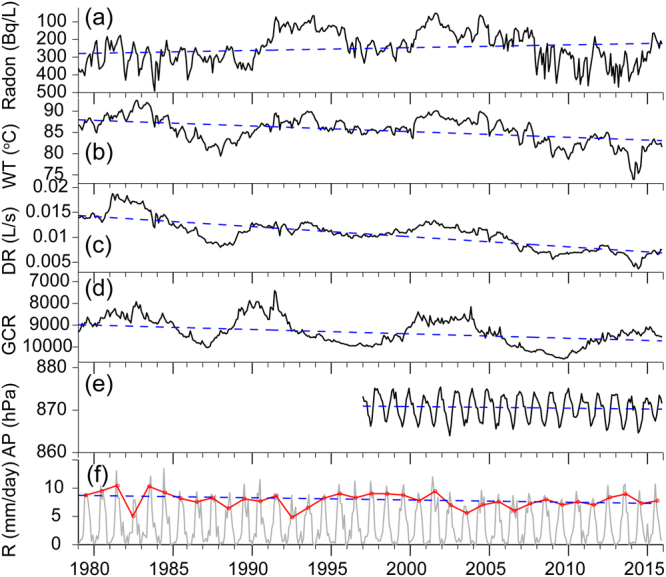
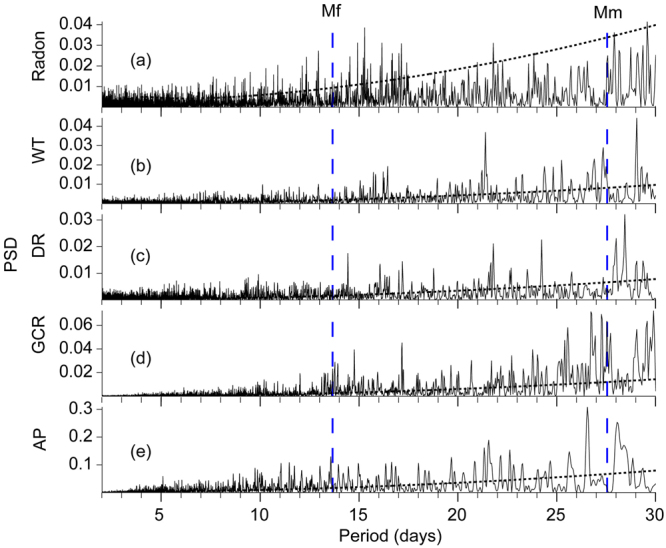
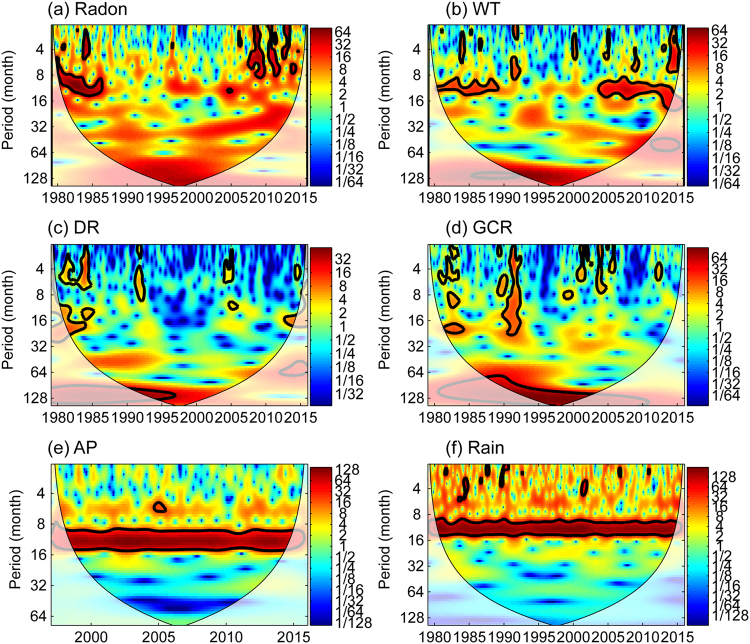
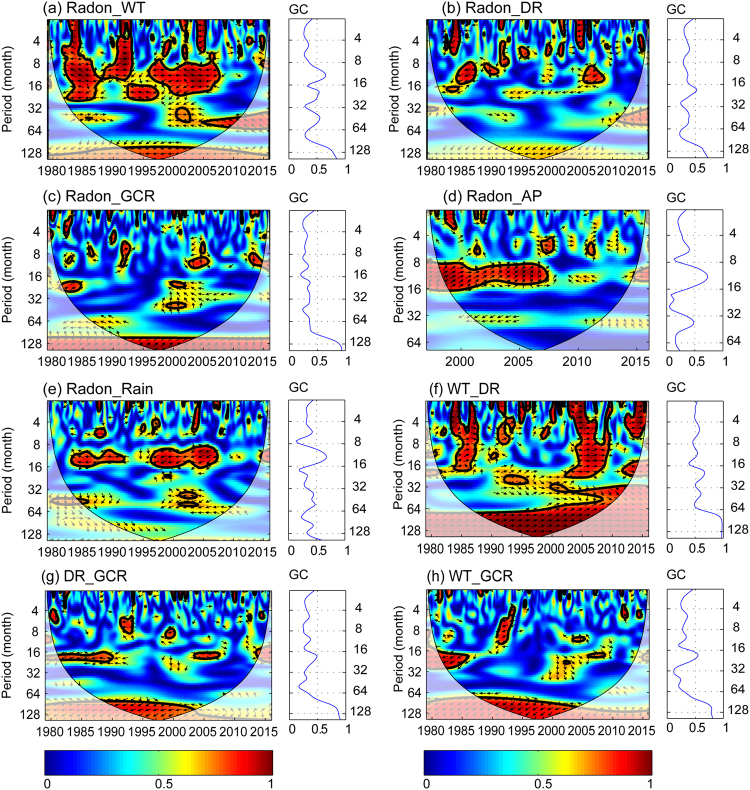
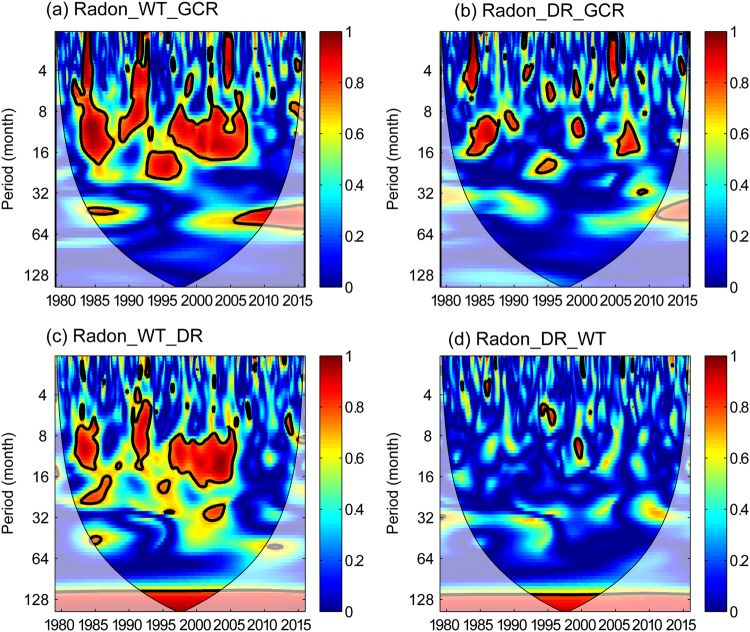
A high-fidelity record covering nearly 40 years of water-dissolved radon from the hot spring site of BangLazhang (BLZ), Southwestern China is presented to study multi-year periodicities of radon. Ancillary observational data, i.e., water temperature, spring discharge rate, barometric pressure, combined with regional rainfall, galactic cosmic rays (GCR flux is modulated by solar wind and thus a proxy for solar activity) and regional seismicity from the same period are considered to identify potentially influencing factors controlling the changes in radon. Variations in radon concentration and ancillary observational data are studied using continuous Wavelet Power Spectrum (WPS), Wavelet Coherence (WTC), and Partial Wavelet Coherence (PWC). The results show that the long-period radon concentration is characterized by a quasi-decadal (8-11 years) cycle, matching well with the concurrent periodicity in water temperature, spring discharge rates and GCR. PWCs of radon, discharge rate and water temperature suggest that water temperature variations explain most of the coherent variability of radon and the discharge rate. We tentatively conclude that radon variations are mainly explained by variations in water temperature and spring discharge, which are modified and modulated by earthquakes and quasi-decadal variations of an unidentified process. The influence of solar activity on the decadal periodicity is discussed.
本文展示了一份高保真记录,涵盖了中国西南部邦腊掌(BLZ)温泉场地近40年的水溶氡含量,以研究氡的多年周期性。同时考虑了辅助观测数据,即水温、泉水流量、气压,以及同期的区域降雨量、银河宇宙射线(GCR通量受太阳风调制,因此可作为太阳活动的代理指标)和区域地震活动,以确定控制氡变化的潜在影响因素。利用连续小波功率谱(WPS)、小波相干性(WTC)和偏小波相干性(PWC)研究了氡浓度和辅助观测数据的变化。结果表明,长期氡浓度具有准十年(8 - 11年)周期,与同期水温、泉水流量和GCR的周期性匹配良好。氡、流量和水温的PWC表明,水温变化解释了氡和流量的大部分相干变化。我们初步得出结论,氡的变化主要由水温和泉水流量的变化解释,这些变化受到地震和一个未确定过程的准十年变化的修正和调制。本文还讨论了太阳活动对十年周期的影响。