Division of Vascular Surgery, Changhai Hospital, Shanghai, China.
Military Institute of Vascular Disease, The First Affiliated Hospital of the Second Military Medical University, Shanghai, China.
J Am Heart Assoc. 2017 Sep 22;6(9):e004649. doi: 10.1161/JAHA.116.004649.
Retrograde type A aortic dissection (RTAD) is a potentially lethal complication after thoracic endovascular aortic repair (TEVAR). However, data are limited regarding the development of RTAD post-TEVAR. This systematic review aims to define the incidence, mortality, and potential risk factors of RTAD post-TEVAR.
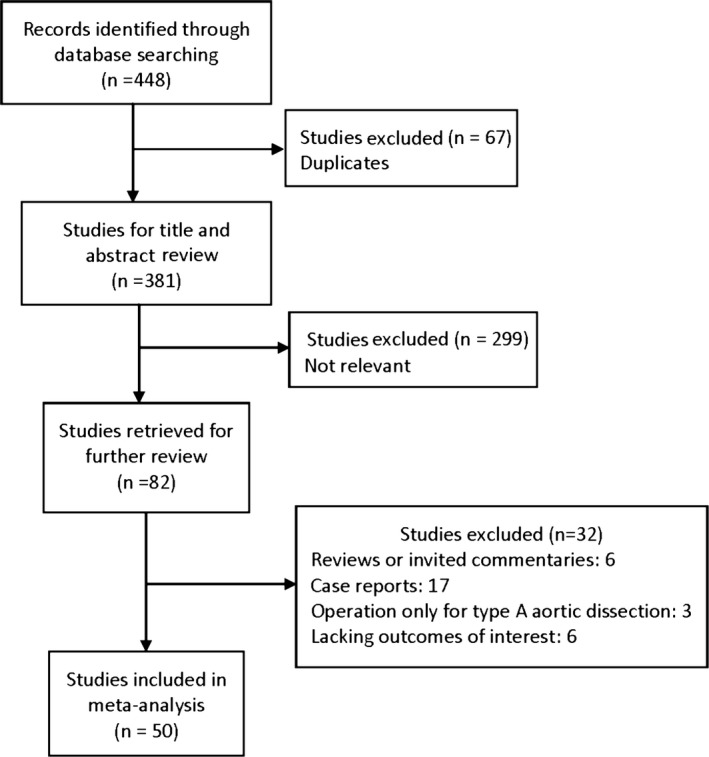
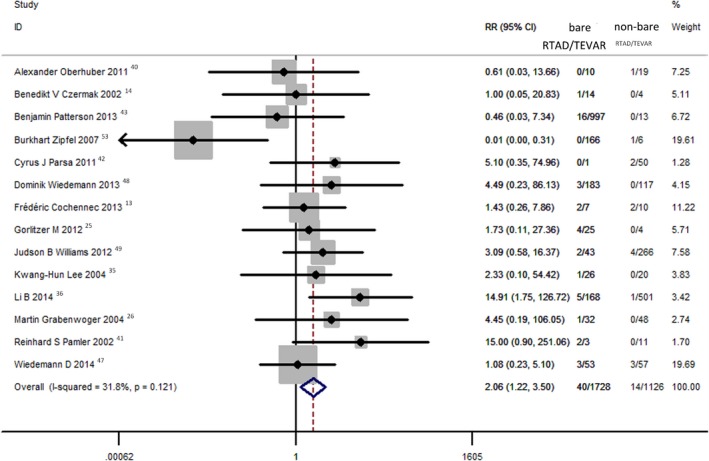
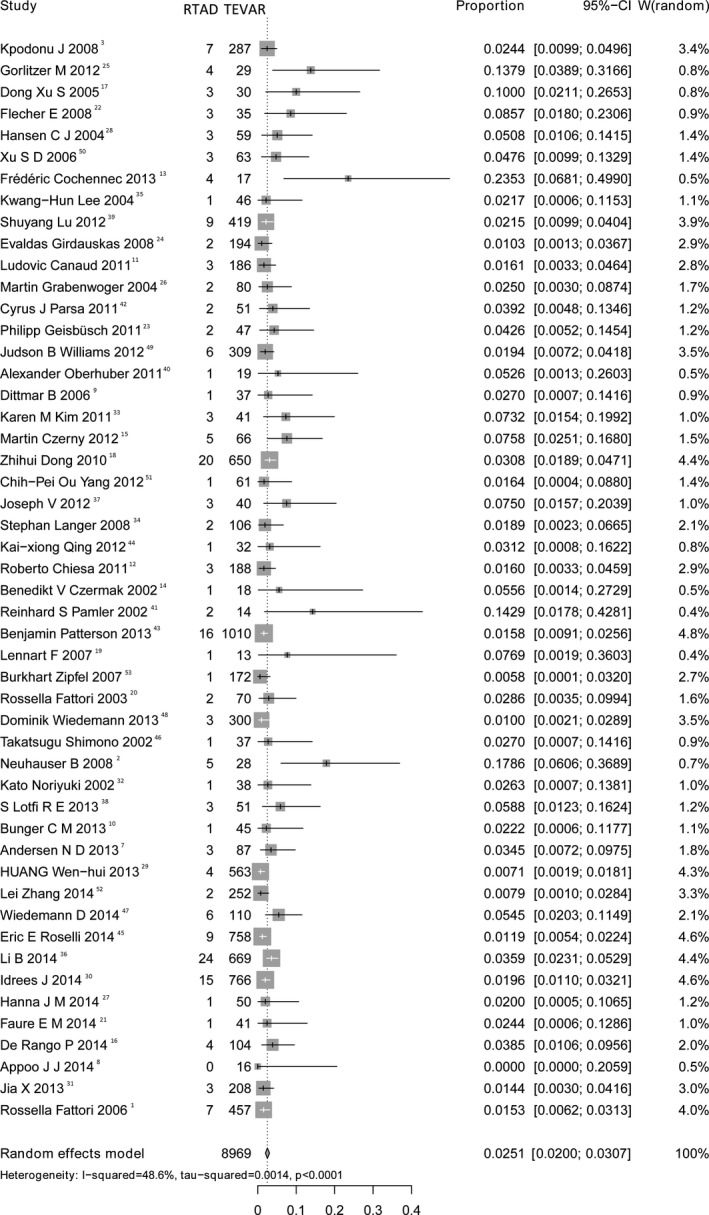
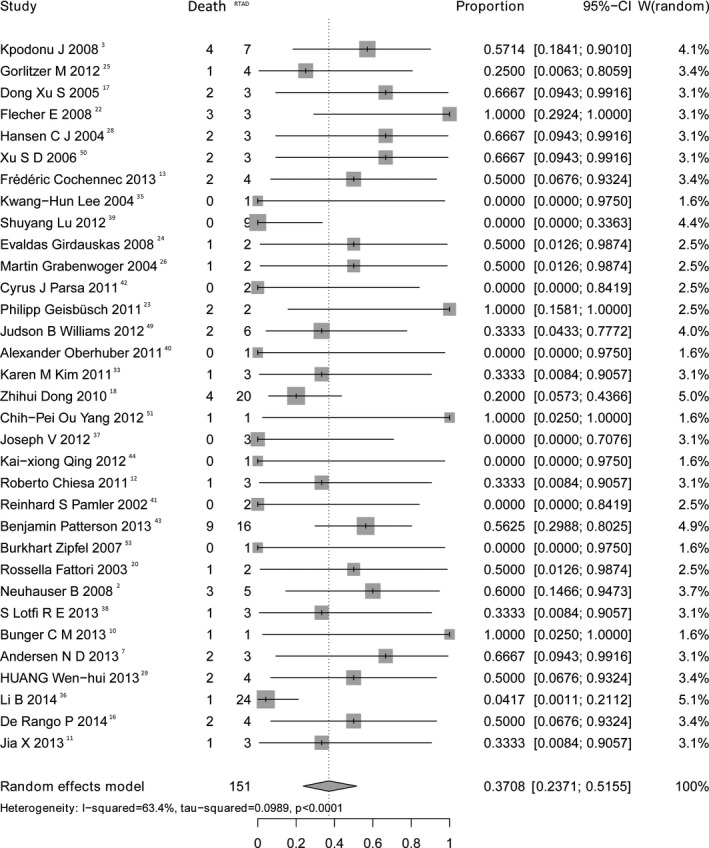
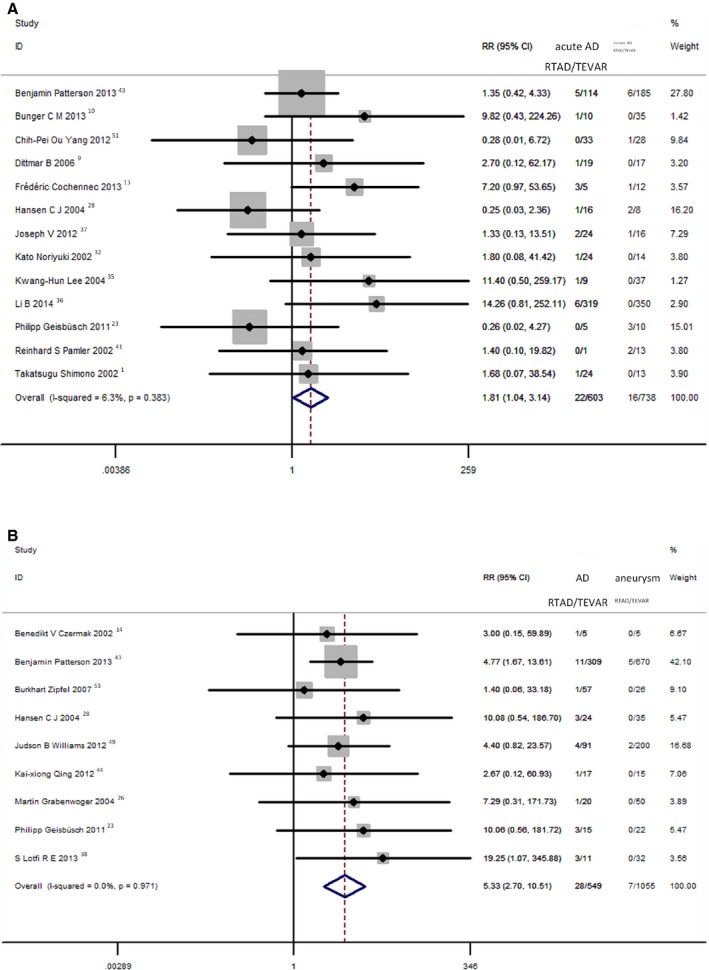
Multiple electronic searches were performed. Fifty publications with a total of 8969 patients were analyzed. Pooled estimates for incidence and mortality of RTAD were 2.5% (95% confidence interval [CI], 2.0-3.1) and 37.1% (95% CI, 23.7-51.6), respectively. Metaregression analysis evidenced that RTAD rate was associated with hypertension (=0.043), history of vascular surgery (=0.042), and American Surgical Association (=0.044). The relative risk of RTAD was 1.81 (95% CI, 1.04-3.14) for acute dissection (relative to chronic dissection) and 5.33 (95% CI, 2.70-10.51) for aortic dissection (relative to a degenerative aneurysm). Incidence of RTAD was significantly different in patients with proximal bare stent and nonbare stent endografts (relative risk [RR]=2.06; 95% CI, 1.22-3.50). RTAD occurrence rate in zone 0 was higher than other landing zones.
The pooled RTAD rate after TEVAR was calculated at 2.5% with a high mortality rate (37.1%). Incidence of RTAD is significantly more frequent in patients treated for dissection than those with an aneurysm (especially for acute dissection), and when the proximal bare stent was used. Rate of RTAD after TEVAR varied significantly according to the proximal Ishimaru landing zone. The more-experienced centers tend to have lower RTAD incidences.
逆行性 A 型主动脉夹层(RTAD)是胸主动脉腔内修复术(TEVAR)后潜在的致命并发症。然而,关于 TEVAR 后 RTAD 的发展的数据有限。本系统评价旨在确定 TEVAR 后 RTAD 的发生率、死亡率和潜在的危险因素。
进行了多次电子检索。分析了 50 篇文献,共 8969 例患者。RTAD 的发生率和死亡率的合并估计值分别为 2.5%(95%置信区间[CI],2.0-3.1)和 37.1%(95%CI,23.7-51.6)。荟萃回归分析表明,RTAD 发生率与高血压(=0.043)、血管外科史(=0.042)和美国外科学会(=0.044)有关。急性夹层(相对于慢性夹层)的 RTAD 相对风险为 1.81(95%CI,1.04-3.14),主动脉夹层(相对于退行性动脉瘤)的相对风险为 5.33(95%CI,2.70-10.51)。近端裸支架和非裸支架内支架的 RTAD 发生率明显不同(相对风险[RR]=2.06;95%CI,1.22-3.50)。Zone0 的 RTAD 发生率高于其他着陆区。
TEVAR 后 RTAD 的总发生率为 2.5%,死亡率较高(37.1%)。与动脉瘤患者相比,接受夹层治疗的患者 RTAD 发生率明显更高(尤其是急性夹层),且近端使用裸支架时发生率更高。TEVAR 后 RTAD 的发生率根据近端 Ishimaru 着陆区而显著不同。经验丰富的中心 RTAD 发生率较低。