Shang Donghao, Song Bo, Liu Yuting
Department of Urology, Friendship Hospital, Beijing Key Laboratory of Tolerance Induction and Organ Protection in Transplantation, Capital Medical University, Beijing, China.
Department of Urology, Beijing Luhe Hospital, Capital Medical University, Beijing, China.
Cancer Sci. 2018 Apr;109(4):980-987. doi: 10.1111/cas.13403. Epub 2018 Feb 20.
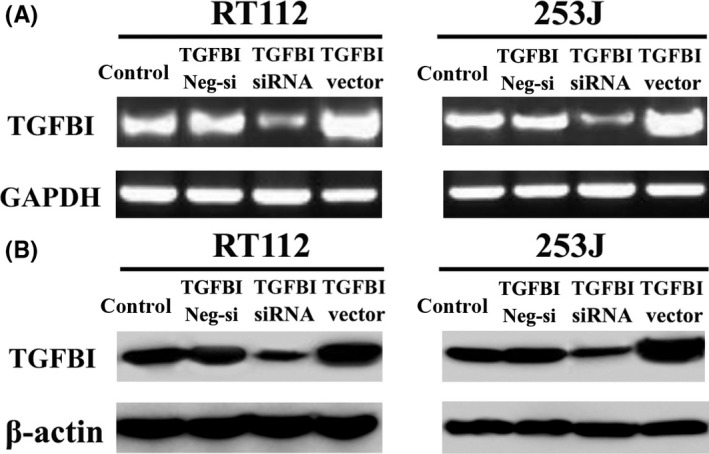
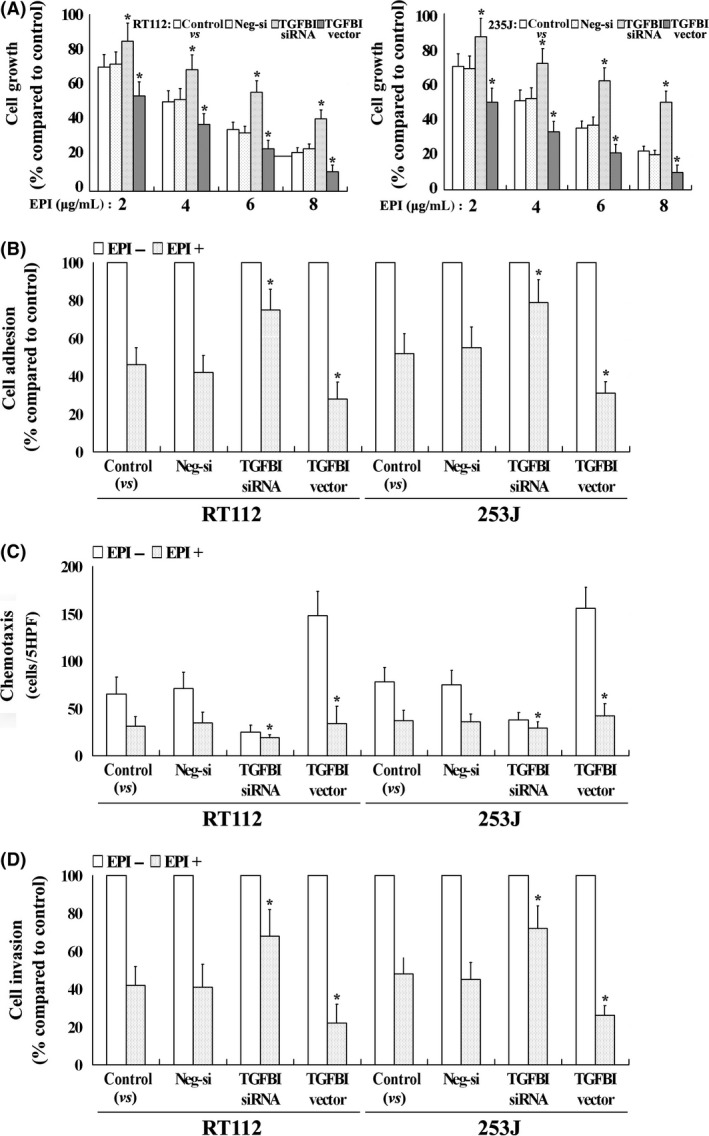
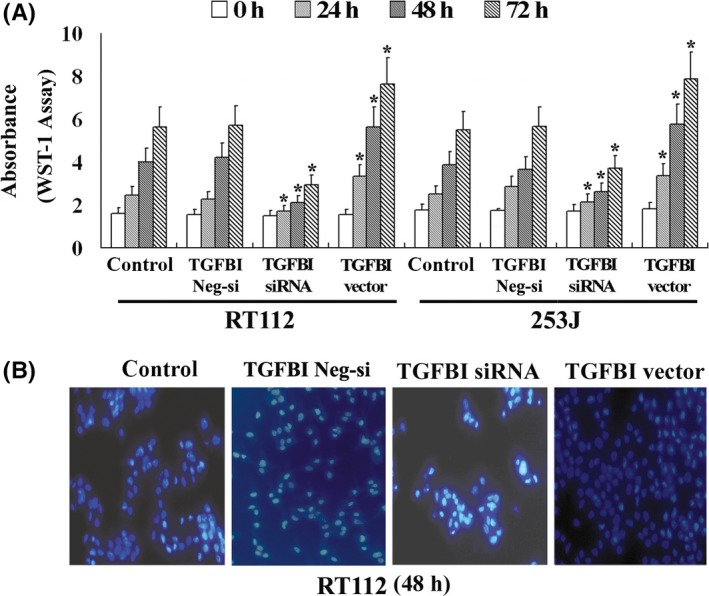
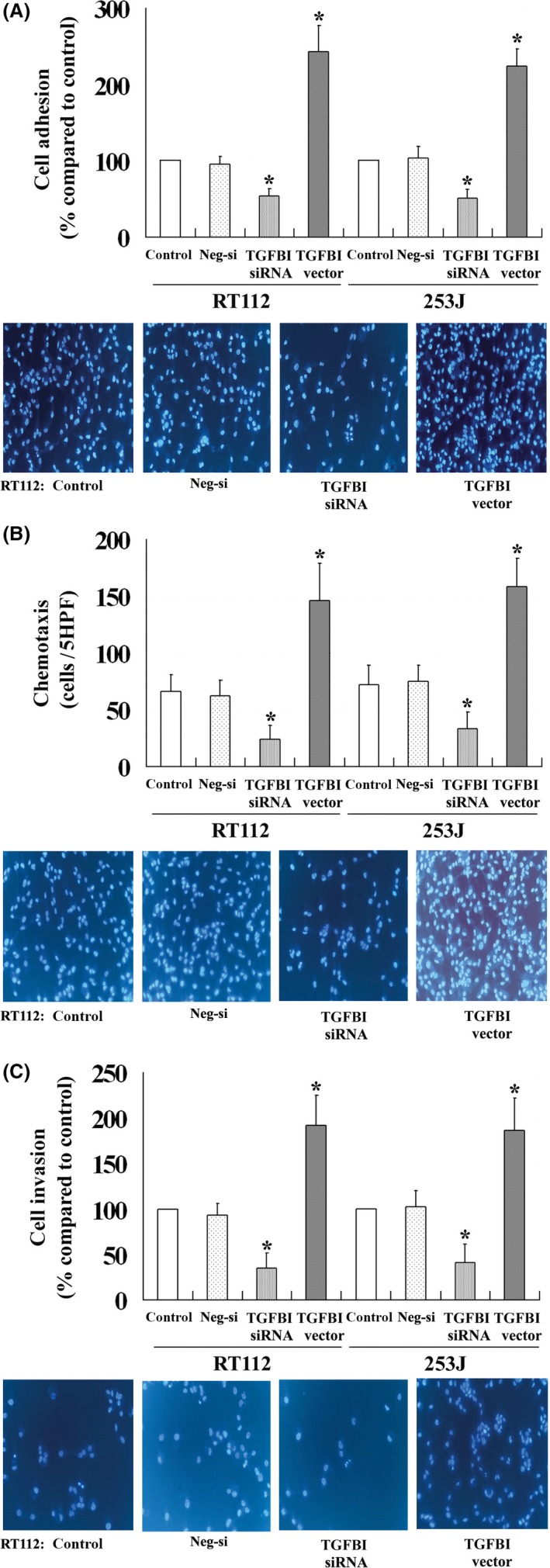
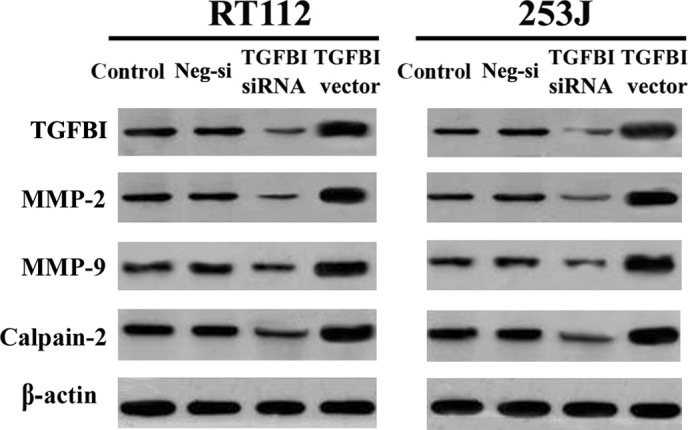
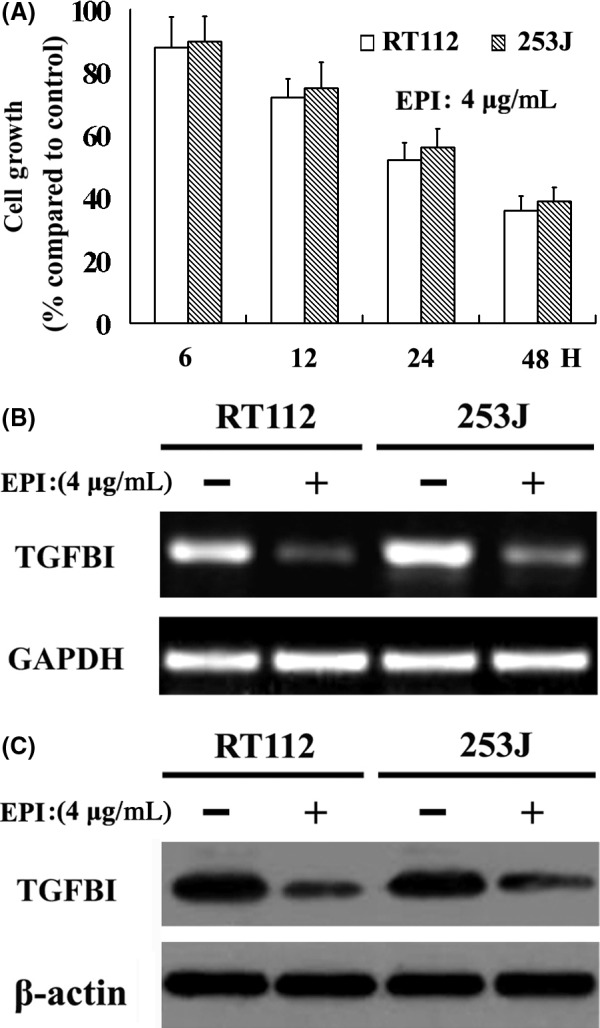
Transforming growth factor-β-induced (TGFΒI) is considered to be a vital gene in several carcinomas. In this study we determined the effect of TGFBI on the proliferative and metastatic potential of human urothelial carcinoma (UC) cells as well as its mRNA and protein expression, which were detected by RT-PCR and western blot, respectively. UC cell proliferation was analyzed by WST-1 assay and Hoechst 33258 staining. The effect of TGFBI on UC cell metastasis was analyzed using adhesion, migration and invasion assays. We found that TGFBI increased the proliferation of UC cells. Moreover, TGFBI enhanced the adhesion, migration and invasion of UC cells by upregulating MMP-2, MMP-9 and calpain-2 expression. We evaluated the effect of Epirubicin (EPI) on the regulation of TGFBI expression and found that TGFBI acts as a downstream target of EPI and is suppressed by EPI in UC cells. EPI is more effective in inhibiting the proliferation and metastasis of UC cells with high TGFBI expression. This study demonstrates that TGFBI might lead to tumorigenesis and progression of UC and those cells with high TGFBI expression may be vulnerable to relapse. EPI could prove to be a therapeutic option in patients with high TGFBI expressing UC cells.
转化生长因子-β诱导蛋白(TGFΒI)被认为是多种癌症中的关键基因。在本研究中,我们分别通过逆转录聚合酶链反应(RT-PCR)和蛋白质免疫印迹法检测了TGFBI对人尿路上皮癌(UC)细胞增殖和转移潜能及其mRNA和蛋白表达的影响。通过WST-1检测法和Hoechst 33258染色分析UC细胞增殖情况。利用黏附、迁移和侵袭实验分析TGFBI对UC细胞转移的影响。我们发现TGFBI可促进UC细胞增殖。此外,TGFBI通过上调基质金属蛋白酶-2(MMP-2)、基质金属蛋白酶-9(MMP-9)和钙蛋白酶-2的表达增强UC细胞的黏附、迁移和侵袭能力。我们评估了表柔比星(EPI)对TGFBI表达调控的影响,发现TGFBI作为EPI的下游靶点,在UC细胞中被EPI抑制。EPI在抑制高表达TGFBI的UC细胞增殖和转移方面更有效。本研究表明,TGFBI可能导致UC的肿瘤发生和进展,且高表达TGFBI的细胞可能易复发。对于高表达TGFBI的UC细胞患者,EPI可能是一种治疗选择。