Woolcock Institute of Medical Research, University of Sydney, Glebe, New South Wales, Australia.
Department of Paediatrics, The University of Melbourne, Parkville, Victoria, Australia.
BMJ Open. 2017 Sep 25;7(9):e016688. doi: 10.1136/bmjopen-2017-016688.
Overuse of asthma relievers, particularly without anti-inflammatory preventers, increases asthma risks. This study aimed to identify how many reliever-only users have urgent healthcare, explore their attitudes and beliefs about asthma and its treatment, and investigate whether purchasing over-the-counter relievers was associated with worse asthma outcomes than by prescription.
Cross-sectional population-based Internet survey in Australia.
Of 2686 participants ≥16 years with current asthma randomly drawn from a web-based panel, 1038 (50.7% male) used only reliever medication.
Urgent asthma-related healthcare; Asthma Control Test (ACT); patient attitudes about asthma and medications; reliever purchase (with/without prescription).
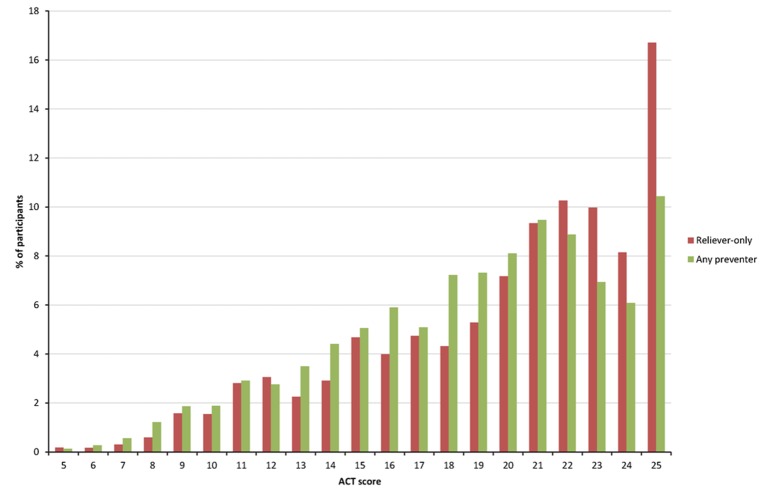
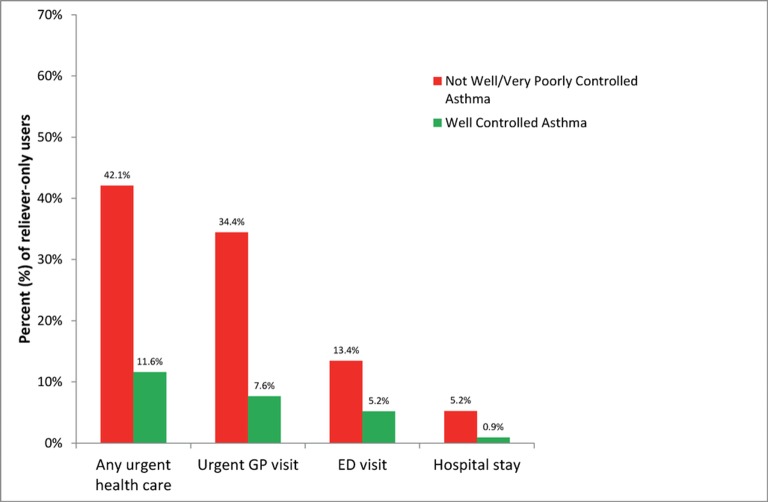
Of 1038 reliever-only participants, 23.3% had required urgent healthcare for asthma in the previous year, and only 36.0% had a non-urgent asthma review. Those needing urgent healthcare were more likely than those without such events to be male (56.5% vs 49.0%, p=0.003) and current smokers (29.4% vs 23.3%, p=0.009). Only 30.6% had well-controlled asthma (ACT ≥20) compared with 71.0% of those with no urgent healthcare (p<0.0001), and 20.8% used relievers regularly to prevent asthma symptoms (vs 5.5% of those without urgent healthcare). Those with urgent healthcare were more frustrated by their asthma and less happy with how they managed it, and they were less confident about their ability to manage worsening asthma, but just as likely as those without urgent healthcare to manage worsening asthma themselves rather than visit a doctor. Reliever-only users purchasing over-the-counter relievers were no more likely than those purchasing relievers by prescription to have uncontrolled asthma (35.9% vs 40.6%, p=0.23) but were less likely to have had a non-urgent asthma review.
One-quarter of the reliever-only population had needed urgent asthma healthcare in the previous year, demonstrating the importance of identifying such patients. Their attitudes and beliefs suggest opportunities for targeting this population in the community.
过度使用哮喘缓解药物,特别是没有使用抗炎预防药物,会增加哮喘风险。本研究旨在确定有多少仅使用缓解药物的患者需要紧急医疗保健,探讨他们对哮喘及其治疗的态度和信念,并调查购买非处方缓解药物是否比处方药物更易导致哮喘恶化。
澳大利亚基于人群的横断面互联网调查。
从基于网络的小组中随机抽取 2686 名≥16 岁且目前患有哮喘的参与者,其中 1038 名(50.7%为男性)仅使用缓解药物。
与哮喘相关的紧急医疗保健;哮喘控制测试(ACT);患者对哮喘和药物的态度;缓解药物的购买(有/无处方)。
在 1038 名仅使用缓解药物的参与者中,23.3%在过去一年中因哮喘需要紧急医疗保健,只有 36.0%有非紧急哮喘复查。需要紧急医疗保健的患者比没有此类事件的患者更可能是男性(56.5%比 49.0%,p=0.003)和当前吸烟者(29.4%比 23.3%,p=0.009)。仅有 30.6%的患者哮喘控制良好(ACT≥20),而没有紧急医疗保健的患者中这一比例为 71.0%(p<0.0001),20.8%的患者定期使用缓解药物预防哮喘症状(而没有紧急医疗保健的患者中这一比例为 5.5%)。有紧急医疗保健需求的患者对哮喘感到更加沮丧,对自己的管理方式也不太满意,对自己管理哮喘恶化的能力缺乏信心,但与没有紧急医疗保健的患者一样,他们更倾向于自己管理哮喘恶化,而不是去看医生。仅使用缓解药物的患者中,购买非处方缓解药物的患者与购买处方缓解药物的患者相比,无控制哮喘的可能性更小(35.9%比 40.6%,p=0.23),但更不可能进行非紧急哮喘复查。
四分之一的仅使用缓解药物的患者在过去一年中需要紧急哮喘医疗保健,这表明确定此类患者的重要性。他们的态度和信念表明,在社区中可以针对这一人群进行靶向治疗。