Centre of Academic Primary Care, Division of Applied Health Sciences, University of Aberdeen, Aberdeen, UK.
Observational and Pragmatic Research Institute, Singapore, Singapore.
NPJ Prim Care Respir Med. 2024 Nov 1;34(1):34. doi: 10.1038/s41533-024-00397-4.
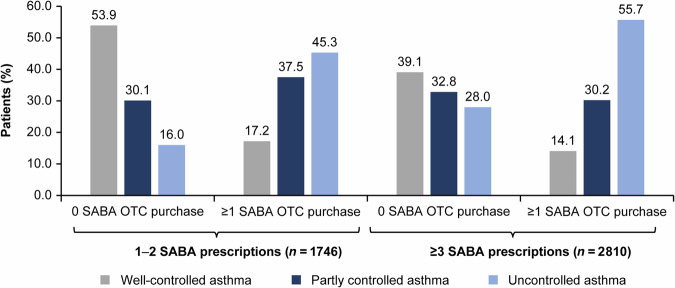
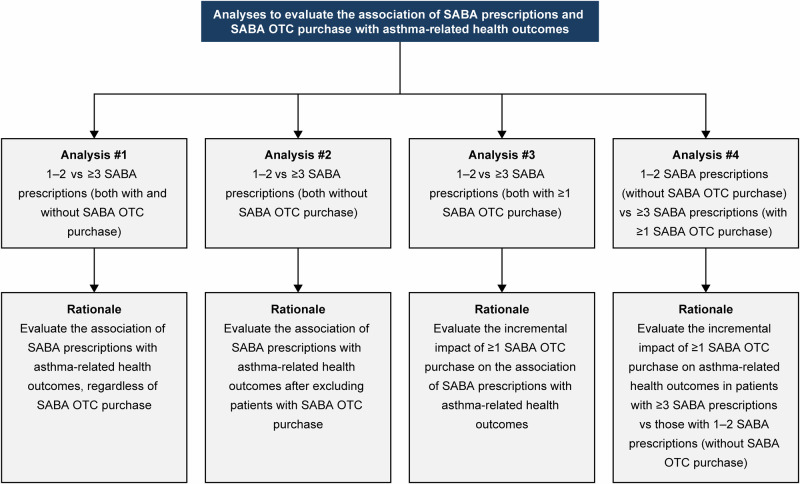
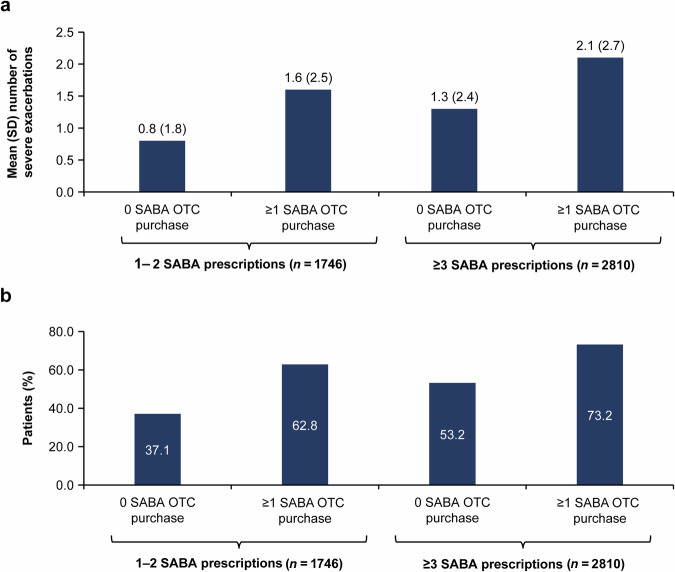
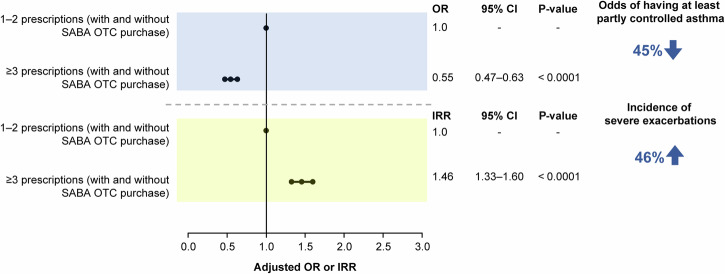
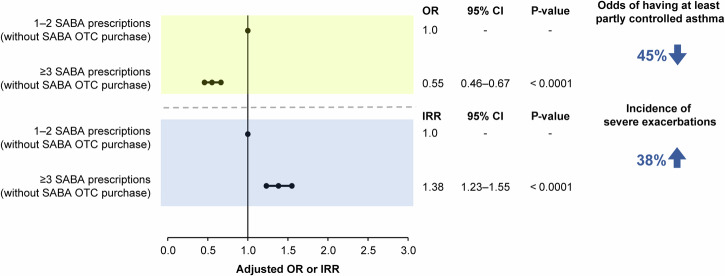
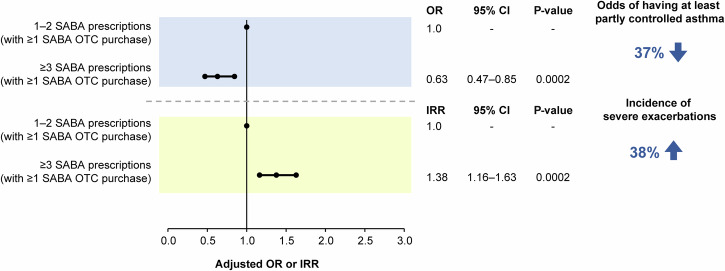
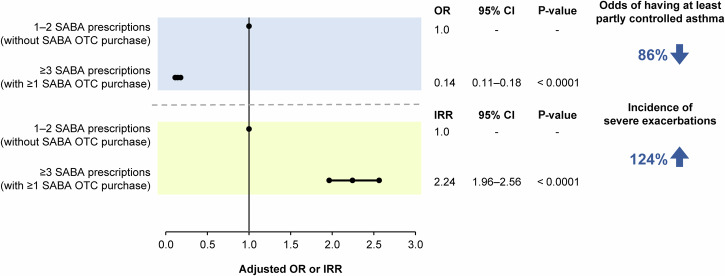
This post-hoc analysis of the SABINA III study evaluated the association of short-acting β-agonist (SABA) prescriptions and self-reported over-the-counter (OTC) SABA purchase in the previous 12 months with asthma-related outcomes using multivariable regression models in 4556 patients (mean age, 48.9 years). Of the 2810 patients prescribed ≥3 SABA canisters, 776 (27.6%) also purchased ≥1 SABA OTC. This subset of 776 patients reported the highest disease burden; 73.2% had ≥1 severe exacerbation and 55.7% had uncontrolled asthma. Asthma-related outcomes worsened with any SABA OTC purchase, regardless of SABA prescriptions; disease burden was the highest in patients with ≥3 SABA prescriptions and ≥1 SABA OTC purchase vs 1-2 SABA prescriptions only (86% lower odds of having at least partly controlled asthma and 124% increased incidence of severe asthma (both P < 0.001). These findings emphasize the need to implement policy changes to restrict SABA purchase without prescriptions and ensure access to affordable asthma care.
本 SABINA III 研究的事后分析采用多变量回归模型,评估了 4556 例患者(平均年龄 48.9 岁)中短效 β-激动剂(SABA)处方和过去 12 个月中报告的非处方(OTC)SABA 购买与哮喘相关结局的关联。在接受 ≥3 个 SABA 罐的 2810 例患者中,776 例(27.6%)也购买了≥1 个 SABA OTC。这 776 例患者的疾病负担最高;73.2%发生≥1 次重度加重,55.7%哮喘未得到控制。无论 SABA 处方如何,任何 SABA OTC 购买都会导致哮喘相关结局恶化;与仅接受 1-2 个 SABA 处方相比,接受≥3 个 SABA 处方和≥1 个 SABA OTC 购买的患者的疾病负担最高(至少部分控制哮喘的可能性降低 86%,重度哮喘的发生率增加 124%,均 P<0.001)。这些发现强调需要实施政策改变,限制无处方购买 SABA,并确保获得负担得起的哮喘护理。