Barros Eric R, Carvajal Cristian A
Center of Translational Endocrinology (CETREN), Faculty of Medicine, Endocrinology Department, Pontificia Universidad Católica de Chile, Santiago, Chile.
Front Endocrinol (Lausanne). 2017 Sep 8;8:230. doi: 10.3389/fendo.2017.00230. eCollection 2017.
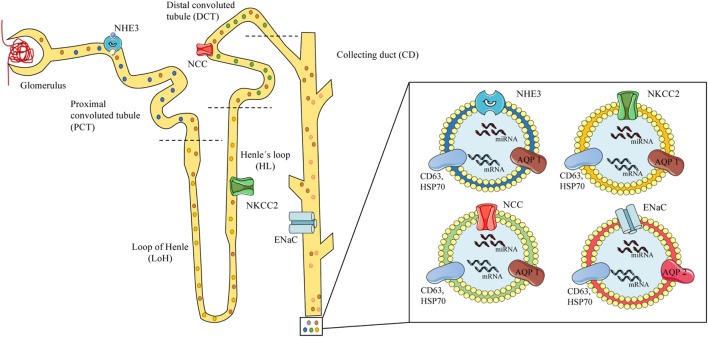
Arterial hypertension (AHT) currently affects approximately 40% of adults worldwide, and its pathological mechanisms are mainly related to renal, vascular, and endocrine systems. Steroid hormones as aldosterone and cortisol are highly relevant to human endocrine physiology, and also to endocrine hypertension. Pathophysiological conditions, such as primary aldosteronism, affect approximately 10% of patients diagnosed with AHT and are secondary to a high production of aldosterone, increasing the risk also for cardiovascular damage and heart diseases. Excess of aldosterone or cortisol increases the activity of the mineralocorticoid receptor (MR) in epithelial and non-epithelial cells. Current research in this field highlights the potential regulatory mechanisms of the MR pathway, including pre-receptor regulation of the MR (action of 11BHSD2), MR activating proteins, and the downstream genes/proteins sensitive to MR (e.g., epithelial sodium channel, NCC, NKCC2). Mineralocorticoid AHT is present in 15-20% of hypertensive subjects, but the mechanisms associated to this condition have been poorly described, due mainly to the absence of reliable biomarkers. In this way, steroids, peptides, and lately urinary exosomes are thought to be potential reporters of biological processes. This review highlight exosomes and their cargo as potential biomarkers of metabolic changes associated to mineralocorticoid AHT. Recent reports have shown the presence of RNA, microRNAs, and proteins in urinary exosomes, which could be used as biomarkers in physiological and pathophysiological conditions. However, more studies are needed in order to benefit from exosomes and the exosomal cargo as a diagnostic tool in mineralocorticoid AHT.
动脉高血压(AHT)目前影响着全球约40%的成年人,其病理机制主要与肾脏、血管和内分泌系统有关。醛固酮和皮质醇等类固醇激素与人类内分泌生理学密切相关,也与内分泌性高血压相关。病理生理状况,如原发性醛固酮增多症,影响约10%被诊断为AHT的患者,且继发于醛固酮的高分泌,增加了心血管损伤和心脏病的风险。醛固酮或皮质醇过多会增加上皮细胞和非上皮细胞中盐皮质激素受体(MR)的活性。该领域目前的研究突出了MR途径的潜在调节机制,包括MR的受体前调节(11β-羟类固醇脱氢酶2的作用)、MR激活蛋白以及对MR敏感的下游基因/蛋白(如上皮钠通道、NCC、NKCC2)。盐皮质激素性AHT存在于15%-20%的高血压患者中,但与这种情况相关的机制描述甚少,主要原因是缺乏可靠的生物标志物。因此,类固醇、肽以及最近发现的尿液外泌体被认为是生物过程的潜在报告物。本综述强调外泌体及其所载物质作为与盐皮质激素性AHT相关的代谢变化的潜在生物标志物。最近的报告显示尿液外泌体中存在RNA、微小RNA和蛋白质,它们可在生理和病理生理状况下用作生物标志物。然而,为了将外泌体及其所载物质作为盐皮质激素性AHT的诊断工具加以利用,还需要更多的研究。