Costliow Zachary A, Degnan Patrick H
Department of Microbiology, University of Illinois at Urbana-Champaign, Urbana, Illinois, USA.
mSystems. 2017 Sep 26;2(5). doi: 10.1128/mSystems.00116-17. eCollection 2017 Sep-Oct.
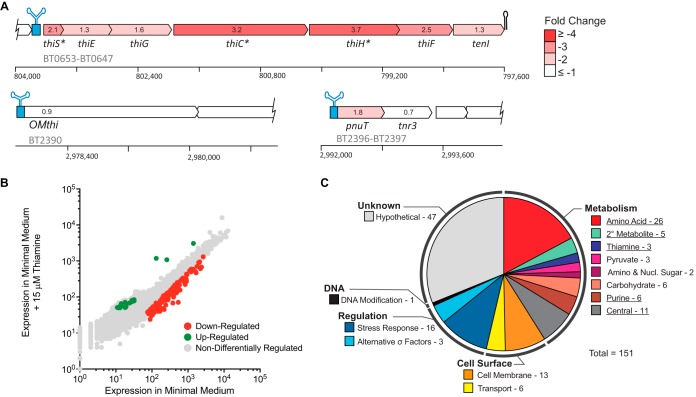
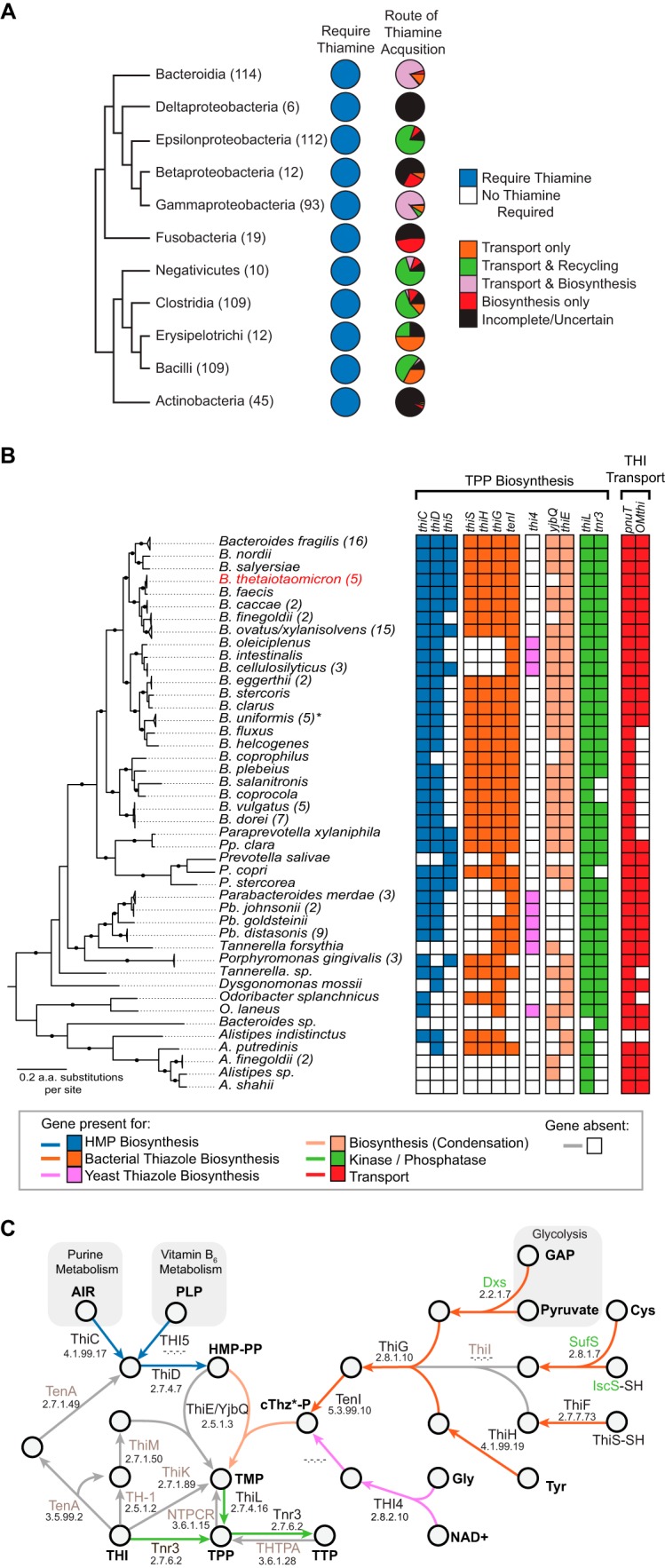
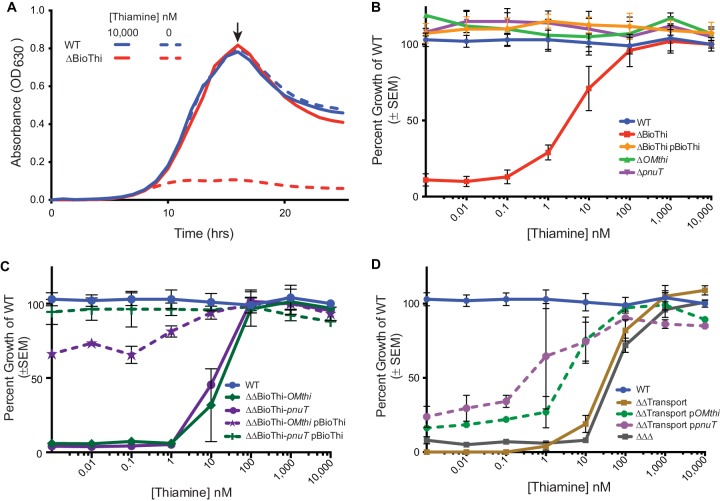
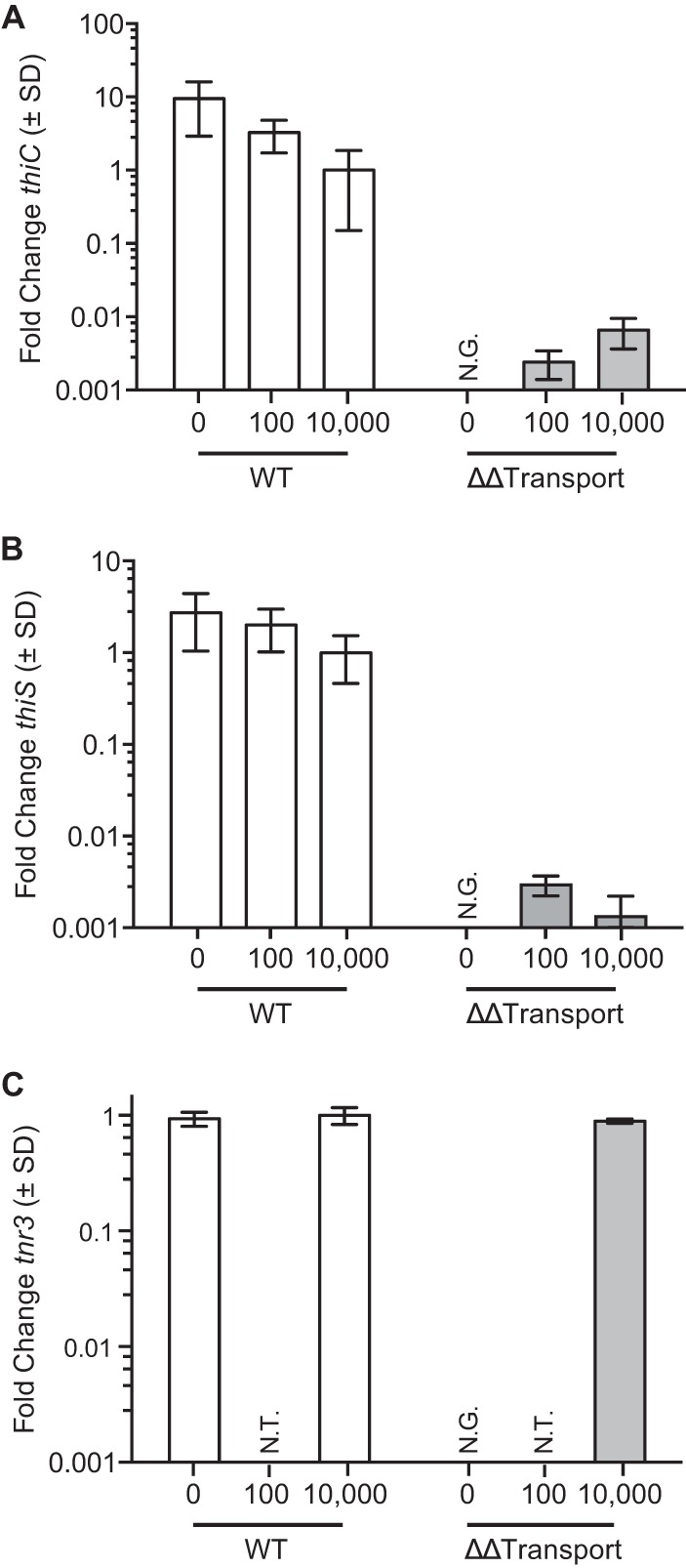
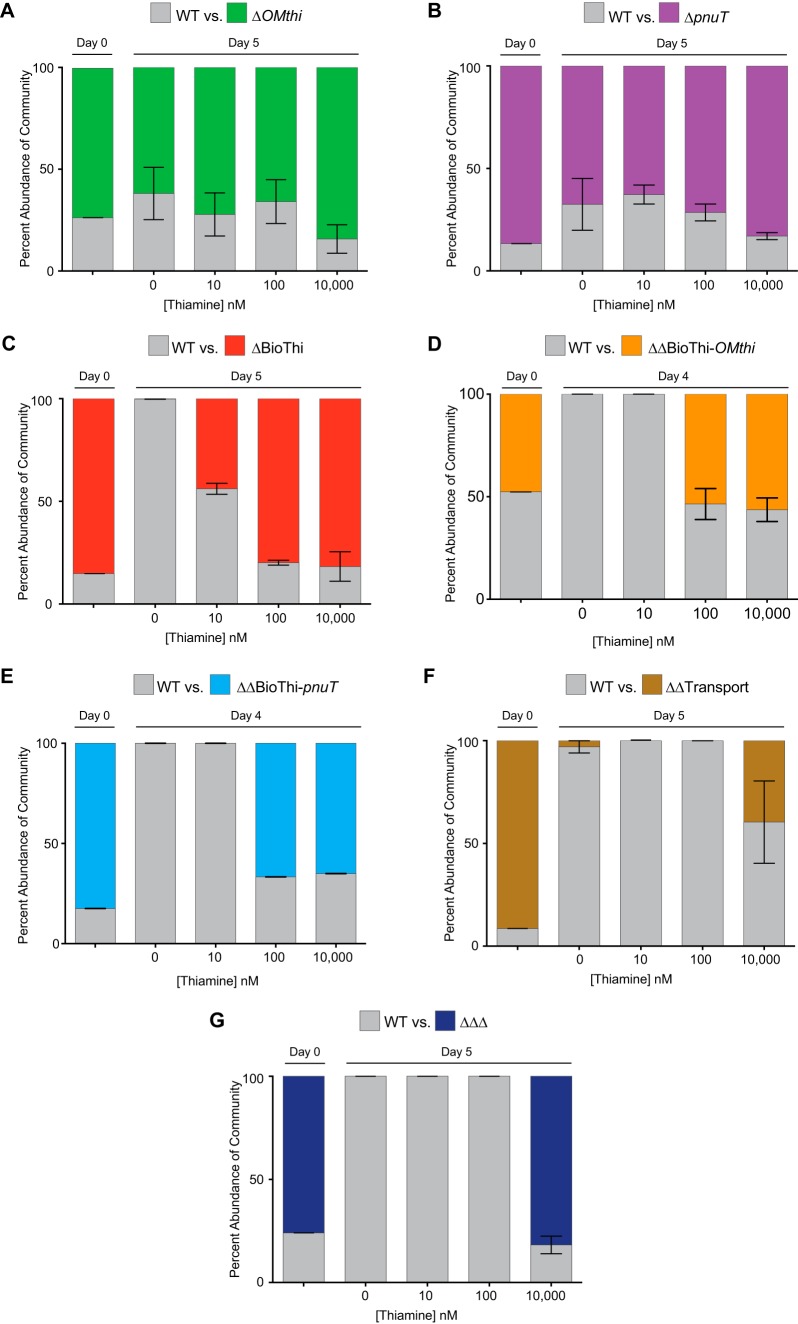
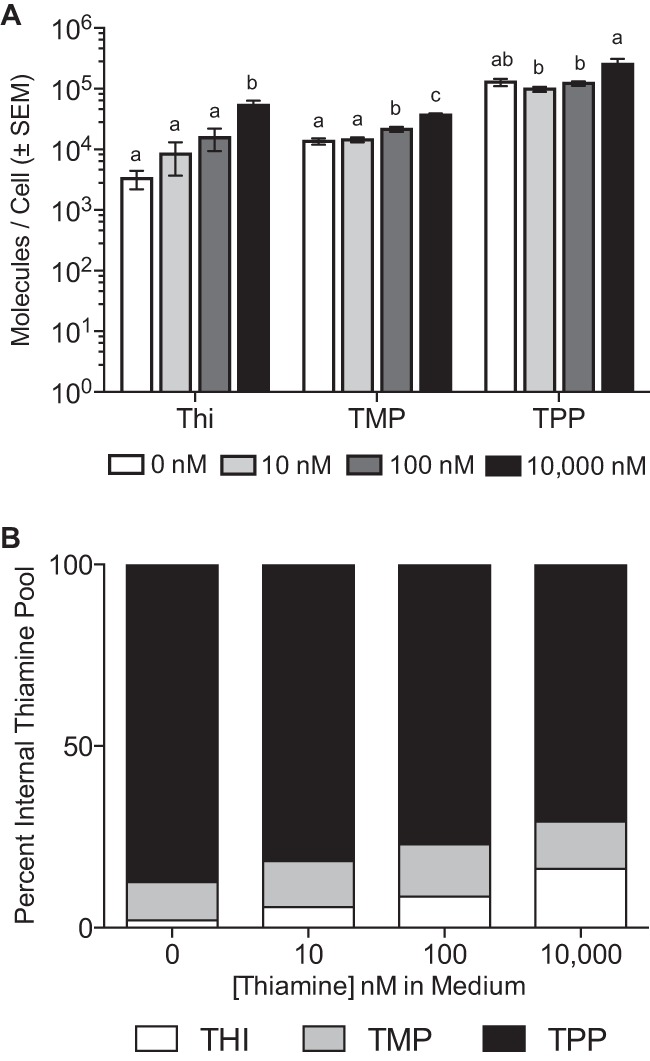
Thiamine (vitamin B) is an essential cofactor for all organisms. Humans primarily acquire thiamine through their diet, and thiamine deficiencies have adverse neurological effects. However, the role gut microbes play in modulating thiamine availability is poorly understood, and little is known about how thiamine impacts the stability of microbial gut communities. To investigate thiamine's role in the gut, we utilized the model gut microbe . Transcriptome sequencing (RNA-seq) revealed a global downregulation of thiamine and amino acid biosynthesis, glycolysis, and purine metabolism when thiamine was present. Using genetic mutants with thiamine biosynthesis and transport locus mutations, we determined both systems were critical for growth in thiamine-deficient medium. The defect in the double transport mutant suggests an uncharacterized feedback mechanism between thiamine transport and biosynthesis in . Mutant phenotypes were recapitulated during pairwise competitions, reinforcing the importance of encoding versatile thiamine acquisition mechanisms when thiamine concentrations are variable. In addition, liquid chromatography-mass spectrometry (LC-MS) analyses corroborate that exogenous thiamine levels affect the internal thiamine pool of . Furthermore, we computationally examined the ability of other gut microbes to acquire thiamine and identified lineage-specific differences in thiamine acquisition strategies. Among the , the capacities for both thiamine transport and biosynthesis are common. Together, these data show that thiamine acquisition mechanisms used by not only are critical for its physiology and fitness but also provide the opportunity to model how other gut microbes may respond to the shifting availability of thiamine in the gut. Variation in the ability of gut microbes to transport, synthesize, and compete for vitamin B (thiamine) is expected to impact the structure and stability of the microbiota, and ultimately this variation may have both direct and indirect effects on human health. Our study identifies the diverse strategies employed by gut to acquire thiamine. We demonstrate how the presence or absence of thiamine biosynthesis or transport dramatically affects the abundance of in a competitive environment. This study adds further evidence that altering the presence or concentrations of water-soluble vitamins such as thiamine may be an effective method for manipulating gut community composition. In turn, targeted thiamine delivery could be used therapeutically to alter dysbiotic communities linked to disease. : An author video summary of this article is available.
硫胺素(维生素B)是所有生物体必需的辅因子。人类主要通过饮食获取硫胺素,硫胺素缺乏会产生不良的神经学影响。然而,肠道微生物在调节硫胺素可利用性方面所起的作用却鲜为人知,而且对于硫胺素如何影响肠道微生物群落的稳定性也知之甚少。为了研究硫胺素在肠道中的作用,我们利用了模式肠道微生物。转录组测序(RNA测序)显示,当存在硫胺素时,硫胺素和氨基酸生物合成、糖酵解及嘌呤代谢会出现整体下调。通过使用硫胺素生物合成和转运位点突变的基因变体,我们确定这两个系统对于在硫胺素缺乏培养基中的生长都至关重要。双重转运突变体中的缺陷表明在……中硫胺素转运和生物合成之间存在一种未明确的反馈机制。在成对竞争过程中重现了突变体表型,这强化了在硫胺素浓度可变时编码多种硫胺素获取机制的重要性。此外,液相色谱 - 质谱(LC - MS)分析证实外源硫胺素水平会影响……的内部硫胺素库。此外我们还通过计算研究了其他肠道微生物获取硫胺素的能力,并确定了硫胺素获取策略中的谱系特异性差异。在……中,硫胺素转运和生物合成能力都很常见。总之,这些数据表明……所使用的硫胺素获取机制不仅对其生理功能和适应性至关重要,而且还为模拟其他肠道微生物如何应对肠道中硫胺素可利用性的变化提供了机会。肠道微生物转运、合成和竞争维生素B(硫胺素)能力的差异预计会影响微生物群的结构和稳定性,最终这种差异可能会对人类健康产生直接和间接影响。我们的研究确定了肠道……获取硫胺素所采用的多种策略。我们展示了硫胺素生物合成或转运的有无如何在竞争环境中显著影响……的丰度。这项研究进一步证明,改变诸如硫胺素等水溶性维生素的存在或浓度可能是操纵肠道群落组成的有效方法。反过来,有针对性的硫胺素递送可用于治疗性地改变与疾病相关的失调群落。:本文有作者视频总结。