Li Cong, Bao Weimin, Xu Luping, Zhang Hua
School of Aerospace Science and Technology, Xidian University, Xi'an 710126, China.
Sensors (Basel). 2017 Sep 27;17(10):2218. doi: 10.3390/s17102218.
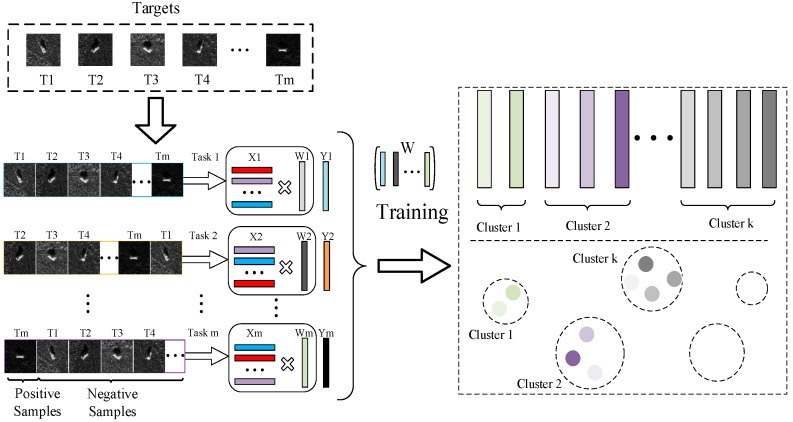
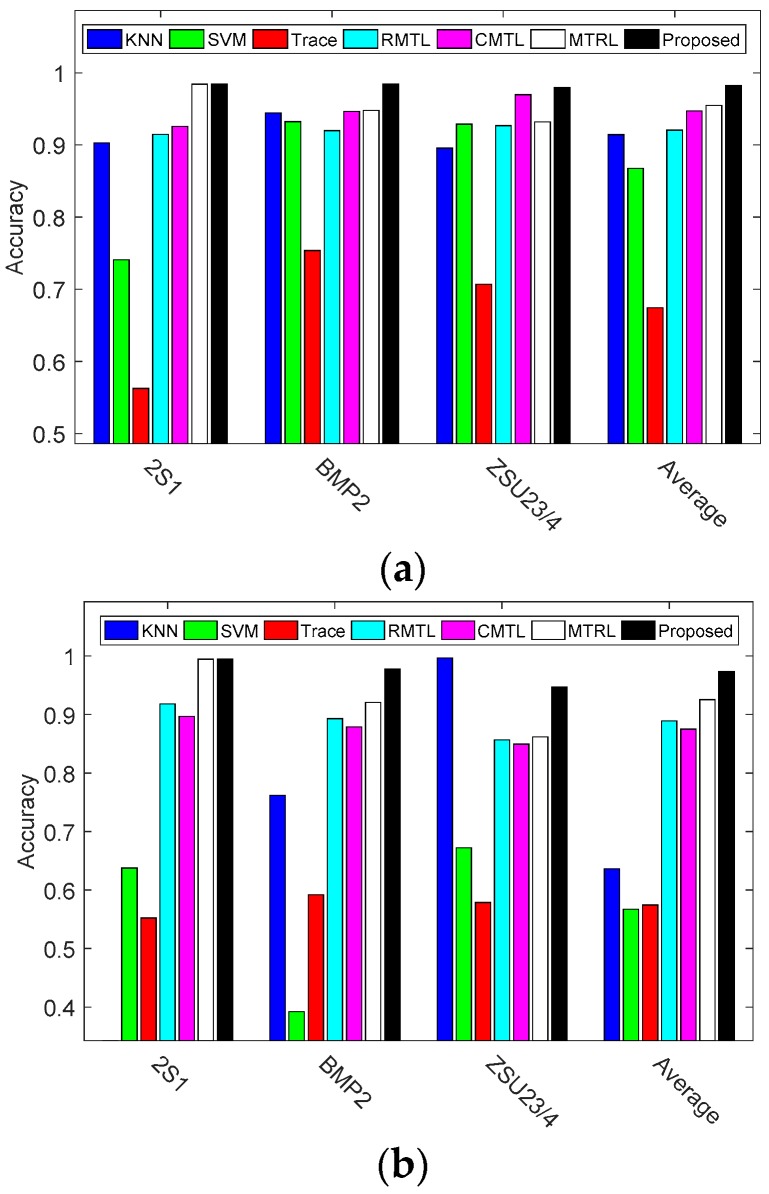
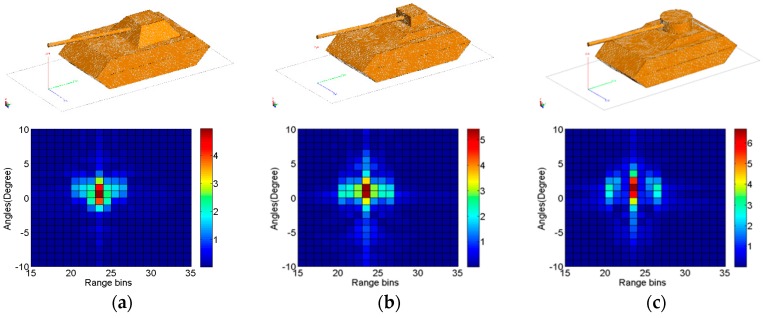
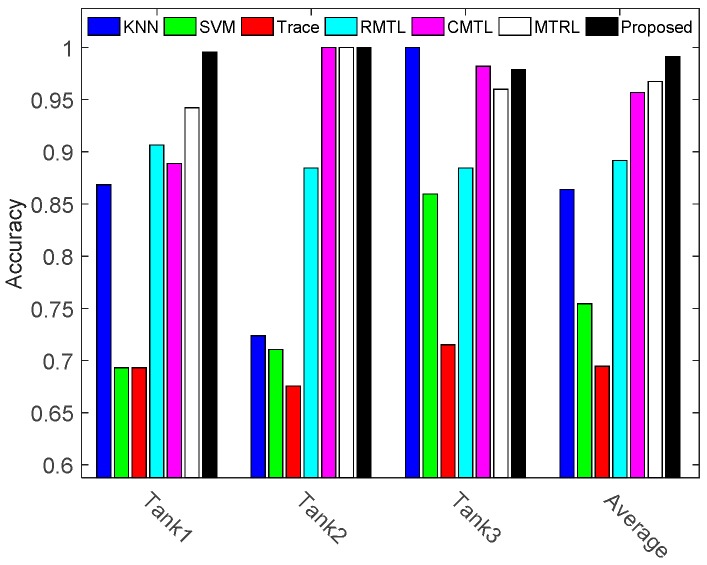
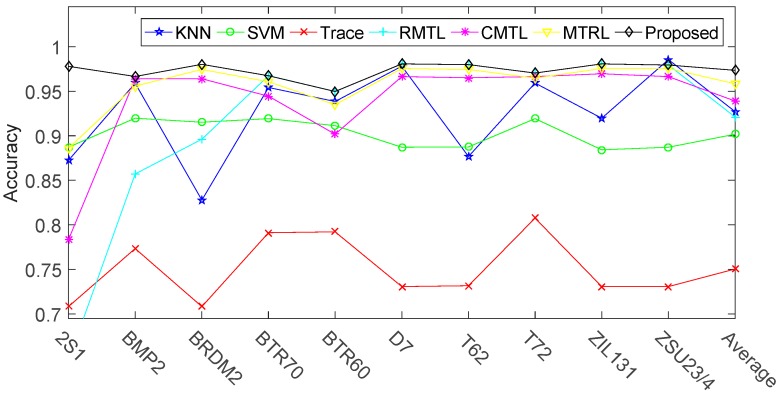
Model training is a key technique for radar target recognition. Traditional model training algorithms in the framework of single task leaning ignore the relationships among multiple tasks, which degrades the recognition performance. In this paper, we propose a clustered multi-task learning, which can reveal and share the multi-task relationships for radar target recognition. To further make full use of these relationships, the latent multi-task relationships in the projection space are taken into consideration. Specifically, a constraint term in the projection space is proposed, the main idea of which is that multiple tasks within a close cluster should be close to each other in the projection space. In the proposed method, the cluster structures and multi-task relationships can be autonomously learned and utilized in both of the original and projected space. In view of the nonlinear characteristics of radar targets, the proposed method is extended to a non-linear kernel version and the corresponding non-linear multi-task solving method is proposed. Comprehensive experimental studies on simulated high-resolution range profile dataset and MSTAR SAR public database verify the superiority of the proposed method to some related algorithms.
模型训练是雷达目标识别的一项关键技术。单任务学习框架下的传统模型训练算法忽略了多个任务之间的关系,这降低了识别性能。在本文中,我们提出了一种聚类多任务学习方法,它可以揭示并共享用于雷达目标识别的多任务关系。为了进一步充分利用这些关系,我们考虑了投影空间中的潜在多任务关系。具体而言,提出了投影空间中的一个约束项,其主要思想是在投影空间中,紧密聚类内的多个任务应彼此接近。在所提出的方法中,聚类结构和多任务关系可以在原始空间和投影空间中自主学习和利用。鉴于雷达目标的非线性特征,将所提出的方法扩展到非线性核版本,并提出了相应的非线性多任务求解方法。对模拟高分辨率距离像数据集和MSTAR SAR公共数据库进行的综合实验研究验证了所提出方法相对于一些相关算法的优越性。