Di Bello Maria Pia, Lazzoi Maria Rosaria, Mele Giuseppe, Scorrano Sonia, Mergola Lucia, Del Sole Roberta
Department of Engineering for Innovation, University of Salento, via per Monteroni Km 1, 73100 Lecce, Italy.
Materials (Basel). 2017 Sep 26;10(10):1133. doi: 10.3390/ma10101133.
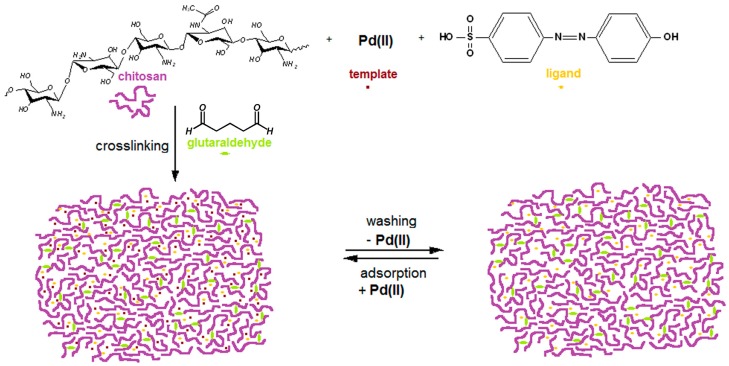
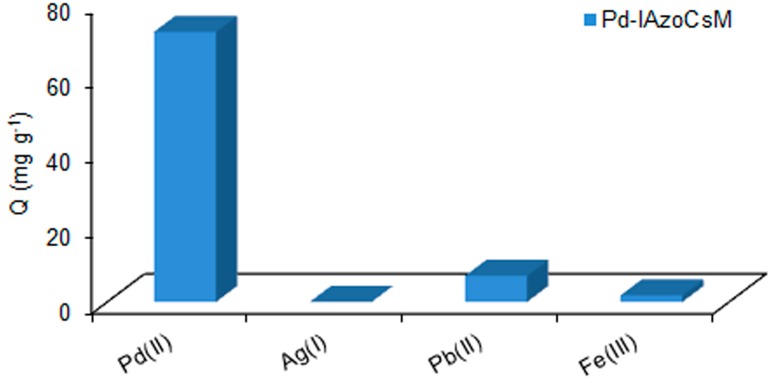
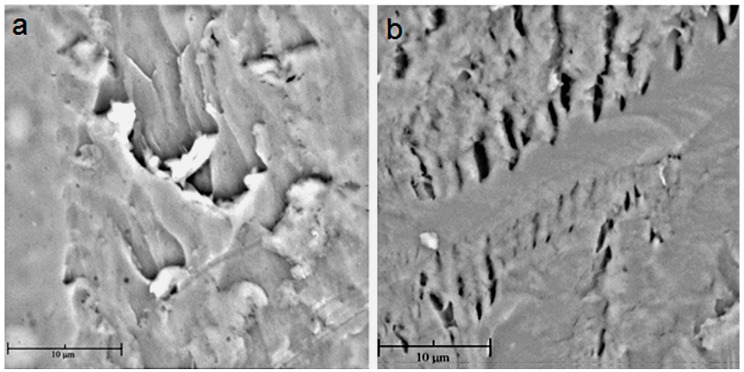
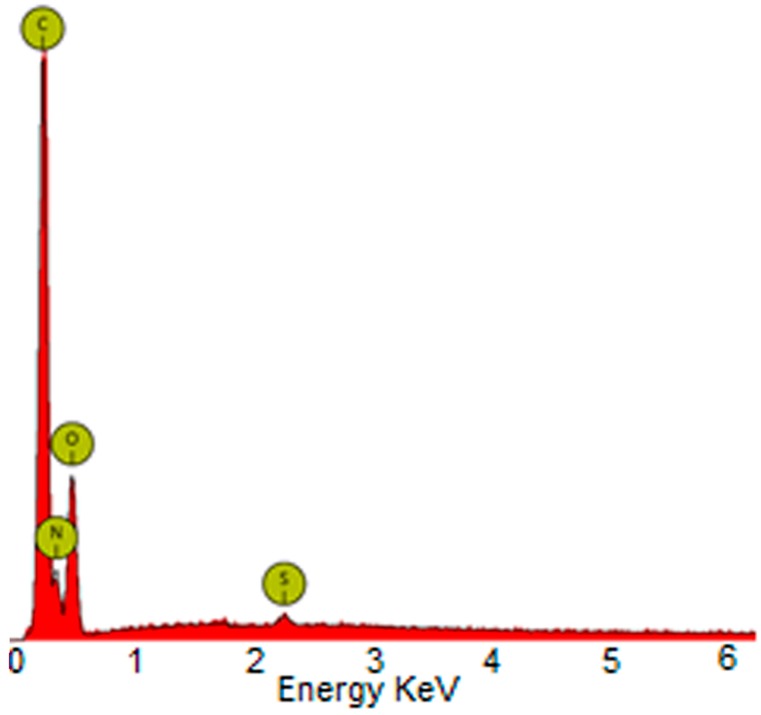
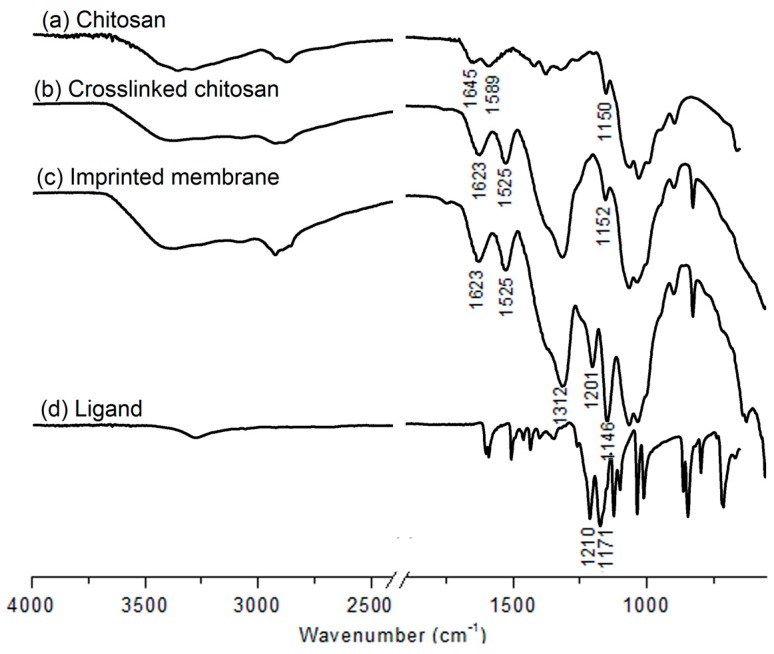
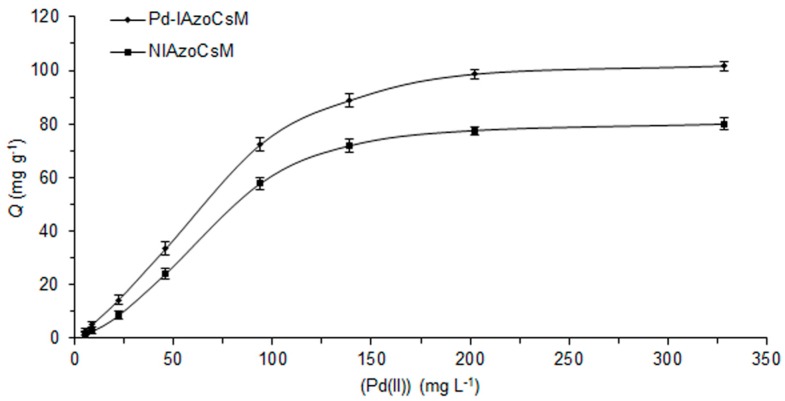
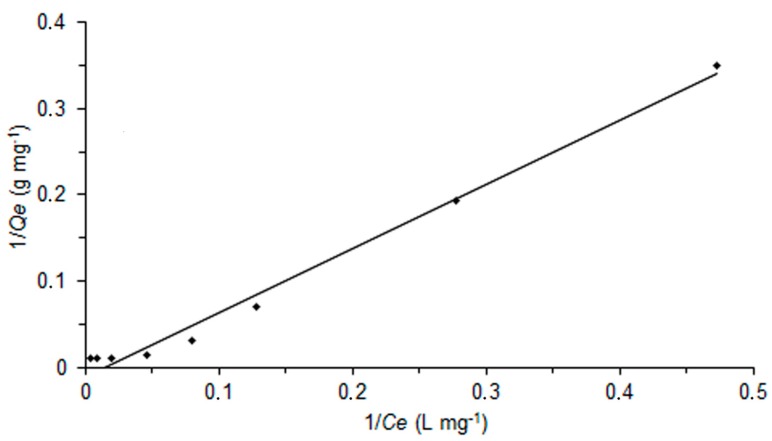
Herein, we described the synthesis of a novel ion-imprinted membrane for the detection of palladium(II) prepared through the glutaraldehyde crosslinking of chitosan with a 4-[(4-Hydroxy)phenylazo]benzenesulfonic acid ligand trapped into the membrane. The imprinting technology was used to improve adsorption capacity and adsorption selectivity, and was combined with some advantages of the developed membrane, such as low cost and ease of preparation, water-friendly synthesis, and high biocompatible chitosan material. The membranes were characterized by Fourier Transform Infrared Spectroscopy (FTIR), Scanning Electron Microscopy (SEM), and Energy Dispersive X-ray Spectrometry (EDS). The results obtained showed a high swelling ratio with a maximum value of 16.4 (1640%) at pH 4 with a strong pH dependence. Batch rebinding experiments gave a maximum adsorption capacity of 101.6 mg of Pd(II) per gram of imprinted membrane. The Pd(II) adsorption behavior was well-described by a Langmuir model with a theoretical maximum adsorption capacity of 93.48 mg g, similar to the experimental one. Finally, a selectivity study versus Ag(I), Pb(II), and Fe(III) ions demonstrated a good selectivity of chitosan-imprinted membrane towards Pd(II).
在此,我们描述了一种用于检测钯(II)的新型离子印迹膜的合成方法,该膜是通过壳聚糖与捕获在膜中的4-[(4-羟基)苯基偶氮]苯磺酸配体进行戊二醛交联制备而成。印迹技术用于提高吸附容量和吸附选择性,并结合了所制备膜的一些优点,如成本低、制备简便、水相友好合成以及壳聚糖材料具有高生物相容性。通过傅里叶变换红外光谱(FTIR)、扫描电子显微镜(SEM)和能量色散X射线光谱(EDS)对膜进行了表征。所得结果表明,该膜在pH值为4时具有较高的溶胀率,最大值为16.4(1640%),且对pH值有很强的依赖性。批量再结合实验表明,每克印迹膜对钯(II)的最大吸附容量为101.6毫克。钯(II)的吸附行为可用朗缪尔模型很好地描述,理论最大吸附容量为93.48毫克/克,与实验值相似。最后,与银(I)、铅(II)和铁(III)离子的选择性研究表明,壳聚糖印迹膜对钯(II)具有良好的选择性。