Hitzler Leonhard, Hirsch Johann, Heine Burkhard, Merkel Markus, Hall Wayne, Öchsner Andreas
Griffith School of Engineering, Griffith University, Gold Coast Campus, Southport 4222, Australia.
Faculty of Mechanical Engineering and Material Science, Aalen University of Applied Sciences, 73430 Aalen, Germany.
Materials (Basel). 2017 Sep 26;10(10):1136. doi: 10.3390/ma10101136.
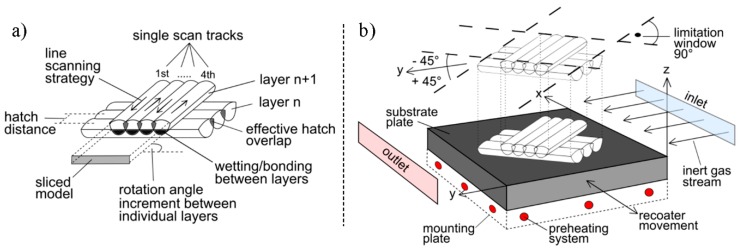
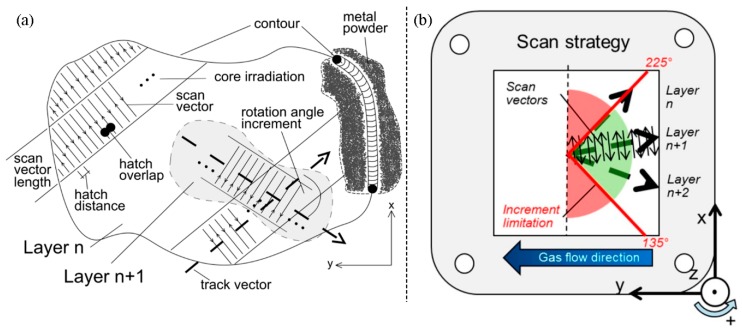
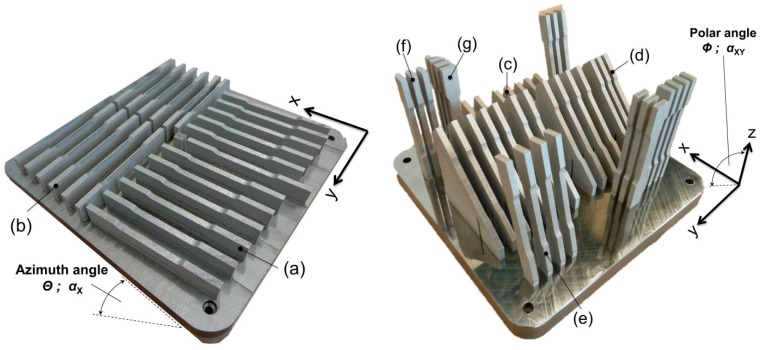
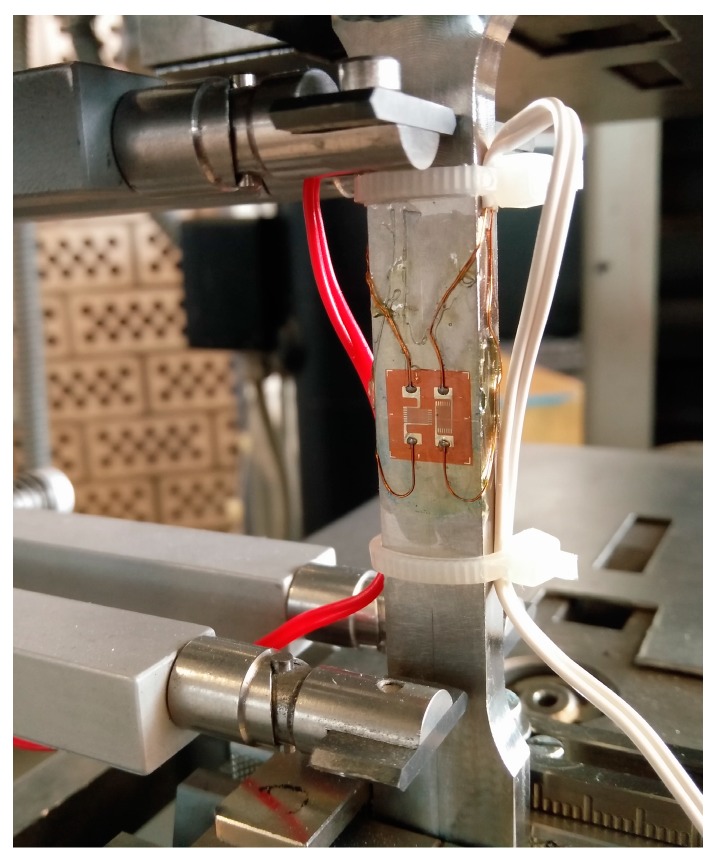
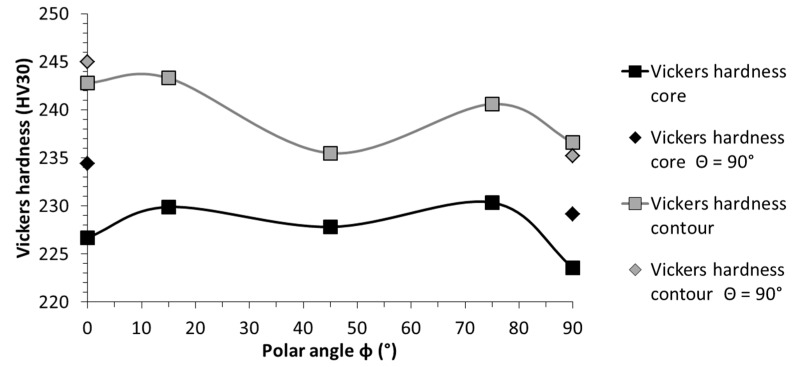
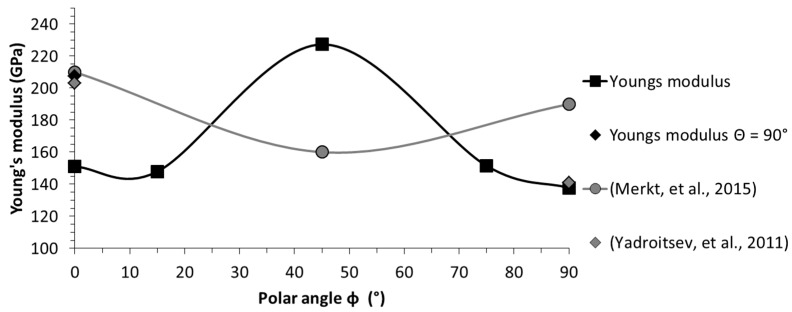
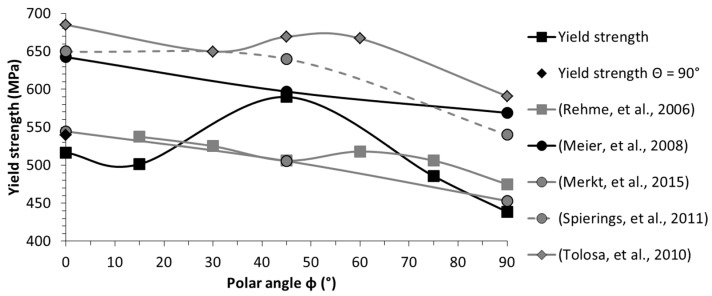
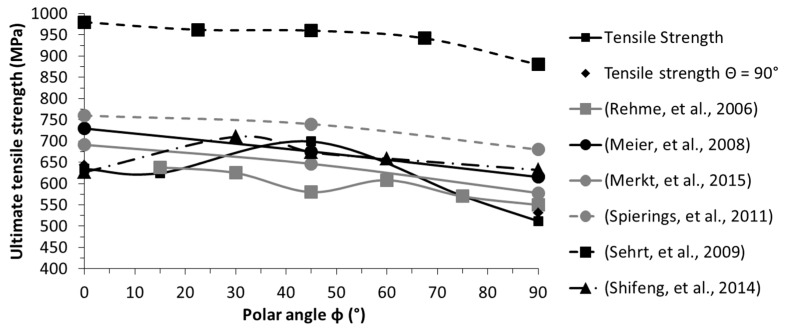
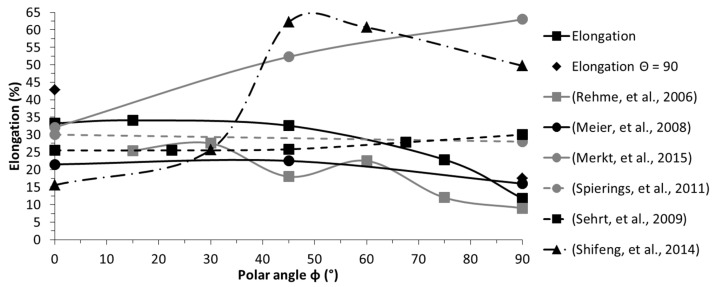
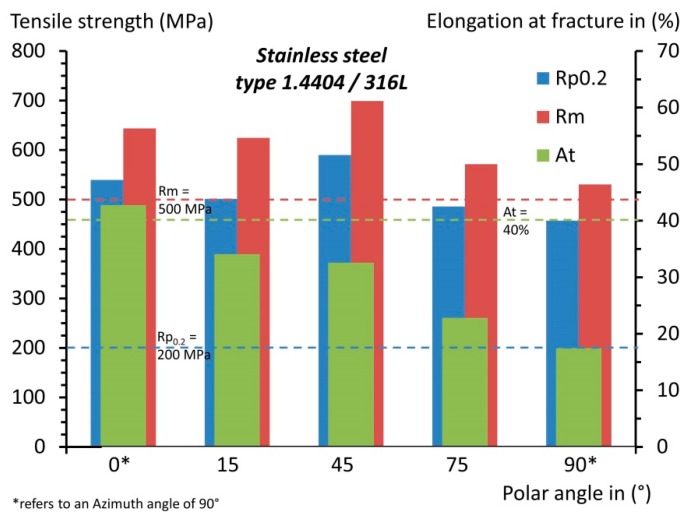
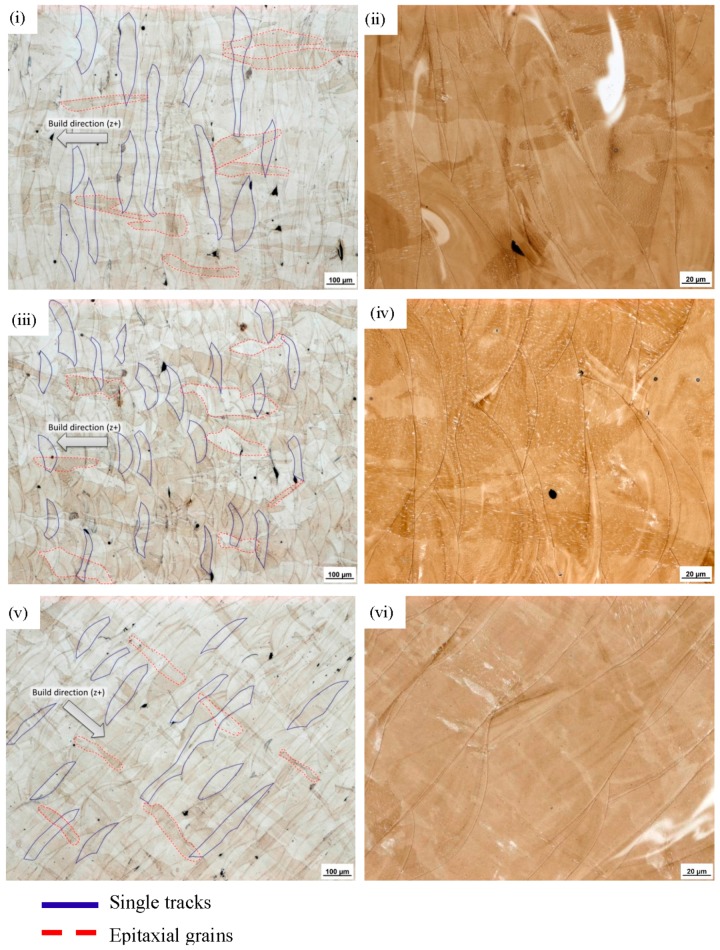
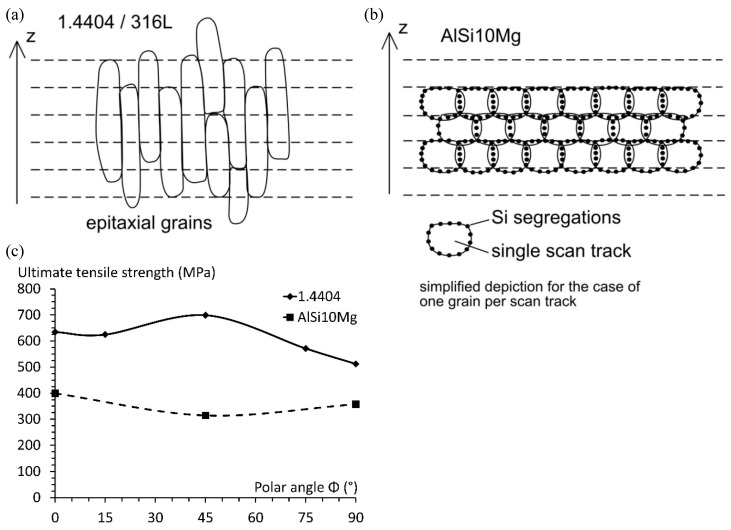
The thorough description of the peculiarities of additively manufactured (AM) structures represents a current challenge for aspiring freeform fabrication methods, such as selective laser melting (SLM). These methods have an immense advantage in the fast fabrication (no special tooling or moulds required) of components, geometrical flexibility in their design, and efficiency when only small quantities are required. However, designs demand precise knowledge of the material properties, which in the case of additively manufactured structures are anisotropic and, under certain circumstances, inhomogeneous in nature. Furthermore, these characteristics are highly dependent on the fabrication settings. In this study, the anisotropic tensile properties of selective laser-melted stainless steel (1.4404, 316L) are investigated: the Young's modulus ranged from 148 to 227 GPa, the ultimate tensile strength from 512 to 699 MPa, and the breaking elongation ranged, respectively, from 12% to 43%. The results were compared to related studies in order to classify the influence of the fabrication settings. Furthermore, the influence of the chosen raw material was addressed by comparing deviations on the directional dependencies reasoned from differing microstructural developments during manufacture. Stainless steel was found to possess its maximum strength at a 45° layer versus loading offset, which is precisely where AlSi10Mg was previously reported to be at its weakest.
对增材制造(AM)结构特性的全面描述,是诸如选择性激光熔化(SLM)等新兴自由成型制造方法当前面临的一项挑战。这些方法在部件快速制造(无需特殊工装或模具)、设计具有几何灵活性以及仅需少量生产时效率高方面具有巨大优势。然而,设计需要精确了解材料特性,对于增材制造结构而言,其材料特性是各向异性的,并且在某些情况下本质上是不均匀的。此外,这些特性高度依赖于制造工艺参数。在本研究中,对选择性激光熔化不锈钢(1.4404, 316L)的各向异性拉伸性能进行了研究:杨氏模量范围为148至227 GPa,极限抗拉强度为512至699 MPa,断裂伸长率分别为12%至43%。将结果与相关研究进行比较,以分类制造工艺参数的影响。此外,通过比较因制造过程中不同微观结构发展导致的方向依赖性偏差,探讨了所选原材料的影响。发现不锈钢在与加载方向呈45°的层方向上具有最大强度,而这恰恰是之前报道AlSi10Mg最弱的方向。