Ju Youngjun, Wu Lingyun, Yang Guangdong
Cardiovascular and Metabolic Research Unit, Lakehead University, Ont., Canada.
The School of Kinesiology, Lakehead University, Ont., Canada.
Biochem Biophys Rep. 2015 Nov 30;5:27-34. doi: 10.1016/j.bbrep.2015.11.012. eCollection 2016 Mar.
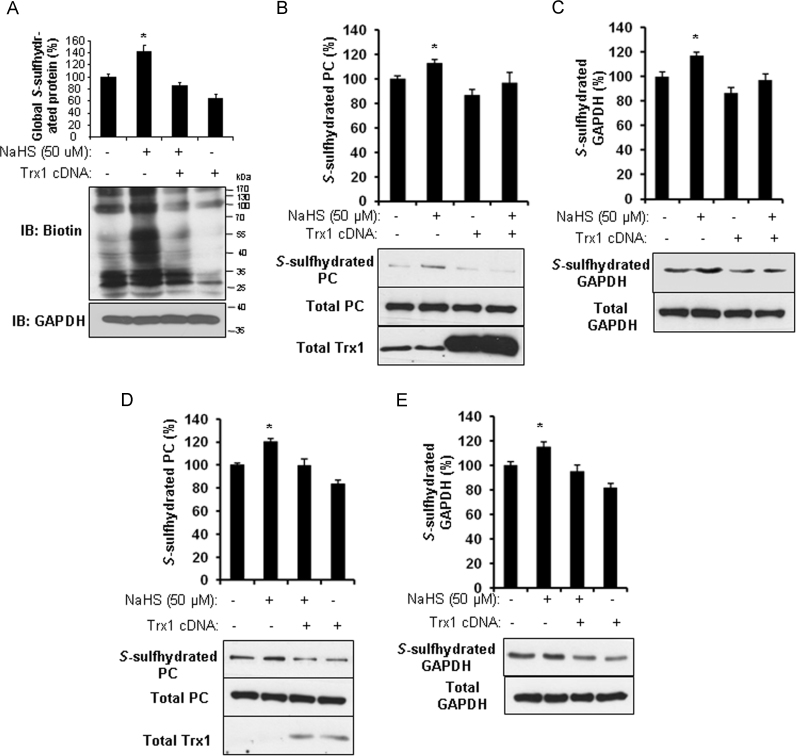
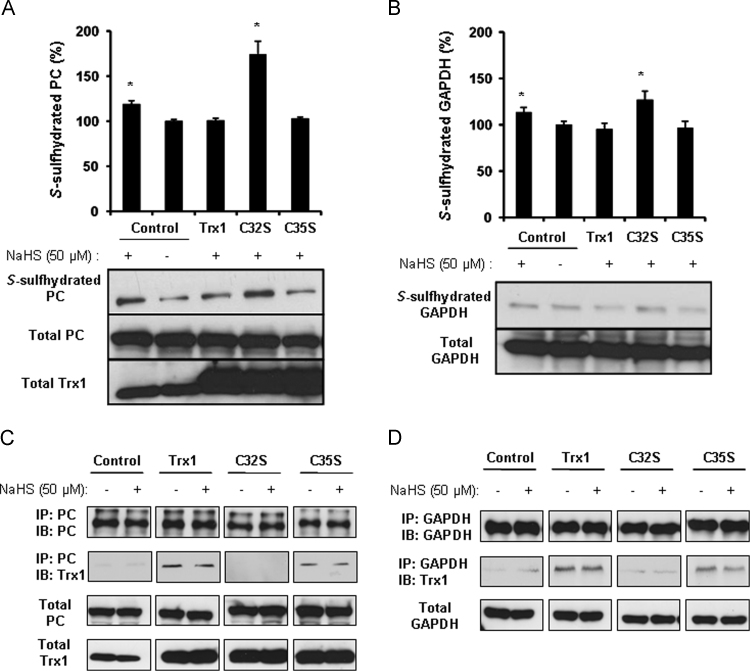
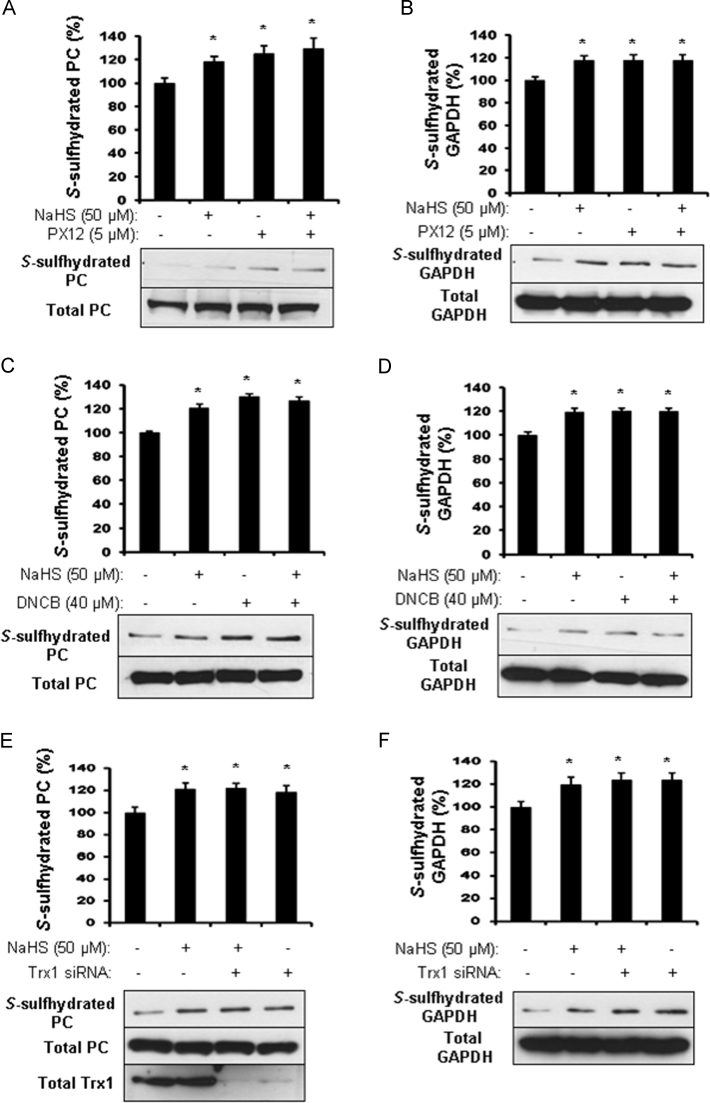
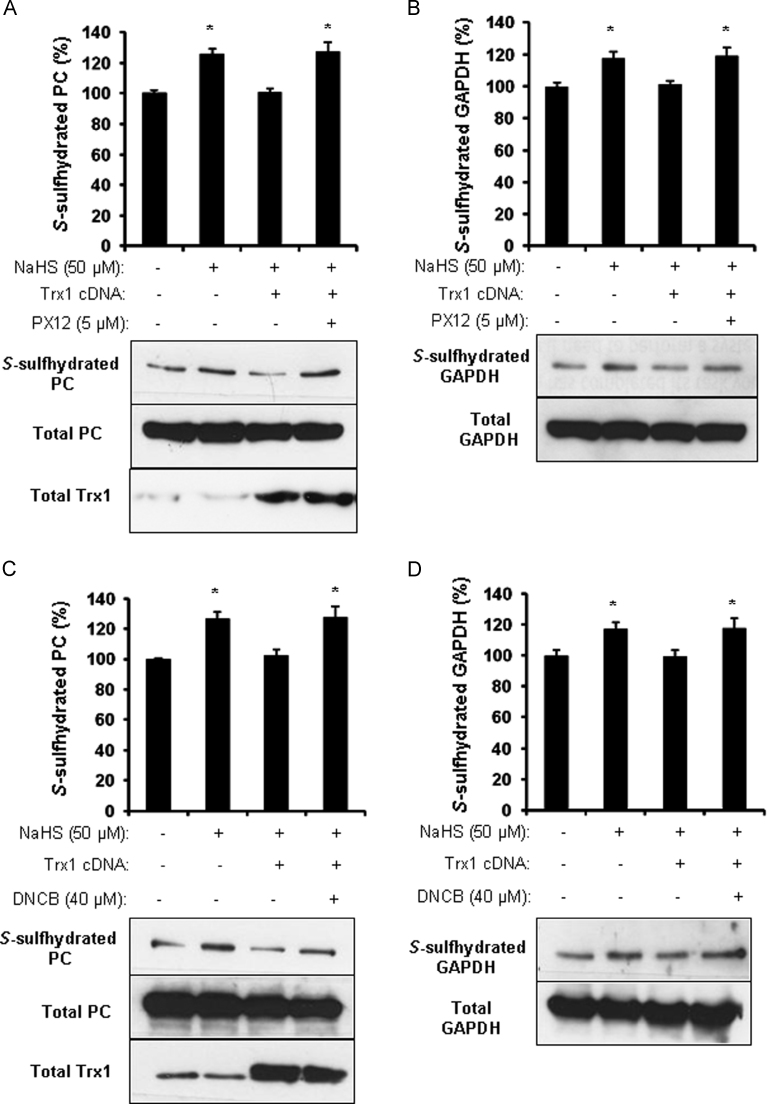
The importance of HS in biology and medicine has been widely recognized in recent years, and protein sulfhydration is proposed to mediate the direct actions of HS bioactivity in the body. Thioredoxin 1 (Trx1) is an important reducing enzyme that cleaves disulfides in proteins and acts as an -denitrosylase. The regulation of Trx1 on protein -sulfhydration is unclear. Here we showed that Trx1 facilitates protein -desulfhydration. Overexpression of Trx1 attenuated the basal level and HS-induced protein -sulfhydration by direct interaction with -sulfhydrated proteins, i.e., glyceraldehyde 3-phosphate dehydrogenase and pyruvate carboxylase. In contrast, knockdown of Trx1 mRNA expression by short interfering RNA or blockage of Trx1 redox activity with PX12 or 2,4-dinitrochlorobenzene enhanced protein -sulfhydration. Mutation of cysteine-32 but not cysteine-35 in the Trp-Cys-Gly-Pro-Cys motif eliminated the binding of Trx1 with -sulfhydrated proteins and abolished the -desulfhydrating effect of Trx1. All these data suggest that Trx1 acts as an -desulfhydrase.
近年来,硫化氢(HS)在生物学和医学中的重要性已得到广泛认可,并且蛋白质巯基化被认为介导了HS在体内的生物活性直接作用。硫氧还蛋白1(Trx1)是一种重要的还原酶,可裂解蛋白质中的二硫键并作为去亚硝基化酶发挥作用。Trx1对蛋白质巯基化的调节尚不清楚。在此我们表明Trx1促进蛋白质去巯基化。Trx1的过表达通过与巯基化蛋白质(即甘油醛-3-磷酸脱氢酶和丙酮酸羧化酶)直接相互作用,减弱了基础水平和HS诱导的蛋白质巯基化。相反,用小干扰RNA敲低Trx1 mRNA表达或用PX12或2,4-二硝基氯苯阻断Trx1的氧化还原活性可增强蛋白质巯基化。Trp-Cys-Gly-Pro-Cys基序中半胱氨酸-32而非半胱氨酸-35的突变消除了Trx1与巯基化蛋白质的结合,并消除了Trx1的去巯基化作用。所有这些数据表明Trx1作为一种去巯基酶发挥作用。