Smith Russell W, Coleman Jeffrey D, Thompson Jerry T, Vanden Heuvel John P
Department of Veterinary and Biomedical Sciences, Penn State University, University Park, PA, United States.
Biochem Biophys Rep. 2016 Nov 4;8:395-402. doi: 10.1016/j.bbrep.2016.10.014. eCollection 2016 Dec.
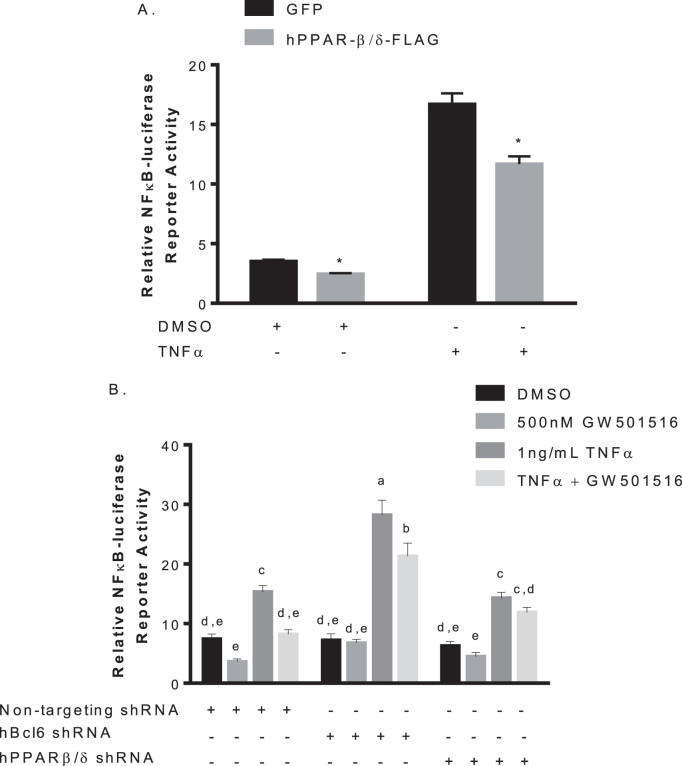
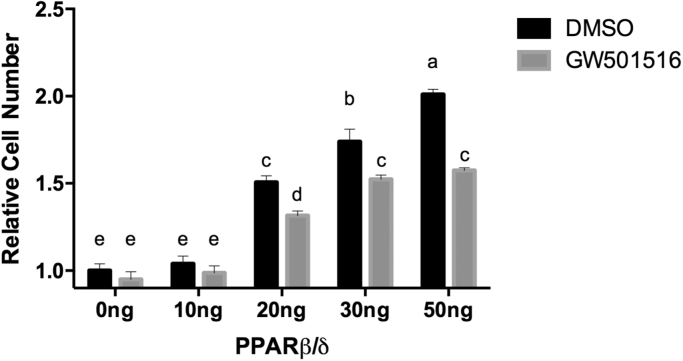
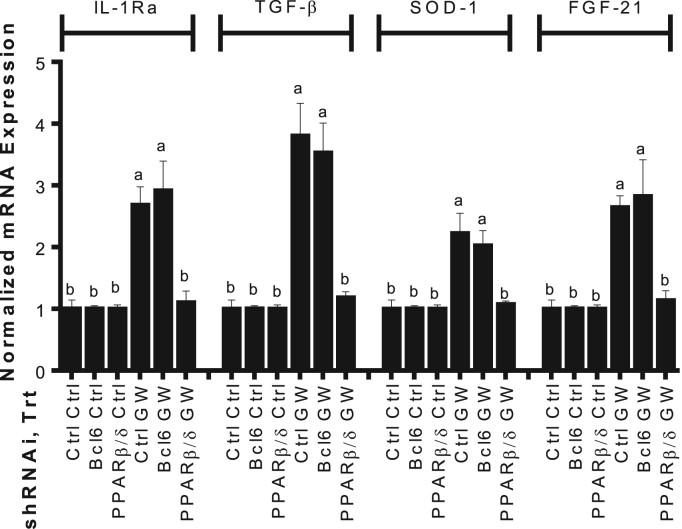
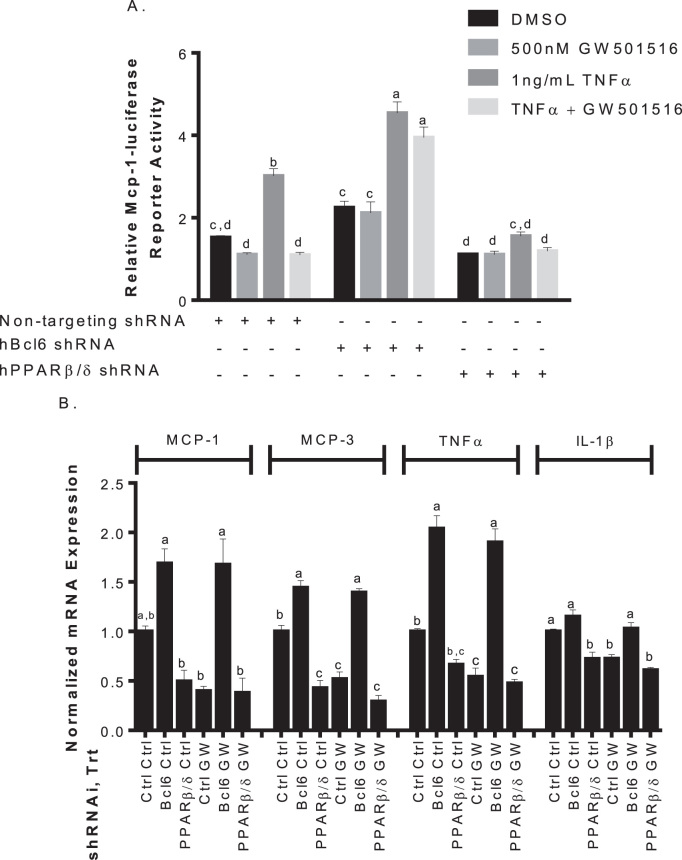
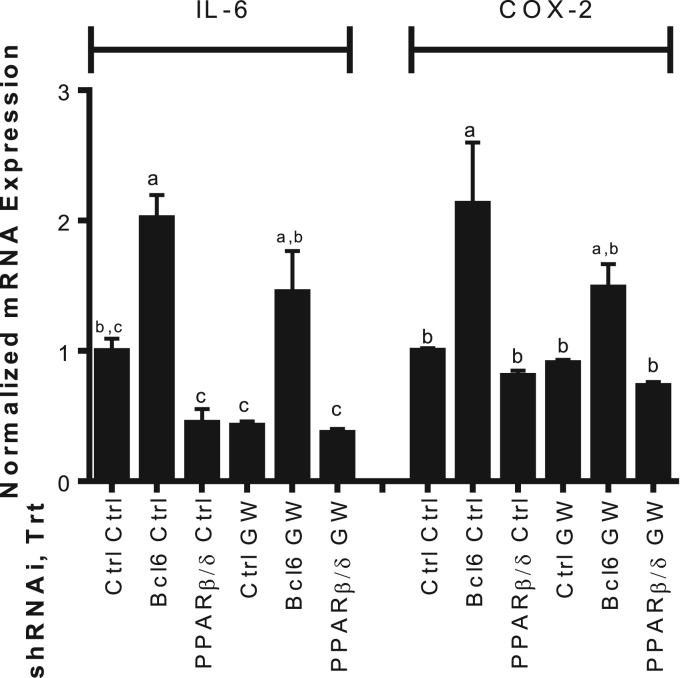
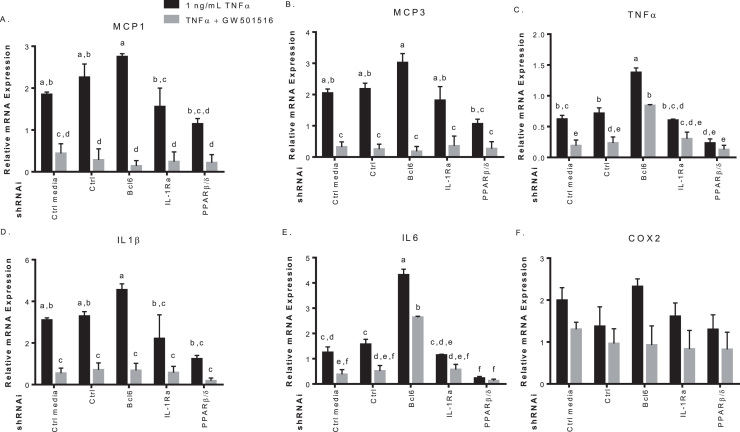
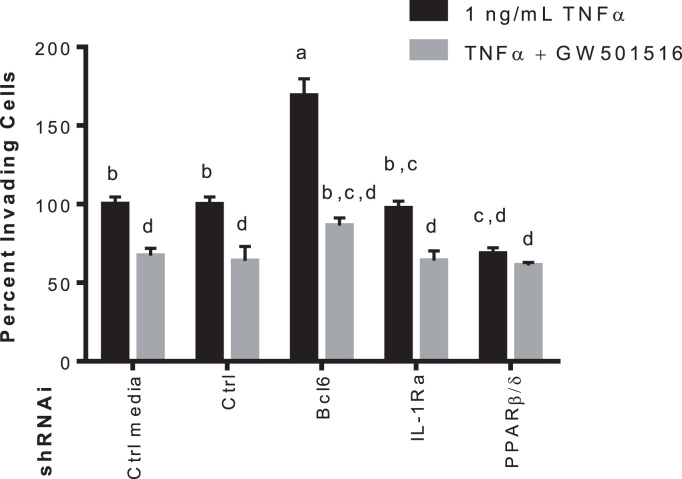
Peroxisome proliferator-activated receptor β/δ (PPARβ/δ) is a member of the nuclear receptor superfamily and a ligand-activated transcription factor that is involved in the regulation of the inflammatory response via activation of anti-inflammatory target genes and ligand-induced disassociation with the transcriptional repressor B-cell lymphoma 6 (BCL6). Chronic pancreatitis is considered to be a significant etiological factor for pancreatic cancer development, and a better understanding of the underlying mechanisms of the transition between inflammation and carcinogenesis would help further elucidate chemopreventative options. The aim of this study was to determine the role of PPARβ/δ and BCL6 in human pancreatic cancer of ductal origin, as well as the therapeutic potential of PPARβ/δ agonist, GW501516. Over-expression of PPARβ/δ inhibited basal and TNFα-induced luciferase activity. GW501516-activated PPARβ/δ suppressed TNFα-induced reporter activity. RNAi knockdown of attenuated the GW501516 effect on luciferase, while knockdown of enhanced TNFα-induced activity. PPARβ/δ activation induced expression of several anti-inflammatory genes in a dose-dependent manner, and GW501516 inhibited promoter-driven luciferase in a BCL6-dependent manner. Several pro-inflammatory genes were suppressed in a BCL6-dependent manner. Conditioned media from GW501516-treated pancreatic cancer cells suppressed pro-inflammatory expression in THP-1 macrophages as well as reduced invasiveness across a basement membrane. These results demonstrate that PPARβ/δ and BCL6 regulate anti-inflammatory signaling in human pancreatic cancer cells by inhibiting NFκB and pro-inflammatory gene expression, and via induction of anti-inflammatory target genes. Activation of PPARβ/δ may be a useful target in pancreatic cancer therapeutics.
过氧化物酶体增殖物激活受体β/δ(PPARβ/δ)是核受体超家族的成员,也是一种配体激活的转录因子,它通过激活抗炎靶基因和配体诱导的与转录抑制因子B细胞淋巴瘤6(BCL6)解离来参与炎症反应的调节。慢性胰腺炎被认为是胰腺癌发生的一个重要病因,更好地了解炎症与致癌作用之间转变的潜在机制将有助于进一步阐明化学预防方案。本研究的目的是确定PPARβ/δ和BCL6在人导管源性胰腺癌中的作用,以及PPARβ/δ激动剂GW501516的治疗潜力。PPARβ/δ的过表达抑制基础和TNFα诱导的荧光素酶活性。GW501516激活的PPARβ/δ抑制TNFα诱导的报告基因活性。RNAi敲低减弱了GW501516对荧光素酶的作用,而敲低BCL6则增强了TNFα诱导的活性。PPARβ/δ激活以剂量依赖的方式诱导几种抗炎基因的表达,并且GW501516以BCL6依赖的方式抑制BCL6启动子驱动的荧光素酶。几种促炎基因以BCL6依赖的方式被抑制。来自GW501516处理的胰腺癌细胞的条件培养基抑制THP-1巨噬细胞中的促炎表达,并降低跨基底膜的侵袭性。这些结果表明,PPARβ/δ和BCL6通过抑制NFκB和促炎基因表达以及诱导抗炎靶基因来调节人胰腺癌细胞中的抗炎信号。PPARβ/δ的激活可能是胰腺癌治疗中的一个有用靶点。