
猪血凝性脑脊髓炎病毒通过网格蛋白介导的内吞作用,以Rab5、胆固醇和pH值依赖性方式进入Neuro-2a细胞。
Porcine Hemagglutinating Encephalomyelitis Virus Enters Neuro-2a Cells via Clathrin-Mediated Endocytosis in a Rab5-, Cholesterol-, and pH-Dependent Manner.
作者信息
Li Zi, Zhao Kui, Lan Yungang, Lv Xiaoling, Hu Shiyu, Guan Jiyu, Lu Huijun, Zhang Jing, Shi Junchao, Yang Yawen, Song Deguang, Gao Feng, He Wenqi
机构信息
Key Laboratory of Zoonosis Research, Ministry of Education, College of Veterinary Medicine, Jilin University, Changchun, China.
Key Laboratory of Zoonosis Research, Ministry of Education, Institute of Zoonosis, Jilin University, Changchun, China.
出版信息
J Virol. 2017 Nov 14;91(23). doi: 10.1128/JVI.01083-17. Print 2017 Dec 1.
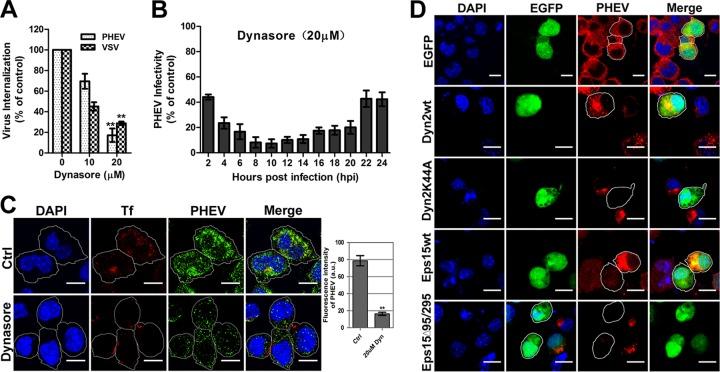
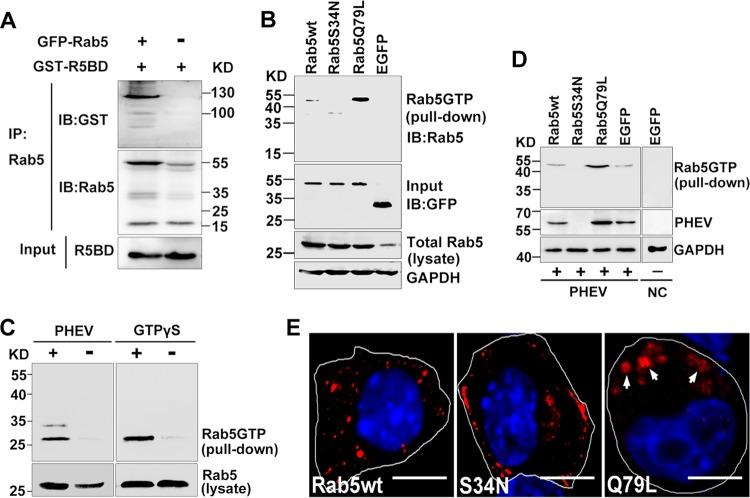
Porcine hemagglutinating encephalomyelitis virus (PHEV) is a highly neurovirulent coronavirus that invades the central nervous system (CNS) in piglets. Although important progress has been made toward understanding the biology of PHEV, many aspects of its life cycle remain obscure. Here we dissected the molecular mechanism underlying cellular entry and intracellular trafficking of PHEV in mouse neuroblastoma (Neuro-2a) cells. We first performed a thin-section transmission electron microscopy (TEM) assay to characterize the kinetics of PHEV, and we found that viral entry and transfer occur via membranous coating-mediated endo- and exocytosis. To verify the roles of distinct endocytic pathways, systematic approaches were used, including pharmacological inhibition, RNA interference, confocal microscopy analysis, use of fluorescently labeled virus particles, and overexpression of a dominant negative (DN) mutant. Quantification of infected cells showed that PHEV enters cells by clathrin-mediated endocytosis (CME) and that low pH, dynamin, cholesterol, and Eps15 are indispensably involved in this process. Intriguingly, PHEV invasion leads to rapid actin rearrangement, suggesting that the intactness and dynamics of the actin cytoskeleton are positively correlated with viral endocytosis. We next investigated the trafficking of internalized PHEV and found that Rab5- and Rab7-dependent pathways are required for the initiation of a productive infection. Furthermore, a GTPase activation assay suggested that endogenous Rab5 is activated by PHEV and is crucial for viral progression. Our findings demonstrate that PHEV hijacks the CME and endosomal system of the host to enter and traffic within neural cells, providing new insights into PHEV pathogenesis and guidance for antiviral drug design. Porcine hemagglutinating encephalomyelitis virus (PHEV), a nonsegmented, positive-sense, single-stranded RNA coronavirus, invades the central nervous system (CNS) and causes neurological dysfunction. Neural cells are its targets for viral progression. However, the detailed mechanism underlying PHEV entry and trafficking remains unknown. PHEV is the etiological agent of porcine hemagglutinating encephalomyelitis, which is an acute and highly contagious disease that causes numerous deaths in suckling piglets and enormous economic losses in China. Understanding the viral entry pathway will not only advance our knowledge of PHEV infection and pathogenesis but also open new approaches to the development of novel therapeutic strategies. Therefore, we employed systematic approaches to dissect the internalization and intracellular trafficking mechanism of PHEV in Neuro-2a cells. This is the first report to describe the process of PHEV entry into nerve cells via clathrin-mediated endocytosis in a dynamin-, cholesterol-, and pH-dependent manner that requires Rab5 and Rab7.
猪血凝性脑脊髓炎病毒(PHEV)是一种高神经毒性冠状病毒,可侵袭仔猪的中枢神经系统(CNS)。尽管在了解PHEV生物学特性方面已取得重要进展,但其生命周期的许多方面仍不清楚。在此,我们剖析了PHEV在小鼠神经母细胞瘤(Neuro-2a)细胞中进入细胞及细胞内转运的分子机制。我们首先进行了超薄切片透射电子显微镜(TEM)分析以表征PHEV的动力学,发现病毒进入和转运通过膜包被介导的内吞和外排作用发生。为验证不同内吞途径的作用,我们采用了系统方法,包括药理学抑制、RNA干扰、共聚焦显微镜分析、使用荧光标记病毒颗粒以及显性负性(DN)突变体的过表达。感染细胞的定量分析表明,PHEV通过网格蛋白介导的内吞作用(CME)进入细胞,并且低pH值、发动蛋白、胆固醇和Eps15在此过程中不可或缺。有趣的是,PHEV入侵导致肌动蛋白迅速重排,表明肌动蛋白细胞骨架的完整性和动态性与病毒内吞作用呈正相关。接下来,我们研究了内化的PHEV的转运,发现Rab5和Rab7依赖性途径是有效感染起始所必需的。此外,GTP酶激活试验表明内源性Rab5被PHEV激活,对病毒进展至关重要。我们的研究结果表明,PHEV劫持宿主的CME和内体系统以在神经细胞内进入和转运,为PHEV发病机制提供了新见解,并为抗病毒药物设计提供了指导。猪血凝性脑脊髓炎病毒(PHEV)是一种不分节段的正链单链RNA冠状病毒,侵袭中枢神经系统(CNS)并引起神经功能障碍。神经细胞是其病毒进展的靶标。然而,PHEV进入和转运的详细机制仍不清楚。PHEV是猪血凝性脑脊髓炎的病原体,这是一种急性且高度传染性的疾病,导致哺乳仔猪大量死亡,并在中国造成巨大经济损失。了解病毒进入途径不仅将推进我们对PHEV感染和发病机制的认识,还将为开发新的治疗策略开辟新途径。因此,我们采用系统方法剖析PHEV在Neuro-2a细胞中的内化和细胞内转运机制。这是第一份描述PHEV以依赖发动蛋白、胆固醇和pH值且需要Rab5和Rab7的方式通过网格蛋白介导的内吞作用进入神经细胞过程的报告。




 Zotero 插件