USEPA Office of Research and Development, Cincinnati, OH 45213, United States.
USEPA Office of Research and Development, Cincinnati, OH 45213, United States.
Sci Total Environ. 2018 Feb 1;613-614:1228-1239. doi: 10.1016/j.scitotenv.2017.08.301. Epub 2017 Sep 24.
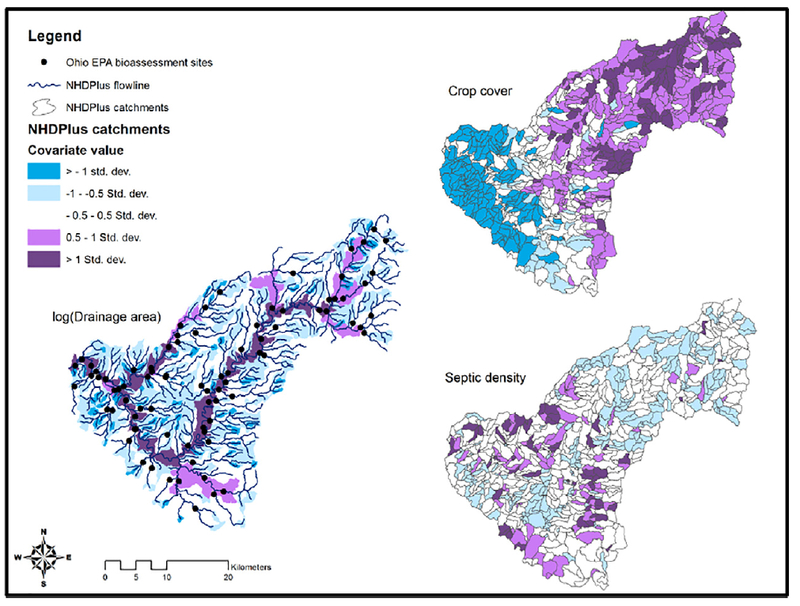
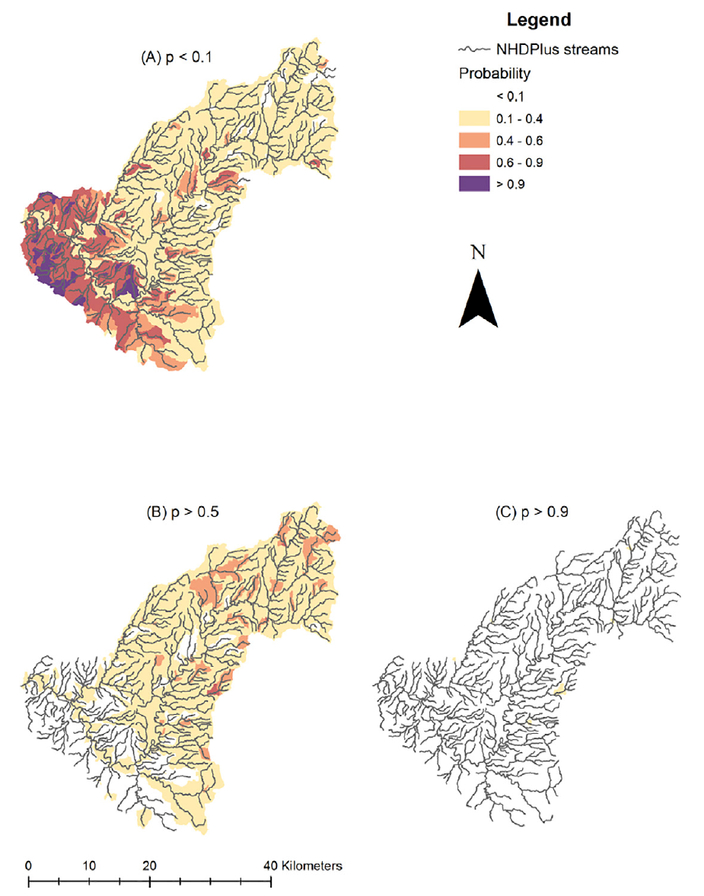
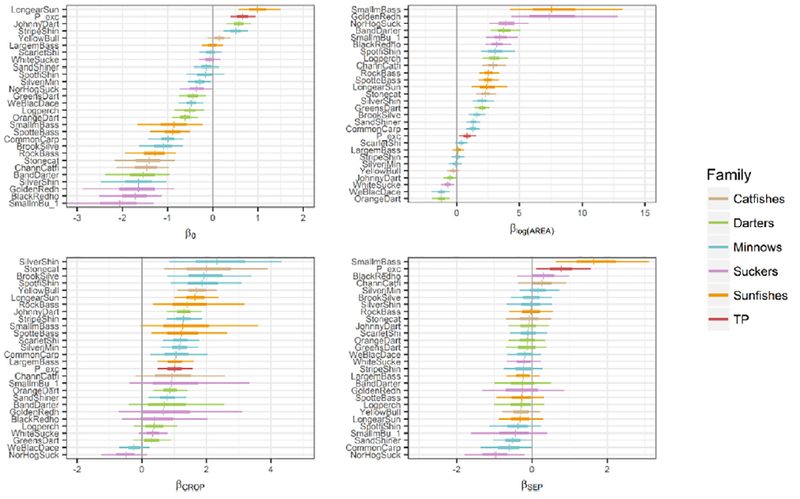
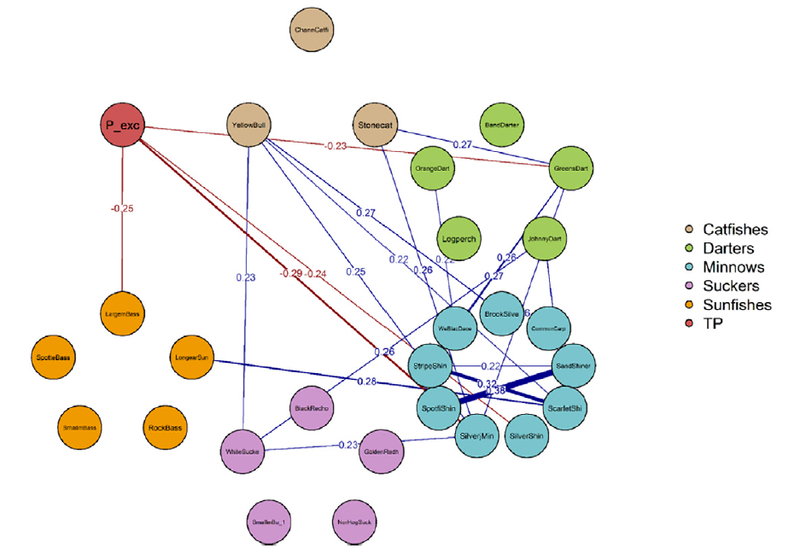
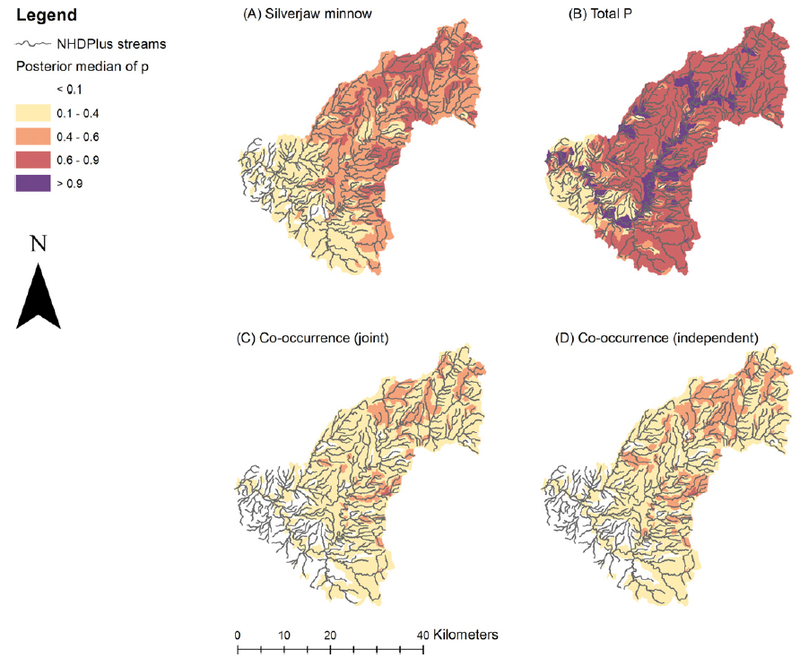
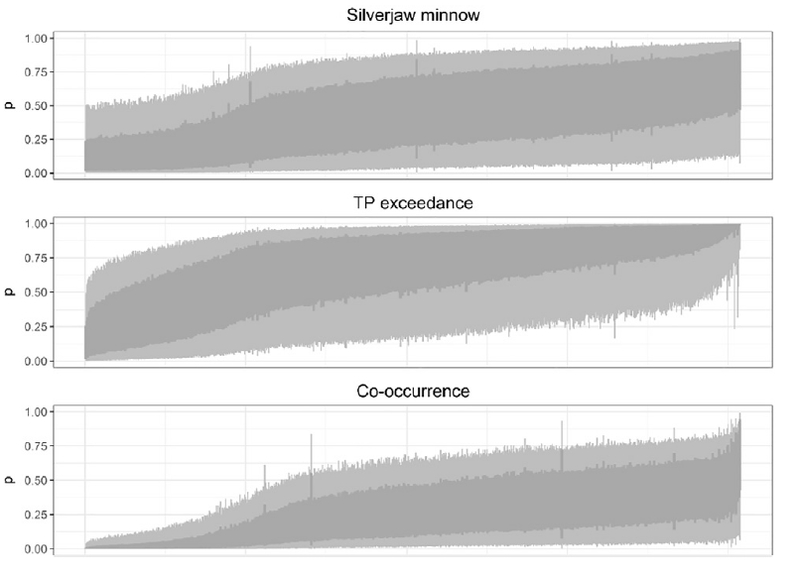
Part of the ecological risk assessment process involves examining the potential for environmental stressors and ecological receptors to co-occur across a landscape. In this study, we introduce a Bayesian joint modeling framework for use in evaluating and mapping the co-occurrence of stressors and receptors using empirical data, open-source statistical software, and Geographic Information Systems tools and data. To illustrate the approach, we apply the framework to bioassessment data on stream fishes and nutrients collected from a watershed in southwestern Ohio. The results highlighted the joint model's ability to parse and exploit statistical dependencies in order to provide empirical insight into the potential environmental and ecotoxicological interactions influencing co-occurrence. We also demonstrate how probabilistic predictions can be generated and mapped to visualize spatial patterns in co-occurrences. For practitioners, we believe that this data-driven approach to modeling and mapping co-occurrence can lead to more quantitatively transparent and robust assessments of ecological risk.
生态风险评估过程的一部分涉及检查环境胁迫物和生态受体在景观中共同出现的可能性。在这项研究中,我们引入了一个贝叶斯联合建模框架,用于使用经验数据、开源统计软件以及地理信息系统工具和数据来评估和绘制胁迫物和受体的共同出现情况。为了说明该方法,我们将该框架应用于从俄亥俄州西南部一个流域收集的溪流鱼类和养分的生物评估数据。结果突出了联合模型解析和利用统计依赖性的能力,以便为影响共同出现的潜在环境和生态毒理学相互作用提供经验见解。我们还展示了如何生成概率预测并将其映射以可视化共同出现的空间模式。对于从业者,我们相信这种对共同出现进行建模和映射的基于数据的方法可以导致对生态风险进行更具定量透明度和稳健性的评估。