Venkatesh Humsa S, Tam Lydia T, Woo Pamelyn J, Lennon James, Nagaraja Surya, Gillespie Shawn M, Ni Jing, Duveau Damien Y, Morris Patrick J, Zhao Jean J, Thomas Craig J, Monje Michelle
Department of Neurology, Stanford University School of Medicine, Stanford, California, USA.
Cancer Biology Graduate Program, Stanford University School of Medicine, Stanford, California, USA.
Nature. 2017 Sep 28;549(7673):533-537. doi: 10.1038/nature24014. Epub 2017 Sep 20.
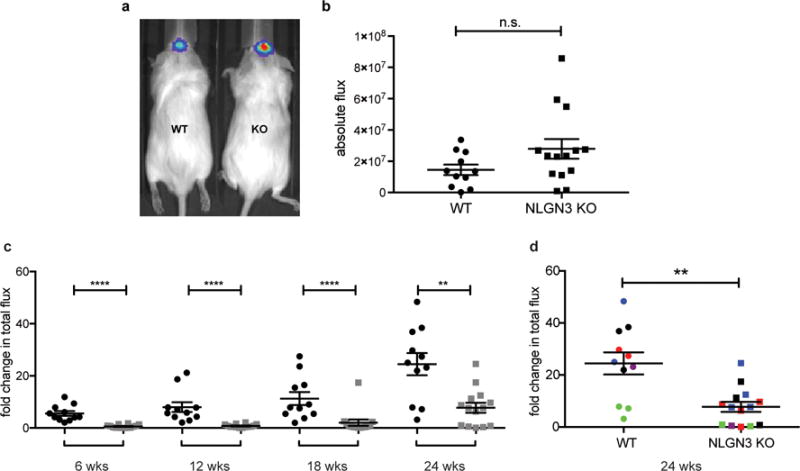
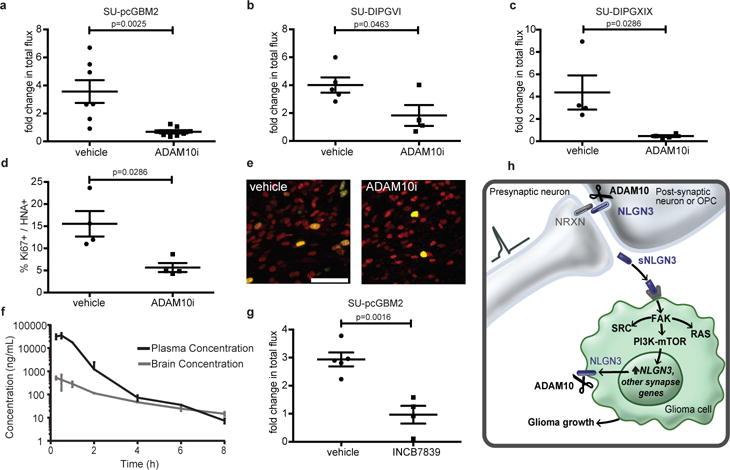
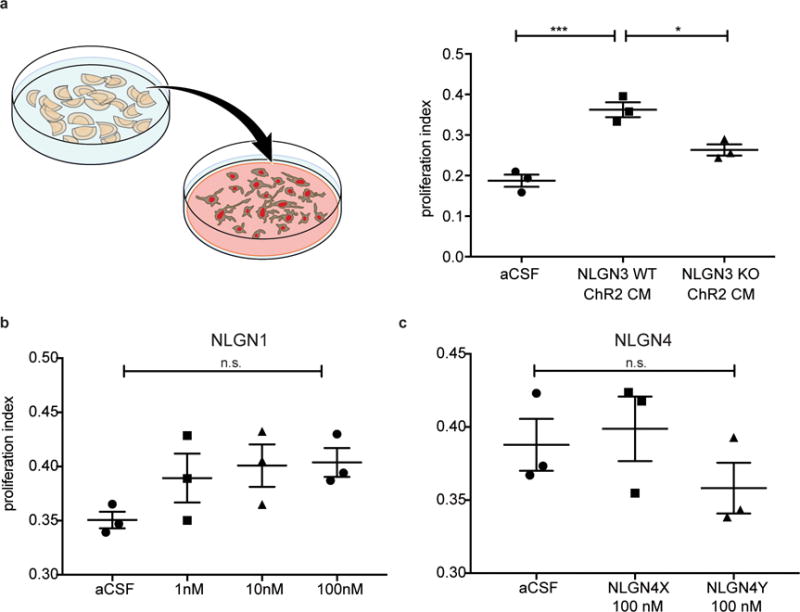
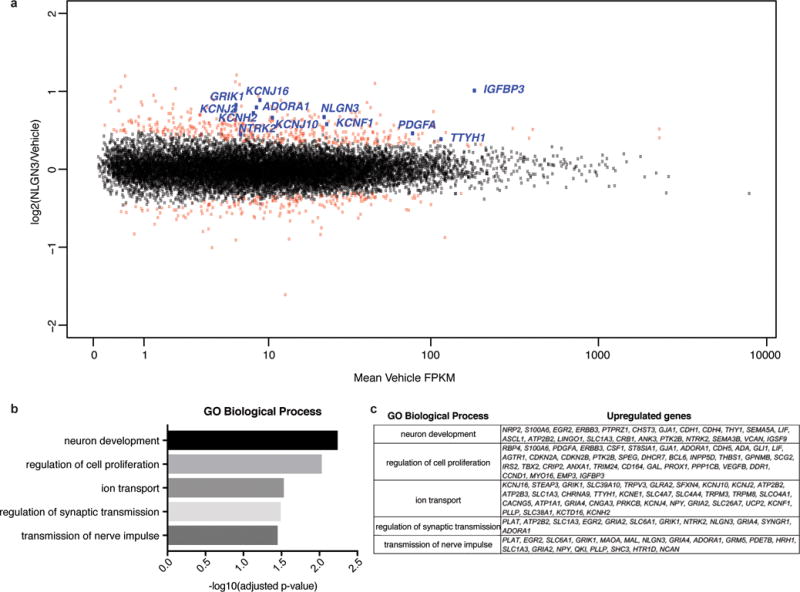
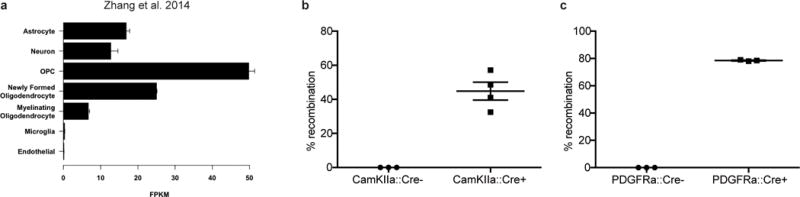
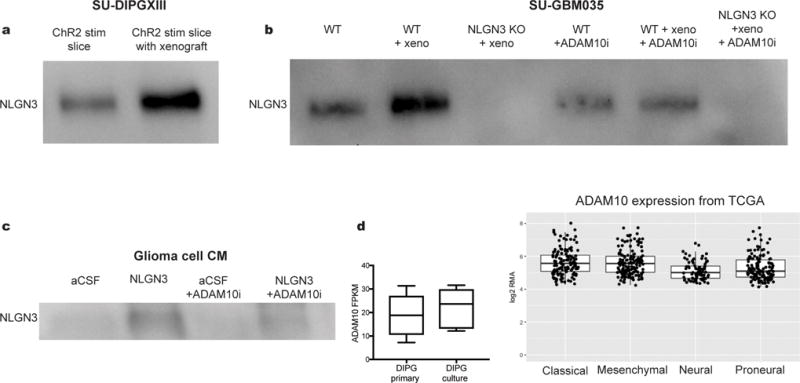
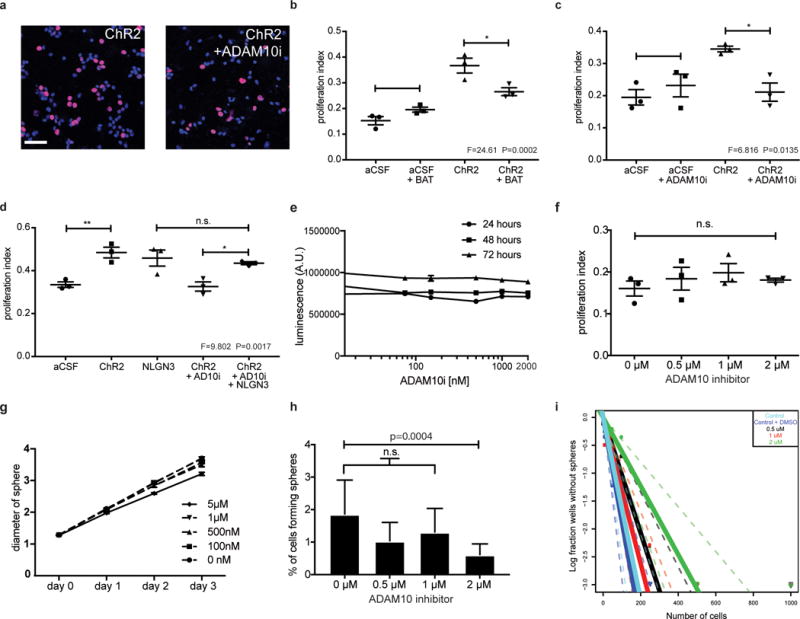
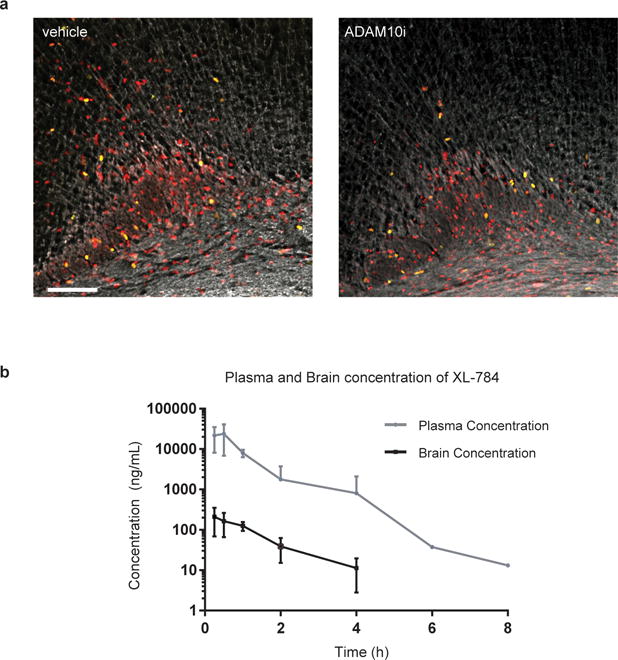
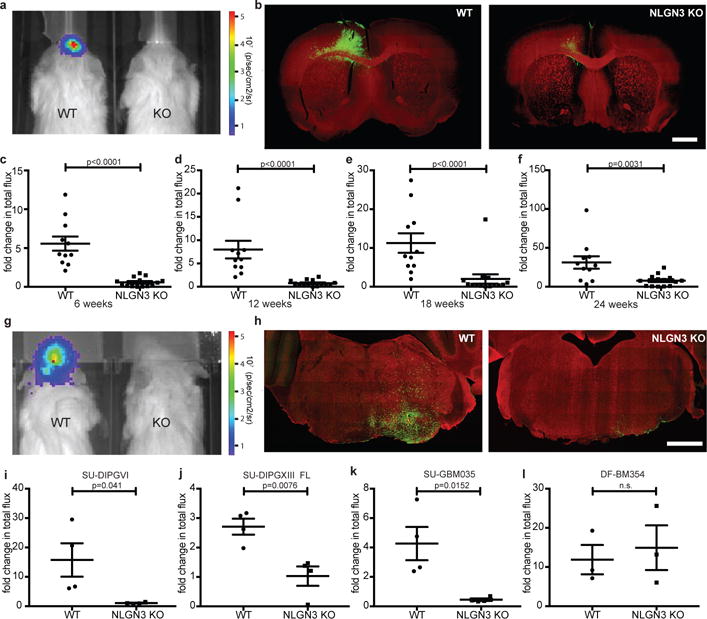
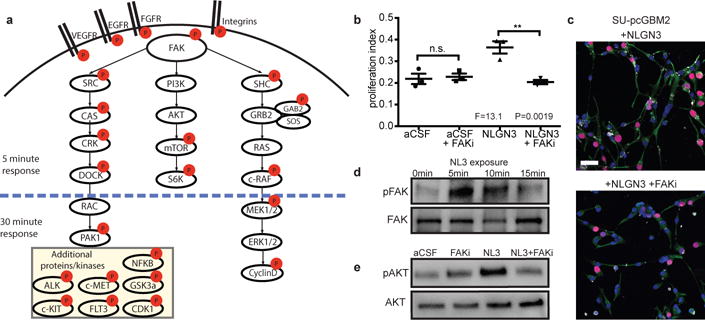
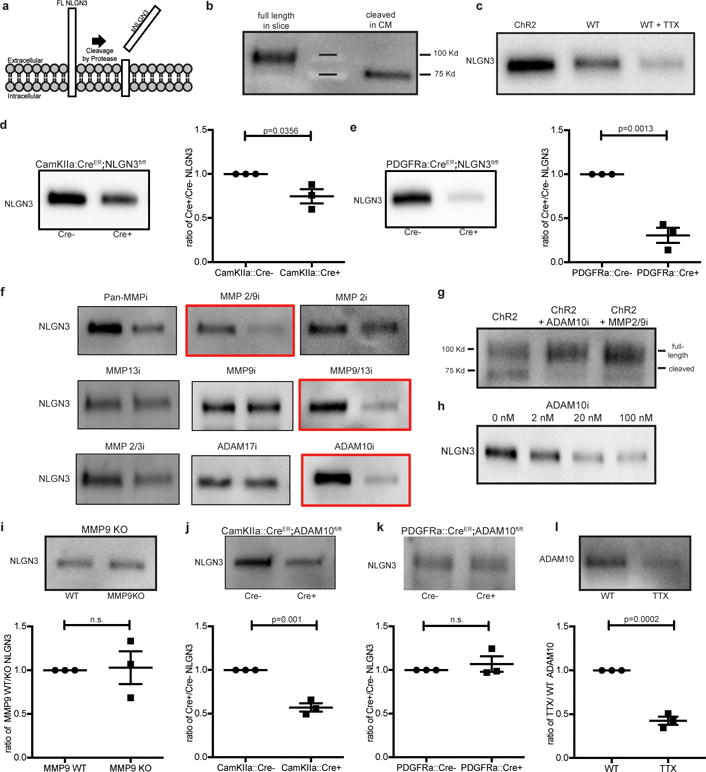
High-grade gliomas (HGG) are a devastating group of cancers, and represent the leading cause of brain tumour-related death in both children and adults. Therapies aimed at mechanisms intrinsic to glioma cells have translated to only limited success; effective therapeutic strategies will need also to target elements of the tumour microenvironment that promote glioma progression. Neuronal activity promotes the growth of a range of molecularly and clinically distinct HGG types, including adult and paediatric glioblastoma (GBM), anaplastic oligodendroglioma, and diffuse intrinsic pontine glioma (DIPG). An important mechanism that mediates this neural regulation of brain cancer is activity-dependent cleavage and secretion of the synaptic adhesion molecule neuroligin-3 (NLGN3), which promotes glioma proliferation through the PI3K-mTOR pathway. However, the necessity of NLGN3 for glioma growth, the proteolytic mechanism of NLGN3 secretion, and the further molecular consequences of NLGN3 secretion in glioma cells remain unknown. Here we show that HGG growth depends on microenvironmental NLGN3, identify signalling cascades downstream of NLGN3 binding in glioma, and determine a therapeutically targetable mechanism of secretion. Patient-derived orthotopic xenografts of paediatric GBM, DIPG and adult GBM fail to grow in Nlgn3 knockout mice. NLGN3 stimulates several oncogenic pathways, such as early focal adhesion kinase activation upstream of PI3K-mTOR, and induces transcriptional changes that include upregulation of several synapse-related genes in glioma cells. NLGN3 is cleaved from both neurons and oligodendrocyte precursor cells via the ADAM10 sheddase. ADAM10 inhibitors prevent the release of NLGN3 into the tumour microenvironment and robustly block HGG xenograft growth. This work defines a promising strategy for targeting NLGN3 secretion, which could prove transformative for HGG therapy.
高级别胶质瘤(HGG)是一类极具破坏性的癌症,是儿童和成人脑肿瘤相关死亡的主要原因。针对胶质瘤细胞内在机制的治疗仅取得了有限的成功;有效的治疗策略还需要针对促进胶质瘤进展的肿瘤微环境因素。神经元活动促进多种分子和临床特征不同的HGG类型的生长,包括成人和儿童胶质母细胞瘤(GBM)、间变性少突胶质细胞瘤和弥漫性脑桥内在胶质瘤(DIPG)。介导这种脑癌神经调节的一个重要机制是突触粘附分子神经连接蛋白-3(NLGN3)的活性依赖性切割和分泌,它通过PI3K-mTOR途径促进胶质瘤增殖。然而,NLGN3对胶质瘤生长的必要性、NLGN3分泌的蛋白水解机制以及NLGN3分泌在胶质瘤细胞中的进一步分子后果仍不清楚。在这里,我们表明HGG的生长依赖于微环境中的NLGN3,确定了胶质瘤中NLGN3结合下游的信号级联,并确定了一种可治疗靶向的分泌机制。来自儿童GBM、DIPG和成人GBM的患者原位异种移植瘤在Nlgn3基因敲除小鼠中无法生长。NLGN3刺激多种致癌途径,如PI3K-mTOR上游的早期粘着斑激酶激活,并诱导转录变化,包括胶质瘤细胞中几种突触相关基因的上调。NLGN3通过ADAM10蛋白酶从神经元和少突胶质前体细胞中切割下来。ADAM10抑制剂可阻止NLGN3释放到肿瘤微环境中,并有力地阻断HGG异种移植瘤的生长。这项工作定义了一种有前景的靶向NLGN3分泌的策略,这可能被证明对HGG治疗具有变革性。