Takahashi Yoshio, Fan Qiaohui, Suga Hiroki, Tanaka Kazuya, Sakaguchi Aya, Takeichi Yasuo, Ono Kanta, Mase Kazuhiko, Kato Kenji, Kanivets Vladimir V
Department of Earth and Planetary Science, The University of Tokyo, Hongo 7-3-1, Bunkyo-ku, Tokyo, 113- 8654, Japan.
Institute of Materials Structure Science, High-Energy Accelerator Research Organization (KEK), Oho, Tsukuba, Ibaraki, 305-0801, Japan.
Sci Rep. 2017 Sep 29;7(1):12407. doi: 10.1038/s41598-017-12391-7.
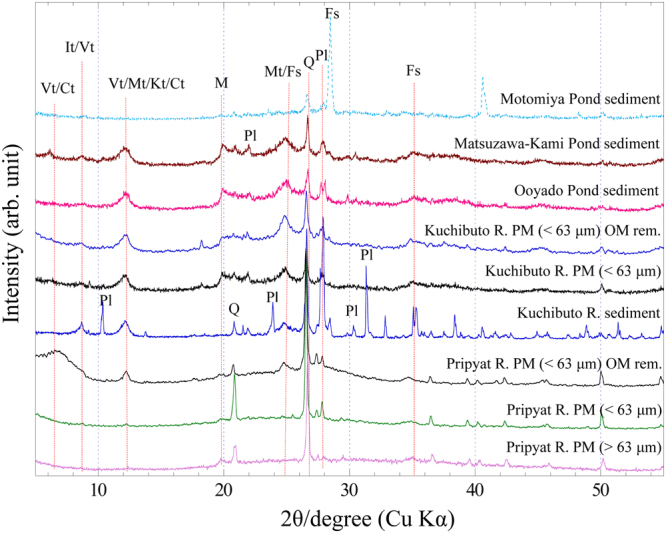
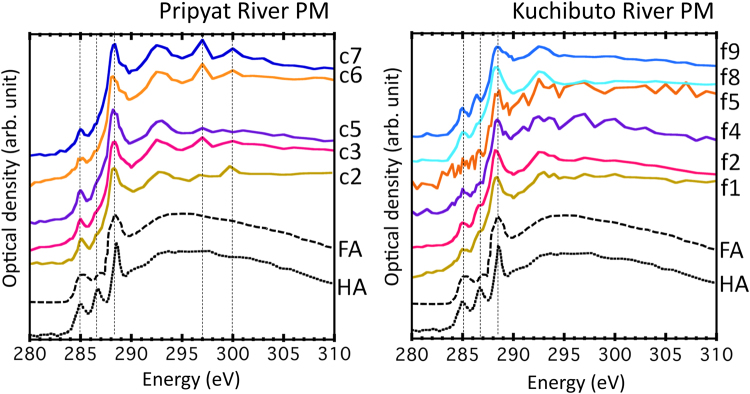
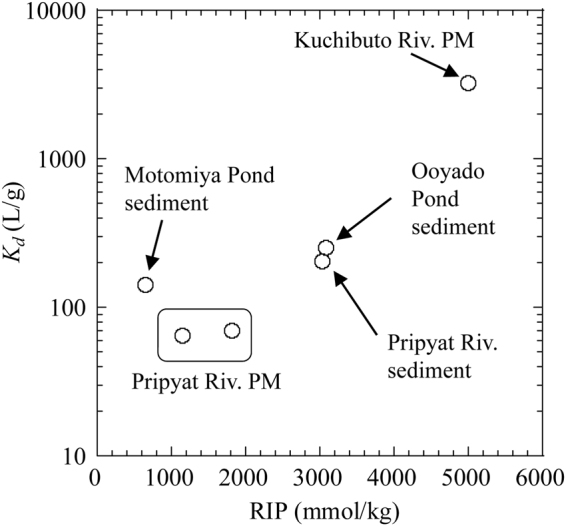
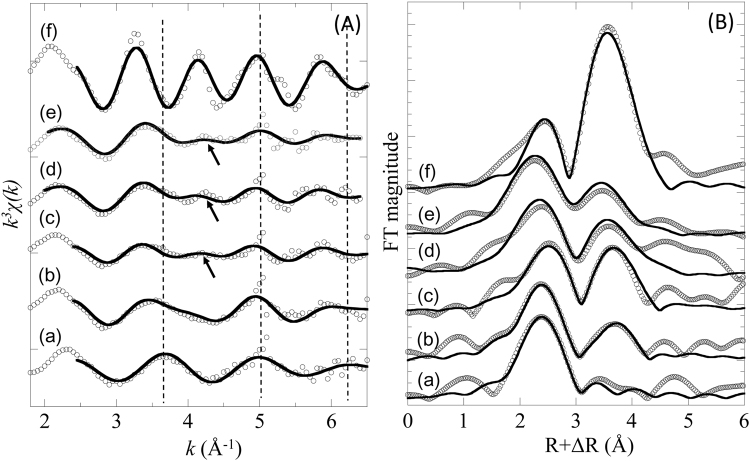
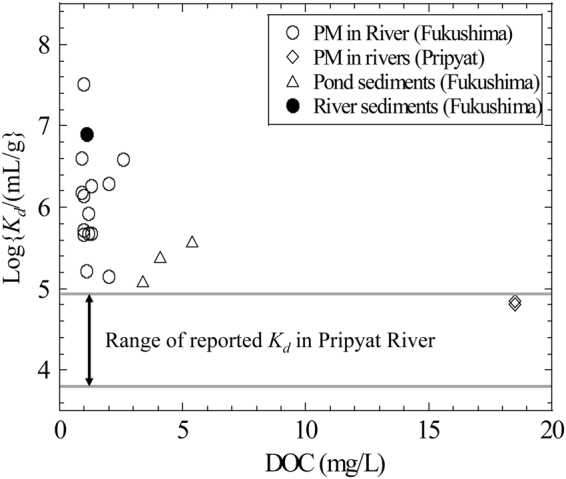
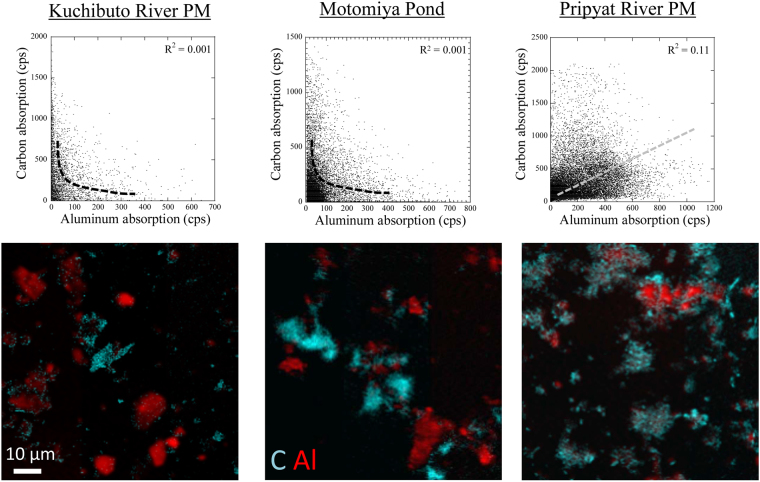
Adsorption of radiocesium (RCs) on particulate matters in aquatic environment is important to understand its mobility and bioavailability. We here focused on factors controlling partition of RCs on particulate matters and sediments in Kuchibuto (Fukushima) and Pripyat (Chernobyl) Rivers, though RCs level in water was much smaller than WHO guideline. Moreover, Cs speciation and organic matter-clay mineral interaction were studied: (i) extended X-ray absorption fine structure showed that the contribution of outer-sphere complex of Cs on particulate matters is larger in Chernobyl than in Fukushima and (ii) scanning transmission X-ray microscope revealed larger association of humic substances and clay minerals in Chernobyl partly due to high [Ca] in the Pripyat River. Consequently, RCs is more soluble in the Pripyat River due to weaker interaction of RCs with clay minerals caused by the inhibition effect of the adsorbed humic substances. In contrast, particulate matters and sediments in the Kuchibuto River display high adsorption affinity with lesser inhibition effect of adsorbed humic substances. This difference is possibly governed by the geology and soil type of provenances surrounding both catchments (Fukushima: weathered granite; Chernobyl: peat wetland and carbonate platform) which leads to high concentrations of organic matter and Ca in the Pripyat River.
了解放射性铯(RCs)在水生环境中颗粒物上的吸附情况,对于掌握其迁移性和生物可利用性至关重要。尽管库奇布托河(福岛)和普里皮亚季河(切尔诺贝利)水中的放射性铯水平远低于世界卫生组织的指导标准,但我们在此重点研究了控制放射性铯在这些河流颗粒物和沉积物上分配的因素。此外,还对铯的形态以及有机物与粘土矿物的相互作用进行了研究:(i)扩展X射线吸收精细结构表明,切尔诺贝利地区颗粒物上铯的外层球络合物贡献比福岛地区更大;(ii)扫描透射X射线显微镜显示,切尔诺贝利地区腐殖质与粘土矿物的结合更为紧密,部分原因是普里皮亚季河中的钙含量较高。因此,由于吸附的腐殖质产生抑制作用,导致放射性铯与粘土矿物的相互作用较弱,使得放射性铯在普里皮亚季河中更易溶解。相比之下,库奇布托河中的颗粒物和沉积物表现出较高的吸附亲和力,且吸附的腐殖质抑制作用较小。这种差异可能由两个集水区周围的地质和土壤类型(福岛:风化花岗岩;切尔诺贝利:泥炭湿地和碳酸盐台地)决定,这导致普里皮亚季河中有机物和钙的浓度较高。