Abrahams Naeemah, Seedat Soraya, Lombard Carl, Kengne Andre P, Myers Bronwyn, Sewnath Alesha, Mhlongo Shibe, Ramjee Gita, Peer Nasheeta, Garcia-Moreno Claudia, Jewkes Rachel
Gender and Health Research Unit, South African Medical Research Council, Tygerberg, South Africa.
Anxiety and Stress Disorder Unit, University of Stellenbosch, Cape Town, South Africa.
BMJ Open. 2017 Sep 29;7(9):e017296. doi: 10.1136/bmjopen-2017-017296.
South Africa is a country known for its high levels of HIV infection and sexual violence. Although the interface between gender-based violence, HIV and mental health has been described, there are substantial gaps in knowledge of the medium-term and long-term health impact. The 2010 Global Burden of Disease study excluded many health outcomes associated with rape and other forms of gender-based violence because systematic reviews revealed huge gaps in data and poor evidence of health effects. This study aims to describe the incidence and attributable burden of physical and mental health problems (including HIV acquisition) in adult women over a 2-year postrape period, through comparison with a cohort of women who have not been raped. The study will substantially advance our understanding of the impact of rape and will generate robust data to assist in the development of postrape health services and the delivery of evidence-based care.
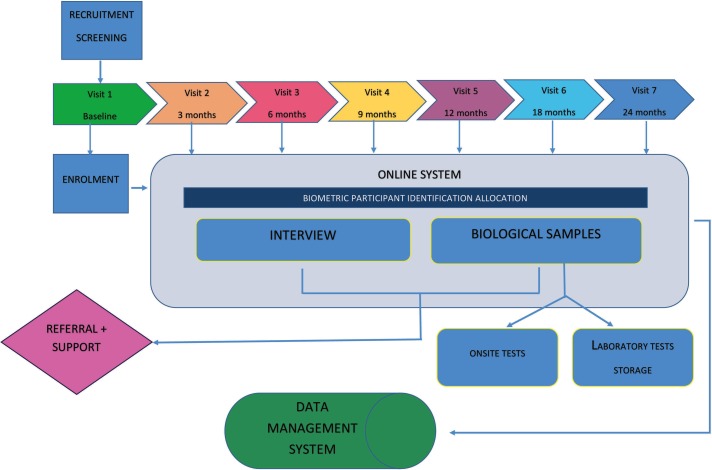
This longitudinal study seeks to recruit 1008 rape-exposed and 1008 rape non-exposed women. Women were recruited from health services, and assessments were carried out at baseline, 3, 6, 9, 12, 18 and 24 months. Outcome measures include exposure to risk factors; mental health status; cardio-metabolic risks; and biomarkers for HIV, sexually transmitted infections, pregnancy and stress. The primary analysis will be to compare HIV incidence in the two groups using log-rank tests. Appropriate models to predict health outcomes over time will also be applied.
The South African Medical Research Council's Ethics Committee approved the study. As rape is a key element of the study, the safety and protection of participants guides the research process. We will adopt a research uptake strategy to ensure dissemination to policy makers, service providers and advocacy groups. Peer-reviewed journal articles will be published.
南非是一个以高艾滋病毒感染率和性暴力闻名的国家。尽管基于性别的暴力、艾滋病毒与心理健康之间的关联已被描述,但在中期和长期健康影响方面的知识仍存在重大差距。2010年全球疾病负担研究排除了许多与强奸及其他形式的基于性别的暴力相关的健康结果,因为系统评价显示数据存在巨大差距且健康影响的证据不足。本研究旨在通过与未遭受强奸的女性队列进行比较,描述成年女性在遭受强奸后两年内身心健康问题(包括感染艾滋病毒)的发生率和归因负担。该研究将极大地推进我们对强奸影响的理解,并生成有力数据以协助制定强奸后健康服务及提供循证护理。
这项纵向研究旨在招募1008名遭受强奸的女性和1008名未遭受强奸的女性。从卫生服务机构招募女性,并在基线、3个月、6个月、9个月、12个月、18个月和24个月进行评估。结果指标包括暴露于风险因素、心理健康状况、心血管代谢风险以及艾滋病毒、性传播感染、怀孕和压力的生物标志物。主要分析将使用对数秩检验比较两组的艾滋病毒感染率。还将应用适当的模型来预测随时间变化的健康结果。
南非医学研究理事会伦理委员会批准了该研究。由于强奸是研究的关键要素,参与者的安全和保护指导着研究过程。我们将采用研究推广策略,确保向政策制定者、服务提供者和倡导团体进行传播。将发表经过同行评审的期刊文章。