Riz Irene, Hawley Robert G
Department of Anatomy and Regenerative Biology, George Washington University, Washington, DC, USA.
Oncoscience. 2017 Aug 1;4(7-8):79-94. doi: 10.18632/oncoscience.356. eCollection 2017 Jul.
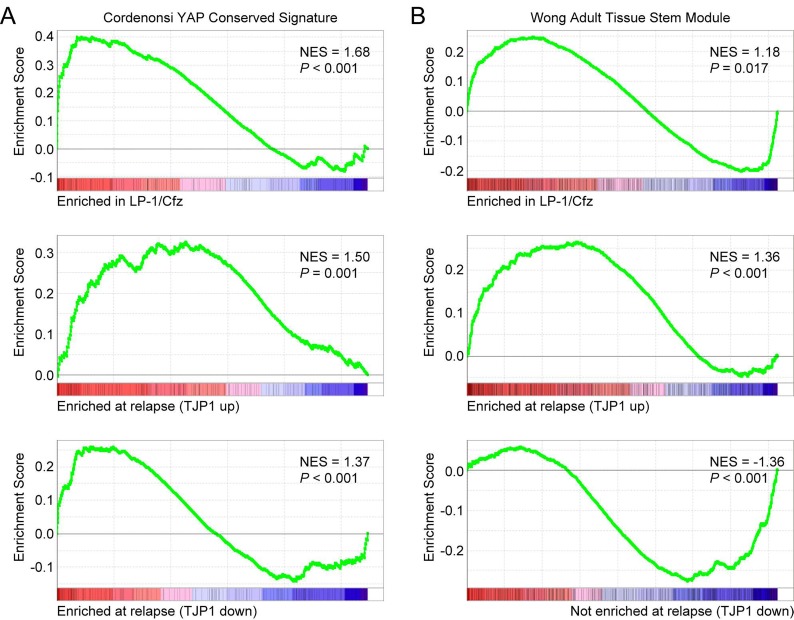
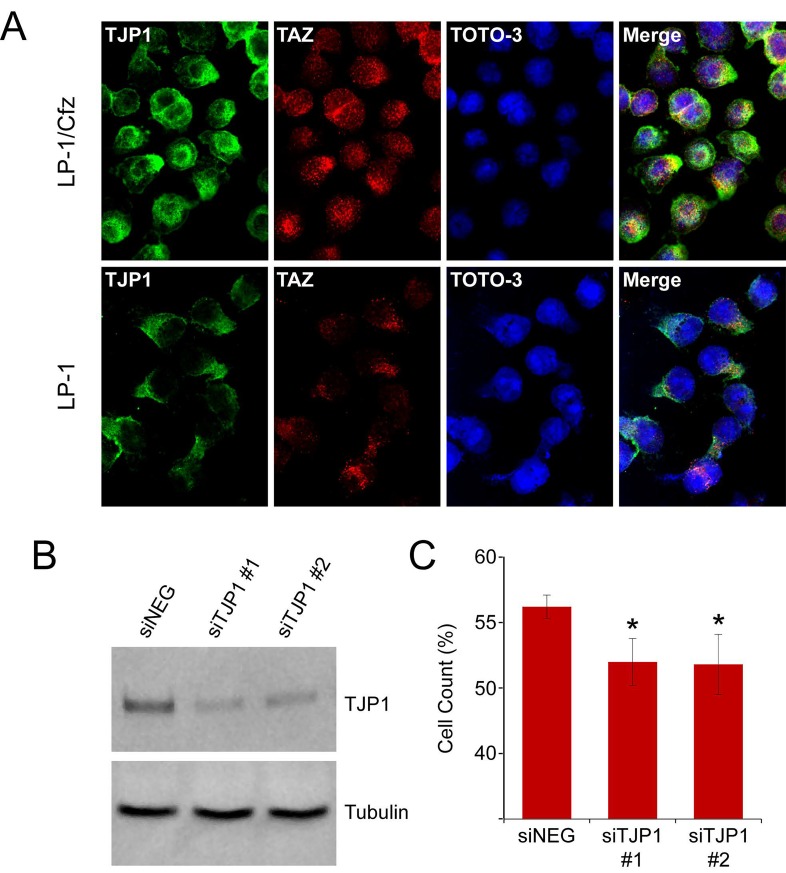
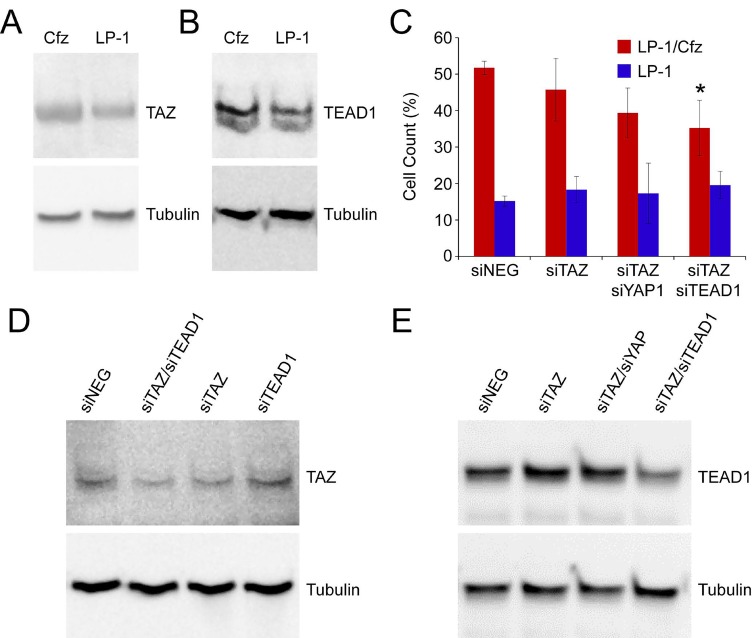
Tight junction protein 1 (TJP1) has recently been proposed as a biomarker to identify multiple myeloma (MM) patients most likely to respond to bortezomib- and carfilzomib-based proteasome inhibitor regimens. Herein we report increased expression of during the adaptive response mediating carfilzomib resistance in the LP-1/Cfz MM cell line. Moreover, increased expression delineated a subset of relapsed/refractory MM patients on bortezomib-based therapy sharing an LP-1/Cfz-like phenotype characterized by activation of interacting transcriptional effectors of the Hippo signaling cascade (TAZ and TEAD1) and an adult tissue stem cell signature. siRNA-mediated knockdown of TJP1 or TAZ/TEAD1 partially sensitized LP-1/Cfz cells to carfilzomib. Connectivity Map analysis identified translation inhibitors as candidate therapeutic agents targeting this molecular phenotype. We confirmed this prediction by showing that homoharringtonine (omacetaxine mepesuccinate) - the first translation inhibitor to be approved by the U.S. Food and Drug Administration - displayed potent cytotoxic activity on LP-1/Cfz cells. Homoharringtonine treatment reduced the levels of TAZ and TEAD1 as well as the MM-protective proteins Nrf2 and MCL1. Thus, our data suggest the importance of further studies evaluating translation inhibitors in relapsed/refractory MM. On the other hand, use of as a MM biomarker for proteasome inhibitor sensitivity requires careful consideration.
紧密连接蛋白1(TJP1)最近被提议作为一种生物标志物,用于识别最有可能对基于硼替佐米和卡非佐米的蛋白酶体抑制剂方案产生反应的多发性骨髓瘤(MM)患者。在此,我们报告了在LP-1/Cfz MM细胞系中介导卡非佐米耐药的适应性反应过程中,TJP1的表达增加。此外,TJP1表达的增加描绘了一组接受基于硼替佐米治疗的复发/难治性MM患者,他们具有LP-1/Cfz样表型,其特征是Hippo信号级联反应的相互作用转录效应因子(TAZ和TEAD1)激活以及成人组织干细胞特征。siRNA介导的TJP1或TAZ/TEAD1敲低使LP-1/Cfz细胞对卡非佐米部分敏感。连接图谱分析确定翻译抑制剂为针对这种分子表型的候选治疗药物。我们通过证明高三尖杉酯碱(奥马西他辛甲磺酸盐)——美国食品药品监督管理局批准的首个翻译抑制剂——对LP-1/Cfz细胞具有强大的细胞毒活性,证实了这一预测。高三尖杉酯碱治疗降低了TAZ和TEAD1以及MM保护蛋白Nrf2和MCL1的水平。因此,我们的数据表明进一步研究评估翻译抑制剂在复发/难治性MM中的重要性。另一方面,将TJP1用作蛋白酶体抑制剂敏感性的MM生物标志物需要仔细考虑。