Mayes Kimberly, Elsayed Zeinab, Alhazmi Aiman, Waters Michael, Alkhatib Suehyb G, Roberts Mark, Song Carolyn, Peterson Kristen, Chan Vivian, Ailaney Nikhil, Malapati Pumoli, Blevins Tana, Lisnić Berislav, Dumur Catherine I, Landry Joseph W
The Department of Human and Molecular Genetics, Virginia Institute of Molecular Medicine, Massey Cancer Center, Virginia Commonwealth University, Richmond, Virginia 23298, USA.
The Department of Biochemistry, Virginia Commonwealth University, Richmond, Virginia 23298, USA.
Oncotarget. 2017 May 12;8(38):64344-64357. doi: 10.18632/oncotarget.17834. eCollection 2017 Sep 8.
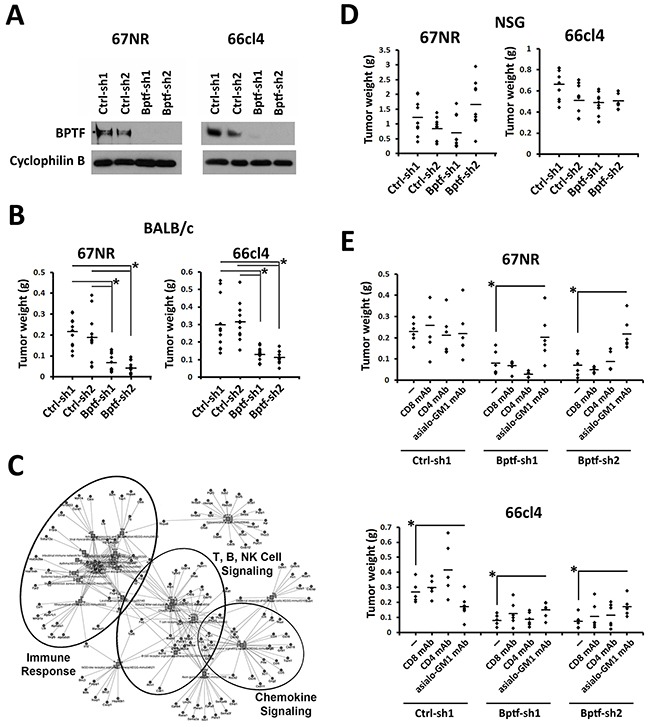
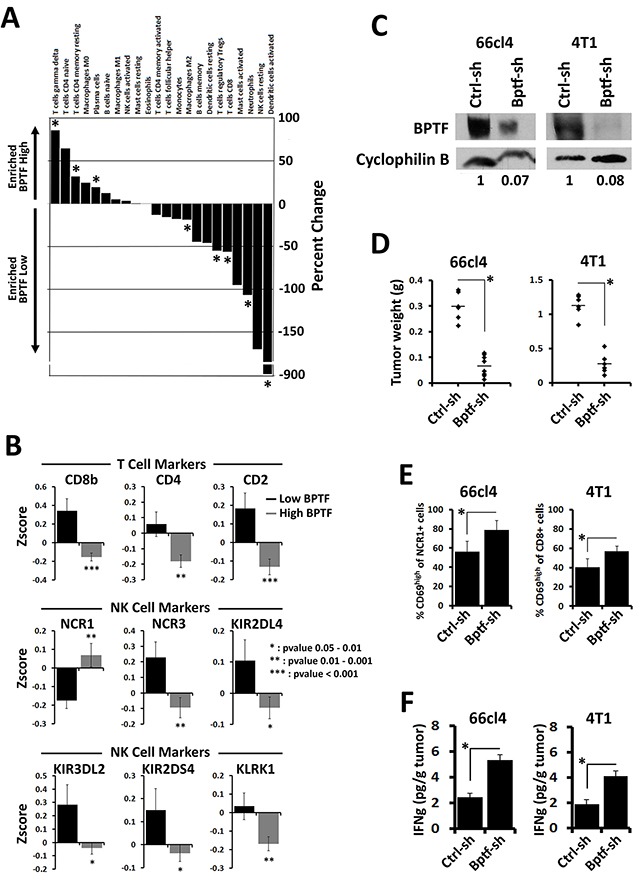
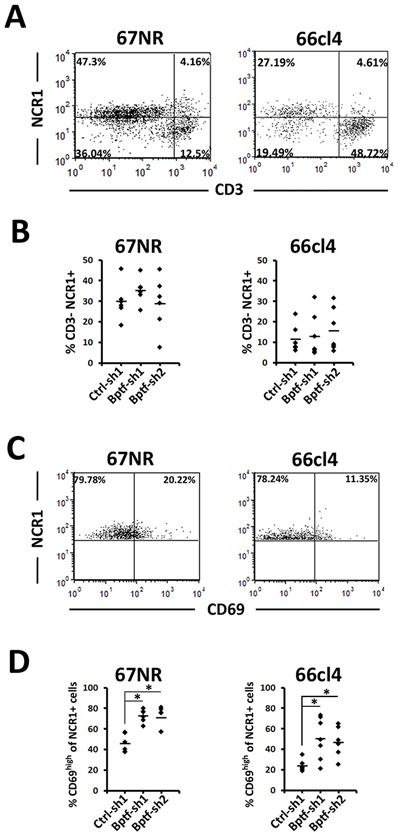
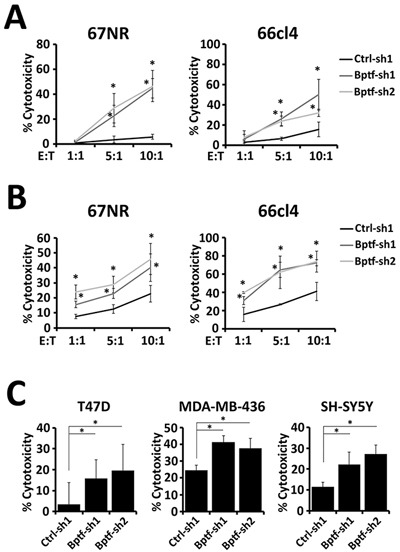
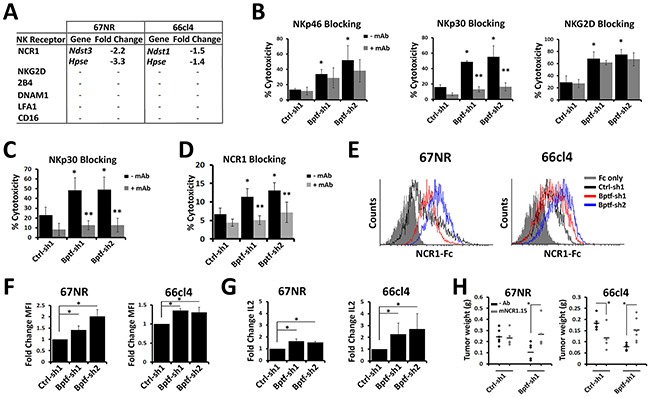
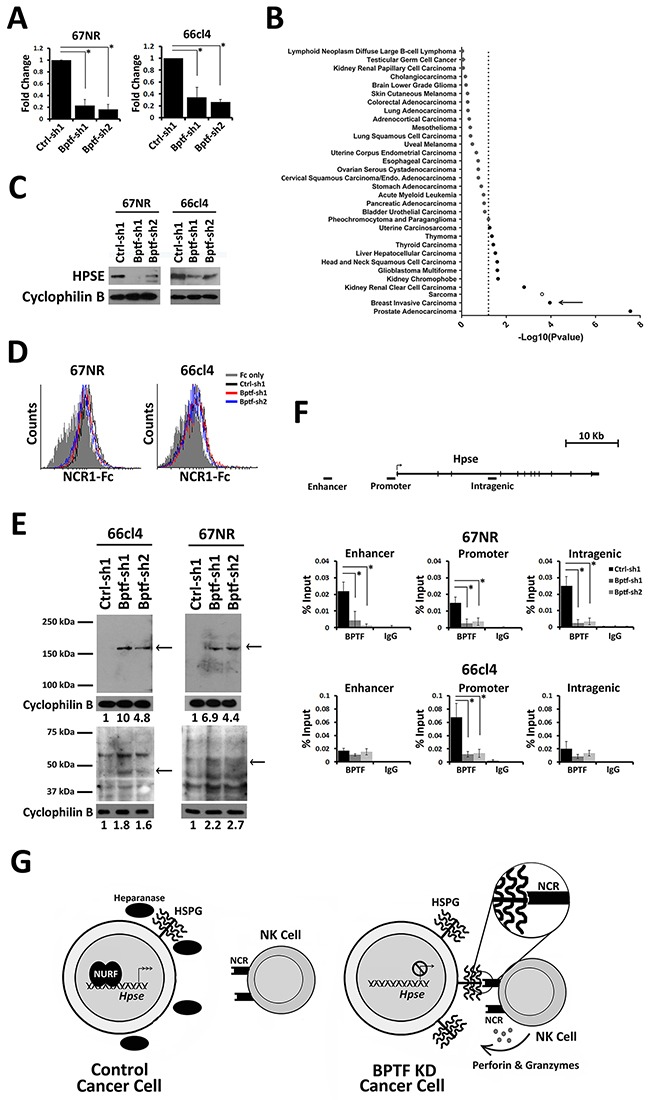
Using syngeneic BALB/c mouse breast cancer models, we show that the chromatin remodeling subunit bromodomain PHD finger transcription factor (BPTF) suppresses natural killer (NK) cell antitumor activity in the tumor microenvironment (TME). In culture, BPTF suppresses direct natural cytotoxicity receptor (NCR) mediated NK cell cytolytic activity to mouse and human cancer cell lines, demonstrating conserved functions. Blocking mouse NCR1 rescues BPTF KD tumor weights, demonstrating its importance for the control of tumor growth. We discovered that BPTF occupies heparanase () regulatory elements, activating its expression. Increased heparanase activity results in reduced cell surface abundance of the NCR co-ligands: heparan sulfate proteoglycans (HSPGs). Using gain and loss of function approaches we show that elevated heparanase levels suppress NK cell cytolytic activity to tumor cells in culture. These results suggest that BPTF activates heparanase expression, which in turn reduces cell surface HSPGs and NCR co-ligands, inhibiting NK cell activity. Furthermore, gene expression data from human breast cancer tumors shows that elevated expression correlates with reduced antitumor immune cell signatures, supporting conserved roles for BPTF in suppressing antitumor immunity. Conditional BPTF depletion in established mouse breast tumors enhances antitumor immunity, suggesting that inhibiting BPTF could provide a novel immunotherapy.
利用同基因BALB/c小鼠乳腺癌模型,我们发现染色质重塑亚基溴结构域PHD指转录因子(BPTF)在肿瘤微环境(TME)中抑制自然杀伤(NK)细胞的抗肿瘤活性。在培养过程中,BPTF抑制直接自然细胞毒性受体(NCR)介导的NK细胞对小鼠和人类癌细胞系的溶细胞活性,证明了其保守功能。阻断小鼠NCR1可挽救BPTF基因敲低(KD)肿瘤的重量,证明其对控制肿瘤生长的重要性。我们发现BPTF占据乙酰肝素酶(HPSE)的调控元件,激活其表达。乙酰肝素酶活性增加导致NCR共配体:硫酸乙酰肝素蛋白聚糖(HSPG)的细胞表面丰度降低。使用功能获得和丧失方法,我们表明升高的乙酰肝素酶水平抑制培养中NK细胞对肿瘤细胞的溶细胞活性。这些结果表明,BPTF激活乙酰肝素酶表达,进而降低细胞表面HSPG和NCR共配体,抑制NK细胞活性。此外,来自人类乳腺癌肿瘤的基因表达数据表明,HPSE表达升高与抗肿瘤免疫细胞特征降低相关,支持BPTF在抑制抗肿瘤免疫中的保守作用。在已建立的小鼠乳腺肿瘤中条件性敲除BPTF可增强抗肿瘤免疫力,表明抑制BPTF可提供一种新的免疫疗法。