Institute of Clinical Radiology and Nuclear Medicine, University Medical Center Mannheim, Medical Faculty Mannheim - Heidelberg University, Mannheim, Germany.
Department of Surgery, University Medical Center Mannheim, Medical Faculty Mannheim - Heidelberg University, Mannheim, Germany.
Sci Rep. 2017 Oct 2;7(1):12563. doi: 10.1038/s41598-017-12902-6.
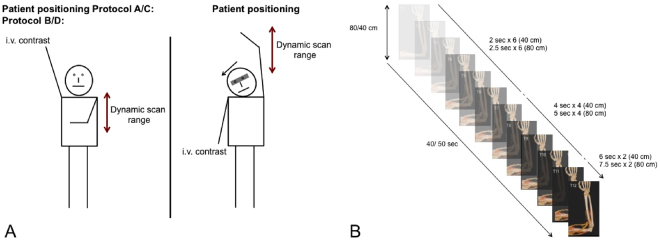
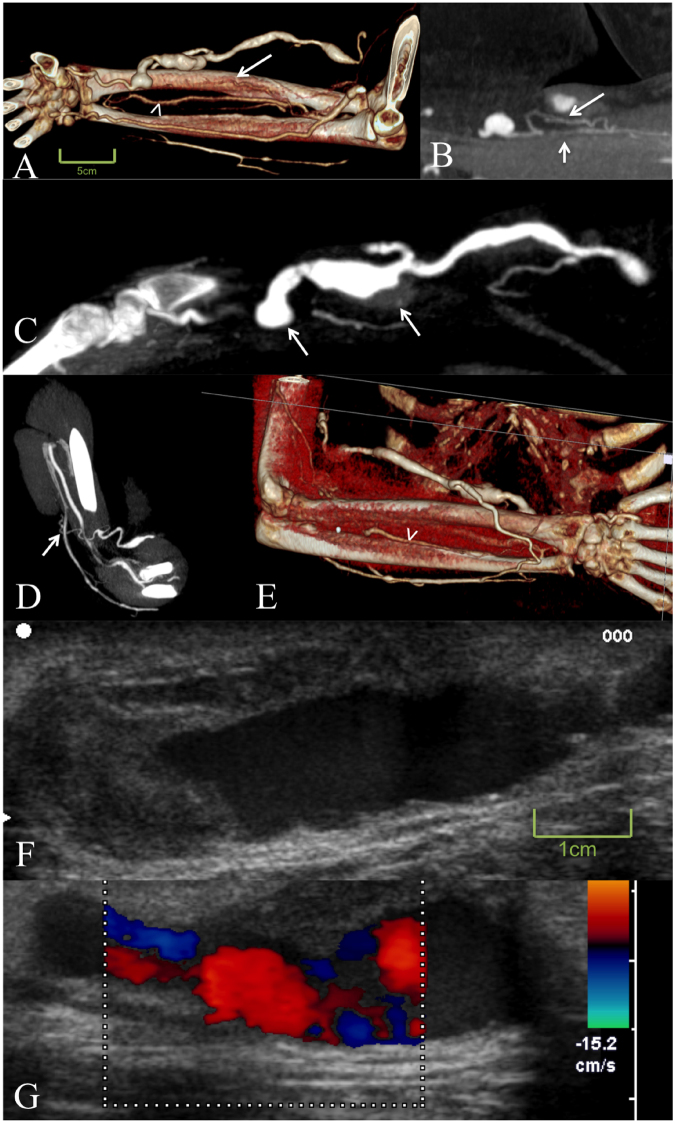
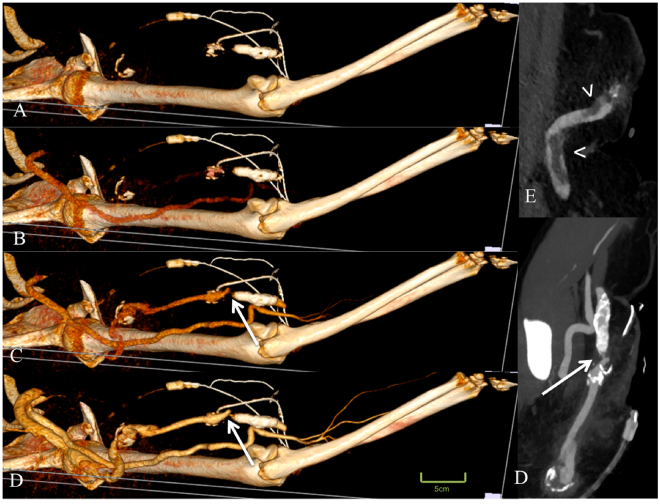
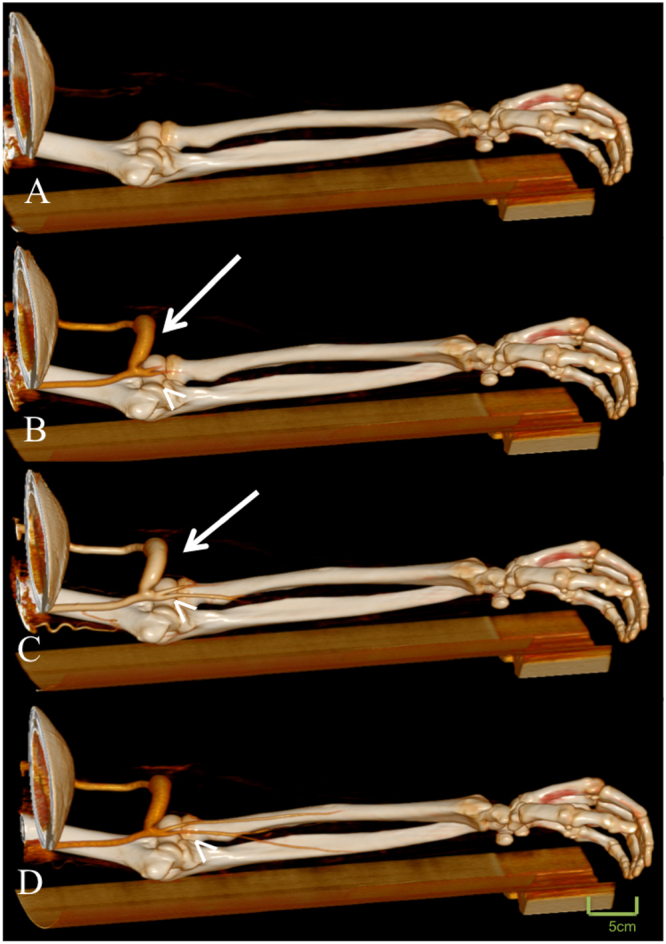
To evaluate the feasibility and potential on therapy management of time-resolved dynamic computed tomography angiography (dCTA) in patients with forearm arterio-venous fistula (AVF)/arterio-venous grafts (AVG). Thirty-five patients with complex failing forearm AVF/AVGs were examined with ultrasound and a dCTA protocol. Diagnosis and therapy management was evaluated versus duplex ultrasound (DUS) in three different readouts: 1. all dCTA datasets; 2. one arterial phase of the dCTA dataset; 3. one arterial and one venous dataset out of the dCTA dataset. All reads were performed >30 days apart from each other. Using all data of the dCTA examination, 20 patients were classified as having a stenosis >50%, 12 high-shunt flow, 11 partial thrombosis, 5 venous aneurysms and 5 complete thrombosis of their AVF/AVG grafts. This lead to 13 additional pathologic findings not visible on DUS and reclassification as normal in one patient with suspected AVF stenosis and complete thrombus on DUS. These additional findings lead to a direct change of therapeutic management in 8 patients. Compared to readout 1 (53 pathologies), readout number 2 and 3 revealed only 33 and 41 pathologies, respectively. dCTA provides additional information, improving diagnostic confidence and leading to changes in therapy management when compared to DUS alone.
评估时间分辨动态计算机断层血管造影(dCTA)在前臂动静脉瘘(AVF)/动静脉移植物(AVG)患者治疗管理中的可行性和潜力。对 35 例复杂失功的前臂 AVF/AVG 患者进行超声和 dCTA 方案检查。通过三种不同的解读评估诊断和治疗管理,与双功能超声(DUS)进行比较:1. 所有 dCTA 数据集;2. dCTA 数据集的一个动脉期;3. dCTA 数据集中的一个动脉期和一个静脉期。所有阅读结果均相隔 30 天以上。使用 dCTA 检查的所有数据,20 例患者被归类为狭窄>50%,12 例高分流,11 例部分血栓形成,5 例静脉瘤和 5 例 AVF/AVG 移植物完全血栓形成。这导致在 1 例疑似 AVF 狭窄和 DUS 上完全血栓形成的患者中发现了 13 个额外的病理发现,这些发现不能在 DUS 上看到,并重新分类为正常。这些额外的发现导致 8 例患者的治疗管理发生直接改变。与解读 1(53 种病变)相比,解读 2 和 3 仅分别显示 33 种和 41 种病变。与单独使用 DUS 相比,dCTA 提供了额外的信息,提高了诊断信心,并导致治疗管理的改变。