Jiang Meijuan, Gu Xinggui, Lam Jacky W Y, Zhang Yilin, Kwok Ryan T K, Wong Kam Sing, Tang Ben Zhong
Department of Chemistry , Hong Kong Branch of Chinese National Engineering Research Centre for Tissue Restoration and Reconstruction , HKUST Jockey Club Institute for Advanced Study , Institute of Molecular Functional Materials , Division of Biomedical Engineering , State Key Laboratory of Molecular Neuroscience , Division of Life Science , Hong Kong University of Science and Technology , Clear Water Bay , Kowloon , Hong Kong . Email:
Guangdong Provincial Key Laboratory of Brain Science , Disease and Drug Development , HKUST-Shenzhen Research Institute , No. 9 Yuexing 1st RD, South Area, Hi-tech Park, Nanshan , Shenzhen 518057 , China.
Chem Sci. 2017 Aug 1;8(8):5440-5446. doi: 10.1039/c7sc01400g. Epub 2017 May 18.
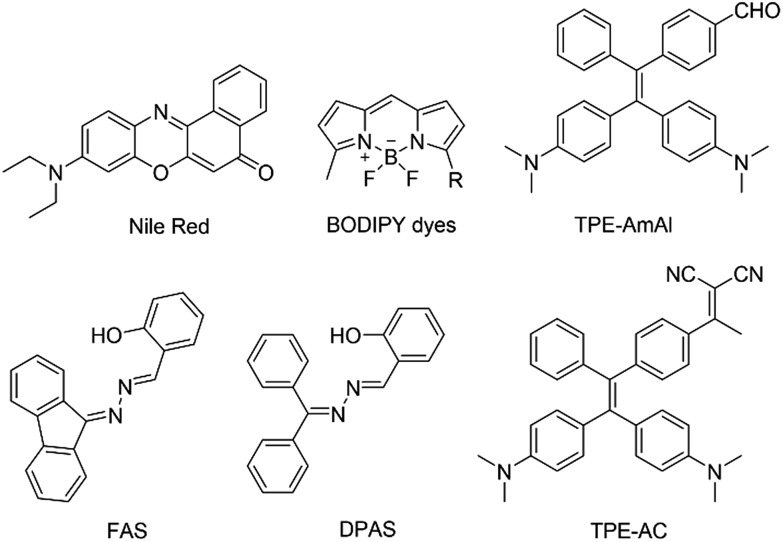
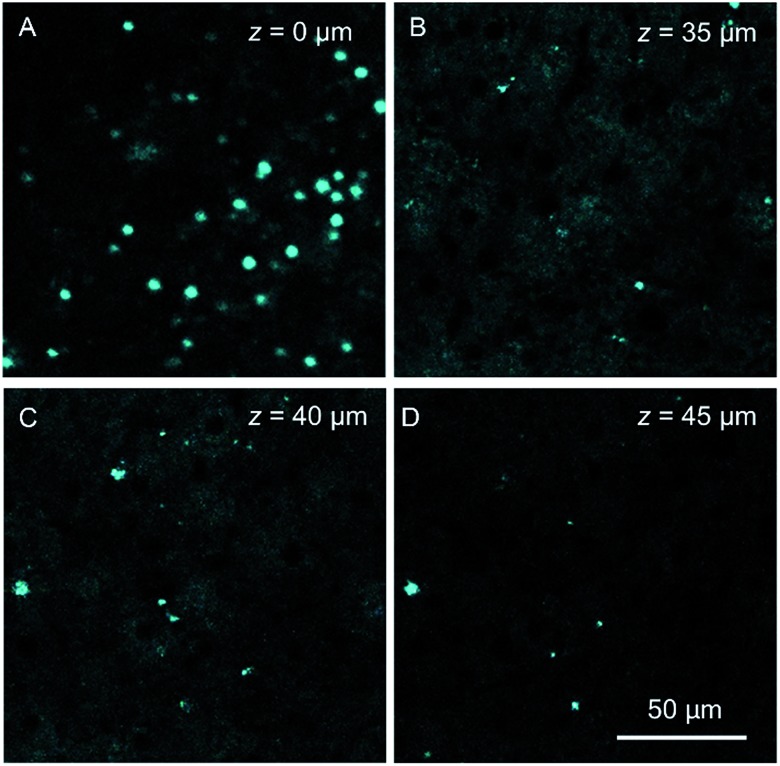
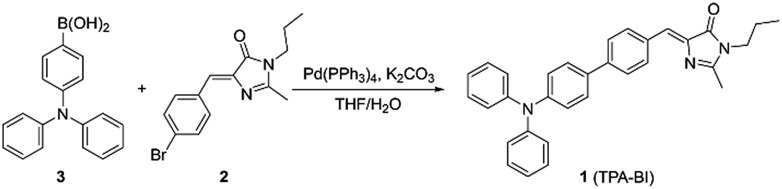
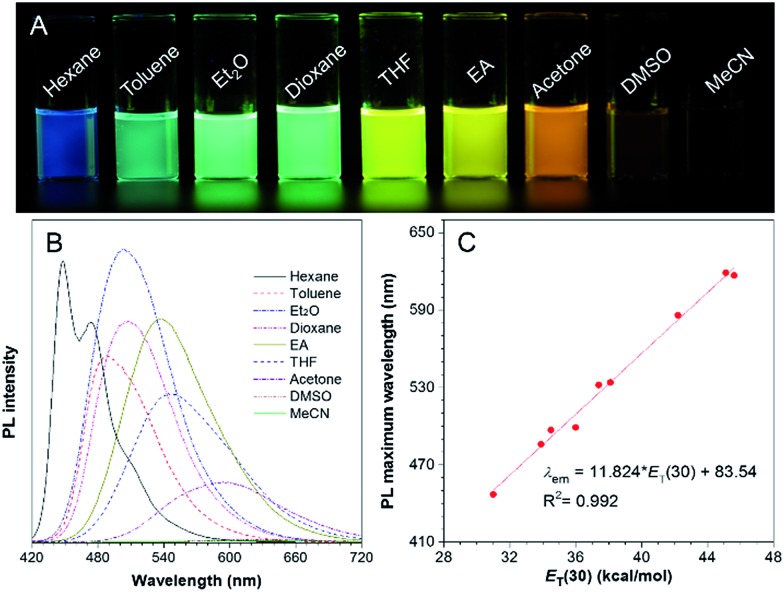
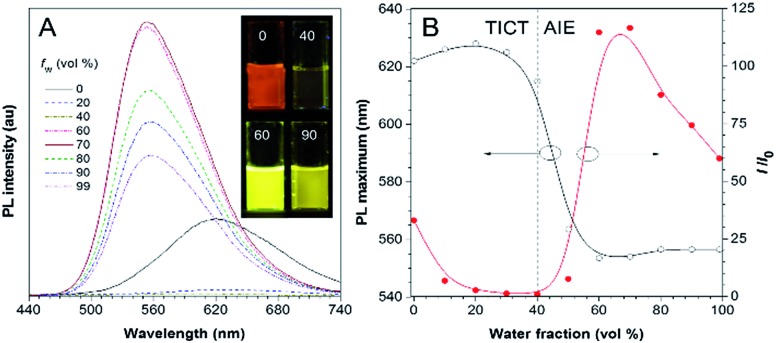
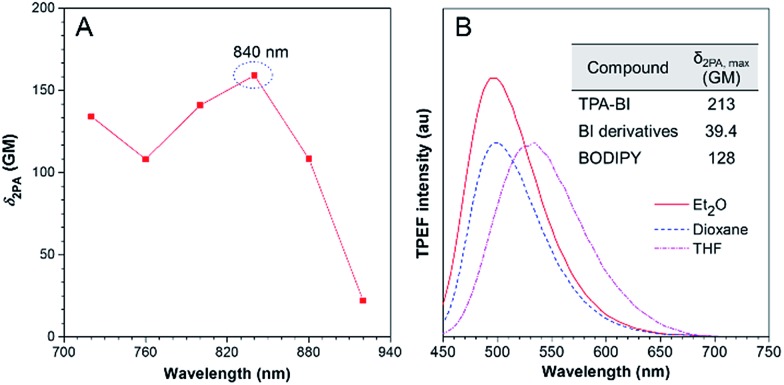
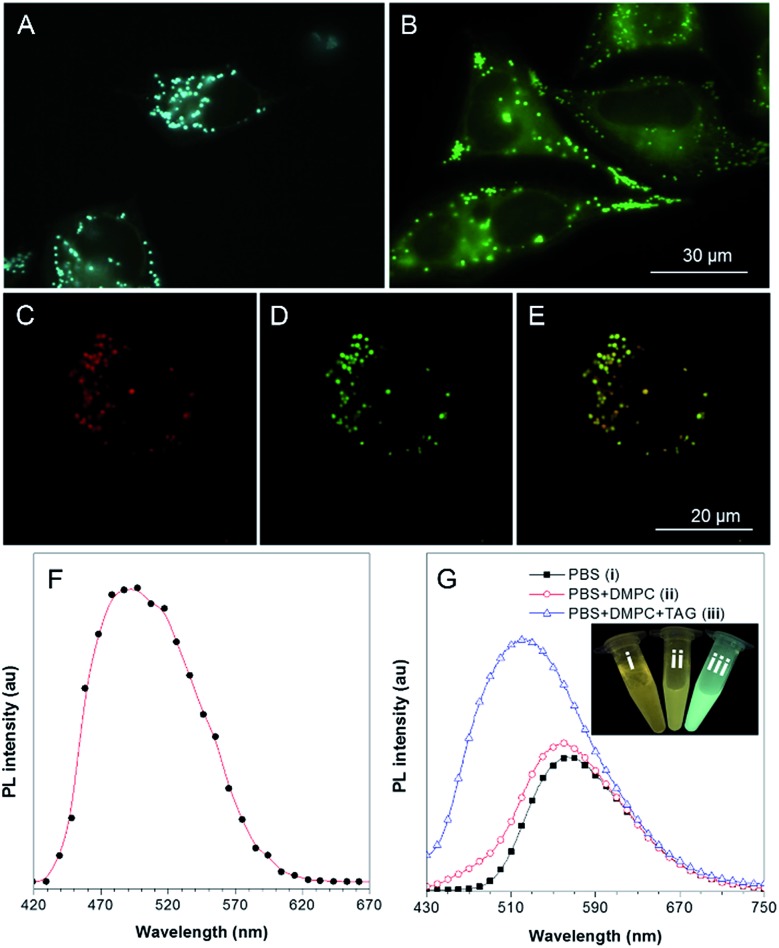
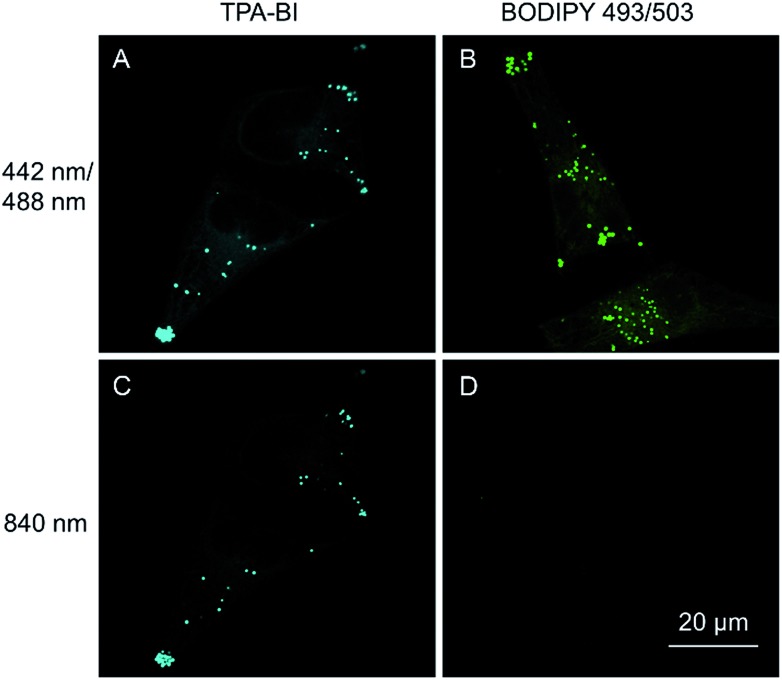
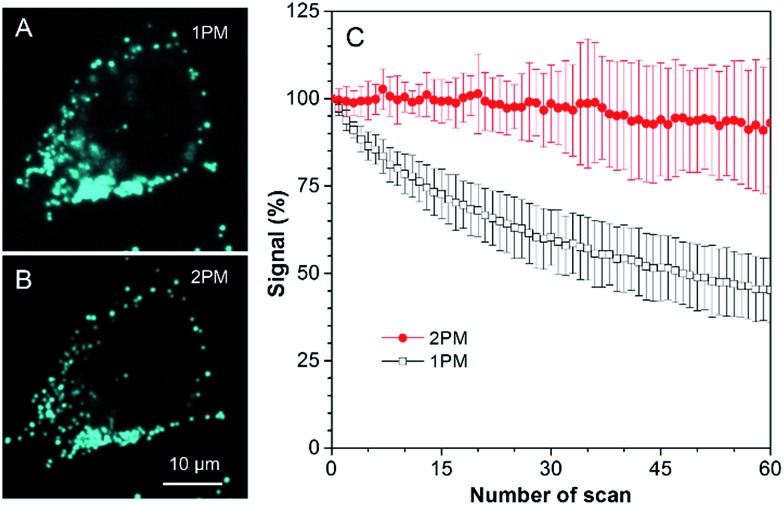
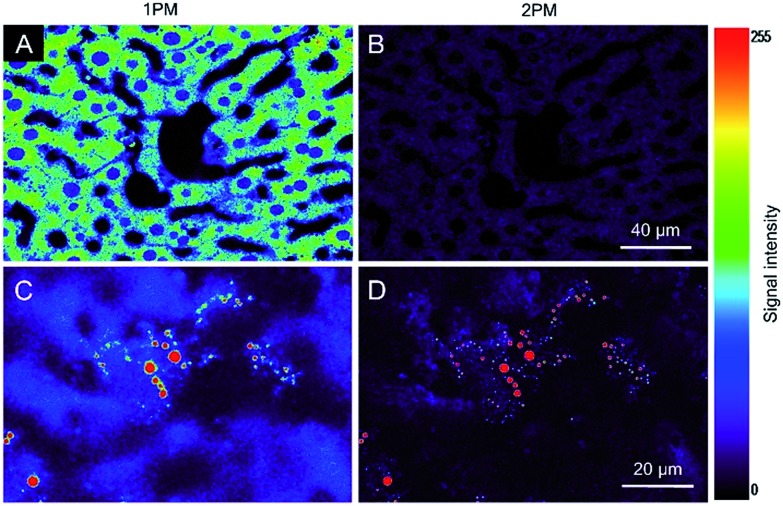
Lipid droplets are dynamic organelles involved in various physiological processes and their detection is thus of high importance to biomedical research. Recent reports show that AIE probes for lipid droplet imaging have the superior advantages of high brightness, large Stokes shift and excellent photostability compared to commercial dyes but suffer from the problem of having a short excitation wavelength. In this work, an AIE probe, namely TPA-BI, was rationally designed and easily prepared from triphenylamine and imidazolone building blocks for the two-photon imaging of lipid droplets. TPA-BI exhibited TICT+AIE features with a large Stokes shift of up to 202 nm and a large two-photon absorption cross-section of up to 213 GM. TPA-BI was more suitable for two-photon imaging of the lipid droplets with the merits of a higher 3D resolution, lesser photobleaching, a reduced autofluorescence and deeper penetration in tissue slices than a commercial probe based on BODIPY 493/503, providing a promising imaging tool for lipid droplet tracking and analysis in biomedical research and clinical diagnosis.
脂滴是参与各种生理过程的动态细胞器,因此其检测对生物医学研究至关重要。最近的报道表明,与商业染料相比,用于脂滴成像的聚集诱导发光(AIE)探针具有高亮度、大斯托克斯位移和优异光稳定性等优势,但存在激发波长较短的问题。在这项工作中,一种AIE探针,即TPA-BI,由三苯胺和咪唑酮构建块合理设计并易于制备,用于脂滴的双光子成像。TPA-BI表现出TICT+AIE特性,具有高达202nm的大斯托克斯位移和高达213GM的大二光子吸收截面。与基于BODIPY 493/503的商业探针相比,TPA-BI更适合脂滴的双光子成像,具有更高的三维分辨率、更少的光漂白、更低的自发荧光以及在组织切片中更深的穿透深度等优点,为生物医学研究和临床诊断中的脂滴追踪和分析提供了一种有前景的成像工具。