Zuo Jiaqi, Zhu Engao, Yin Wenjing, Yao Chuangye, Liao Jiajia, Ping Xinni, Zhu Yuqing, Cai Xuting, Rao Yuchun, Feng Hui, Zhang Kewei, Qian Zhaosheng
Key Laboratory of the Ministry of Education for Advanced Catalysis Materials, College of Chemistry and Material Sciences, Zhejiang Normal University Yingbin Road 688 Jinhua 321004 China
College of Life Sciences, Zhejiang Normal University Yingbin Road 688 Jinhua 321004 China
Chem Sci. 2023 Jan 19;14(8):2139-2148. doi: 10.1039/d2sc05727a. eCollection 2023 Feb 22.
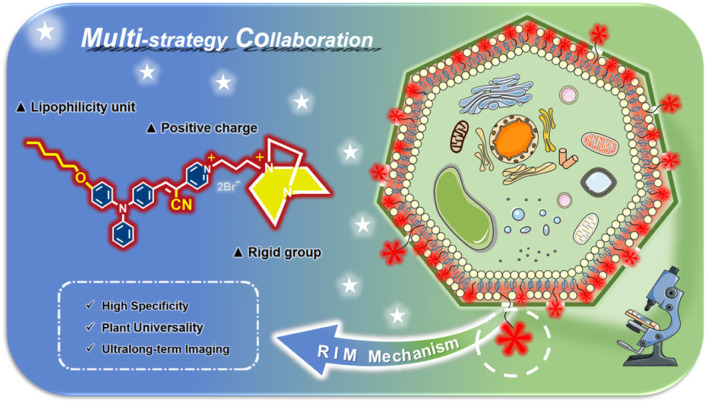
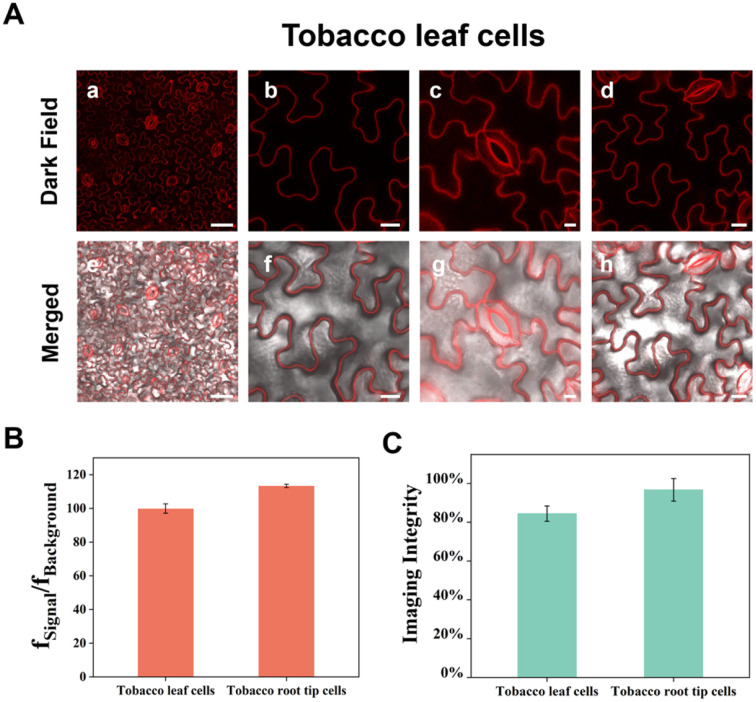
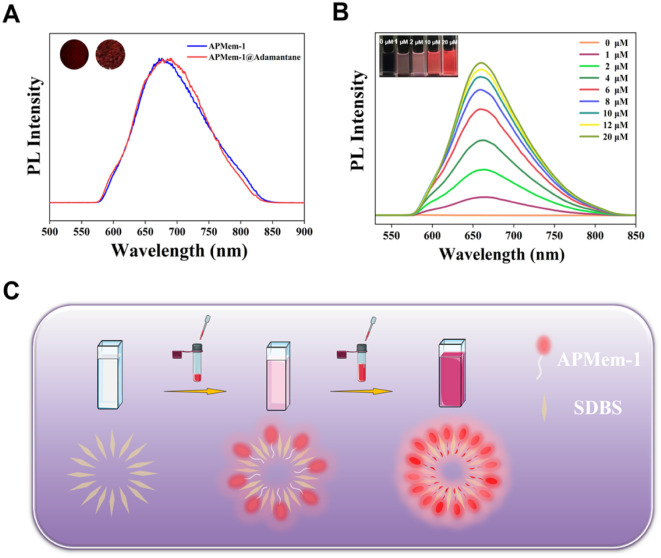
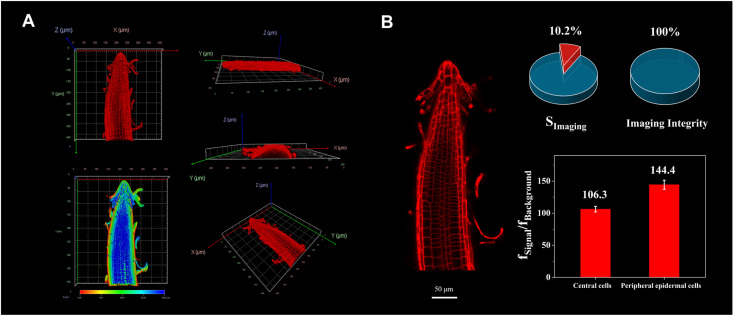
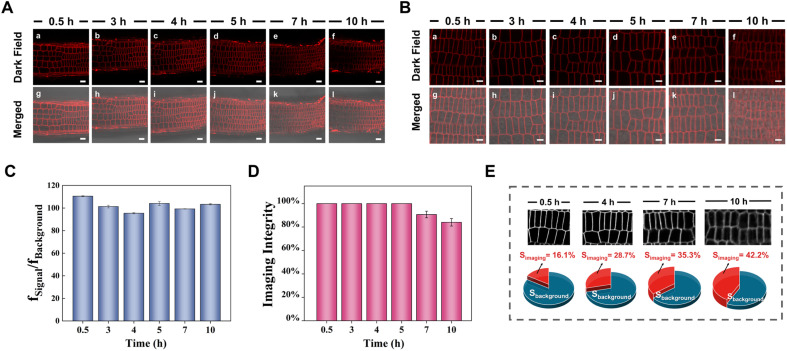
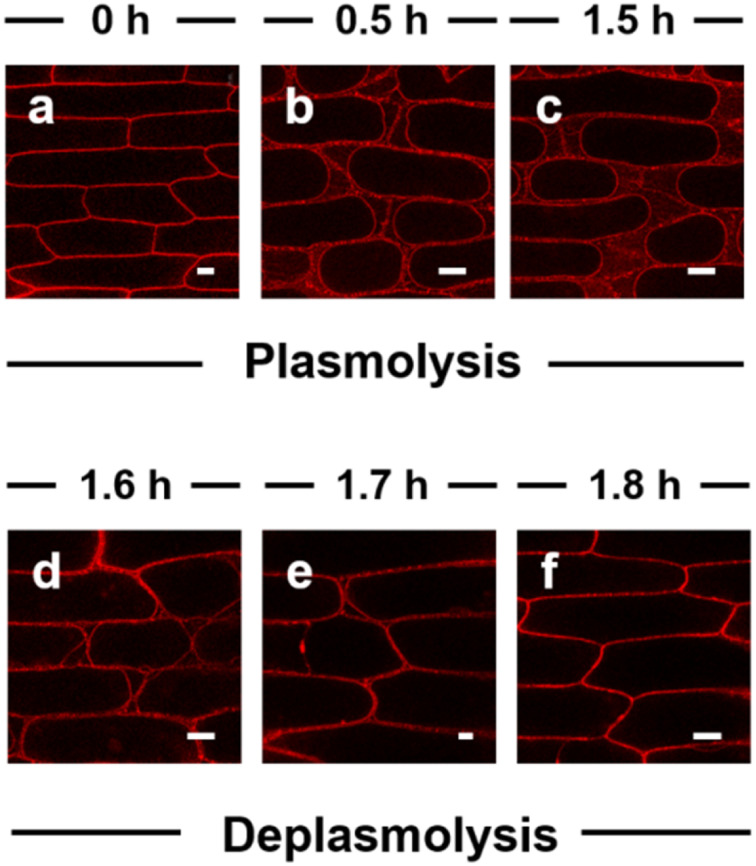
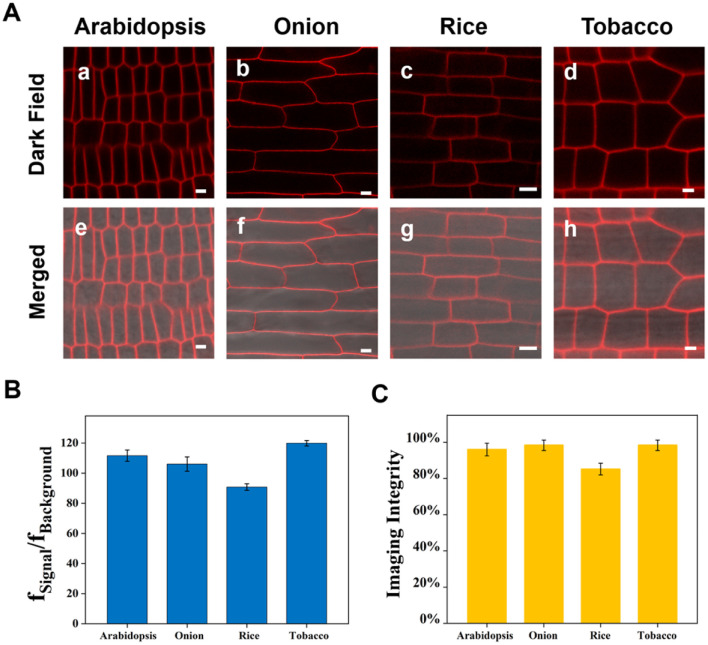
Fluorescent probes are valuable tools to visualize plasma membranes intuitively and clearly and their related physiological processes in a spatiotemporal manner. However, most existing probes have only realized the specific staining of the plasma membranes of animal/human cells within a very short time period, while almost no fluorescent probes have been developed for the long-term imaging of the plasma membranes of plant cells. Herein, we designed an AIE-active probe with NIR emission to achieve four-dimensional spatiotemporal imaging of the plasma membranes of plant cells based on a collaboration approach involving multiple strategies, demonstrated long-term real-time monitoring of morphological changes of plasma membranes for the first time, and further proved its wide applicability to plant cells of different types and diverse plant species. In the design concept, three effective strategies including the similarity and intermiscibility principle, antipermeability strategy and strong electrostatic interactions were combined to allow the probe to specifically target and anchor the plasma membrane for an ultralong amount of time on the premise of guaranteeing its sufficiently high aqueous solubility. The designed APMem-1 can quickly penetrate cell walls to specifically stain the plasma membranes of all plant cells in a very short time with advanced features (ultrafast staining, wash-free, and desirable biocompatibility) and the probe shows excellent plasma membrane specificity without staining other areas of the cell in comparison to commercial FM dyes. The longest imaging time of APMem-1 can be up to 10 h with comparable performance in both imaging contrast and imaging integrity. The validation experiments on different types of plant cells and diverse plants convincingly proved the universality of APMem-1. The development of plasma membrane probes with four-dimensional spatial and ultralong-term imaging ability provides a valuable tool to monitor the dynamic processes of plasma membrane-related events in an intuitive and real-time manner.
荧光探针是直观且清晰地可视化质膜及其相关生理过程的宝贵工具,能够以时空方式呈现这些过程。然而,大多数现有探针仅在极短时间内实现了对动物/人类细胞质膜的特异性染色,而几乎没有针对植物细胞质膜的长期成像开发荧光探针。在此,我们设计了一种具有近红外发射的聚集诱导发光(AIE)活性探针,基于多种策略相结合的方法实现了对植物细胞质膜的四维时空成像,首次展示了对质膜形态变化的长期实时监测,并进一步证明了其对不同类型和多种植物物种的植物细胞具有广泛适用性。在设计理念中,结合了相似相溶原理、抗渗透策略和强静电相互作用这三种有效策略,使探针在保证其具有足够高的水溶性的前提下,能够在超长的时间内特异性靶向并锚定在质膜上。所设计的APMem-1能够快速穿透细胞壁,在极短时间内特异性地对所有植物细胞的质膜进行染色,具有先进的特性(超快染色、无需冲洗和良好的生物相容性),并且与商业FM染料相比,该探针显示出优异的质膜特异性,不会对细胞的其他区域进行染色。APMem-1的最长成像时间可达10小时,在成像对比度和成像完整性方面都具有相当的性能。对不同类型的植物细胞和多种植物进行的验证实验令人信服地证明了APMem-1的通用性。具有四维空间和超长期成像能力的质膜探针的开发为直观且实时地监测质膜相关事件的动态过程提供了宝贵工具。