Gu Shiyan, Sun Donglei, Li Xinyang, Zhang Zunzhen
Department of Environmental and Occupational Health, West China School of Public Health, Sichuan University, Chengdu 610041, China.
Genes (Basel). 2017 Oct 3;8(10):254. doi: 10.3390/genes8100254.
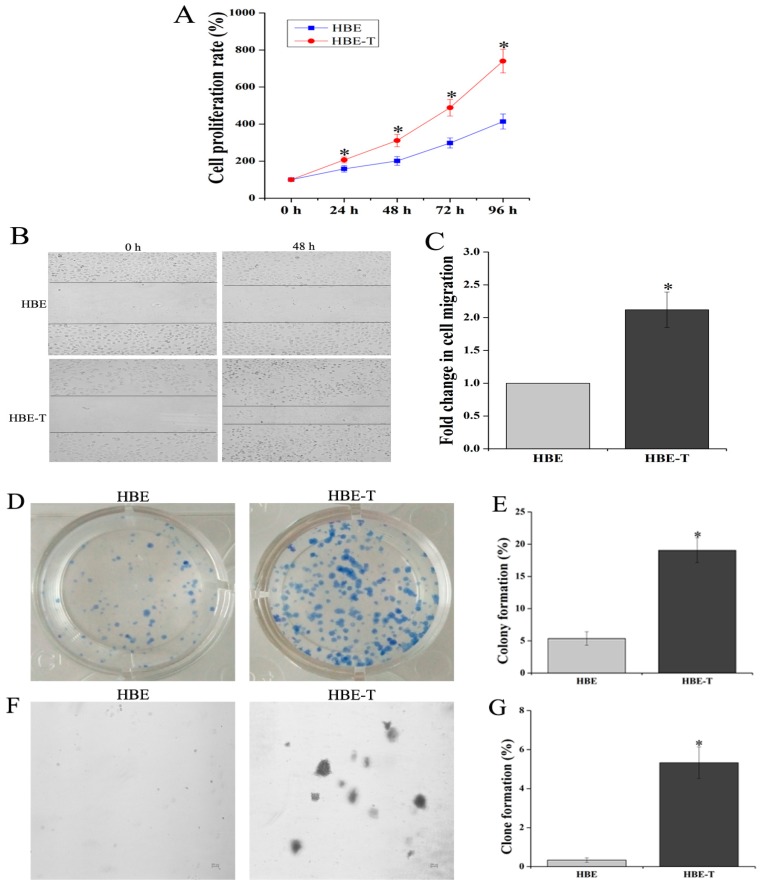
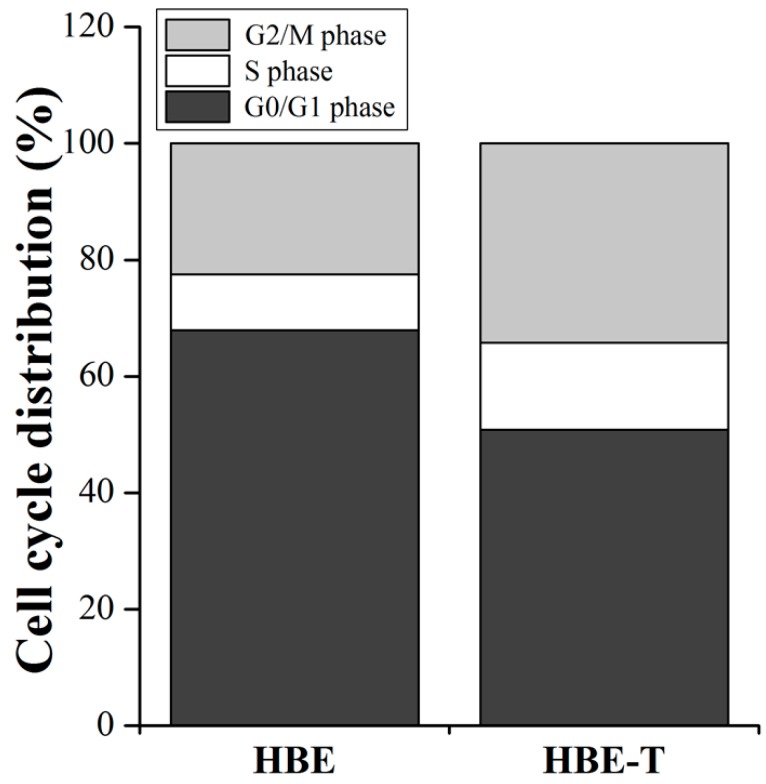
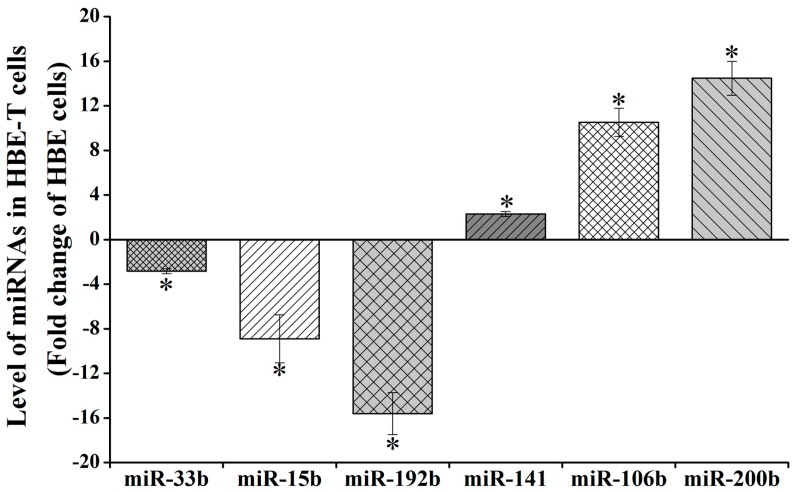
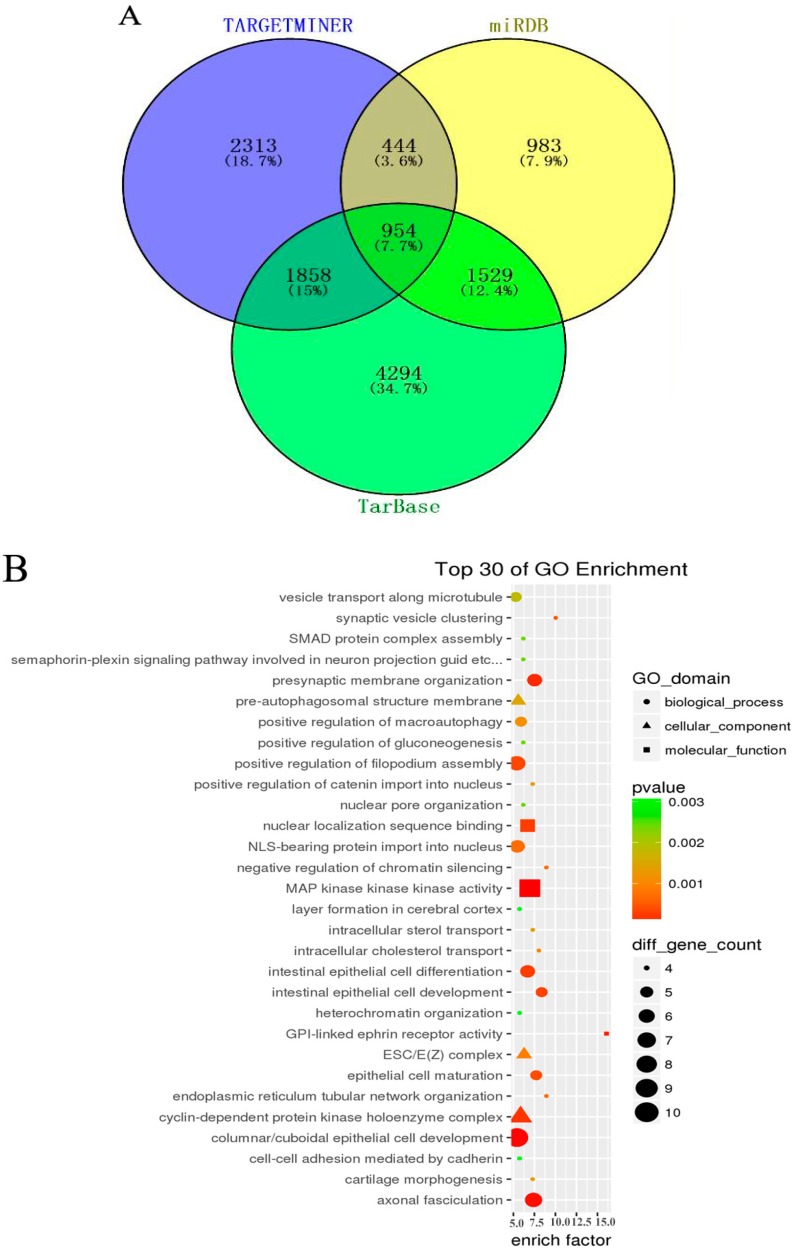
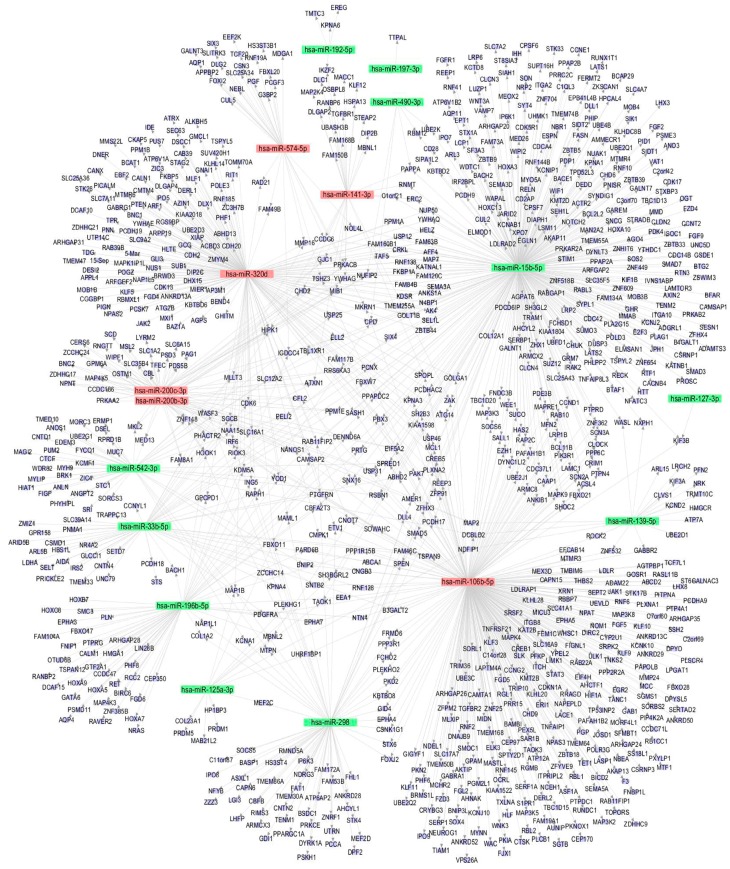
The alterations of micro RNAs (miRNAs) and their potential roles in arsenite-induced tumorigenesis are still poorly understood. In this study, miRNA Array was used to detect the expression level of miRNAs in human bronchial epithelial (HBE) cells that were transformed by 2.5 μM arsenite for 13 weeks. These cells exhibited a neoplastic phenotype manifested by increased levels of cellular proliferation and migration and clone formation. Subsequently, 191 dysregulated miRNAs were identified to be associated with arsenite-induced transformation by miRNA Array. Among them, six miRNAs were validated by their expression levels with quantitative real-time polymerase chain reaction (qPCR), and 17 miRNAs were further explored via their target genes as well as regulatory network. Three databases, TargetMiner, miRDB, and TarBase, were used to predict the target genes of the 17 miRNAs, and a total of 954 common genes were sorted. Results of Gene Ontology (GO) analyses showed that the 954 genes were involved in diverse terms of GO categories, such as positive regulation of macroautophagy, epithelial cell maturation, and synaptic vesicle clustering. Moreover, results of Kyoto Encyclopedia of Genes and Genomes (KEGG) pathway analyses demonstrated that most of these target genes were enriched in various cancer-related pathways, including non-small cell lung cancer, Wnt signaling pathway, cell cycle, and p53 signaling pathway. The miRNA-gene regulatory network, which was constructed by cytoscape software with miRNAs and their target genes, showed that miR-15b-5p, miR-106b-5p, and miR-320d were the core hubs. Collectively, our results provide new insights into miRNA-mediated mechanisms underlying arsenite-induced transformation, although more experimental verification is still needed to prove these predictions.
微小RNA(miRNA)的改变及其在亚砷酸盐诱导的肿瘤发生中的潜在作用仍未得到充分了解。在本研究中,使用miRNA芯片检测经2.5μM亚砷酸盐处理13周后转化的人支气管上皮(HBE)细胞中miRNA的表达水平。这些细胞表现出肿瘤表型,表现为细胞增殖、迁移和克隆形成水平增加。随后,通过miRNA芯片鉴定出191个失调的miRNA与亚砷酸盐诱导的转化相关。其中,6个miRNA通过定量实时聚合酶链反应(qPCR)验证其表达水平,17个miRNA通过其靶基因以及调控网络进一步探究。使用TargetMiner、miRDB和TarBase三个数据库预测这17个miRNA的靶基因,共筛选出954个共同基因。基因本体论(GO)分析结果表明,这954个基因涉及多种GO类别,如巨自噬的正调控、上皮细胞成熟和突触小泡聚集。此外,京都基因与基因组百科全书(KEGG)通路分析结果表明,这些靶基因大多富集于各种癌症相关通路,包括非小细胞肺癌、Wnt信号通路、细胞周期和p53信号通路。通过cytoscape软件用miRNA及其靶基因构建的miRNA-基因调控网络表明,miR-15b-5p、miR-106b-5p和miR-320d是核心枢纽。总体而言,我们的数据为亚砷酸盐诱导转化的miRNA介导机制提供了新的见解,尽管仍需要更多实验验证来证实这些预测。