Valianatos Georgios, Valcikova Barbora, Growkova Katerina, Verlande Amandine, Mlcochova Jitka, Radova Lenka, Stetkova Monika, Vyhnakova Michaela, Slaby Ondrej, Uldrijan Stjepan
Department of Biology, Faculty of Medicine, Masaryk University, Brno, Czech Republic.
International Clinical Research Center, St. Anne's University Hospital, Brno, Czech Republic.
PLoS One. 2017 Oct 3;12(10):e0185801. doi: 10.1371/journal.pone.0185801. eCollection 2017.
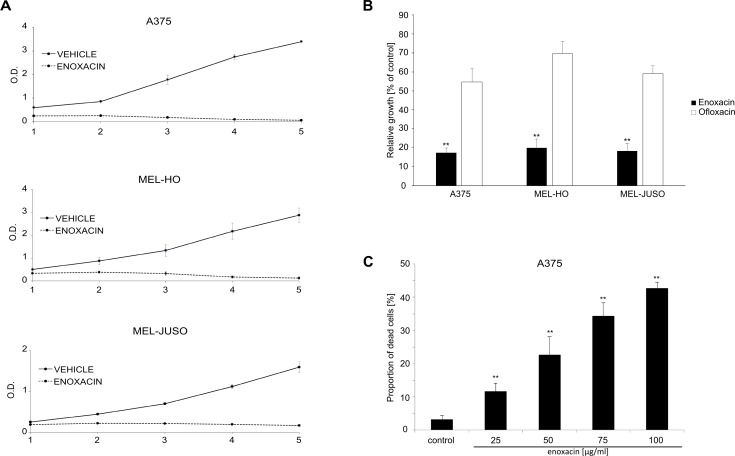
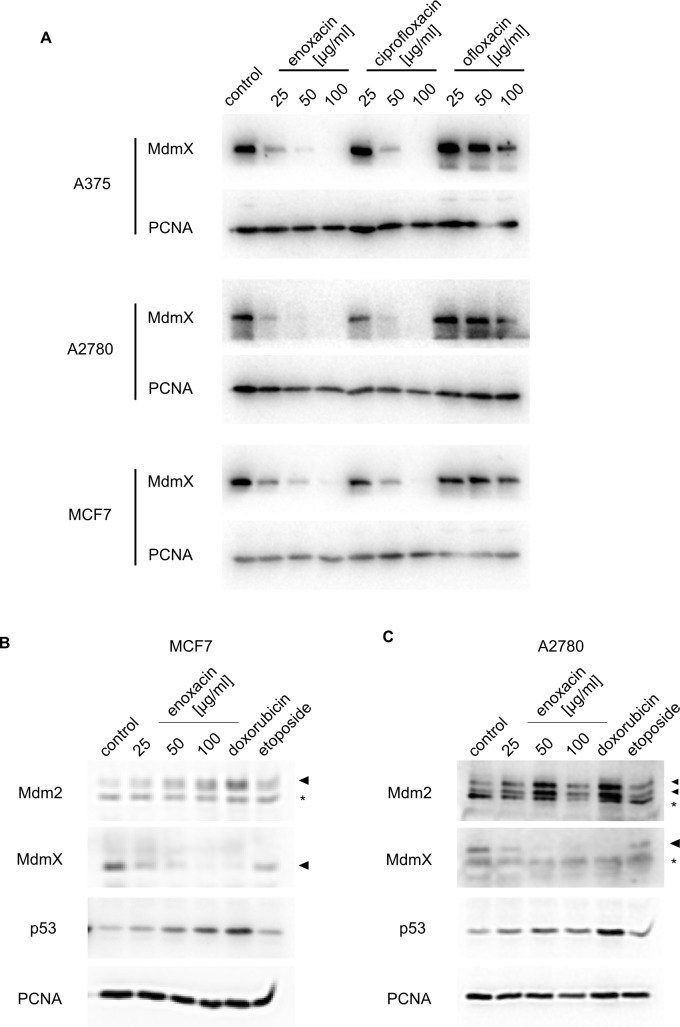
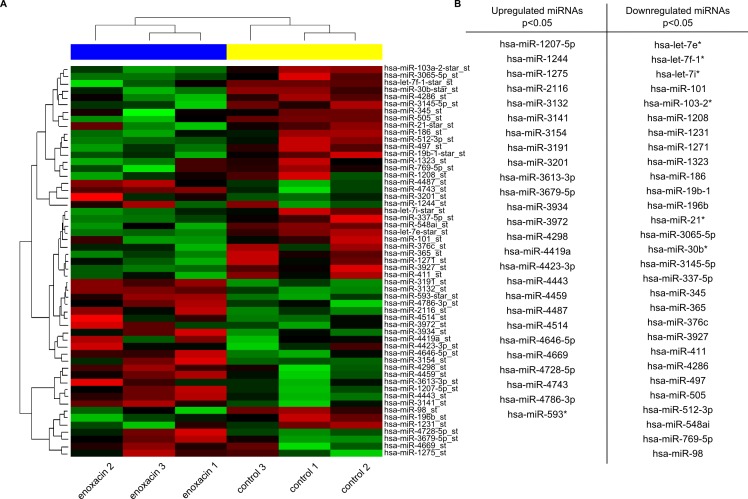
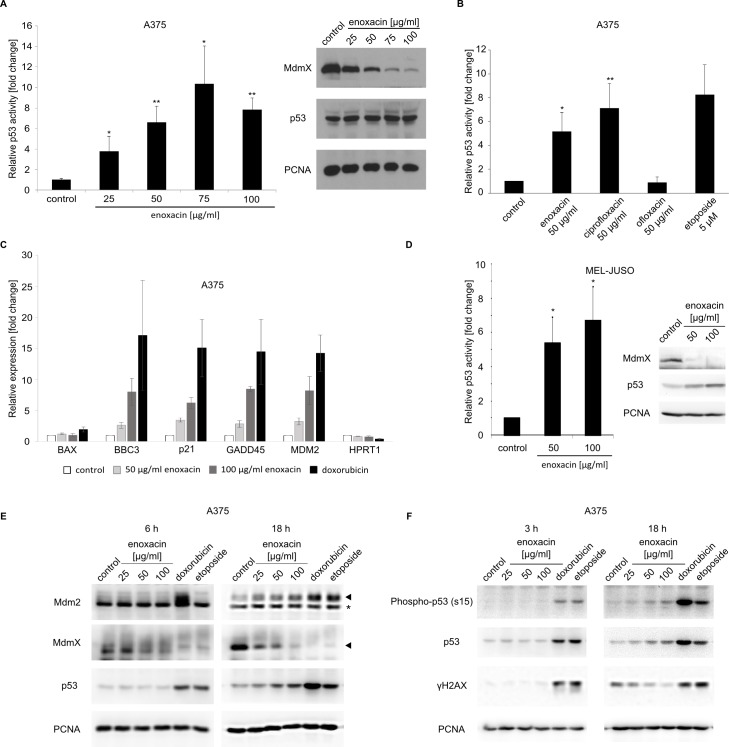
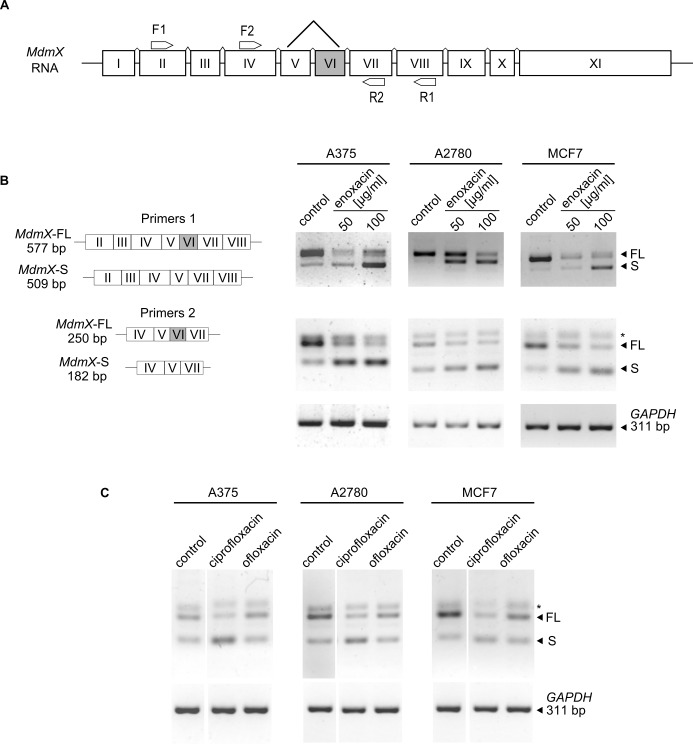
MdmX overexpression contributes to the development of cancer by inhibiting tumor suppressor p53. A switch in the alternative splicing of MdmX transcript, leading to the inclusion of exon 6, has been identified as the primary mechanism responsible for increased MdmX protein levels in human cancers, including melanoma. However, there are no approved drugs, which could translate these new findings into clinical applications. We analyzed the anti-melanoma activity of enoxacin, a fluoroquinolone antibiotic inhibiting the growth of some human cancers in vitro and in vivo by promoting miRNA maturation. We found that enoxacin inhibited the growth and viability of human melanoma cell lines much stronger than a structurally related fluoroquinolone ofloxacin, which only weakly modulates miRNA processing. A microarray analysis identified a set of miRNAs significantly dysregulated in enoxacin-treated A375 melanoma cells. They had the potential to target multiple signaling pathways required for cancer cell growth, among them the RNA splicing. Recent studies showed that interfering with cellular splicing machinery can result in MdmX downregulation in cancer cells. We, therefore, hypothesized that enoxacin could, by modulating miRNAs targeting splicing machinery, activate p53 in melanoma cells overexpressing MdmX. We found that enoxacin and ciprofloxacin, a related fluoroquinolone capable of promoting microRNA processing, but not ofloxacin, strongly activated wild type p53-dependent transcription in A375 melanoma without causing significant DNA damage. On the molecular level, the drugs promoted MdmX exon 6 skipping, leading to a dose-dependent downregulation of MdmX. Not only in melanoma, but also in MCF7 breast carcinoma and A2780 ovarian carcinoma cells overexpressing MdmX. Together, our results suggest that some clinically approved fluoroquinolones could potentially be repurposed as activators of p53 tumor suppressor in cancers overexpressing MdmX oncoprotein and that p53 activation might contribute to the previously reported activity of enoxacin towards human cancer cells.
MdmX过表达通过抑制肿瘤抑制因子p53促进癌症发展。MdmX转录本选择性剪接的转变,导致外显子6的包含,已被确定为人类癌症(包括黑色素瘤)中MdmX蛋白水平升高的主要机制。然而,尚无获批药物可将这些新发现转化为临床应用。我们分析了依诺沙星的抗黑色素瘤活性,依诺沙星是一种氟喹诺酮类抗生素,通过促进miRNA成熟在体外和体内抑制某些人类癌症的生长。我们发现,依诺沙星抑制人黑色素瘤细胞系的生长和活力的能力比结构相关的氟喹诺酮类药物氧氟沙星强得多,氧氟沙星只能微弱地调节miRNA加工。微阵列分析确定了一组在依诺沙星处理的A375黑色素瘤细胞中显著失调的miRNA。它们有可能靶向癌细胞生长所需的多个信号通路,其中包括RNA剪接。最近的研究表明,干扰细胞剪接机制可导致癌细胞中MdmX下调。因此,我们假设依诺沙星可通过调节靶向剪接机制的miRNA,激活过表达MdmX的黑色素瘤细胞中的p53。我们发现,依诺沙星和环丙沙星(一种能够促进微小RNA加工的相关氟喹诺酮类药物,但氧氟沙星不能)在A375黑色素瘤中强烈激活野生型p53依赖性转录,且不会造成明显的DNA损伤。在分子水平上,这些药物促进MdmX外显子6跳跃,导致MdmX剂量依赖性下调。不仅在黑色素瘤中如此,在过表达MdmX的MCF7乳腺癌和A2780卵巢癌细胞中也是如此。总之,我们的结果表明,一些临床获批的氟喹诺酮类药物可能有潜力被重新用作过表达MdmX癌蛋白的癌症中p53肿瘤抑制因子的激活剂,并且p53激活可能有助于先前报道的依诺沙星对人类癌细胞的活性。