
地位信号系统效用的季节性变化:羽毛装饰仅在竞争激烈时期预示觅食成功。
Seasonal variation in the utility of a status signaling system: Plumage ornament predicts foraging success only during periods of high competition.
作者信息
Queller Philip S, Murphy Troy G
机构信息
Department of Biology, Trinity University, San Antonio, Texas, United States of America.
出版信息
PLoS One. 2017 Oct 3;12(10):e0185584. doi: 10.1371/journal.pone.0185584. eCollection 2017.
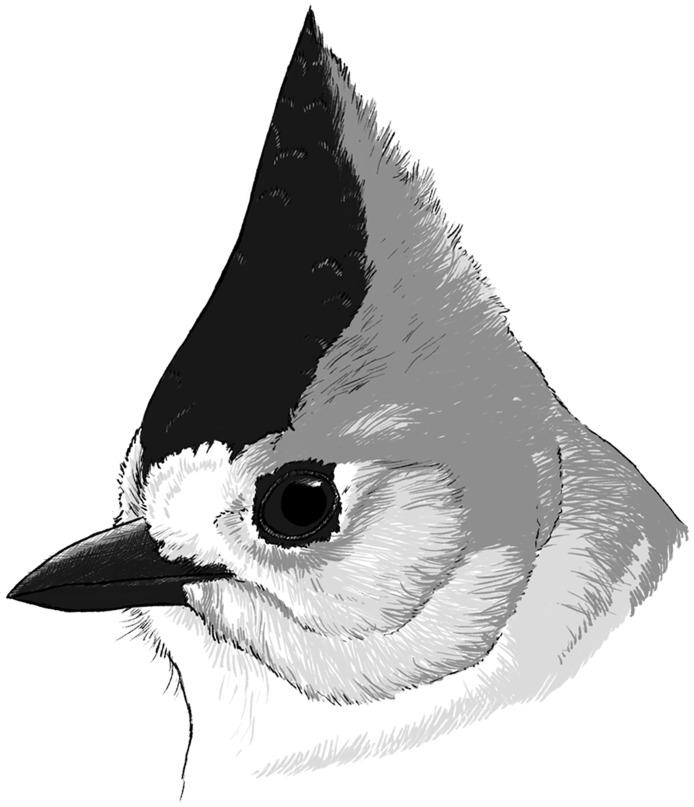
Status signals allow competitors to assess each other's resource holding potential and reduce the occurrence of physical fights. Because status signals function to mediate competition over resources, a change in the strength of competition may affect the utility of a status signaling system. Status signals alter competitor behavior during periods of high competition, and thus determine access to resources; however, when competition is reduced, we expect these signals to become disassociated from access to resources. We investigated seasonal changes in status signaling of the male black-crested titmouse (Baeolophus atricristatus), a species that experiences substantial changes in population density and competition for food over the annual cycle. We compared the size of the prominent head-crest to foraging success at community-used feeding stations; we tested this relationship when competition was seasonally high, and when competition was seasonally low. We then experimentally decreased the number of feeders to increase competition (during the season of low-competition), and again tested whether male crest size predicted access to feeders. When competition was seasonally high, males with longer crests had greater access to feeders, but this pattern was not apparent when competition was seasonally low. When competition was experimentally increased, males with longer crests were again more successful at maintaining access to feeders. These findings provide evidence of a context-dependent status signaling system, where the status signal only mediates access to resources during periods of high competition. We discuss possible hypotheses for why the signaling system may not be functional, or detectable, during periods of low competition, including that competitors may interact less frequently and so have reduced opportunity for signaling, or that status signals are disregarded by receivers during periods of low competition because signalers are unlikely to escalate a contest into a fight. In any case, these results indicate that resource availability affects a status signaling system, and that the potential for status signaling persists in this system between seasons, even though such signaling may not be overtly present or detectable during periods of low competition.
地位信号使竞争者能够评估彼此的资源占有潜力,并减少肢体冲突的发生。由于地位信号的作用是调节对资源的竞争,竞争强度的变化可能会影响地位信号系统的效用。地位信号在竞争激烈时期会改变竞争者的行为,从而决定对资源的获取;然而,当竞争减弱时,我们预计这些信号将与资源获取脱钩。我们研究了雄性黑冠山雀(Baeolophus atricristatus)地位信号的季节性变化,该物种在一年的周期中经历了种群密度和食物竞争的显著变化。我们将突出的头冠大小与在社区使用的喂食站的觅食成功率进行了比较;我们在竞争季节性激烈时和竞争季节性较弱时测试了这种关系。然后,我们通过实验减少喂食器的数量以增加竞争(在竞争较弱的季节),并再次测试雄性冠羽大小是否能预测对喂食器的获取。当竞争季节性激烈时,冠羽较长的雄性有更多机会使用喂食器,但当竞争季节性较弱时,这种模式并不明显。当通过实验增加竞争时,冠羽较长的雄性在维持使用喂食器方面再次更成功。这些发现提供了一个依赖于环境的地位信号系统的证据,即地位信号仅在竞争激烈时期调节对资源的获取。我们讨论了为什么信号系统在竞争较弱时期可能不起作用或无法检测到的可能假设,包括竞争者可能互动较少,因此信号传递的机会减少,或者在竞争较弱时期接收者会忽略地位信号,因为信号发出者不太可能将竞争升级为争斗。无论如何,这些结果表明资源可用性会影响地位信号系统,并且尽管在竞争较弱时期这种信号可能不会明显出现或被检测到,但地位信号传递的潜力在这个系统中在不同季节之间仍然存在。


 Zotero 插件