Xue Huijun, Liu Miao, Zhang Yang, Liang Fulai, Qi Fugui, Chen Fuming, Lv Hao, Wang Jianqi, Zhang Yang
Department of Biomedical Engineering, Fourth Military Medical University, Xi'an 710032, China.
Center for Disease Control and Prevention of Guangzhou Military Region, Guangzhou 510507, China.
Sensors (Basel). 2017 Sep 30;17(10):2255. doi: 10.3390/s17102255.
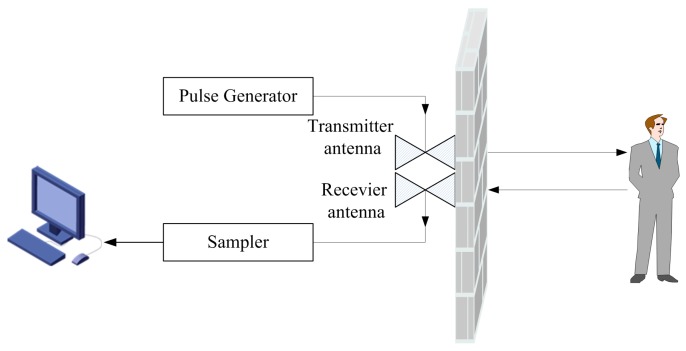
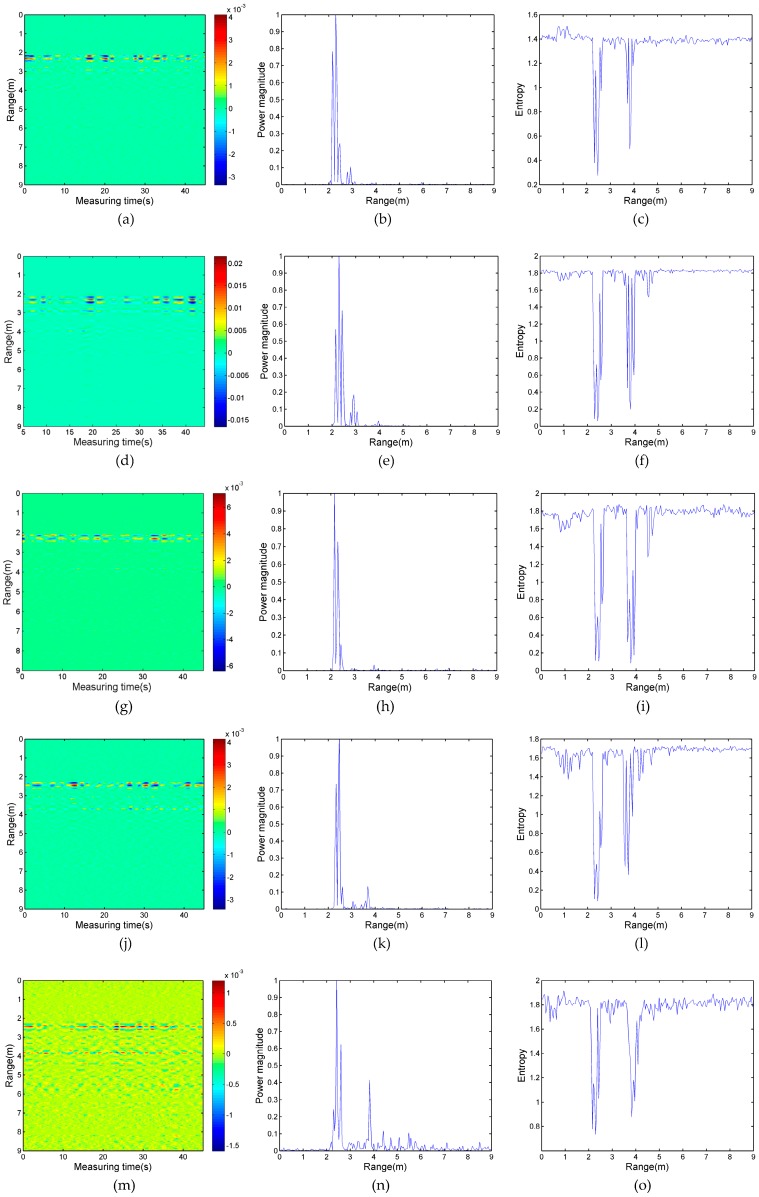
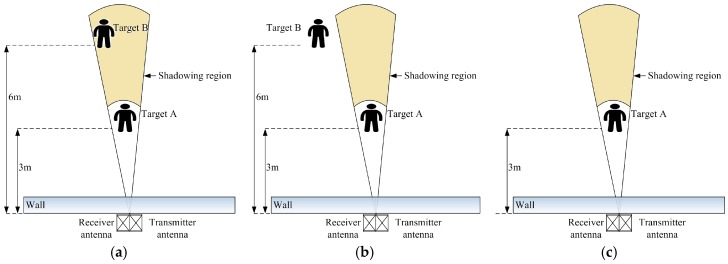
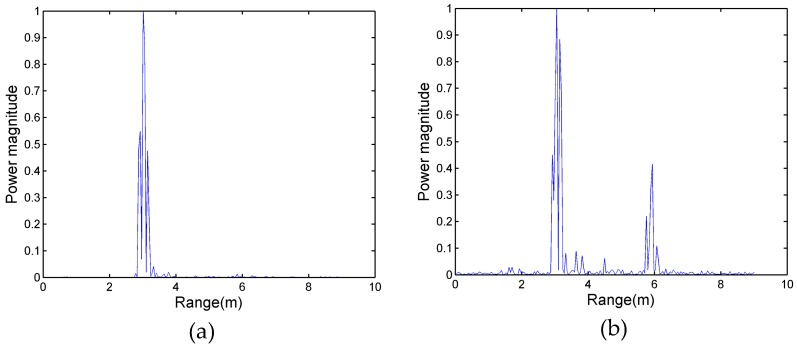
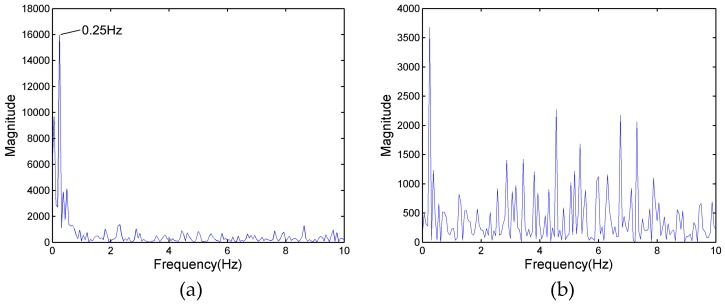
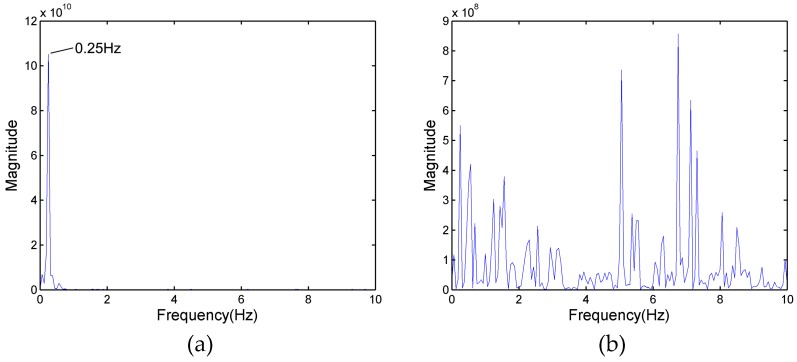
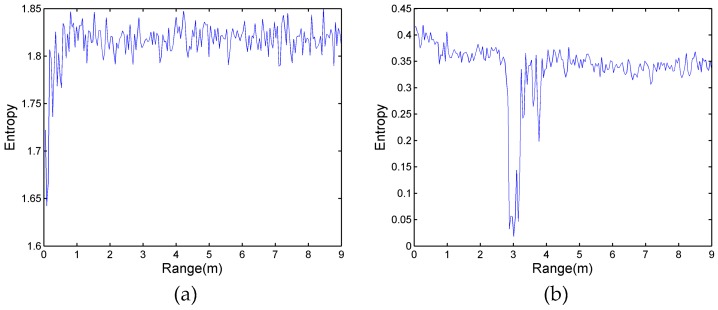
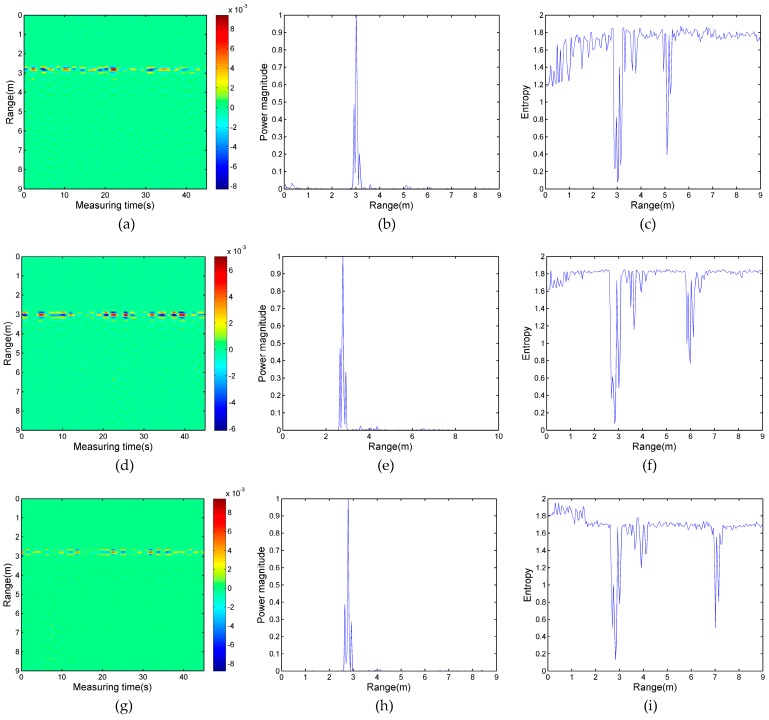
Ultra-wide band (UWB) radar for short-range human target detection is widely used to find and locate survivors in some rescue missions after a disaster. The results of the application of bistatic UWB radar for detecting multi-stationary human targets have shown that human targets close to the radar antennas are very often visible, while those farther from radar antennas are detected with less reliability. In this paper, on account of the significant difference of frequency content between the echo signal of the human target and that of noise in the shadowing region, an algorithm based on wavelet entropy is proposed to detect multiple targets. Our findings indicate that the entropy value of human targets was much lower than that of noise. Compared with the method of adaptive filtering and the energy spectrum, wavelet entropy can accurately detect the person farther from the radar antennas, and it can be employed as a useful tool in detecting multiple targets by bistatic UWB radar.
用于短程人体目标检测的超宽带(UWB)雷达被广泛应用于灾难后的一些救援任务中,以寻找和定位幸存者。双基地UWB雷达检测多静止人体目标的应用结果表明,靠近雷达天线的人体目标通常很容易被发现,而距离雷达天线较远的目标检测可靠性较低。本文基于人体目标回波信号与阴影区域噪声频率成分的显著差异,提出了一种基于小波熵的多目标检测算法。我们的研究结果表明,人体目标的熵值远低于噪声的熵值。与自适应滤波方法和能谱相比,小波熵能够准确检测距离雷达天线较远的人体目标,可作为双基地UWB雷达检测多目标的有效工具。