Boareto Marcelo, Iber Dagmar, Taylor Verdon
Department of Biosystems Science and Engineering (D-BSSE), ETH Zurich, Mattenstrasse 26, 4058 Basel, Switzerland
Swiss Institute of Bioinformatics, Mattenstrasse 26, 4058 Basel, Switzerland.
Development. 2017 Oct 1;144(19):3465-3474. doi: 10.1242/dev.152520.
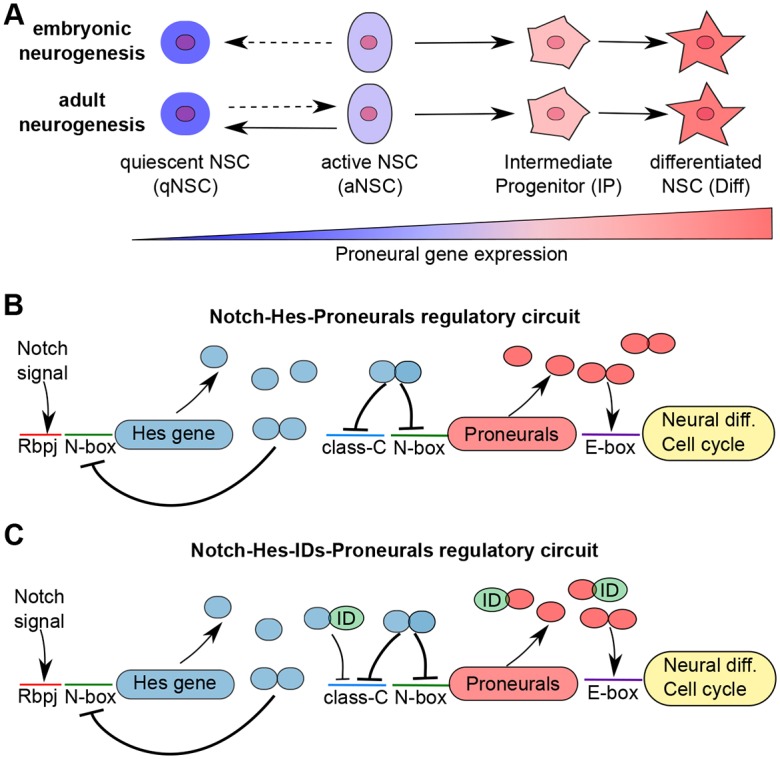
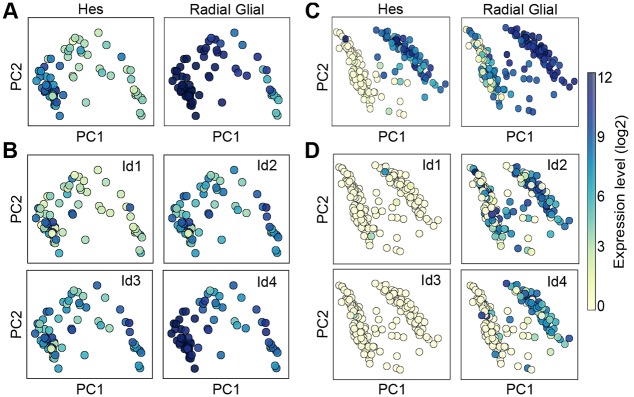
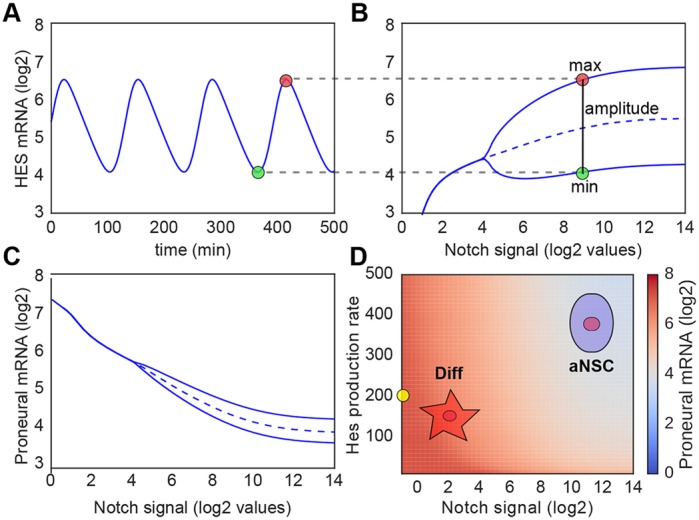
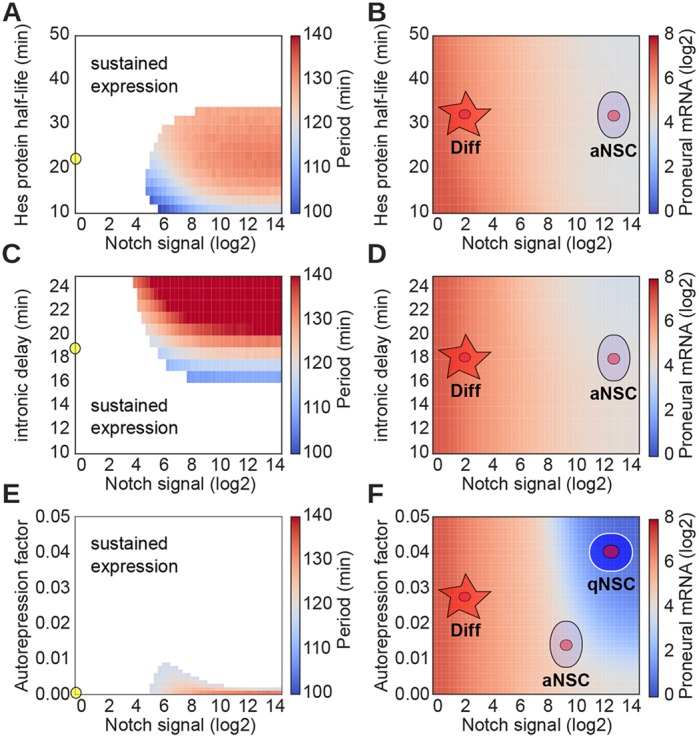
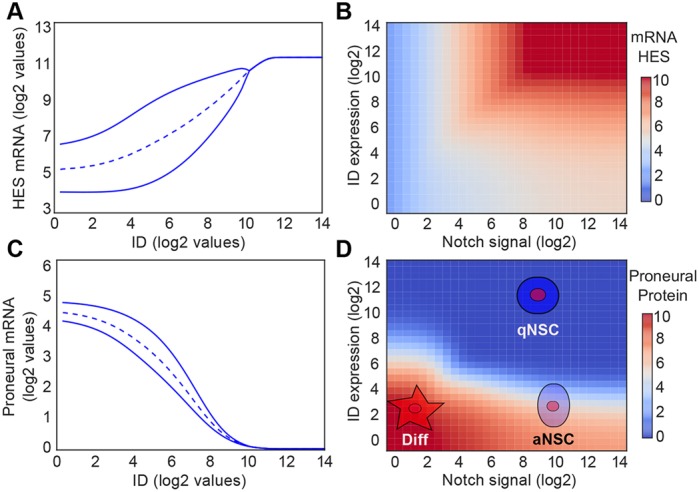
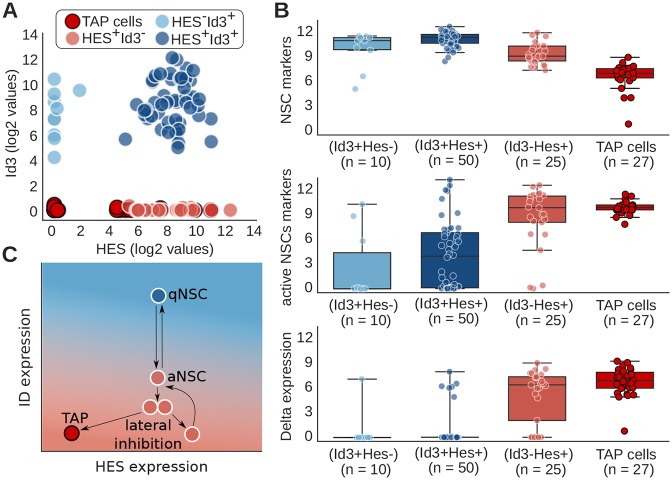
During embryonic and adult neurogenesis, neural stem cells (NSCs) generate the correct number and types of neurons in a temporospatial fashion. Control of NSC activity and fate is crucial for brain formation and homeostasis. Neurogenesis in the embryonic and adult brain differ considerably, but Notch signaling and inhibitor of DNA-binding (ID) factors are pivotal in both. Notch and ID factors regulate NSC maintenance; however, it has been difficult to evaluate how these pathways potentially interact. Here, we combined mathematical modeling with analysis of single-cell transcriptomic data to elucidate unforeseen interactions between the Notch and ID factor pathways. During brain development, Notch signaling dominates and directly regulates Id4 expression, preventing other ID factors from inducing NSC quiescence. Conversely, during adult neurogenesis, Notch signaling and Id2/3 regulate neurogenesis in a complementary manner and ID factors can induce NSC maintenance and quiescence in the absence of Notch. Our analyses unveil key molecular interactions underlying NSC maintenance and mechanistic differences between embryonic and adult neurogenesis. Similar Notch and ID factor interactions may be crucial in other stem cell systems.
在胚胎期和成年期神经发生过程中,神经干细胞(NSCs)以时空方式产生正确数量和类型的神经元。控制神经干细胞的活性和命运对于大脑的形成和稳态至关重要。胚胎期和成年期大脑中的神经发生有很大差异,但Notch信号通路和DNA结合抑制因子(ID)在两者中都起着关键作用。Notch和ID因子调节神经干细胞的维持;然而,很难评估这些信号通路之间可能是如何相互作用的。在这里,我们将数学建模与单细胞转录组数据分析相结合,以阐明Notch和ID因子信号通路之间未曾预料到的相互作用。在大脑发育过程中,Notch信号通路占主导地位,并直接调节Id4的表达,阻止其他ID因子诱导神经干细胞进入静止状态。相反,在成年期神经发生过程中,Notch信号通路和Id2/3以互补的方式调节神经发生,并且在没有Notch的情况下,ID因子可以诱导神经干细胞的维持和静止。我们的分析揭示了神经干细胞维持背后的关键分子相互作用以及胚胎期和成年期神经发生之间的机制差异。类似的Notch和ID因子相互作用可能在其他干细胞系统中也至关重要。