Makis William, Ciarallo Anthony
Cross Cancer Institute, Department of Diagnostic Imaging, Edmonton, Canada.
MUHC Glen Site, Department of Nuclear Medicine, Montreal, Canada.
Mol Imaging Radionucl Ther. 2017 Oct 3;26(3):93-100. doi: 10.4274/mirt.94695.
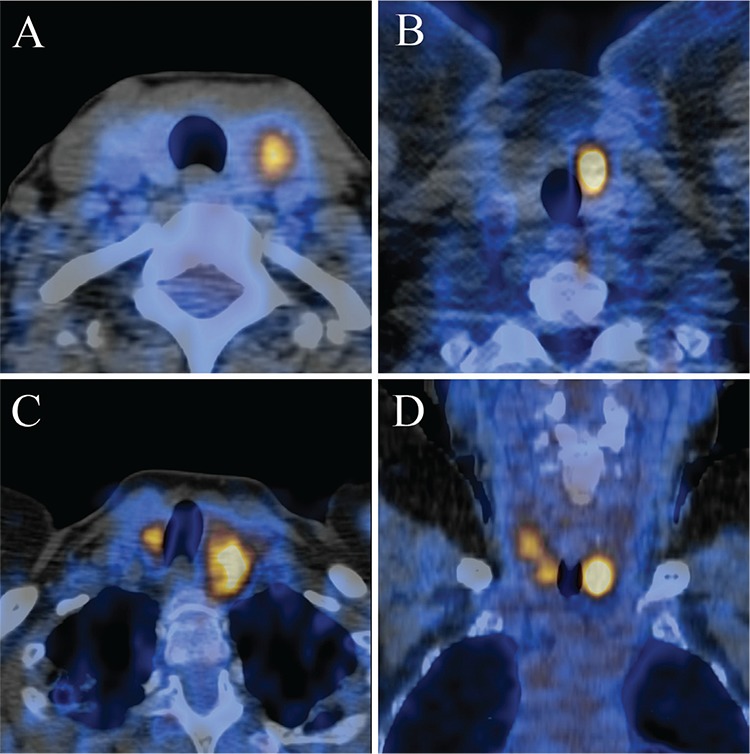
The purpose of the current study is to examine the incidence and clinical significance of unexpected focal uptake of F-fluorodeoxyglucose (F-FDG) on positron emission tomography/computed tomography (PET/CT) in the thyroid gland of oncology patients, the maximum standardized uptake value (SUV) of benign and malignant thyroid incidentalomas in these patients, and review the literature.
Seven thousand two hundred fifty-two F-FDG PET/CT studies performed over four years, were retrospectively reviewed. Studies with incidental focal F-FDG uptake in the thyroid gland were further analyzed.
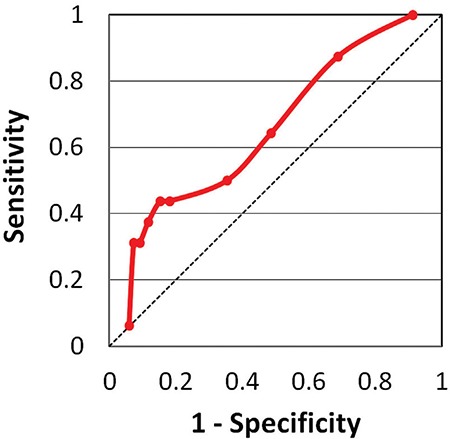
Incidental focal thyroid F-FDG uptake was identified in 157 of 7252 patients (2.2%). Sufficient follow-up data (≥12 months) were available in 128 patients, of whom 57 (45%) had a biopsy performed and 71 had clinical follow-up. Malignancy was diagnosed in 14 of 128 patients (10.9%). There was a statistically significant difference between the median SUV of benign thyroid incidentalomas (SUV 4.8) vs malignant (SUV 6.3), but the wide range of overlap between the two groups yielded no clinically useful SUV threshold value to determine malignancy.
F-FDG positive focal thyroid incidentalomas occurred in 2.2% of oncologic PET/CT scans, and were malignant in 10.9% of 128 patients. This is the lowest reported malignancy rate in a North American study to date, and significantly lower than the average malignancy rate (35%) reported in the literature. Invasive biopsy of all F-FDG positive thyroid incidentalomas, as recommended by some studies, is unwarranted and further research to determine optimal management is needed. There was no clinically useful SUV cut-off value to determine malignancy and PET/CT may not be a useful imaging modality to follow these patients conservatively.
本研究旨在探讨肿瘤患者甲状腺在正电子发射断层扫描/计算机断层扫描(PET/CT)上意外出现的局灶性氟脱氧葡萄糖(F-FDG)摄取的发生率及临床意义、这些患者中甲状腺良性和恶性偶发瘤的最大标准化摄取值(SUV),并回顾相关文献。
回顾性分析四年内进行的7252例F-FDG PET/CT检查。对甲状腺出现局灶性F-FDG摄取的检查进行进一步分析。
7252例患者中有157例(2.2%)出现甲状腺局灶性F-FDG摄取。128例患者有足够的随访数据(≥12个月),其中57例(45%)进行了活检,71例进行了临床随访。128例患者中有14例(10.9%)被诊断为恶性肿瘤。甲状腺良性偶发瘤的中位SUV(SUV 4.8)与恶性肿瘤(SUV 6.3)之间存在统计学显著差异,但两组间有较大范围的重叠,未产生用于确定恶性肿瘤的临床有用SUV阈值。
F-FDG阳性甲状腺局灶性偶发瘤在肿瘤PET/CT扫描中占2.2%,在128例患者中有10.9%为恶性。这是迄今为止北美研究中报道的最低恶性率,显著低于文献报道的平均恶性率(35%)。一些研究建议对所有F-FDG阳性甲状腺偶发瘤进行侵入性活检是不必要的,需要进一步研究以确定最佳管理方法。没有用于确定恶性肿瘤的临床有用SUV临界值,PET/CT可能不是对这些患者进行保守随访的有用成像方式。