Tur Mehmet Kemal, Daramola Adebukola K, Gattenlöhner Stefan, Herling Marco, Chetty Shivan, Barth Stefan
Institute of Pathology, University Hospital, Justus Liebig University Giessen, 35390 Giessen, Germany.
South African Research Chair in Cancer Biotechnology, Institute of Infectious Disease and Molecular Medicine, Department of Integrative Biomedical Sciences, Faculty of Health Sciences, University of Cape Town, Cape Town 7700, South Africa.
Biomedicines. 2017 Oct 4;5(4):59. doi: 10.3390/biomedicines5040059.
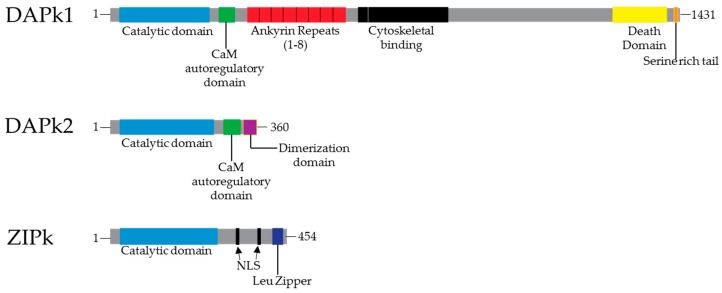
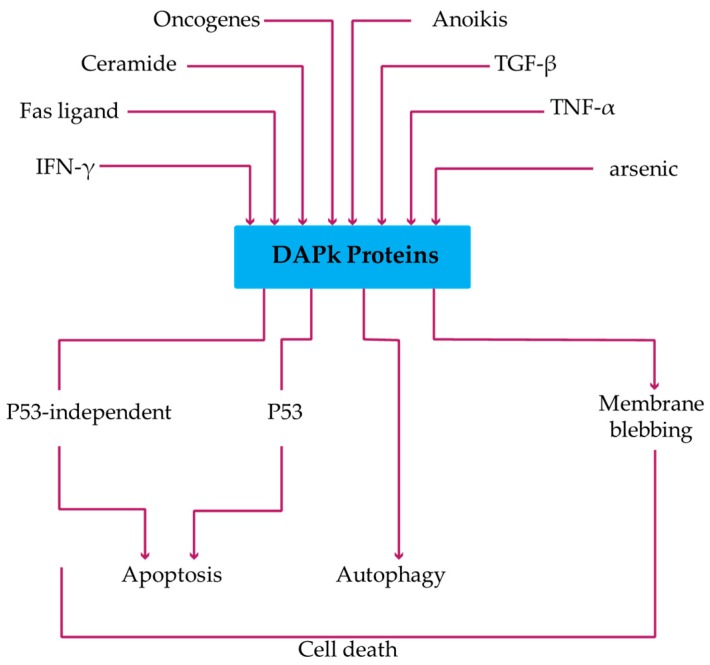
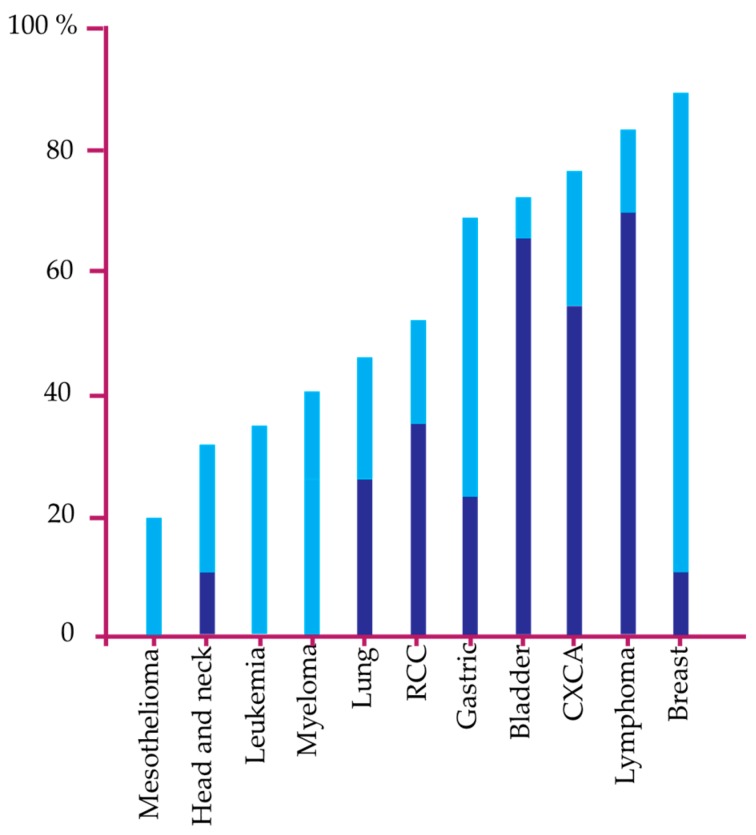
Targeted cancer immunotherapy is designed to selectively eliminate tumor cells without harming the surrounding healthy tissues. The death-associated protein kinases (DAPk) are a family of proapoptotic proteins that play a vital role in the regulation of cellular process and have been identified as positive mediators of apoptosis via extrinsic and intrinsic death-regulating signaling pathways. Tumor suppressor activities have been shown for DAPk1 and DAPk2 and they are downregulated in e.g., Hodgkin's (HL) and B cell lymphoma (CLL), respectively. Here, we review a targeted therapeutic approach which involves reconstitution of DAPks by the generation of immunokinase fusion proteins. These recombinant proteins consist of a disease-specific ligand fused to a modified version of DAPk1 or DAPk2. HL was targeted via CD30 and B-CLL via CD22 cell surface antigens.
靶向癌症免疫疗法旨在选择性地消除肿瘤细胞,而不损害周围的健康组织。死亡相关蛋白激酶(DAPk)是一类促凋亡蛋白,在细胞过程的调节中起着至关重要的作用,并且已被确定为通过外在和内在死亡调节信号通路介导凋亡的正向介质。DAPk1和DAPk2已显示出肿瘤抑制活性,例如在霍奇金淋巴瘤(HL)和B细胞淋巴瘤(CLL)中它们分别下调。在此,我们综述了一种靶向治疗方法,该方法涉及通过产生免疫激酶融合蛋白来重建DAPk。这些重组蛋白由与DAPk1或DAPk2的修饰版本融合的疾病特异性配体组成。HL通过CD30靶向,B-CLL通过CD22细胞表面抗原靶向。