Xu Yang, Chen Yuanyuan, Liu Hu, Lei Xiao, Guo Jiaming, Cao Kun, Liu Cong, Li Bailong, Cai Jianming, Ju Jintao, Gao Fu, Yang Yanyong
Department of Radiation Medicine, Faculty of Naval Medicine, Second Military Medical University, Shanghai 200433, P.R. China.
Faculty of Naval Medicine, Second Military Medical University, 200433, Shanghai, P.R. China.
Oncotarget. 2017 May 15;8(40):67082-67093. doi: 10.18632/oncotarget.17859. eCollection 2017 Sep 15.
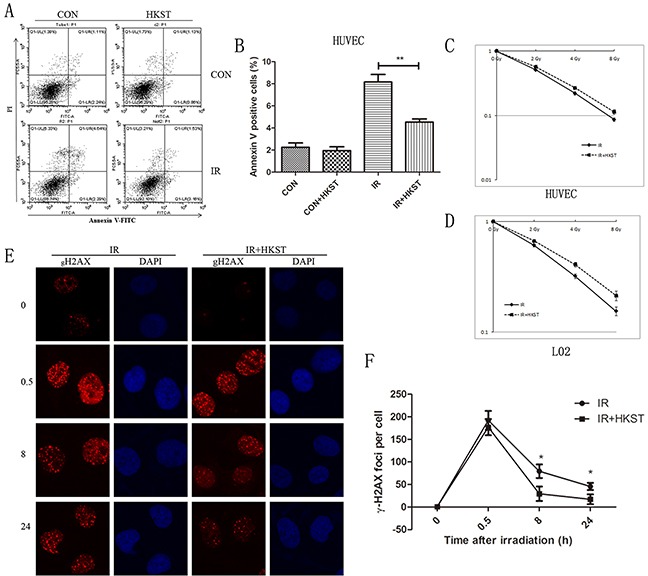
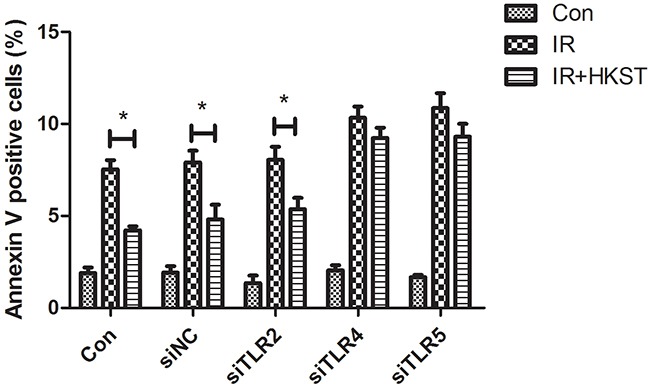
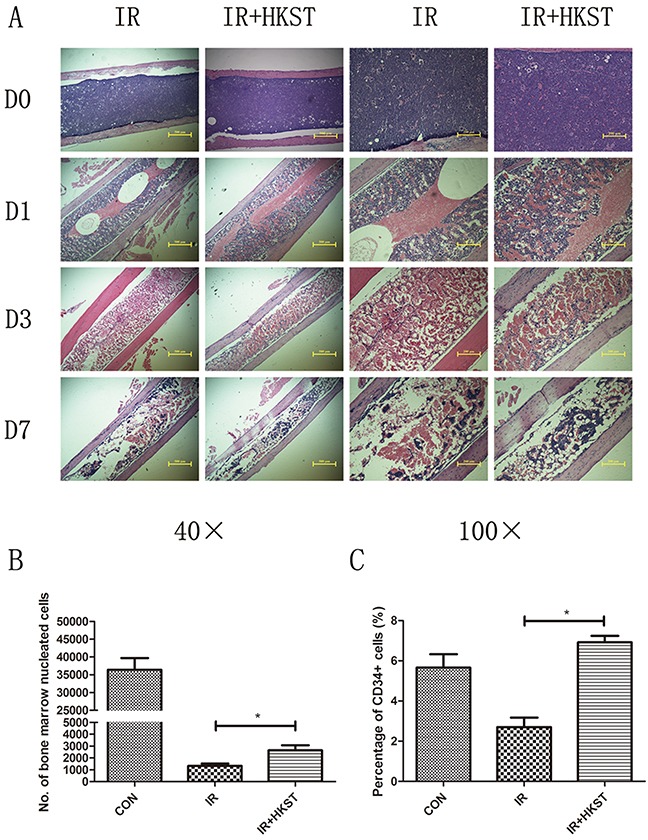
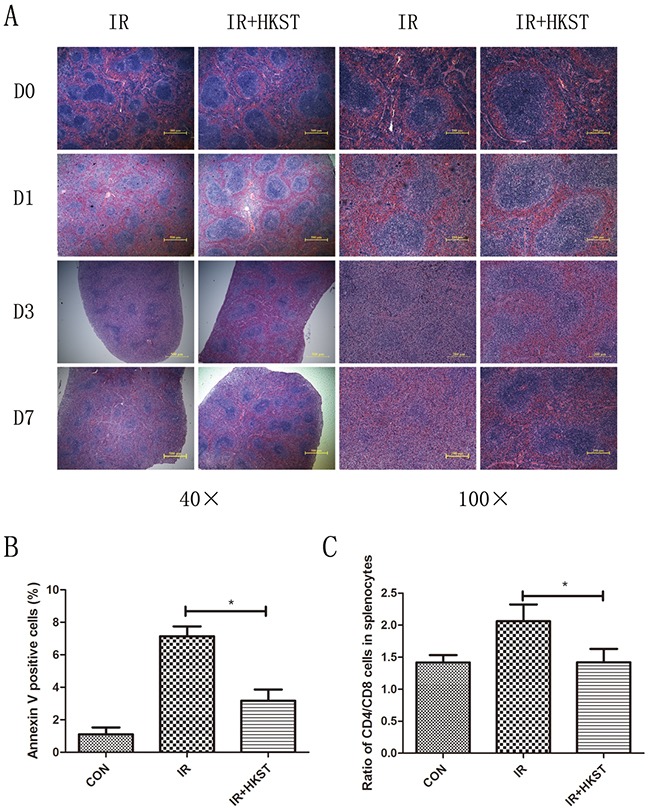
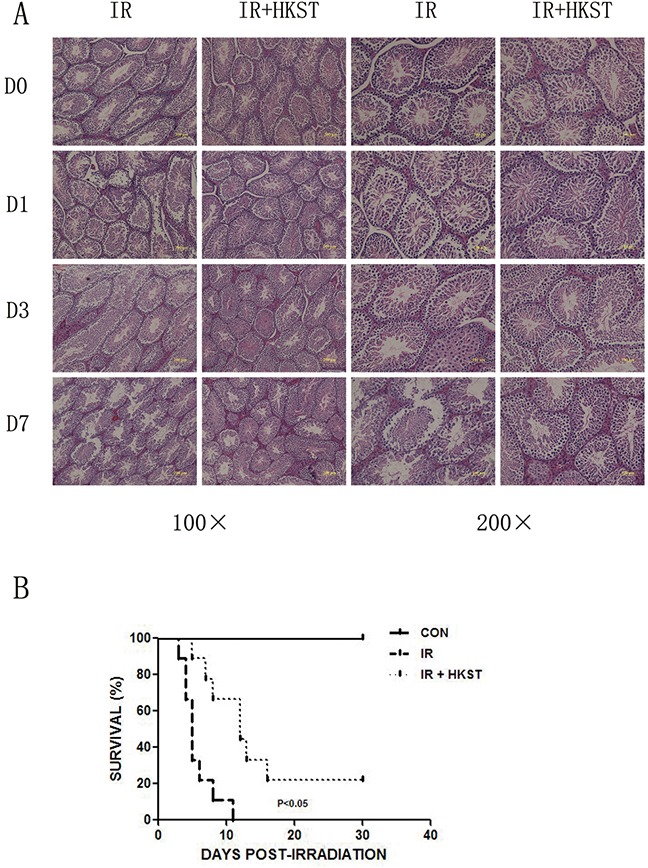
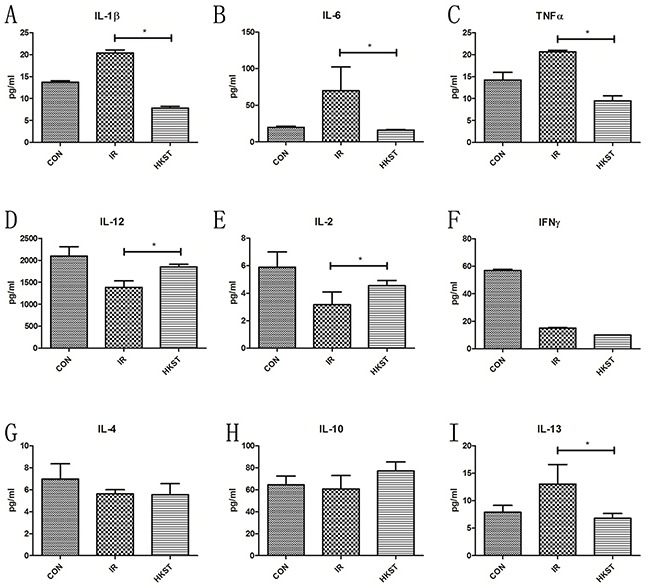
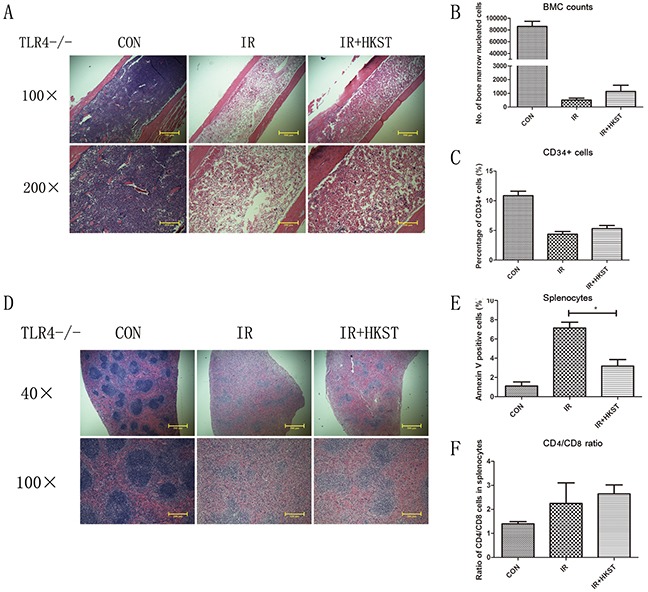
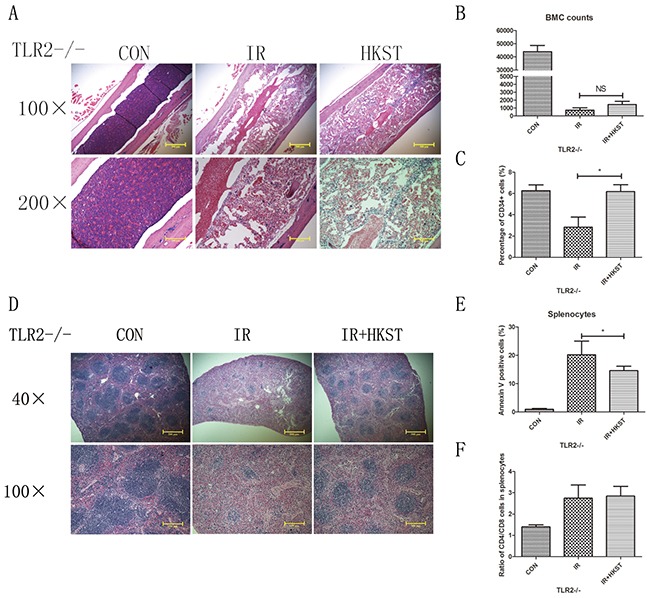
It is urgently required to develop novel safe and effective radioprotectors to alleviate radiation damages. Recently, several toll like receptors (TLRs), including TLR2, TLR4, TLR5, TLR9, have been proved to exert protective effects against ionizing radiation. Due to different tissue-distribution and distinct functions of TLRs, we hypothesized that co-activation of multiple TLRs simultaneously may produce extensive and stronger radioprotective effects. In this study, we found the co-agonist of TLR2, TLR4 and TLR5, heat-killed salmonella typhimurium (HKST) significantly inhibited radiation-induced cell apoptosis, increased cell survival and alleviated DNA damage. HKST also prolonged animal survival and protected radiosensitive tissues against radiation damages, such as bone marrow, spleen and testis. Decrease of CD4+ and CD8+ cells were also reversed by HKST treatment. By using TLR2 and TLR4 knockout mice, we found that most of radioprotective effects of HKST were abrogated in TLR4 knock out mice. And HKST failed to inhibited cell apoptosis in TLR5 knock down cells. In conclusion, we demonstrated that HKST effectively protected cells and radiosensitive tissues against radiation injury in a TLR4 biased mechanism, suggesting HKST as a potential radioprotector with low toxicity.
迫切需要开发新型安全有效的辐射防护剂以减轻辐射损伤。最近,包括TLR2、TLR4、TLR5、TLR9在内的几种 toll 样受体(TLR)已被证明对电离辐射具有保护作用。由于TLR的组织分布不同且功能各异,我们推测同时共同激活多种TLR可能会产生广泛且更强的辐射防护作用。在本研究中,我们发现TLR2、TLR4和TLR5的共同激动剂——热灭活鼠伤寒沙门氏菌(HKST)可显著抑制辐射诱导的细胞凋亡,提高细胞存活率并减轻DNA损伤。HKST还可延长动物存活时间,并保护辐射敏感组织免受辐射损伤,如骨髓、脾脏和睾丸。HKST处理还可逆转CD4+和CD8+细胞的减少。通过使用TLR2和TLR4基因敲除小鼠,我们发现HKST的大多数辐射防护作用在TLR4基因敲除小鼠中被消除。并且HKST在TLR5敲低细胞中未能抑制细胞凋亡。总之,我们证明了HKST以TLR4偏向性机制有效保护细胞和辐射敏感组织免受辐射损伤,表明HKST是一种潜在的低毒性辐射防护剂。