King Ryan J, Yu Fang, Singh Pankaj K
The Eppley Institute for Research in Cancer and Allied Diseases, University of Nebraska Medical Center, Omaha, Nebraska, USA.
Department of Biostatistics, University of Nebraska Medical Center, Omaha, Nebraska, USA.
Oncotarget. 2017 May 17;8(40):67152-67168. doi: 10.18632/oncotarget.17934. eCollection 2017 Sep 15.
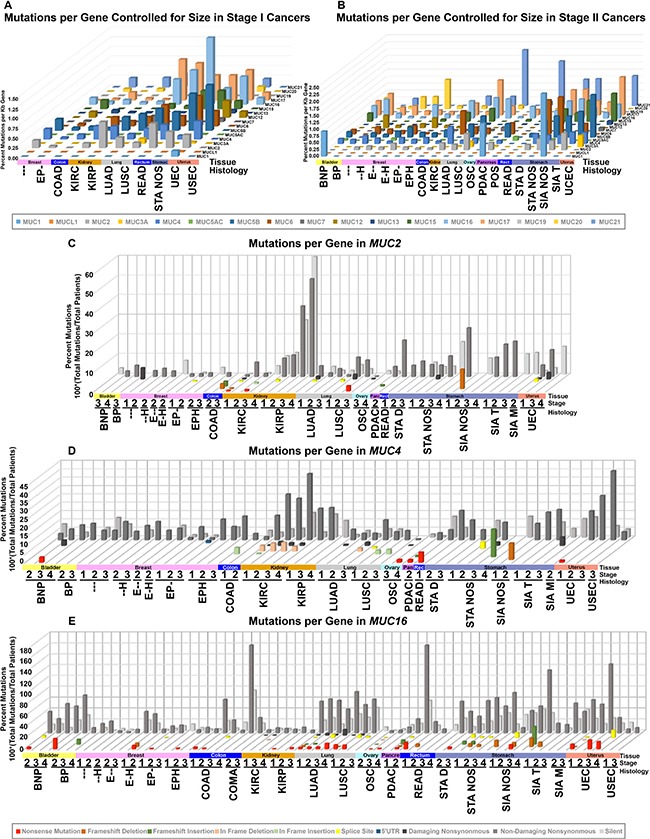
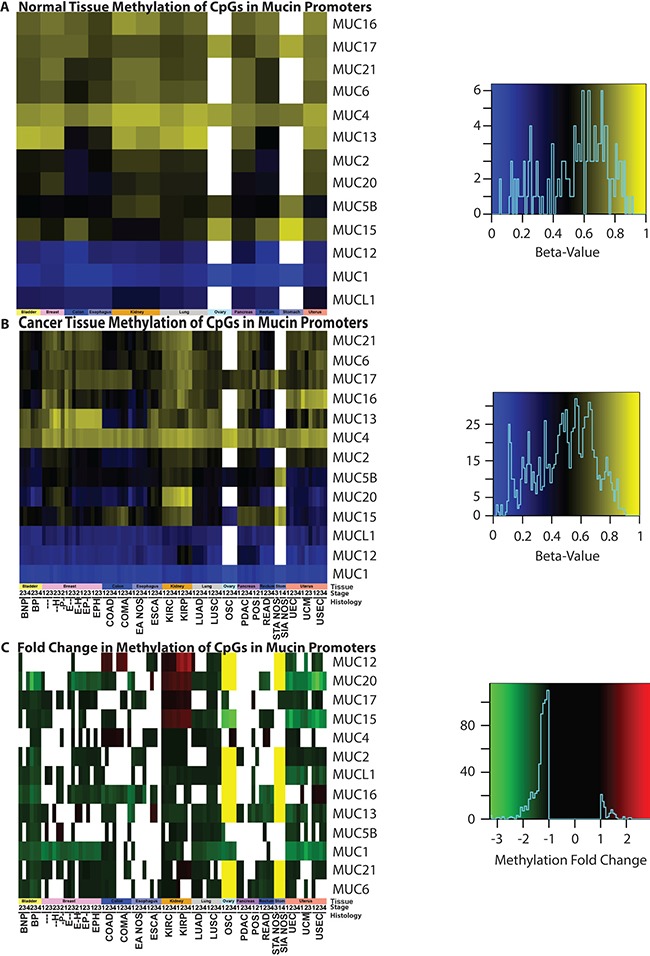
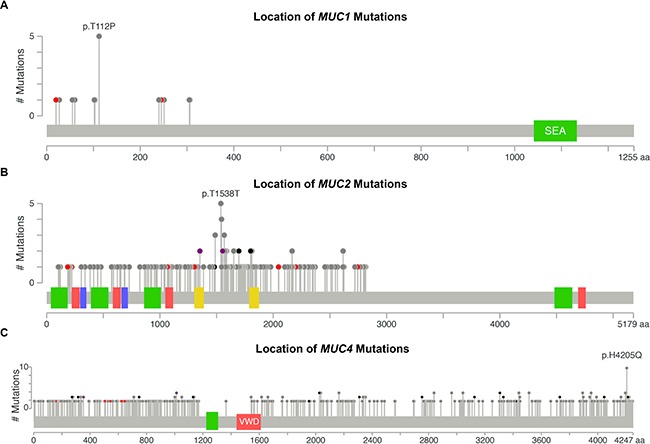
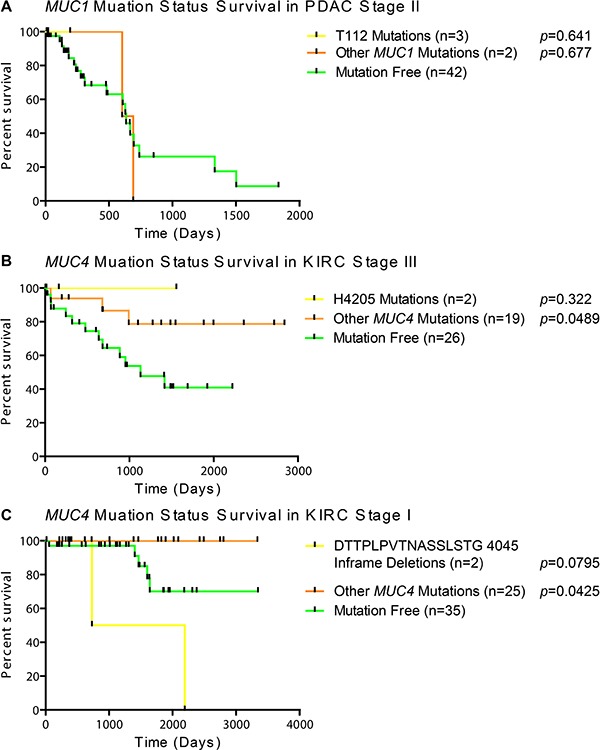
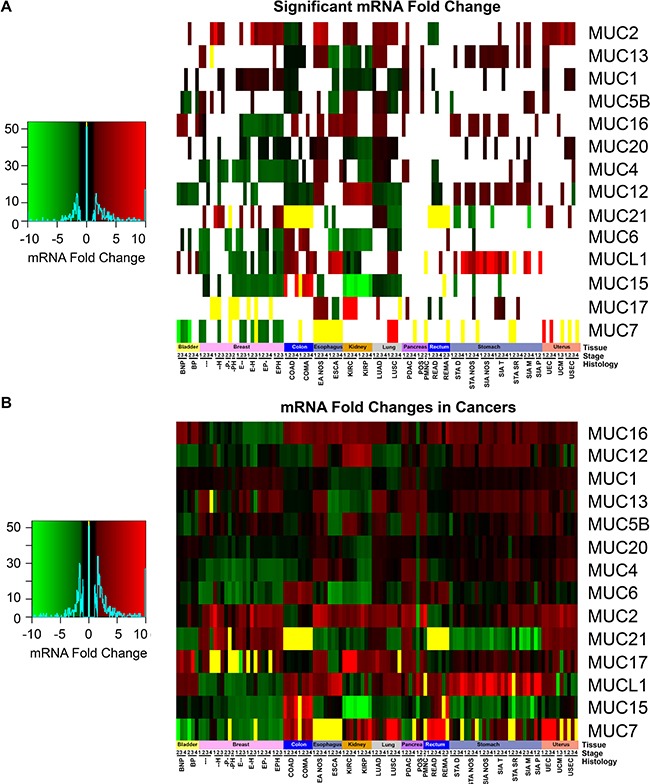
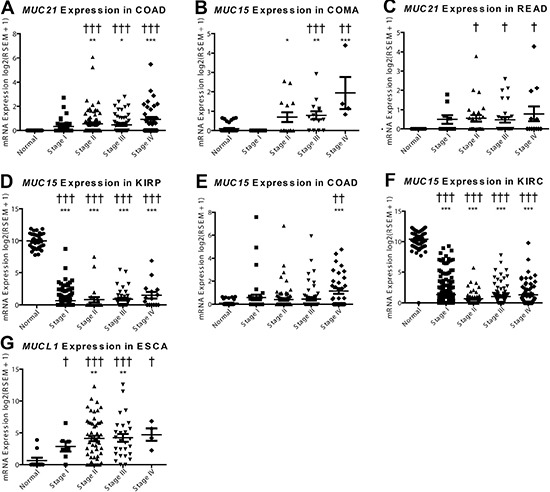
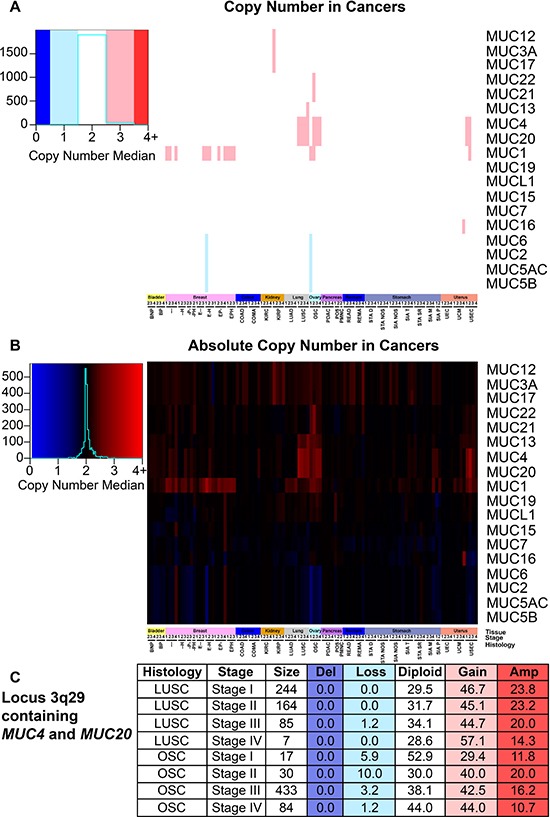
The significance of mucins in cancers has led to the development of novel biomarkers and therapeutic agents against cancers. Despite significant advances in the understanding of mucins, systemic investigations into the role of mucins in cancer biology focusing particularly on the histological subtypes and stages, along with other variables, are yet to be carried out to discover potential novel functions and cancer-specific roles. Here, we investigated 11 mucin expressing cancers for DNA mutations, mRNA expression, copy number, methylation, and the impacts these genomic features may have on patient survival by utilizing The Cancer Genome Atlas dataset. We demonstrate that mucin DNA mutations have a significant rate, pattern, and impact on cancer patient survival depending on the tissue of origin. This includes a frequent T112P mutation in that is seen in half of the pancreatic mutations, as well as being present in other cancers. We also observed a very frequent mutation at H4205, which correlated with survival outcomes in patients. Furthermore, we observed significant alterations in mucin mRNA expression in multiple tumor types. Our results demonstrate expression of certain mucins in cancer tissues, including in colorectal cancers. We observed a general decrease in promoter methylation for mucins, which correlated with decreased expression of many genes, such as in kidney cancers. Lastly, several mucin gene loci demonstrated copy number increase in multiple histological subtypes. Thus, our study presents a comprehensive analysis of genomic alterations in mucins and their corresponding roles in cancer progression.
黏蛋白在癌症中的重要性促使了针对癌症的新型生物标志物和治疗药物的开发。尽管在黏蛋白的理解方面取得了重大进展,但尚未对黏蛋白在癌症生物学中的作用进行系统研究,特别是针对组织学亚型和阶段以及其他变量,以发现潜在的新功能和癌症特异性作用。在此,我们利用癌症基因组图谱数据集,对11种表达黏蛋白的癌症进行了DNA突变、mRNA表达、拷贝数、甲基化以及这些基因组特征对患者生存可能产生的影响的研究。我们证明,黏蛋白DNA突变根据起源组织的不同,在发生率、模式和对癌症患者生存的影响方面存在显著差异。这包括在一半的胰腺突变中出现的常见的T112P突变,以及在其他癌症中也存在的该突变。我们还观察到在H4205处非常频繁的突变,其与患者的生存结果相关。此外,我们在多种肿瘤类型中观察到黏蛋白mRNA表达的显著改变。我们的结果证明了某些黏蛋白在癌组织中的表达,包括在结直肠癌中的表达。我们观察到黏蛋白启动子甲基化普遍降低,这与许多基因的表达降低相关,如在肾癌中的表达。最后,几个黏蛋白基因位点在多种组织学亚型中显示出拷贝数增加。因此,我们的研究对黏蛋白的基因组改变及其在癌症进展中的相应作用进行了全面分析。