Department of Biology, College of Natural and Computational Sciences, University of Gondar, P.O. Box 196, Gondar, Ethiopia.
J Ethnobiol Ethnomed. 2017 Oct 4;13(1):55. doi: 10.1186/s13002-017-0182-7.
Traditional medicinal plant species documentation is very crucial in Ethiopia for biodiversity conservation, bioactive chemical extractions and indigenous knowledge retention. Having first observed the inhabitants of Gubalafto District (Northern Ethiopia), the author gathered, recorded, and documented the human traditional medicinal plant species and the associated indigenous knowledge.
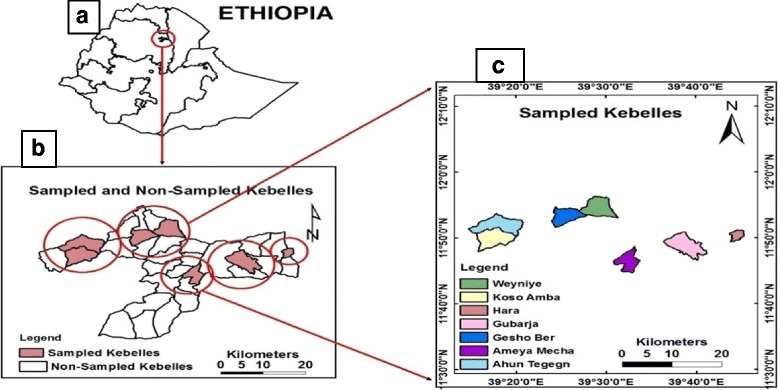
The study was conducted from February 2013 to January 2015 and used descriptive field survey design. Eighty-four informants were selected from seven study kebeles (sub-districts) in the District through purposive, snowball, and random sampling techniques. Both quantitative and qualitative data were collected through semi-structured interviews, guided field walks, demonstrations, and focus group discussions with the help of guided questions. Data were organized and analyzed by descriptive statistics with SPSS version 20 and Microsoft Office Excel 2007.
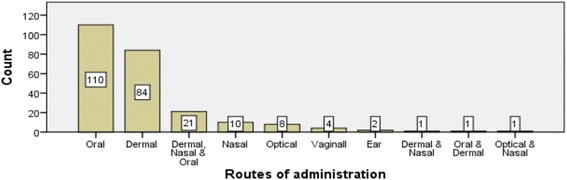
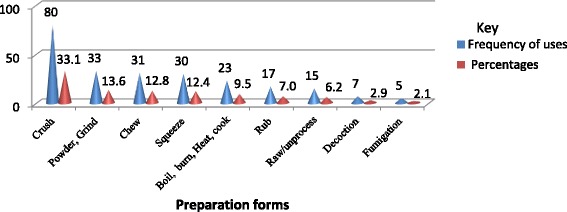
A total of 135 medicinal plant species within 120 genera and 64 families were documented. Among the species, Ocimum lamiifolium and Rhamnus prinoides scored the highest informant citations and fidelity level value, respectively. In the study area, Asteraceae with 8.1% and herbs with 50.4% plant species were the most used sources for their medicinal uses. A total of 65 ailments were identified as being treated by traditional medicinal plants, among which stomachache (abdominal health problems) was frequently reported. Solanum incanum was reported for the treatment of many of the reported diseases. The leaf, fresh parts, and crushed forms of the medicinal plants were the most preferred in remedy preparations. Oral application was the highest reported administration for 110 preparations. A majority of medicinal plant species existed in the wild without any particular conservation effort. Few informants (about 5%) had only brief notes about the traditional medicinal plants. Ninety percent of the respondents have learned indigenous medicinal plants knowledge from their family members and friends secretly. Orthodox Church schools were found the main place for 65% of healer's indigenous knowledge origin and experiences. Elders, aged between 40 and 84 years, gave detailed descriptions about traditional medicinal plants.
Traditional medicinal plants and associated indigenous knowledge are the main systems to maintain human health in Gubalafto District. But minimal conservation measures were recorded in the community. Thus, in-situ and ex-situ conservation practices and sustainable utilization are required in the District.
传统药用植物物种的文献记载在埃塞俄比亚对于生物多样性保护、生物活性化学物质提取和本土知识保留非常重要。作者首次观察了古巴拉夫托区(埃塞俄比亚北部)的居民,收集、记录并记录了人类传统药用植物物种和相关的本土知识。
本研究于 2013 年 2 月至 2015 年 1 月进行,采用描述性实地调查设计。通过有目的、雪球和随机抽样技术,从该地区的 7 个研究村(分区)中选择了 84 名知情者。通过半结构化访谈、实地指导行走、示范和焦点小组讨论收集了定量和定性数据,并借助指导问题进行了讨论。数据由 SPSS 版本 20 和 Microsoft Office Excel 2007 进行组织和分析。
共记录了 135 种药用植物,涉及 120 属和 64 科。在这些物种中,罗勒(Ocimum lamiifolium)和鼠李(Rhamnus prinoides)的信息提供者引用率和保真度水平得分最高。在研究区域中,菊科(Asteraceae)以 8.1%的比例和草本植物以 50.4%的比例成为药用植物的最主要来源。共确定了 65 种疾病可以通过传统药用植物进行治疗,其中胃痛(腹部健康问题)的报告最为频繁。报春花(Solanum incanum)被报道用于治疗许多报告的疾病。药用植物的叶子、新鲜部位和粉碎形式是最受欢迎的药物制备形式。口服是报告的最高给药方式,用于 110 种制剂。大多数药用植物物种都存在于野外,没有任何特定的保护措施。只有少数(约 5%)的信息提供者对传统药用植物有简要的记录。90%的受访者从家人和朋友那里秘密学习本土药用植物知识。东正教学校被发现是 65%的治疗师本土知识来源和经验的主要场所。年龄在 40 至 84 岁之间的老年人对传统药用植物进行了详细描述。
传统药用植物和相关的本土知识是古巴拉夫托区维持人类健康的主要系统。但是,在社区中记录了最小的保护措施。因此,需要在该地区进行就地和迁地保护实践和可持续利用。