Supramolecular and Biomaterials Chemistry, Leiden Institute of Chemistry, Leiden University , P.O. Box 9502, 2300 RA Leiden, The Netherlands.
Langmuir. 2017 Oct 31;33(43):12443-12452. doi: 10.1021/acs.langmuir.7b02931. Epub 2017 Oct 18.
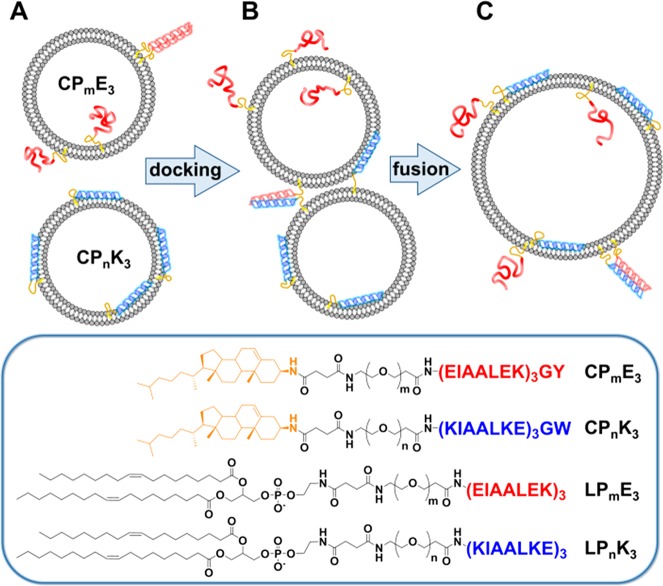
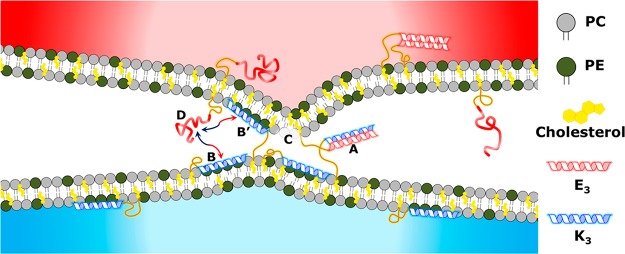
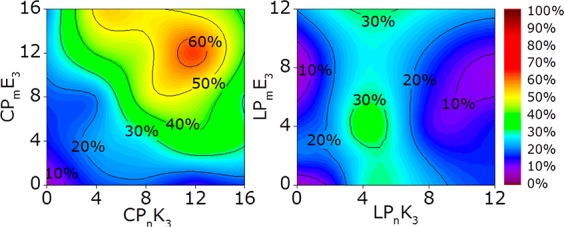
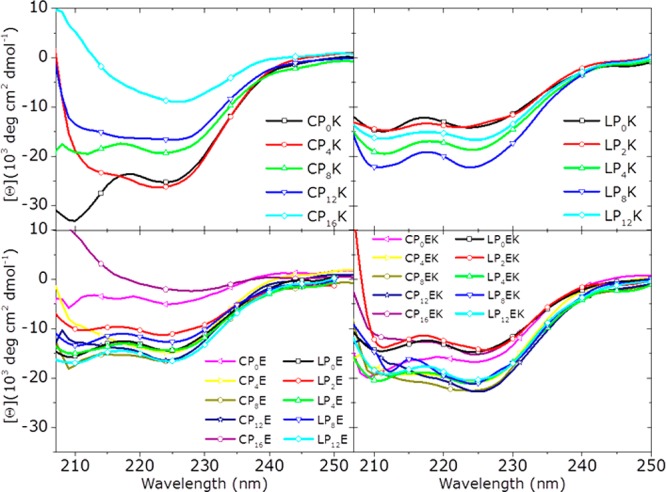
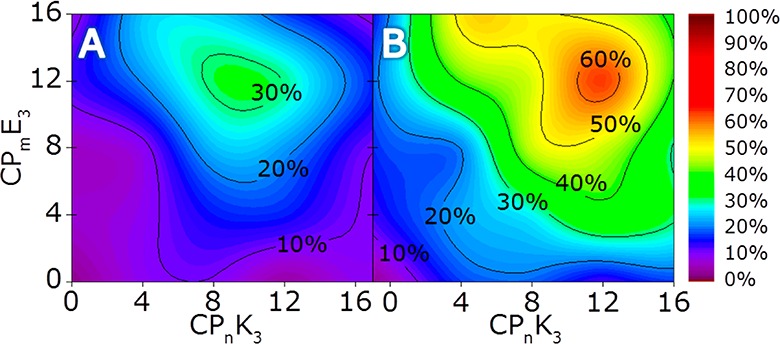
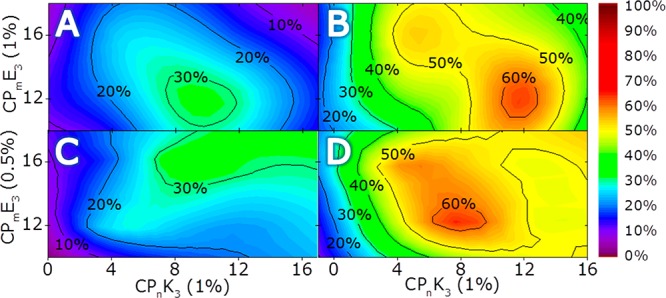
We have developed a model system for membrane fusion that utilizes lipidated derivatives of a heterodimeric coiled-coil pair dubbed E (EIAALEK) and K (KIAALKE). In this system, peptides are conjugated to a lipid anchor via a poly(ethylene glycol) (PEG) spacer, and this contribution studies the influence of the PEG spacer length, coupled with the type of lipid anchor, on liposome-liposome fusion. The effects of these modifications on peptide secondary structure, their interactions with liposomes, and their ability to mediate fusion were studied using a variety of different content mixing experiments and CD spectroscopy. Our results demonstrate the asymmetric role of the peptides in the fusion process because alterations to the PEG spacer length affect E and K differently. We conclude that negatively charged E acts as a "handle" for positively charged K and facilitates liposome docking, the first stage of the fusion process, through coiled-coil formation. The efficacy of this E handle is enhanced by longer spacer lengths. K directs the fusion process via peptide-membrane interactions, but the length of the PEG spacer plays two competing roles: a PEG/PEG spacer length is optimal for membrane destabilization; however, a PEG spacer increases the fusion efficiency over time by improving the peptide accessibility for successive fusion events. Both the anchor type and spacer length affect the peptide structure; a cholesterol anchor appears to enhance K-membrane interactions and thus mediates fusion more efficiently.
我们开发了一种利用脂化的异二聚体卷曲螺旋对 E(EIAALEK)和 K(KIAALKE)衍生物的膜融合模型系统。在该系统中,肽通过聚乙二醇(PEG)间隔物连接到脂质锚上,本研究探讨了 PEG 间隔物长度以及脂质锚的类型对脂质体-脂质体融合的影响。通过各种不同的混合实验和 CD 光谱研究了这些修饰对肽二级结构、与脂质体相互作用及其介导融合能力的影响。我们的结果表明,肽在融合过程中起着不对称的作用,因为 PEG 间隔物长度的改变会对 E 和 K 产生不同的影响。我们得出结论,带负电荷的 E 充当带正电荷的 K 的“把手”,并通过卷曲螺旋形成促进脂质体对接,即融合过程的第一阶段。较长的间隔物长度增强了这个 E 把手的功效。K 通过肽-膜相互作用指导融合过程,但 PEG 间隔物的长度起着两个相互竞争的作用:PEG/PEG 间隔物长度对于膜去稳定化是最佳的;然而,PEG 间隔物通过提高肽对后续融合事件的可及性来提高融合效率。锚的类型和间隔物的长度都会影响肽的结构;胆固醇锚似乎增强了 K 与膜的相互作用,从而更有效地介导融合。