Nie Hongyi, Liu Xiaoyan, Pan Jiao, Li Wenfeng, Li Zhiguo, Zhang Shaowu, Chen Shenglu, Miao Xiaoqing, Zheng Nenggan, Su Songkun
College of Bee Science, Fujian Agriculture and Forestry University, Fuzhou, China.
College of Animal Sciences, Zhejiang University, Hangzhou, China.
Genet Mol Biol. 2017 Oct-Dec;40(4):781-789. doi: 10.1590/1678-4685-GMB-2017-0013. Epub 2017 Oct 2.
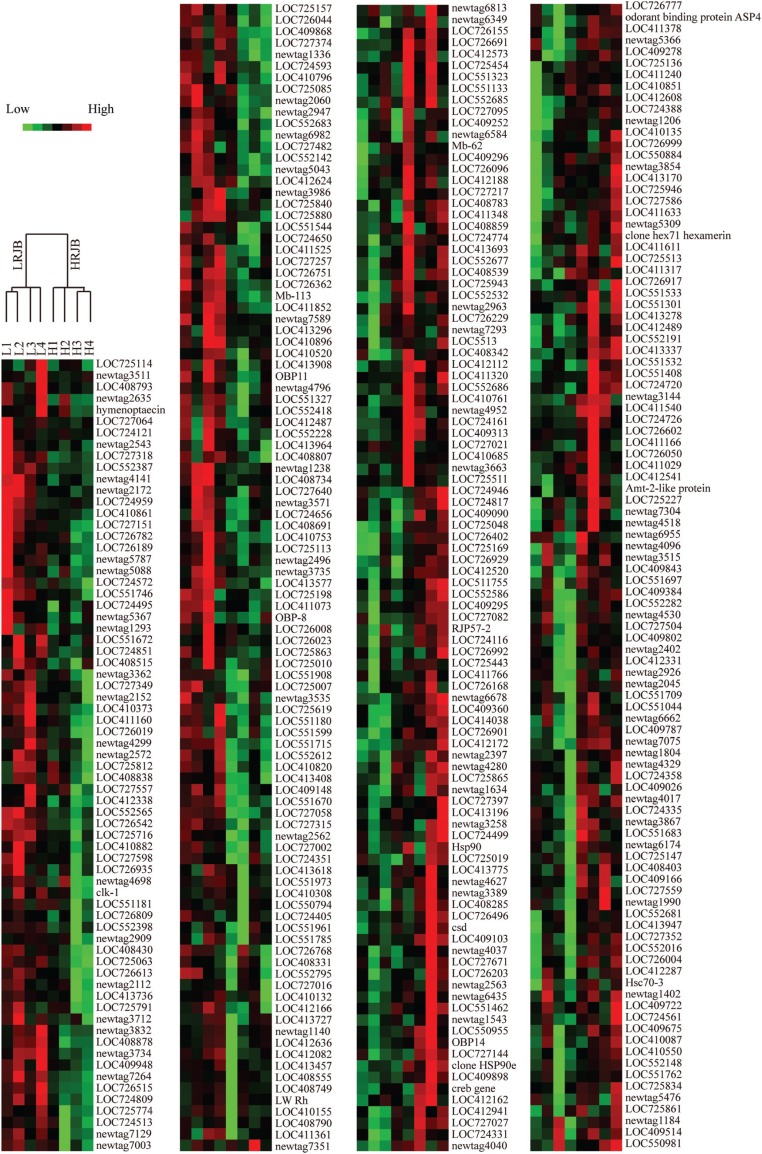
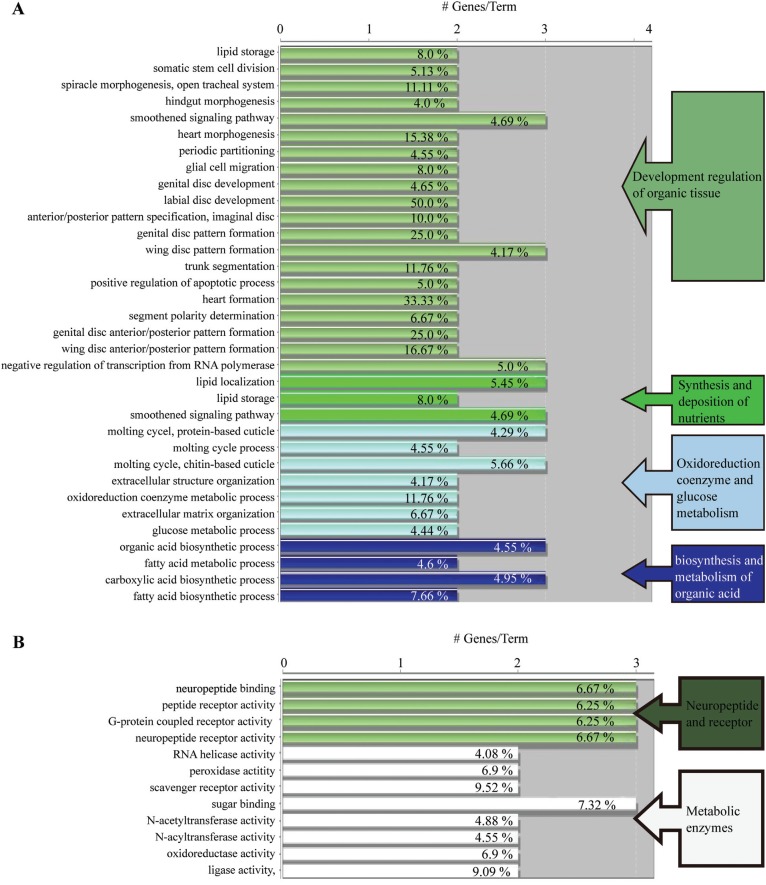
China is the largest royal jelly producer and exporter in the world, and high royal jelly-yielding strains have been bred in the country for approximately three decades. However, information on the molecular mechanism underlying high royal jelly production is scarce. Here, a cDNA microarray was used to screen and identify differentially expressed genes (DEGs) to obtain an overview on the changes in gene expression levels between high and low royal jelly producing bees. We developed a honey bee gene chip that covered 11,689 genes, and this chip was hybridised with cDNA generated from RNA isolated from heads of nursing bees. A total of 369 DEGs were identified between high and low royal jelly producing bees. Amongst these DEGs, 201 (54.47%) genes were up-regulated, whereas 168 (45.53%) were down-regulated in high royal jelly-yielding bees. Gene ontology (GO) analyses showed that they are mainly involved in four key biological processes, and pathway analyses revealed that they belong to a total of 46 biological pathways. These results provide a genetic basis for further studies on the molecular mechanisms involved in high royal jelly production.
中国是世界上最大的蜂王浆生产国和出口国,并且该国已经培育出高产蜂王浆的品系约三十年了。然而,关于高产蜂王浆的分子机制的信息却很匮乏。在此,利用cDNA微阵列来筛选和鉴定差异表达基因(DEGs),以全面了解高产和低产蜂王浆蜜蜂之间基因表达水平的变化。我们开发了一种涵盖11,689个基因的蜜蜂基因芯片,并用该芯片与从哺育蜂头部分离的RNA所产生的cDNA进行杂交。在高产和低产蜂王浆蜜蜂之间共鉴定出369个差异表达基因。在这些差异表达基因中,有201个(54.47%)基因在高产蜂王浆蜜蜂中上调,而168个(45.53%)基因下调。基因本体(GO)分析表明,它们主要参与四个关键生物学过程,通路分析显示它们总共属于46条生物学通路。这些结果为进一步研究高产蜂王浆的分子机制提供了遗传基础。