Lin Siying, Alam Tanfis I, Kottadiel Vishal I, VanGessel Carl J, Tang Wei-Chun, Chemla Yann R, Rao Venigalla B
Department of Biology, The Catholic University of America, Washington, DC, 20064, USA.
Department of Physics, Center for Biophysics and Quantitative Biology, University of Illinois at Urbana-Champaign, Urbana, IL, 61801, USA.
Nucleic Acids Res. 2017 Nov 2;45(19):11437-11448. doi: 10.1093/nar/gkx809.
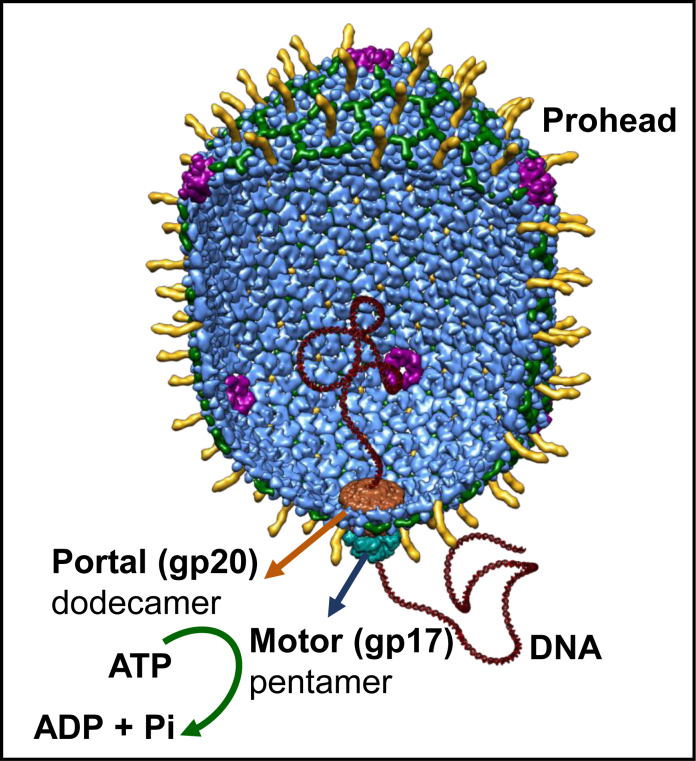
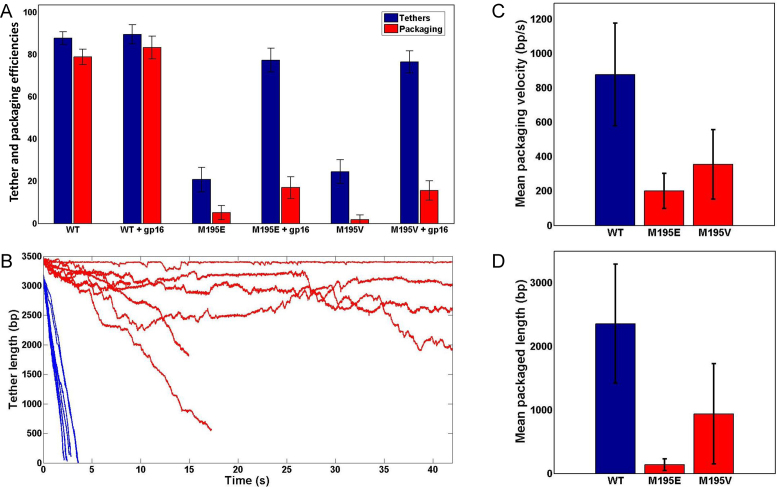
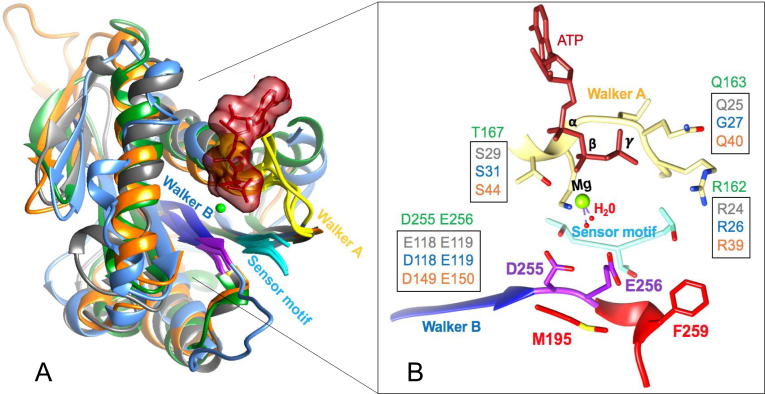
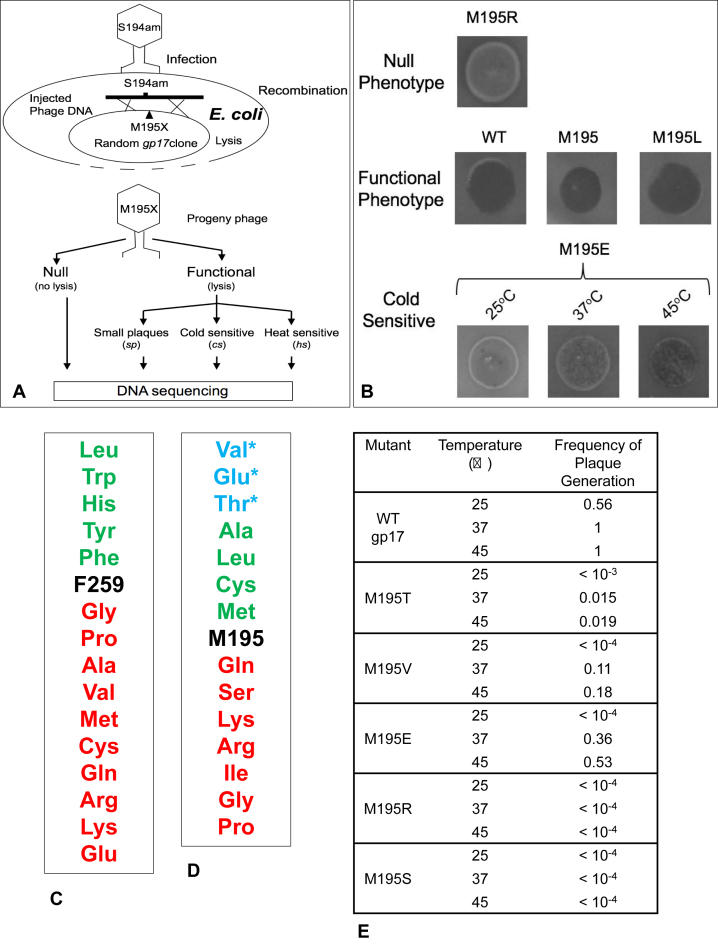
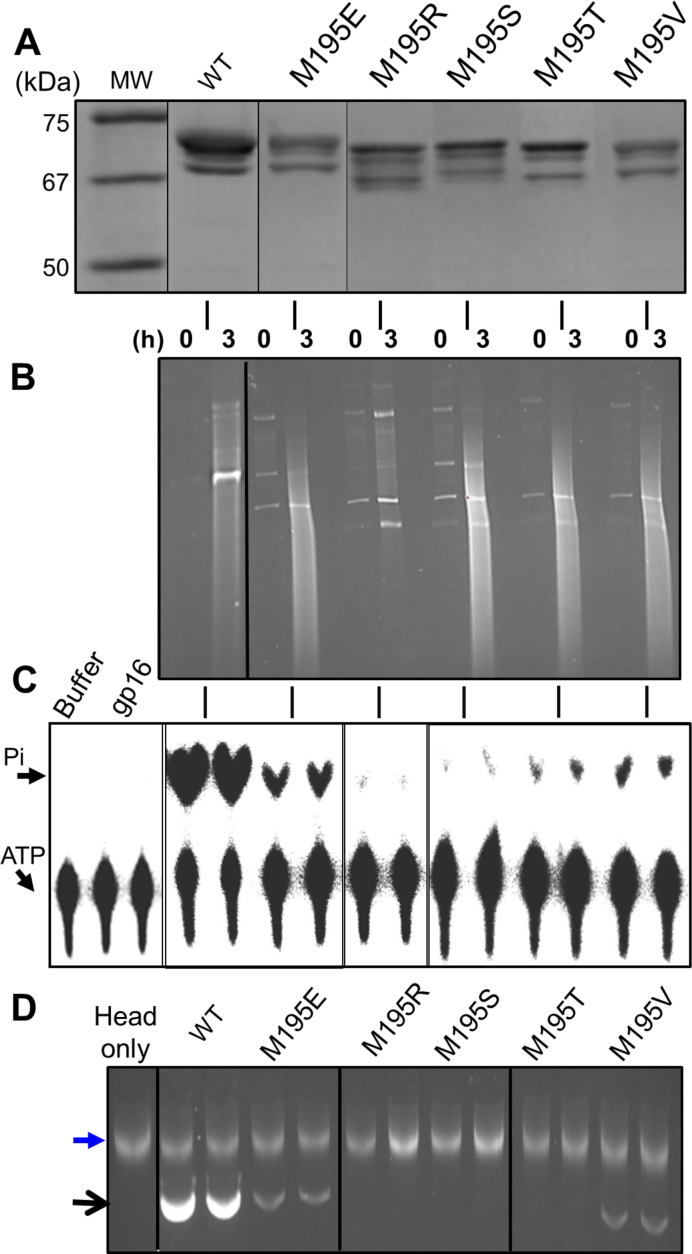
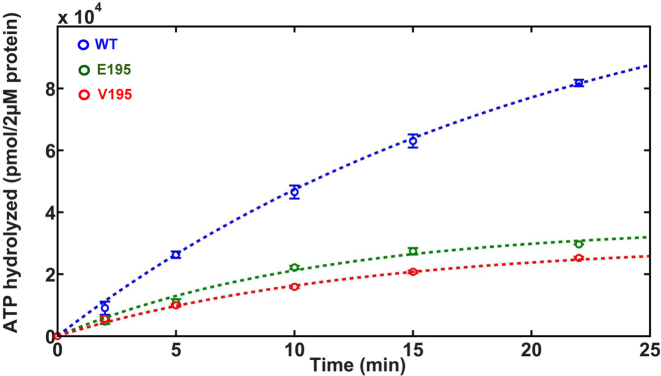
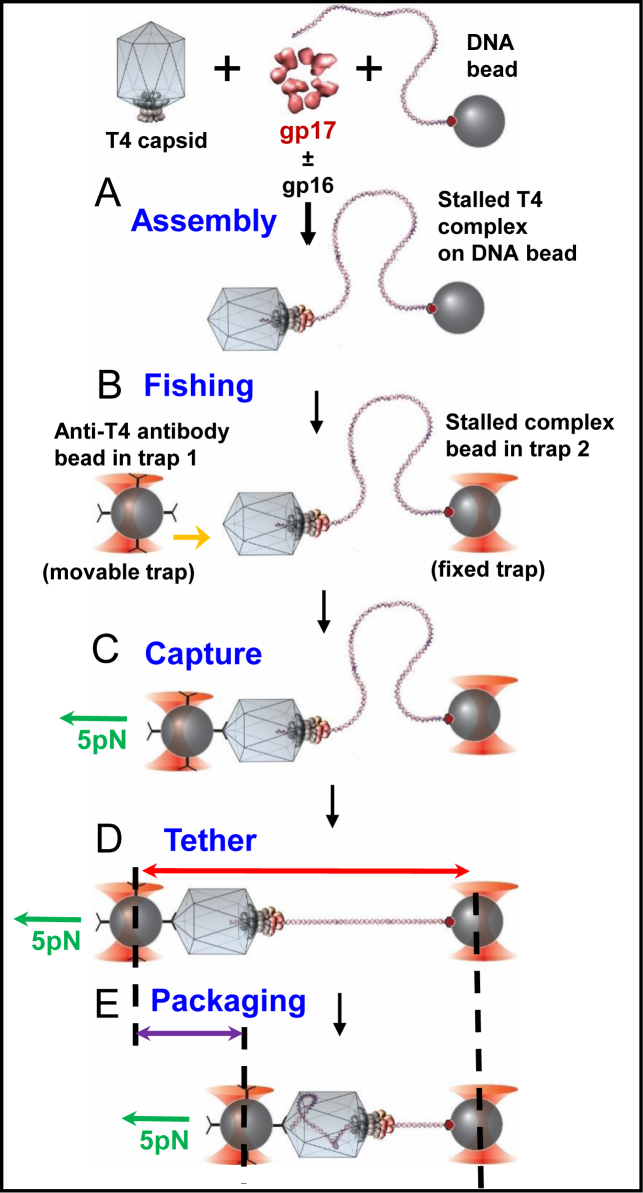
The speed at which a molecular motor operates is critically important for the survival of a virus or an organism but very little is known about the underlying mechanisms. Tailed bacteriophage T4 employs one of the fastest and most powerful packaging motors, a pentamer of gp17 that translocates DNA at a rate of up to ∼2000-bp/s. We hypothesize, guided by structural and genetic analyses, that a unique hydrophobic environment in the catalytic space of gp17-adenosine triphosphatase (ATPase) determines the rate at which the 'lytic water' molecule is activated and OH- nucleophile is generated, in turn determining the speed of the motor. We tested this hypothesis by identifying two hydrophobic amino acids, M195 and F259, in the catalytic space of gp17-ATPase that are in a position to modulate motor speed. Combinatorial mutagenesis demonstrated that hydrophobic substitutions were tolerated but polar or charged substitutions resulted in null or cold-sensitive/small-plaque phenotypes. Quantitative biochemical and single-molecule analyses showed that the mutant motors exhibited 1.8- to 2.5-fold lower rate of ATP hydrolysis, 2.5- to 4.5-fold lower DNA packaging velocity, and required an activator protein, gp16 for rapid firing of ATPases. These studies uncover a speed control mechanism that might allow selection of motors with optimal performance for organisms' survival.
分子马达的运行速度对于病毒或生物体的生存至关重要,但对于其潜在机制却知之甚少。有尾噬菌体T4使用了最快且最强大的包装马达之一,即gp17五聚体,它以高达约2000碱基对/秒的速度转运DNA。在结构和遗传分析的指导下,我们推测,gp17 - 三磷酸腺苷酶(ATPase)催化空间中独特的疏水环境决定了“裂解水”分子被激活以及OH-亲核试剂生成的速率,进而决定了马达的速度。我们通过在gp17 - ATPase的催化空间中鉴定出两个能够调节马达速度的疏水氨基酸M195和F259来验证这一假设。组合诱变表明,疏水取代是可以耐受的,但极性或带电取代会导致无效或冷敏感/小噬菌斑表型。定量生化分析和单分子分析表明,突变型马达的ATP水解速率降低了1.8至2.5倍,DNA包装速度降低了2.5至4.5倍,并且需要激活蛋白gp16才能使ATPase快速启动。这些研究揭示了一种速度控制机制,该机制可能允许为生物体的生存选择具有最佳性能的马达。