Shepherd Charles, Koepp Matthias, Myland Melissa, Patel Keyur, Miglio Cristiana, Siva Vathani, Gray Elizabeth, Neary Maureen
Neurology, Nobles Hospital, Braddan, Isle of Man.
National Hospital for Neurology and Neurosurgery, University College London Hospital, London, UK.
BMJ Open. 2017 Oct 5;7(10):e015236. doi: 10.1136/bmjopen-2016-015236.
Epilepsy is highly prevalent in tuberous sclerosis complex (TSC), a multi-system genetic disorder. The clinical and economic burden of this condition is expected to be substantial due to treatment challenges, debilitating co-morbidities and the relationship between TSC-related manifestations. This study estimated healthcare resource utilisation (HCRU) and costs for patients with TSC with epilepsy (TSC+E) in the UK.
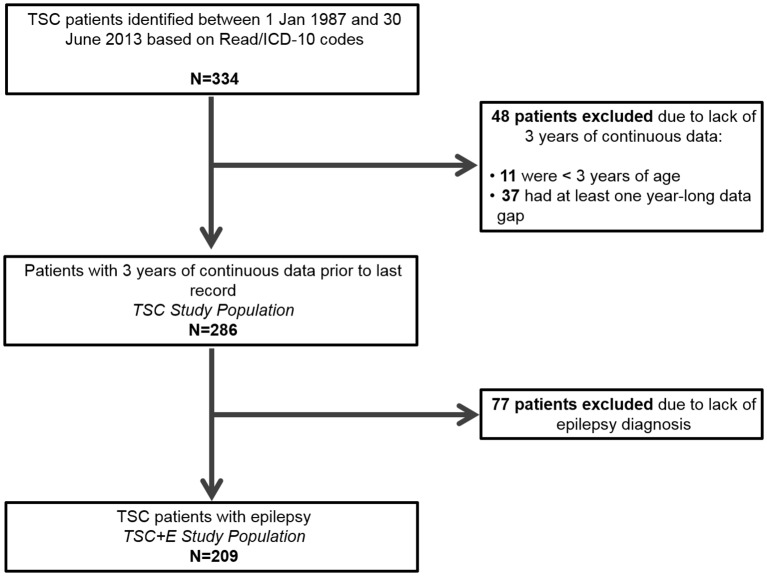
Patients with TSC+E in the Clinical Practice Research Datalink (CPRD) linked to Hospital Episodes Statistics were identified from April 1997 to March 2012. Clinical data were extracted over the entire history, and costs were reported over the most recent 3-year period. HCRU was compared with a matched Comparator cohort, and the key cost drivers were identified by regression modelling.
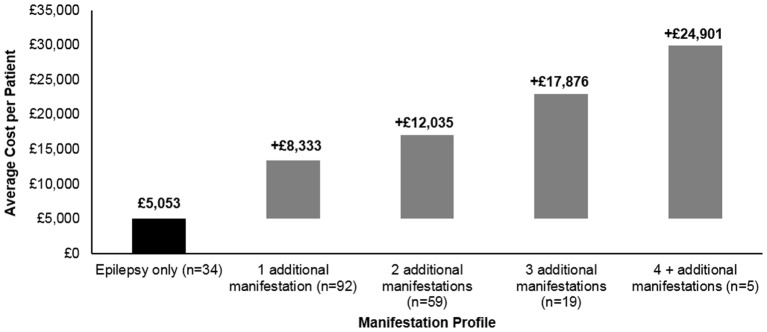
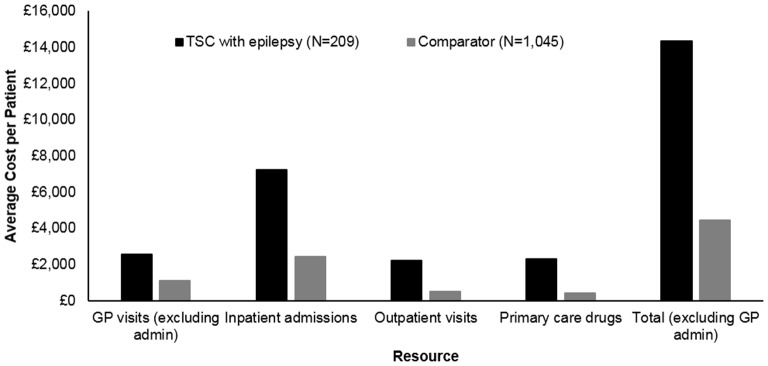
In total, 209 patients with TSC+E were identified, of which 40% recorded ≥2 other primary organ system manifestations and 42% had learning disability. Treatment with ≥2 concomitant antiepileptic drugs (AEDs) was prevalent (60%), potentially suggesting refractory epilepsy. Notwithstanding, many patients with TSC+E (12%) had no record of AED use in their entire history, which may indicate undertreatment for these patients.Brain surgery was recorded in 12% of patients. Routine electroencephalography and MRI were infrequently performed (30% of patients), yet general practitioner visits, hospitalisations and outpatient visits were more frequent in patients with TSC+E than the Comparator. This translated to threefold higher clinical costs (£14 335 vs £4448), which significantly increased with each additional primary manifestation (p<0.0001).
Patients with TSC+E have increased HCRU compared with the general CPRD population, likely related to manifestations in several organ systems, substantial cognitive impairment and severe epilepsy, which is challenging to treat and may be intractable. Disease surveillance and testing appears to be inadequate with few treatments trialled.Multidisciplinary care in TSC clinics with specialist neurologist input may alleviate some of the morbidity of patients, but more innovative treatment and management options should be sought.
癫痫在结节性硬化症(TSC)中极为常见,TSC是一种多系统遗传性疾病。鉴于治疗挑战、使人衰弱的合并症以及TSC相关表现之间的关系,这种疾病的临床和经济负担预计会相当大。本研究估计了英国癫痫型结节性硬化症(TSC+E)患者的医疗资源利用(HCRU)和费用。
从1997年4月至2012年3月,在与医院事件统计数据相关联的临床实践研究数据链(CPRD)中识别出TSC+E患者。提取了整个病史的临床数据,并报告了最近3年期间的费用。将HCRU与匹配的对照队列进行比较,并通过回归模型确定关键成本驱动因素。
总共识别出209例TSC+E患者,其中40%记录有≥2种其他主要器官系统表现,42%有学习障碍。同时使用≥2种抗癫痫药物(AEDs)进行治疗很普遍(60%),这可能提示难治性癫痫。尽管如此,许多TSC+E患者(12%)在其整个病史中没有AED使用记录,这可能表明这些患者治疗不足。12%的患者记录有脑部手术。常规脑电图和MRI检查很少进行(30%的患者),然而TSC+E患者的全科医生就诊、住院和门诊就诊比对照组更频繁。这导致临床费用高出三倍(14335英镑对4448英镑),随着每增加一种主要表现,费用显著增加(p<0.0001)。
与CPRD总体人群相比,TSC+E患者的HCRU增加,这可能与多个器官系统的表现、严重的认知障碍和严重癫痫有关,这些癫痫治疗具有挑战性且可能难以治疗。疾病监测和检测似乎不足,试验的治疗方法很少。有专科神经科医生参与的TSC诊所的多学科护理可能会减轻患者的一些发病率,但应寻求更具创新性的治疗和管理选择。