Department of Veterinary Microbiology and Pathology, Washington State University, Pullman, WA, United States of America.
Department of Entomology, Faculty of Science, Cairo University, Giza, Egypt.
PLoS Negl Trop Dis. 2017 Oct 6;11(10):e0005965. doi: 10.1371/journal.pntd.0005965. eCollection 2017 Oct.
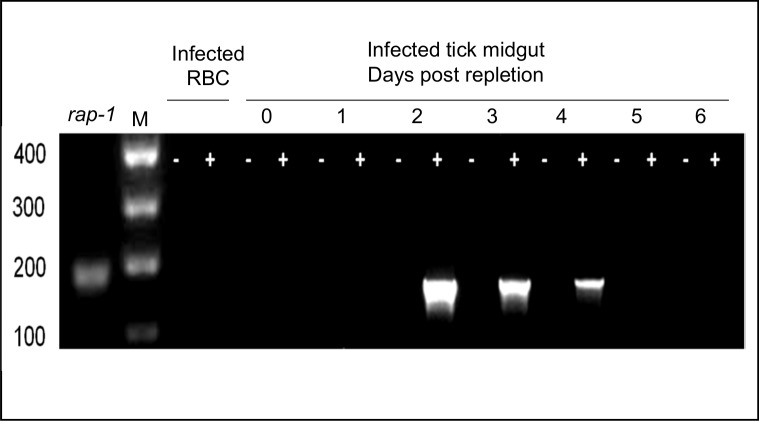
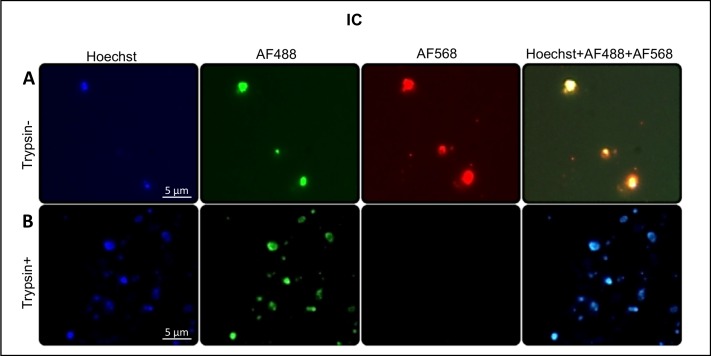
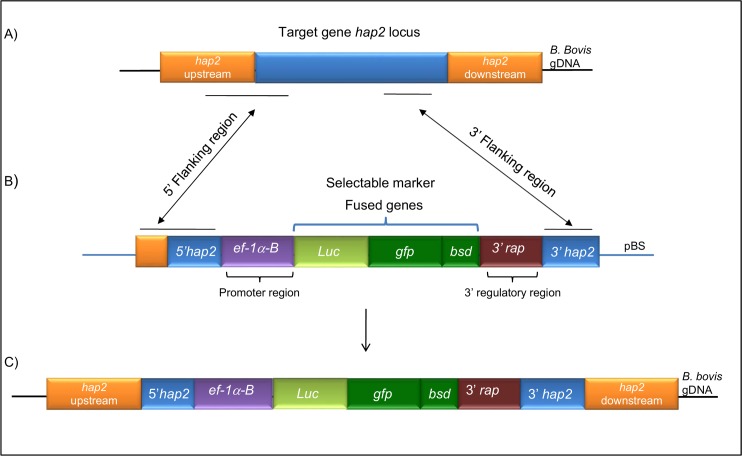
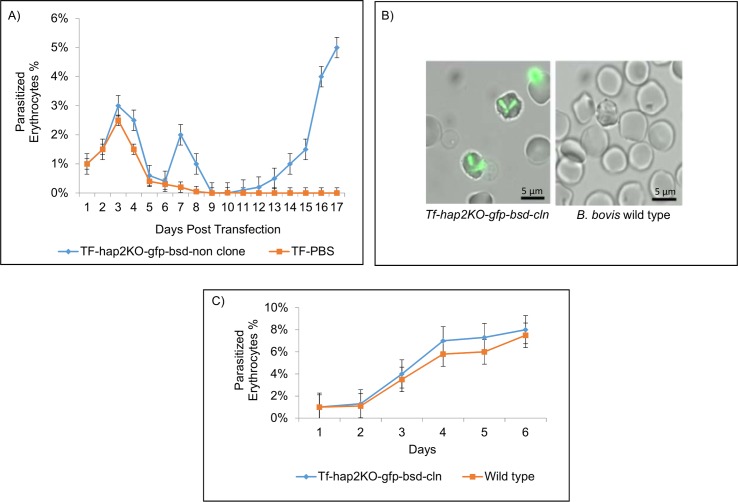
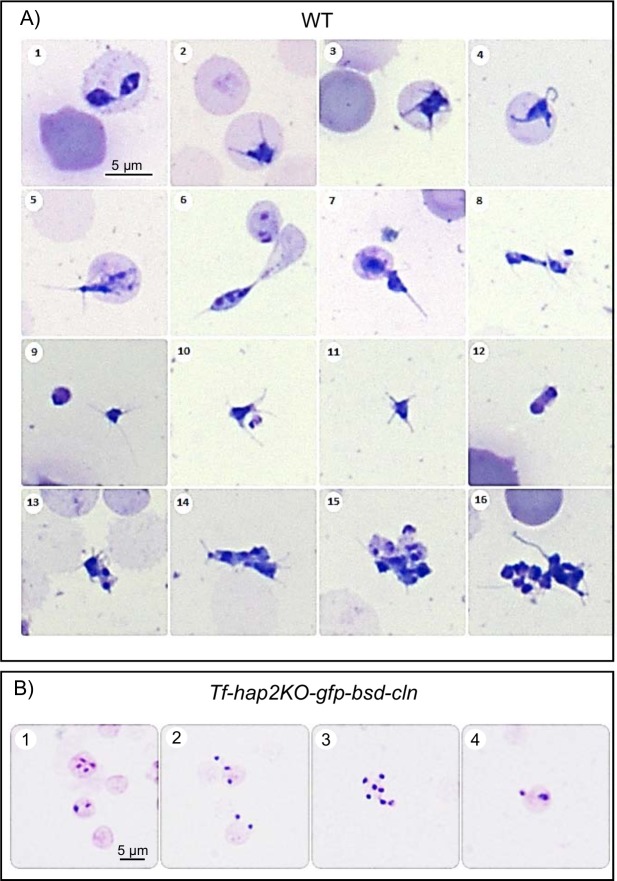
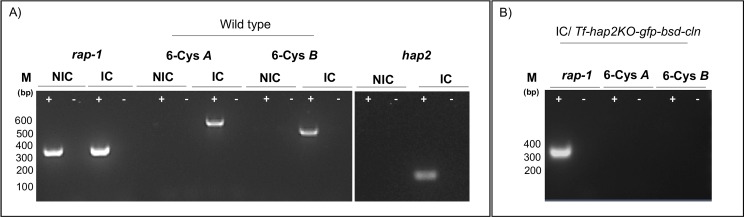
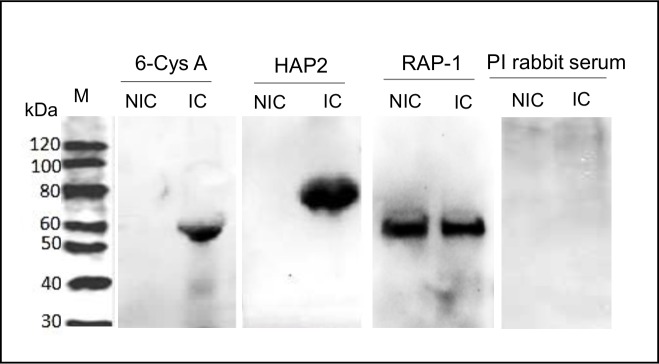
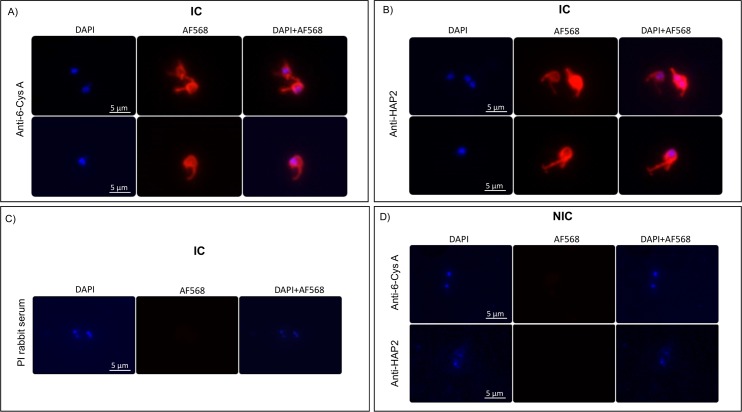
Babesia bovis, is a tick borne apicomplexan parasite responsible for important cattle losses globally. Babesia parasites have a complex life cycle including asexual replication in the mammalian host and sexual reproduction in the tick vector. Novel control strategies aimed at limiting transmission of the parasite are needed, but transmission blocking vaccine candidates remain undefined. Expression of HAP2 has been recognized as critical for the fertilization of parasites in the Babesia-related Plasmodium, and is a leading candidate for a transmission blocking vaccine against malaria. Hereby we identified the B. bovis hap2 gene and demonstrated that it is widely conserved and differentially transcribed during development within the tick midgut, but not by blood stage parasites. The hap2 gene was disrupted by transfecting B. bovis with a plasmid containing the flanking regions of the hap2 gene and the GPF-BSD gene under the control of the ef-1α-B promoter. Comparison of in vitro growth between a hap2-KO B. bovis clonal line and its parental wild type strain showed that HAP2 is not required for the development of B. bovis in erythrocytes. However, xanthurenic acid-in vitro induction experiments of sexual stages of parasites recovered after tick transmission resulted in surface expression of HAP2 exclusively in sexual stage induced parasites. In addition, hap2-KO parasites were not able to develop such sexual stages as defined both by morphology and by expression of the B. bovis sexual marker genes 6-Cys A and B. Together, the data strongly suggests that tick midgut stage differential expression of hap2 is associated with the development of B. bovis sexual forms. Overall these studies are consistent with a role of HAP2 in tick stages of the parasite and suggest that HAP2 is a potential candidate for a transmission blocking vaccine against bovine babesiosis.
牛巴贝斯虫是一种蜱传顶复门寄生虫,在全球范围内导致了重要的牛只损失。巴贝斯虫寄生虫具有复杂的生命周期,包括在哺乳动物宿主中进行无性繁殖和在蜱媒介中进行有性繁殖。需要新的控制策略来限制寄生虫的传播,但传播阻断疫苗候选物仍然不明确。HAP2 的表达已被认为对巴贝斯虫相关疟原虫的受精至关重要,是针对疟疾的传播阻断疫苗的主要候选物。在此,我们鉴定了 B. bovis 的 hap2 基因,并证明它在蜱中肠内的发育过程中广泛保守且差异转录,但血液阶段寄生虫不转录。通过用含有 hap2 基因侧翼区和 GFP-BSD 基因的质粒转染 B. bovis 来破坏 hap2 基因,该质粒受 ef-1α-B 启动子的控制。在体外比较 hap2-KO B. bovis 克隆系与其亲本野生型菌株之间的生长情况表明,HAP2 不是 B. bovis 在红细胞中发育所必需的。然而,在 tick 传播后回收的性阶段寄生虫的黄嘌呤酸体外诱导实验中,HAP2 的表面表达仅在诱导的性阶段寄生虫中出现。此外,hap2-KO 寄生虫无法发育成性阶段,这是通过形态和 B. bovis 性标记基因 6-Cys A 和 B 的表达来定义的。总之,这些数据强烈表明 hap2 在蜱中肠阶段的差异表达与 B. bovis 性形式的发育有关。总体而言,这些研究与 HAP2 在寄生虫的蜱阶段的作用一致,并表明 HAP2 是针对牛巴贝斯虫的传播阻断疫苗的潜在候选物。