Antoniali Giulia, Serra Fabrizio, Lirussi Lisa, Tanaka Mikiei, D'Ambrosio Chiara, Zhang Shiheng, Radovic Slobodanka, Dalla Emiliano, Ciani Yari, Scaloni Andrea, Li Mengxia, Piazza Silvano, Tell Gianluca
Department of Medicine, Laboratory of Molecular Biology and DNA repair, University of Udine, p.le M. Kolbe 4, Udine, 33100, Italy.
Clinical and Experimental Onco-Hematology Unit, Centro di Riferimento Oncologico, I.R.C.C.S., via Franco Gallini 2, Aviano (PN), 33081, Italy.
Nat Commun. 2017 Oct 6;8(1):797. doi: 10.1038/s41467-017-00842-8.
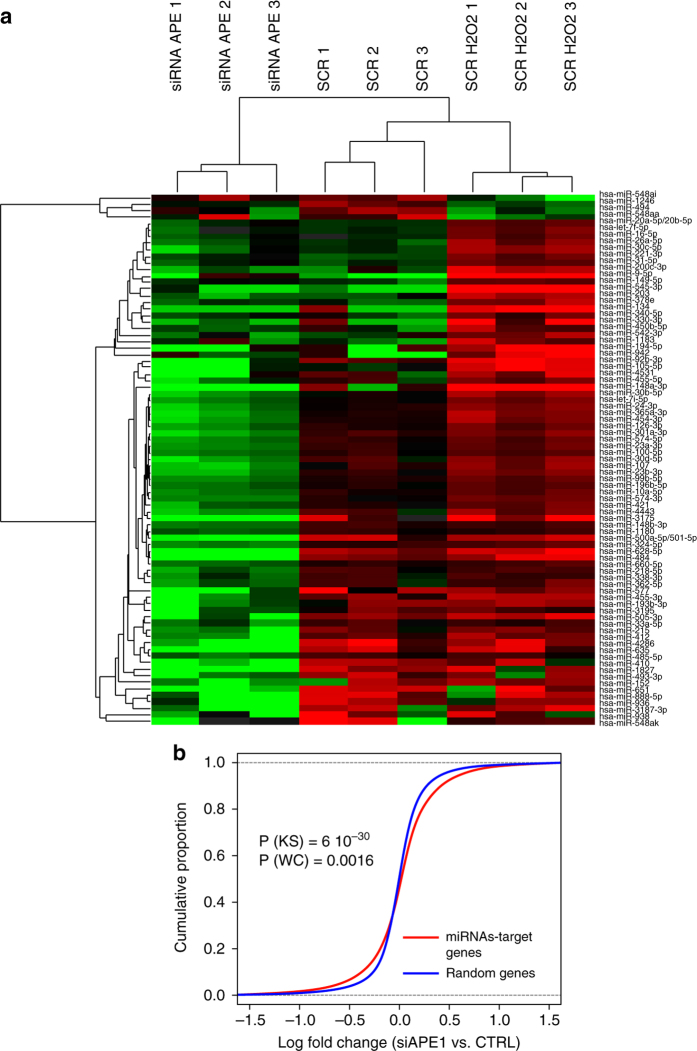
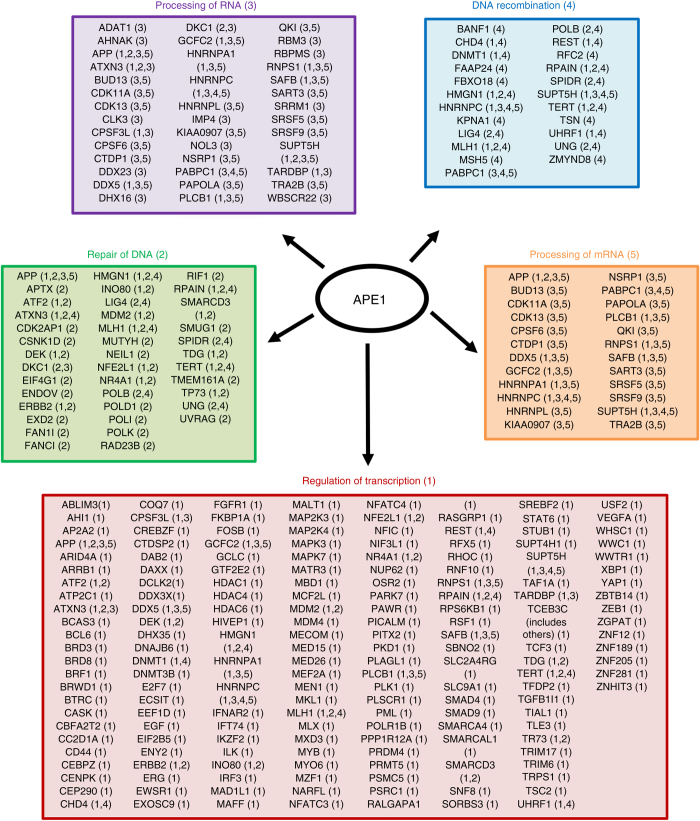
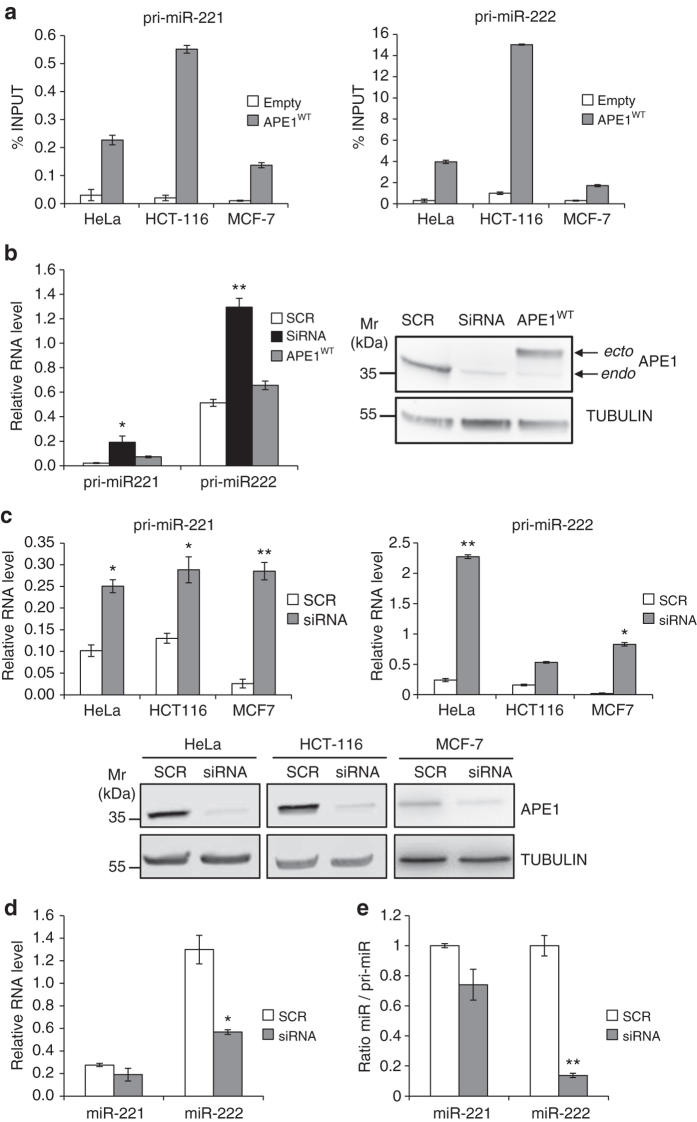
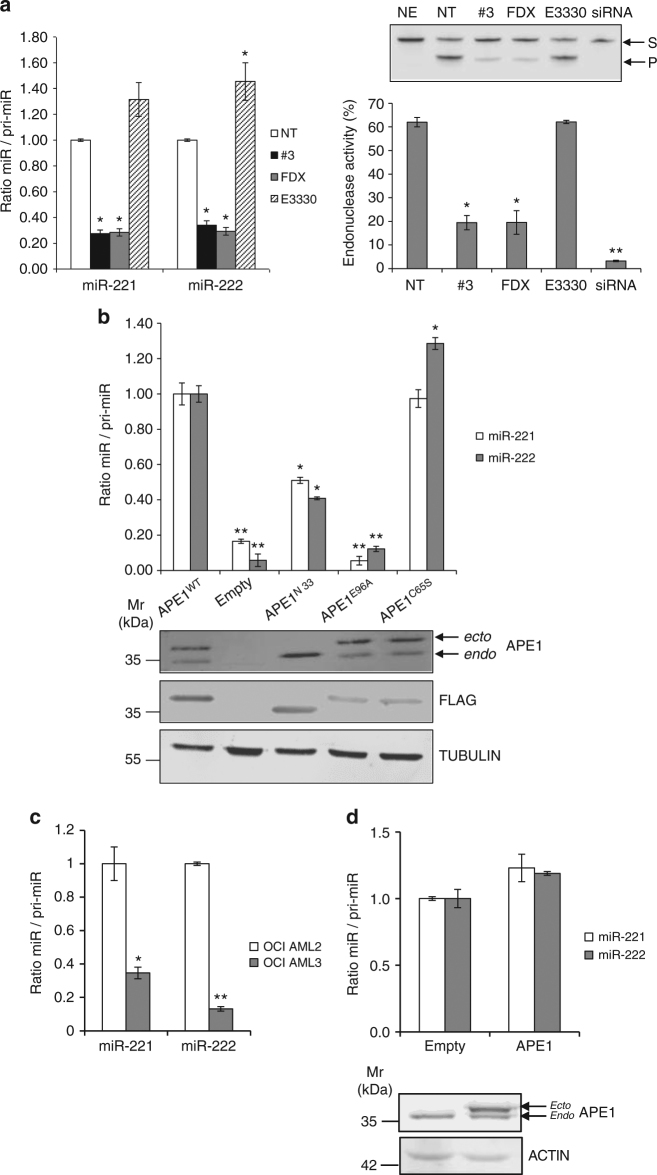
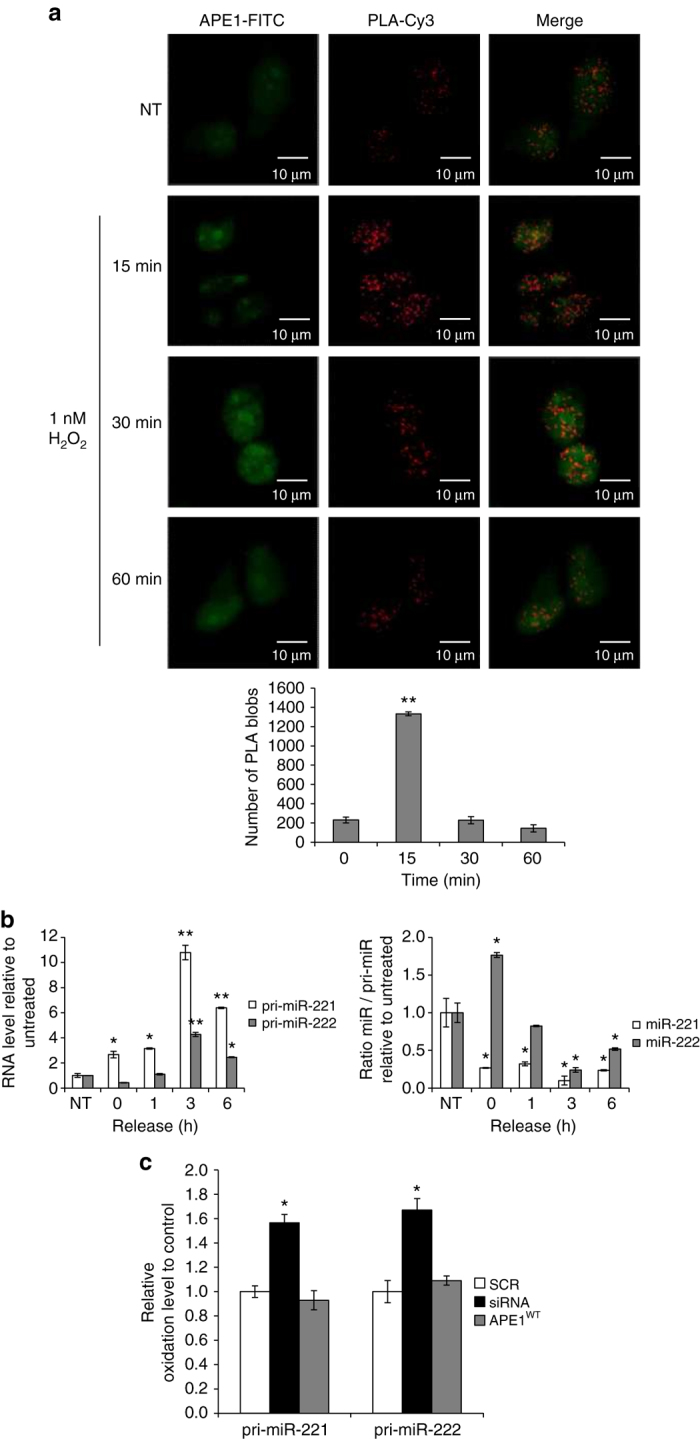
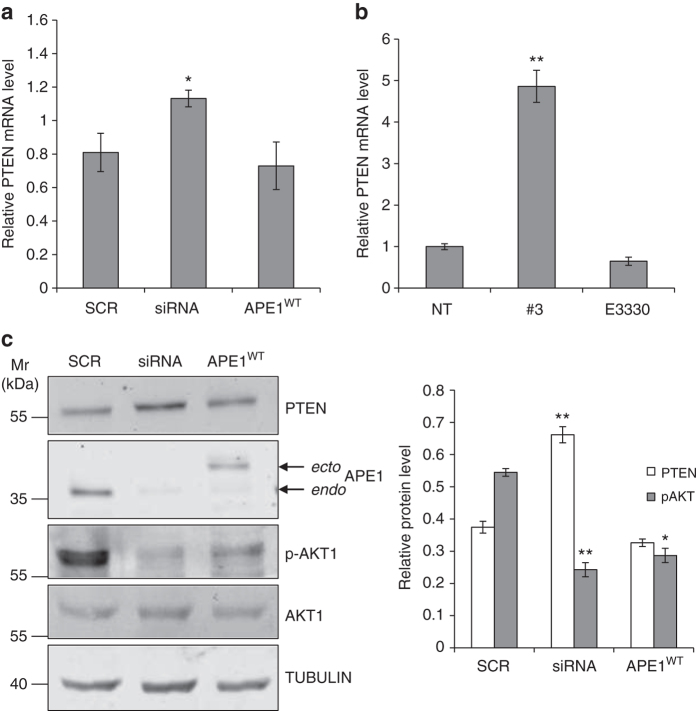
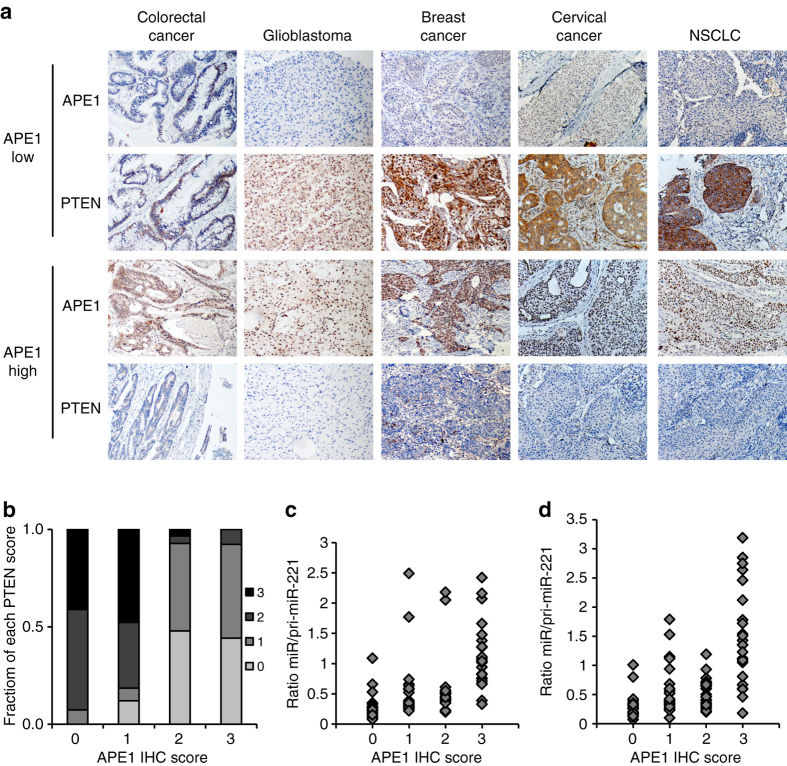
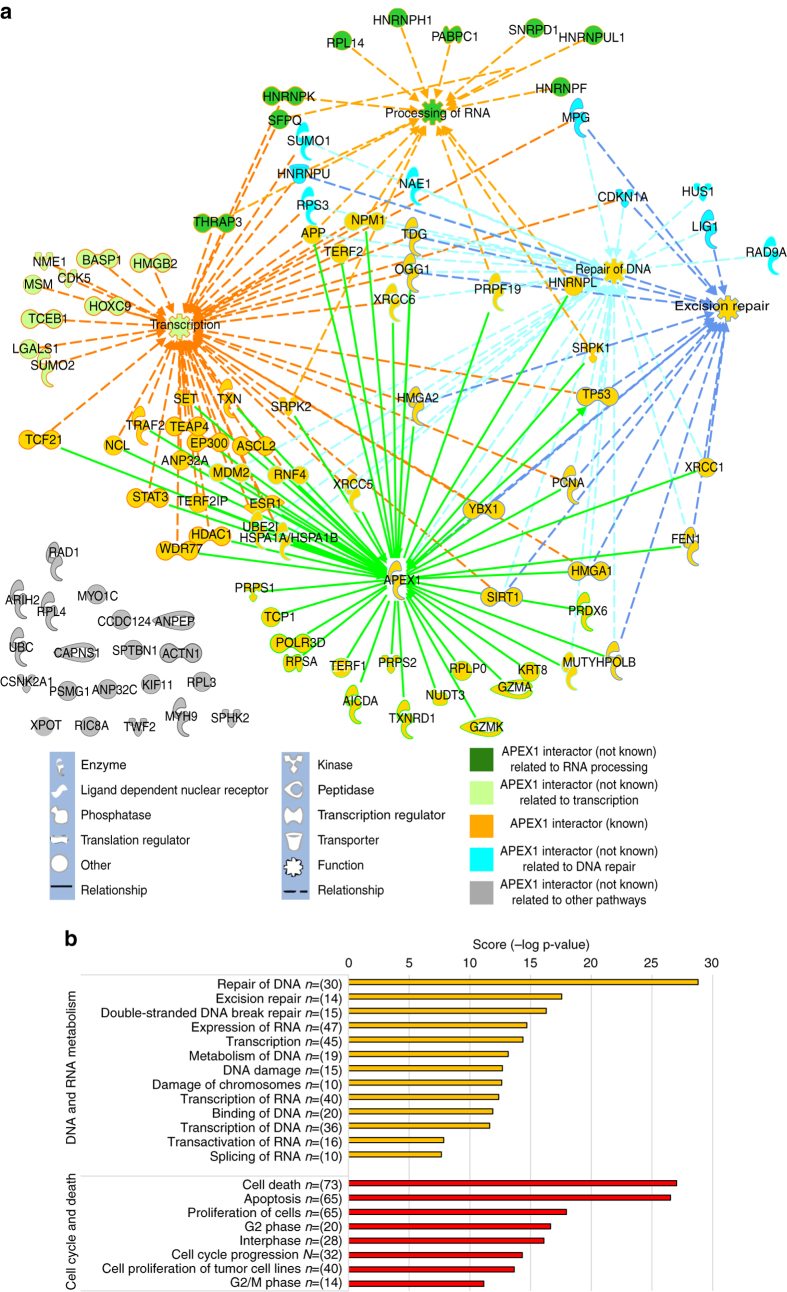
Mammalian apurinic/apyrimidinic endonuclease 1 is a DNA repair enzyme involved in genome stability and expression of genes involved in oxidative stress responses, tumor progression and chemoresistance. However, the molecular mechanisms underlying the role of apurinic/apyrimidinic endonuclease 1 in these processes are still unclear. Recent findings point to a novel role of apurinic/apyrimidinic endonuclease 1 in RNA metabolism. Through the characterization of the interactomes of apurinic/apyrimidinic endonuclease 1 with RNA and other proteins, we demonstrate here a role for apurinic/apyrimidinic endonuclease 1 in pri-miRNA processing and stability via association with the DROSHA-processing complex during genotoxic stress. We also show that endonuclease activity of apurinic/apyrimidinic endonuclease 1 is required for the processing of miR-221/222 in regulating expression of the tumor suppressor PTEN. Analysis of a cohort of different cancers supports the relevance of our findings for tumor biology. We also show that apurinic/apyrimidinic endonuclease 1 participates in RNA-interactomes and protein-interactomes involved in cancer development, thus indicating an unsuspected post-transcriptional effect on cancer genes.APE1 plays an important role in the cellular response to oxidative stress, and mutations are linked to tumor progression and chemoresistance. Here, the authors characterize the interactions of APE1 with RNA and demonstrate a role in microRNA processing.
哺乳动物脱嘌呤/脱嘧啶内切核酸酶1是一种DNA修复酶,参与基因组稳定性以及与氧化应激反应、肿瘤进展和化疗耐药相关的基因表达。然而,脱嘌呤/脱嘧啶内切核酸酶1在这些过程中发挥作用的分子机制仍不清楚。最近的研究结果指出脱嘌呤/脱嘧啶内切核酸酶1在RNA代谢中具有新作用。通过对脱嘌呤/脱嘧啶内切核酸酶1与RNA及其他蛋白质相互作用组的表征,我们在此证明了脱嘌呤/脱嘧啶内切核酸酶1在基因毒性应激期间通过与DROSHA加工复合体结合,在初级微小RNA(pri-miRNA)加工和稳定性方面发挥的作用。我们还表明,脱嘌呤/脱嘧啶内切核酸酶1的内切核酸酶活性是加工miR-221/222以调节肿瘤抑制因子PTEN表达所必需的。对一组不同癌症的分析支持了我们的研究结果与肿瘤生物学的相关性。我们还表明,脱嘌呤/脱嘧啶内切核酸酶1参与了与癌症发展相关的RNA相互作用组和蛋白质相互作用组,从而表明其对癌症基因具有意外的转录后效应。脱嘌呤/脱嘧啶内切核酸酶1(APE1)在细胞对氧化应激的反应中起重要作用,其突变与肿瘤进展和化疗耐药有关。在此,作者表征了APE1与RNA的相互作用,并证明了其在微小RNA加工中的作用。