Tuukkanen Anne T, Spilotros Alessandro, Svergun Dmitri I
European Molecular Biology Laboratory, EMBL Hamburg c/o DESY, Notkestrasse 85, 22607 Hamburg, Germany.
IUCrJ. 2017 Aug 8;4(Pt 5):518-528. doi: 10.1107/S2052252517008740. eCollection 2017 Sep 1.
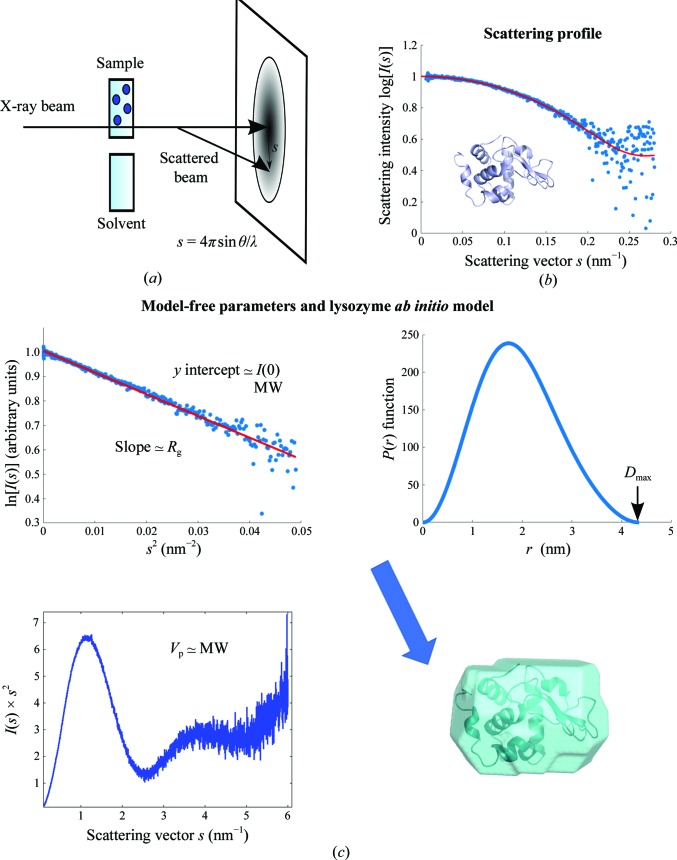
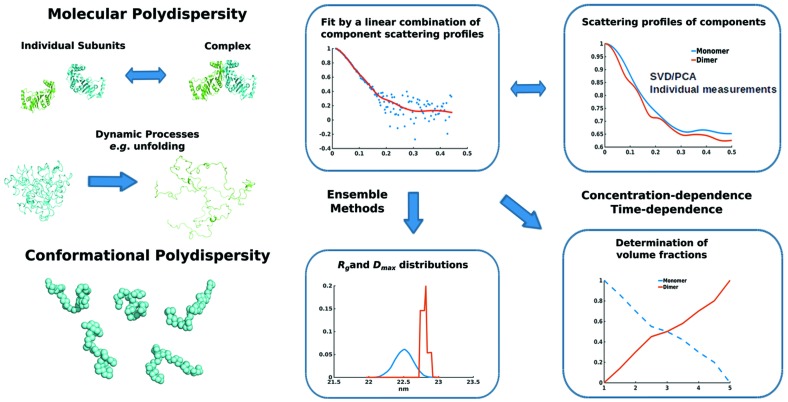
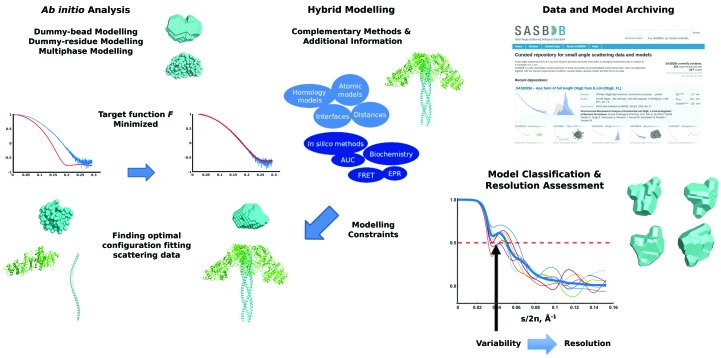
Small-angle X-ray scattering (SAXS) is an established technique that provides low-resolution structural information on macromolecular solutions. Recent decades have witnessed significant progress in both experimental facilities and in novel data-analysis approaches, making SAXS a mainstream method for structural biology. The technique is routinely applied to directly reconstruct low-resolution shapes of proteins and to generate atomistic models of macromolecular assemblies using hybrid approaches. Very importantly, SAXS is capable of yielding structural information on systems with size and conformational polydispersity, including highly flexible objects. In addition, utilizing high-flux synchrotron facilities, time-resolved SAXS allows analysis of kinetic processes over time ranges from microseconds to hours. Dedicated bioSAXS beamlines now offer fully automated data-collection and analysis pipelines, where analysis and modelling is conducted on the fly. This enables SAXS to be employed as a high-throughput method to rapidly screen various sample conditions and additives. The growing SAXS user community is supported by developments in data and model archiving and quality criteria. This review illustrates the latest developments in SAXS, in particular highlighting time-resolved applications aimed at flexible and evolving systems.
小角X射线散射(SAXS)是一种成熟的技术,可提供关于大分子溶液的低分辨率结构信息。近几十年来,实验设备和新型数据分析方法都取得了显著进展,使SAXS成为结构生物学的主流方法。该技术通常用于直接重建蛋白质的低分辨率形状,并使用混合方法生成大分子组装体的原子模型。非常重要的是,SAXS能够提供关于具有尺寸和构象多分散性的系统的结构信息,包括高度柔性的物体。此外,利用高通量同步加速器设施,时间分辨SAXS允许分析从微秒到小时的时间范围内的动力学过程。专门的生物SAXS光束线现在提供全自动的数据收集和分析管道,可即时进行分析和建模。这使得SAXS能够用作高通量方法来快速筛选各种样品条件和添加剂。数据和模型存档以及质量标准的发展为不断壮大的SAXS用户群体提供了支持。本综述阐述了SAXS的最新进展,尤其突出了针对柔性和动态系统的时间分辨应用。